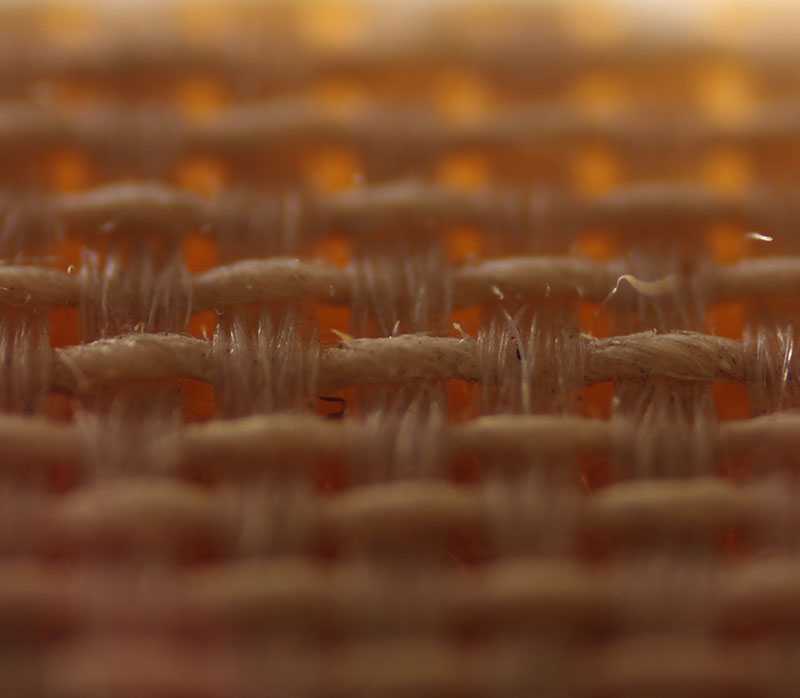
Also known as tabby weave, it is the most common weave in textiles. In this weave, each weft yarn passes over one warp yarn and under the next one, with this alternating sequence continuing across rows of weft in a 1:1 ratio. Other weaves, such as twill or satin, feature differing ratios and sequences of the weft yarn, which results in fabrics of different patterns and qualities.
More Definitions
Fluting
Decorative ridges or grooves that are carved along the shaft of a column or pilaster to make it appear rounder…
Patthakati
Skilled artisan involved in the process of making Benarasi brocade textiles, who punch holes in a card corresponding to a…
Fresco
A mural painting technique where water-based pigments are applied over wet lime plaster. As the paint and plaster dry together,…
Dovetail
A method of tapestry weaving where wefts of two different colours are woven onto the same warp threads. This method…
Gelatin Dry Plate
A method of producing photographic negatives that emerged in the 1880s, using a glass plate coated with silver salts in…
Kashika Vastra
Meaning “clothes from Kashi” in Sanskrit, it is a possible reference to the brocaded fabric produced in Kashi (now Varanasi).
Rib Weave
A variation of the plain weave, it is created by passing the weft over and under the warp threads in…
Schiffli
A multi-thread machine used to create machine embroidery and lace, invented in 1893 by Swiss inventor Isaak Grobli. The term…