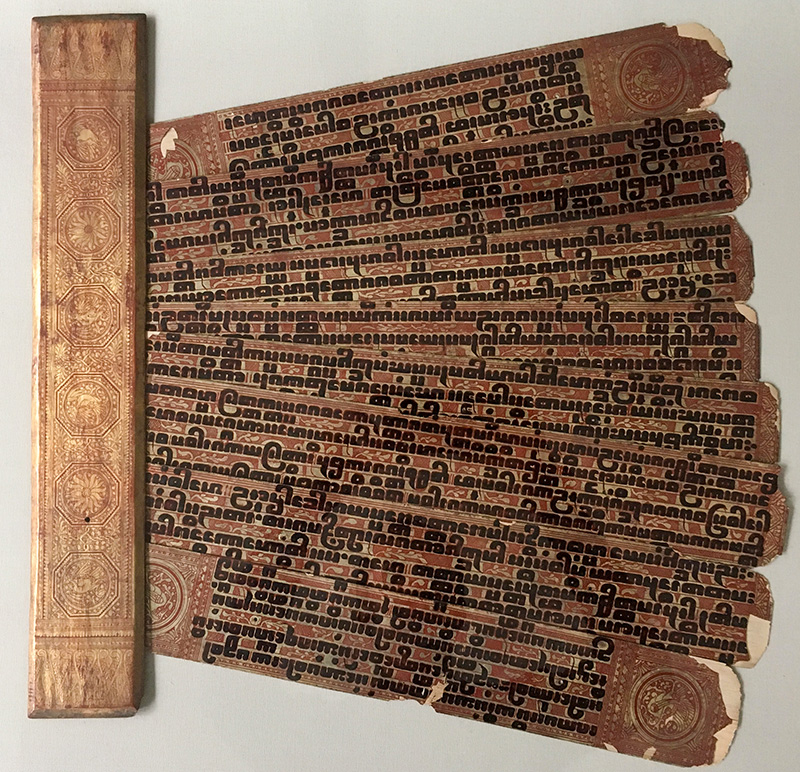
Middle Indo-Aryan language in which the canonical texts of Theravada Buddhism are composed; and the liturgical and scholarly language of the Theravada tradition in Sri Lanka and mainland Southeast Asia. The term pali means ‘line’ or ‘text’ and originally referred to the literal text (pali bhasa) of the Tipitaka canon; the language came to be known as Pali in the latter half of the first millenium. Theravada textual tradition identifies Pali with Magadhi Prakrit, the vernacular language of eastern India which the Buddha is believed to have spoken. It is possible that Pali was a standardised literary language formed out of several regional Middle Indo-Aryan dialects, including Magadhi, and not the spoken language of any particular community. Pali fell out of use across the subcontinental mainland with the decline of Buddhism, but continued to be used by Theravada Buddhists in Sri Lanka and parts of Southeast Asia. No script was developed specifically for Pali, and it was written in the local scripts of the regions to which Buddhism spread. Pali stone inscriptions are relatively rare in India and Sri Lanka, but found in greater numbers in Thailand and Myanmar, where the earliest of them have been dated to between the fifth and eighth centuries.
Pali
Link copied!