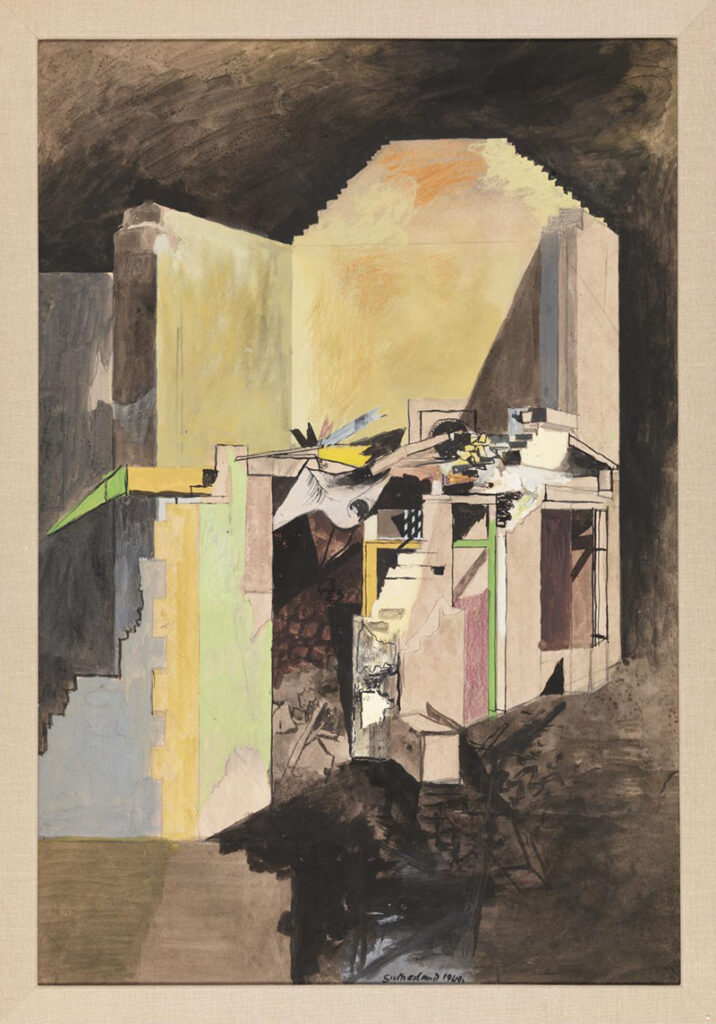
A cultural movement in Britain during the 1930s and ’40s which was influenced by eighteenth-century Romanticism and emphasised individualism and the depiction of intense emotions over social subjects. It developed in response to the impending threats of and the social conditions during World War II. Prominent artists associated with the movement include Graham Sutherland, John Minton and Paul Nash.
More Definitions
Art Informel
Coined by French art critic and curator Michel Tapie in 1952, the term signifies French artistic and painting styles of…
German Expressionism
An art movement that emerged in early twentieth-century Germany, characterised by irregular brushstrokes and gestural marks which eschewed realist depictions…
Primitivism
A tendency in European and American modern art where artists explored the visual vocabulary of the cultures of Africa, Oceania…
Pictorialism
An aesthetic movement in photography during the late nineteenth and early twentieth century that focused on composition, light and subject…
Pop Art
An art movement that originated in the 1950s and 1960s in Britain and the United States of America, it challenged…
Bauhaus
A school of art and design founded by German architect Walter Gropius in 1919, which emphasised an interdisciplinary approach to…
Colour Field Painting
An abstract painting style categorised within American Expressionism, it is characterised by large-scale canvases painted expansively with flat, solid colour…
Pop Kitsch
The use of popular and everyday materials and images in pop art. Kitsch in German signifies art, objects and design…