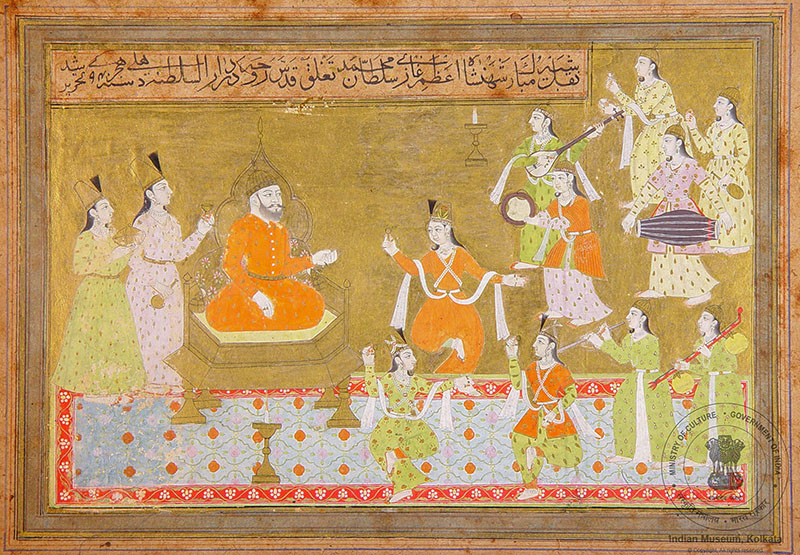
Muhammad bin Tughlaq (r. 1325–51) was the second sultan of the Tughlaq dynasty (r. 1320–1413), under whom the Delhi Sultanate reached its territorial peak, extending as far south as Madurai. As a prince, he led the conquest of Warangal in the Deccan, defeating the last Kakatiya king, Prataparudra. Tughlaq was a polyglot interested in law and religion, and viewed himself as a reformer. He employed the Moroccan traveller Ibn Battuta as a judge in his court. Tughlaq’s reign was characterised by severe political upheavals, with many provincial rebellions — most notably the founding of the Vijayanagara Empire in 1336 and the Bahmani Sultanate in 1347, which marked the loss of major Deccan territories. His regime also suffered due to his high taxation on farmers; his minting of copper coins of the same value as silver; forced migrations of people from Delhi to his Deccan capital Daulatabad; and his failed attempts at conquests in Central Asia.
More Definitions
Megasthenes
Megasthenes (b. c. 350 BCE; d. c. 290 BCE) was an ancient Greek historian, diplomat and explorer known for his…
Jamsetjee Jejeebhoy
Jamsetjee Jejeebhoy (b. 1783; d. 1859) was an Indian businessman and philanthropist from Mumbai. He established the Sir JJ School…
Ira Bhaskar
An Indian scholar of film studies, as well as a professor and former dean of the School of Art and…
Jivan Ram
A nineteenth century artist who worked between Delhi, Meerut and Patna and was patronised by the Mughal emperor Akbar II…
Shamlu Dudeja
A designer and textile revivalist who has worked extensively with kantha embroidery. She is the founder and chairperson of Mallika’s…
Henry Daly
Henry Daly (b. 1823; d. 1895) was a British Indian army officer who served as agent to the Governor General…
Harisena
A ruler of the Vakataka Dynasty who reigned in the late fifth century CE. He and his court are believed…
John Murray
A Scottish-born doctor who started making photographs c. 1849, while working in the Medical Service of the army of the…