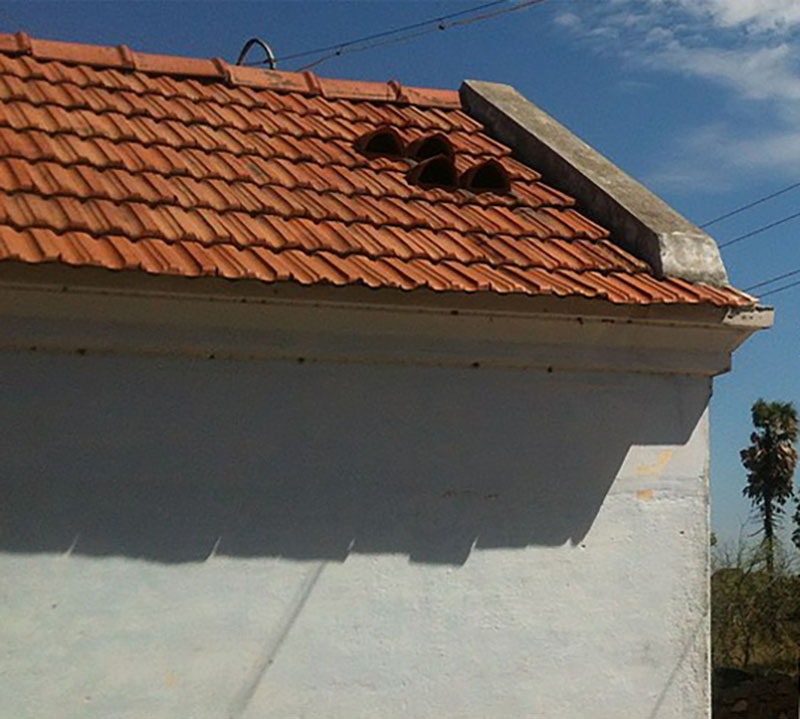
Moulded terracotta tiles popularly used on sloping roofs in India, first manufactured in 1864–65 by the Basel Mission Tile Works (later registered as the Commonwealth Tile Factory) set up by German missionary George Plebst in Mangalore (now Mangaluru) in southern India. Made using clay from the local Netravati River — initially as flat tiles before acquiring their current corrugated form with interlocking edges — Mangalore tiles, as they are popularly known, integrated indigenous pottery practices with European techniques. First made using manual and bullock-powered systems, with the advent of steam power and gas from around 1880 they could be mass-manufactured with uniform size and quality. They proved lighter and more durable and waterproof than country tiles — the semi-cylindrical tiles of traditional potters, locally known as khapra or kavelu — and became very popular for roofing colonial offices, bungalows and public buildings during the nineteenth and twentieth centuries, gradually substituting country tiles almost entirely.
Mangalore tiles
Link copied!