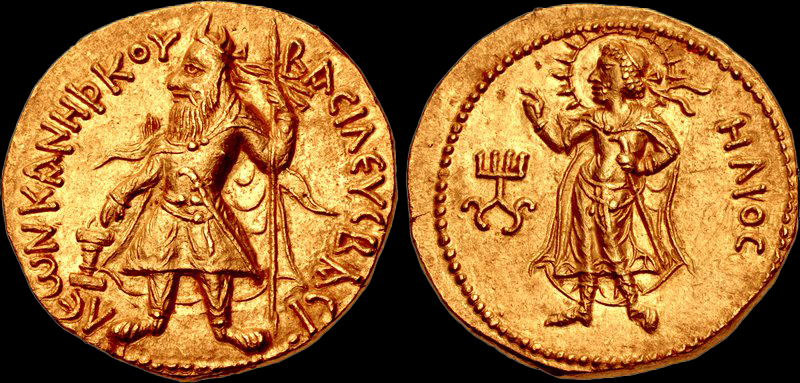
A syncretic empire founded in the Bactrian region of central Asia around the first century CE, it spread to Uzbekistan, Afghanistan and parts of the Indian subcontinent, stretching as far as present-day Varanasi, Uttar Pradesh. The empire’s rulers, who were great patrons of Buddhism and Zoroastrianism, were instrumental in the development of the Gandhara and Mathura schools of art.
More Definitions
Tushaspha
A governor at Girnar in Junagarh, Gujarat, under the Mauryan emperor Ashoka. He is believed to have been of Greek…
US war in Afghanistan (2001–21)
Two-decade-long conflict in Afghanistan between US-led forces and the Taliban. In retaliation to the al-Qaeda's terrorist attacks in the US…
Indian National Congress
Political party formed in 1885 by British civil servants and elite Indian reformers to represent Indian interests to the colonial…
Nayaka
The governors of the Vijayanagara Kingdom, who declared independence after the Battle of Talikota in 1565 CE and they ruled…
The Partition
The division of British India in 1947 into India and Pakistan, spurring a great migration of people from and to…
Chamunda Raya
Chamunda Raya (b. n.d.; d. n.d.) was a general and minister of the Ganga kingdom in medieval southern India. He…
Lepel Griffin
Lepel Griffin (b. 1838; d. 1908) was a British diplomat, photographer and writer and frequent collaborator of photographer Lala Deen…
Bangladesh Liberation War
Nine-month-long war (March–December 1971) was fought between the Pakistani army aiming to suppress the self-determination movement in East Pakistan, and…