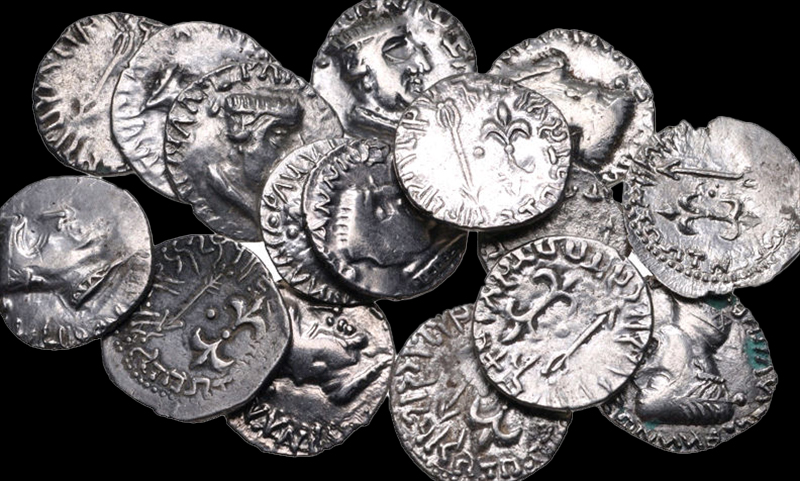
The title given to local governors who administered territories in several parts of north-western, northern, western and central India during the first centuries of the common era. They were administrative feudatories — first of the Indo-Scythian rulers (first century BCE to first century CE) and, later, the Kushan dynasty (first century CE to third century CE) — who enjoyed considerable autonomy over their territories and are documented in several inscriptions and coins from the period. One such dynasty of rulers gained control in parts of northwestern, western and central India from the second to the fourth centuries CE and is known as the Western Kshatrapa dynasty.
More Definitions
Firuz Shah Tughlaq
Firuz Shah Tughlaq (b.1309; d.1388) was a Tughlaq dynasty ruler who reigned over the Sultanate of Delhi from 1351–88 CE.…
Henry Daly
Henry Daly (b. 1823; d. 1895) was a British Indian army officer who served as agent to the Governor General…
Gonandiya
An ancient dynasty from Kashmir that is referred to in the twelfth century CE text Rajatarangini, by the historian Kalhana.…
French East India Company
Founded in 1664 to counter the growing influence of the British and the Dutch East India Companies in global commerce,…
Achyutadeva
Achyutadeva (b. n.d.; d. 1542 CE) was a ruler of the Vijayanagara empire. He was the successor to Krishnadevaraya and…
Tuluva
A dynasty that ruled over the Vijayanagara Empire from 1505 to 1565 CE. It rose to power in 1505, after…
Chola
A medieval dynasty that ruled over areas of present-day Tamil Nadu. The earliest mentions of Chola kings appear in Tamil…
Venkatapatiraya
Venkatapatiraya (b. n.d.; d. 1614) was a ruler of the Aravidu dynasty, the fourth and last dynasty that ruled over…