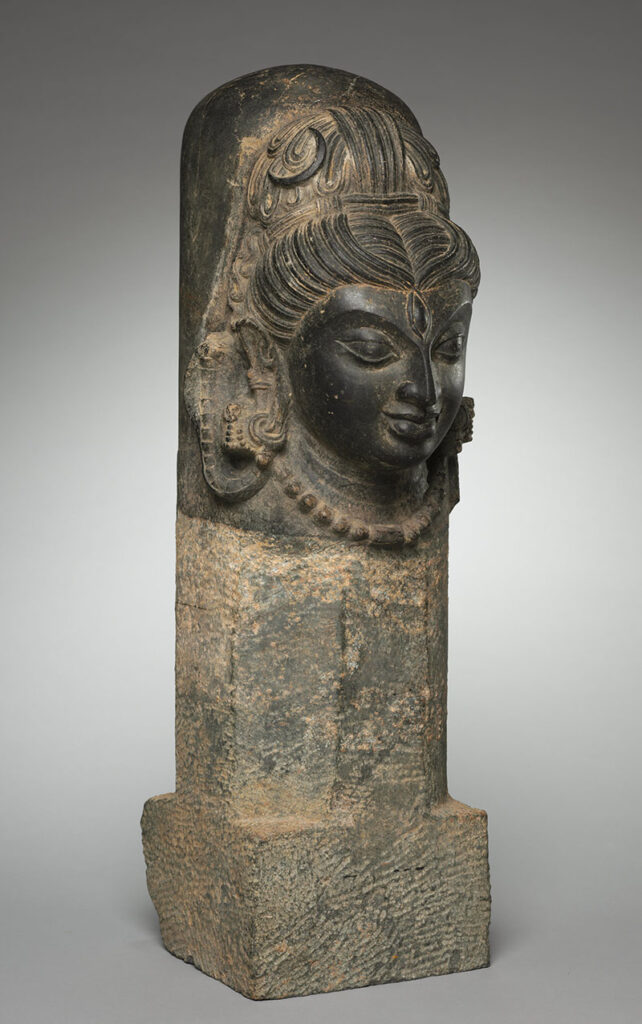
An aniconic representation of the Hindu deity Shiva in the form of a lingam (phallus), representing Shiva as a stambha (pillar) with no beginning or end. According to the Shiva Purana, there are believed to be sixty-four jyotirlinga sites in the Indian subcontinent, which are considered shrines to the deity. Twelve of these, considered the holiest, are known as Maha Jyotirlingam.
More Definitions
Alam
A religious processional object used by the Shi’a community on Ashura, the tenth day of Muharram. It is considered a…
Chandesanugrahamurti
A benevolent form (anugrahamurti) of the Hindu deity Shiva, in which he is depicted bestowing his blessings upon his devotee,…
Kottadi
Commonly found in sari designs of Tamil Nadu, it is a pattern characterised by fine, evenly spaced checks woven into…
Bindu
A circular symbol resembling and implying a point or a dot. It has several meanings in Indian philosophy: while the…
Ardhaparyanka
An asana or posture wherein the figure is depicted half-sitting on one folded leg while the other hangs at an…
Phoda Kumbha
A temple motif common to several sari-weaving traditions of Odisha, it consists of triangular shapes that run along the border…
Chand Tara
A motif which combines visual elements of the moon and the stars, used decoratively in textiles such as banarasi, zari,…
Kataka Hasta
A single-handed mudra or gesture in the South Asian iconographic tradition in which the thumb, middle and ring fingers are…