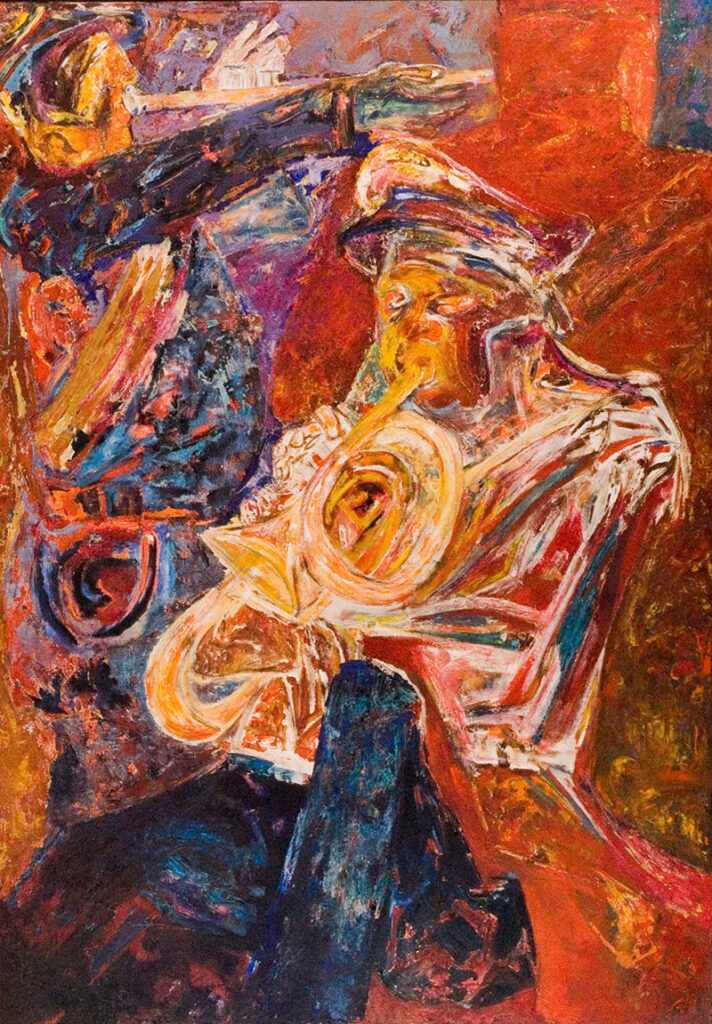
A painting technique in which paint is thickly applied to the canvas, creating a surface texture. This can aid in intensifying the effects of light and shadow or revealing the energetic strokes of the painter. It became prominent in the seventeenth century with Baroque painters such as Rembrandt and Diego Velazquez, and gained popularity throughout the nineteenth and twentieth centuries, exemplified in the works of Vincent Van Gogh and Jackson Pollock.
More Definitions
Assemblage
Art made by assembling disparate elements from everyday or found objects. Assemblages are often associated with movements such as Dadaism,…
Tintype
A photograph made by creating a positive directly on a thin sheet of black-enamelled metal coated with collodion. They were…
Kashikari
Painted and glazed ceramic ware, particularly tiles, common in the Islamic world, typically featuring colourful arabesques, floral and geometric motifs,…
Etching
The process of using a mordant or acid to cut into exposed areas of a metal plate to create raised…
Inlay
An ornamentation technique in sculpture and the decorative arts, where wood, metal, stone and fabric are embedded with different materials…
Talim
An instructional code that translates the designs to be woven in Kani shawls. The code is written on a sheet…
Chandrakali Sari
A type of sari made in Ilkal in Karnataka, India, woven in dyed silk and decorated with embroidery. Traditionally considered…
Screen-Printing
Also known as serigraphy and silk-screen printing, it is a stencil-based technique of printing on a substrate such as paper…