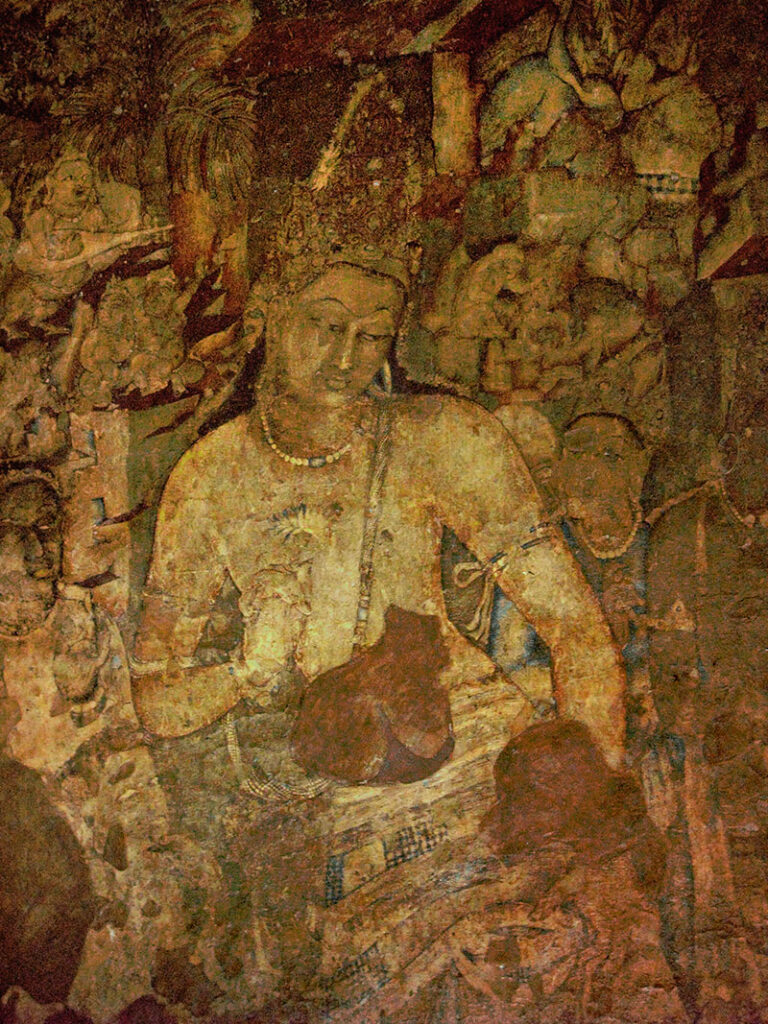
Within the Mahayana tradition of the Buddhist faith, it refers to any figure who has renounced society and is on the path of enlightenment. The term is a combination of sattva, meaning “sentient being,” and bodhi, meaning “enlightenment.” In the Theravada tradition, however, it refers specifically to stories from the life of the Buddha before he achieved enlightenment.
More Definitions
Bhagavad Gita
Section of the Sanskrit epic Mahabharata, composed as a dialogue between the Pandava prince Arjuna and his charioteer and companion…
Bhagirath
The mythical king of the Sagara Dynasty who performed several years of penance in the Himalayas. He is known to…
Ekadasamukha
An epithet for one of Alokiteshwara’s forms, it is Sanskrit for "the one with eleven heads." The tenth face represents…
Purusha
The conception of man according to Hindu philosophy as established in the Vedas and the Upanishads. The purusha is a…
Guru Nanak
The first of the ten Sikh gurus, Guru Nanak (b. 1469, d. 1539) was the founder of Sikhism. Born in…
Kama
In Hinduism, Kama is the god of love and desire. Some of his iconographical attributes are a bow made from…
Thiruvilaiyadal Puranam
A sixteenth-century Tamil text attributed to Paranjothi Munivar, which comprises sixty four stories narrating the miracles of the Hindu deity,…
Siddhayika
In Jaina religious art, a yakshi (nature spirit) who is an attendant of Mahavira, the twenty-fourth Tirthankara. Her iconographical attributes…