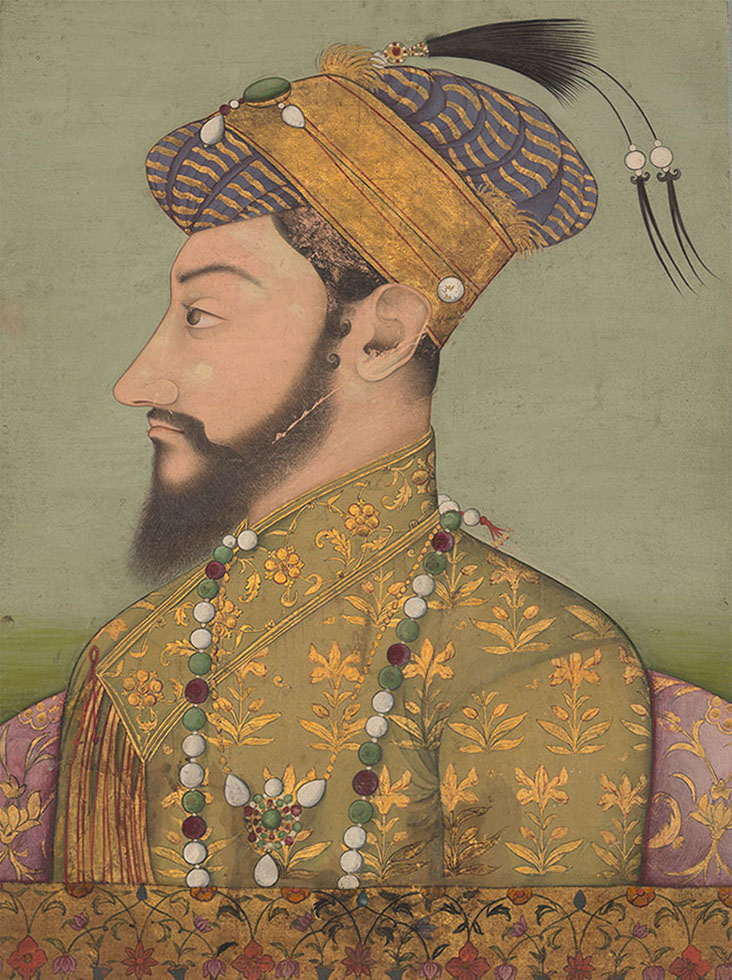
Aurangzeb (b. 1618; d. 1707) was the sixth Mughal emperor of India. He succeeded his father Shah Jahan, and ruled between 1657 and 1707. His reign was marked by extensive territorial expansion, Islamic orthodoxy and cultural austerity. His reign also saw the construction of mosques and memorials such as Moti Masjid in Delhi, Badshahi Mosque in Lahore and Bibi ka Maqbara in Aurangabad.
More Definitions
Jawaharlal Nehru
Jawaharlal Nehru (1889–1964) was a prominent leader of the Indian independence movement and the country’s first prime minister (1947–1964). Born…
Harisena
A ruler of the Vakataka Dynasty who reigned in the late fifth century CE. He and his court are believed…
FO Oertel
Friedrich Oscar Oertel (b.1862; d.1942) was a German engineer and archaeologist best known for his excavations at Sarnath in 1904–05,…
Ahmad Shah Durrani
Ahmad Shah Durrani (b. c. 1722; d. 1772; r. 1747–72) was the first ruler of the Durrani empire and is…
Dantidurga
The founder of the Rashtrakuta kingdom, who reigned between c. 735–c. 756 CE. He patronised the rock-cut architectural cave temples…
Shivani Gupta
Shivani Gupta (b. 1984) is an Indian photographer, dancer and a member of the team behind HH Art Spaces, an…
Sakhawat Hussain Khan
Sakhawat Hussain Khan (b. n.d.; d. n.d.) was an Indian textile craftsman who specialised in creating authentic Balaposh quilts. He…
Jamsetjee Jejeebhoy
Jamsetjee Jejeebhoy (b. 1783; d. 1859) was an Indian businessman and philanthropist from Mumbai. He established the Sir JJ School…