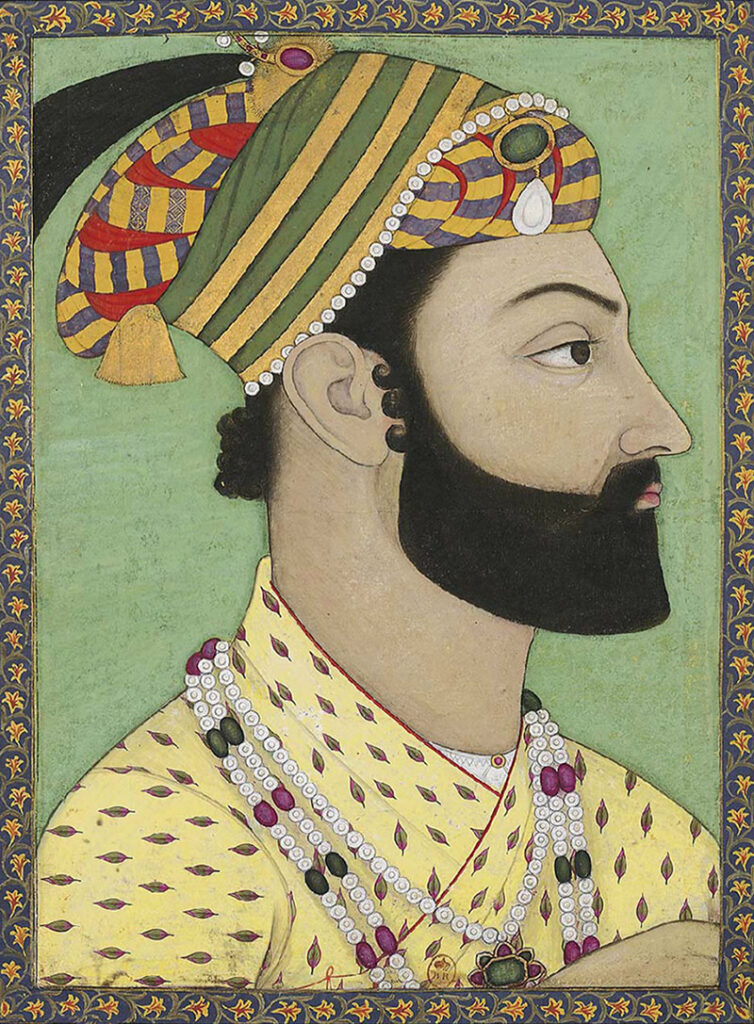
Ahmad Shah Durrani (b. c. 1722; d. 1772; r. 1747–72) was the first ruler of the Durrani empire and is considered the founder of modern-day Afghanistan. A member of the Sadozai clan, he was a hereditary leader of the Abdali tribe and commanded Abdali troops in the army of the Persian ruler Nadir Shah during 1736–47. Following Nadir Shah’s assassination in 1747, he took over sovereign leadership with the support of other Afghan clan chiefs, also taking the royal insignia and the coveted Koh-i-Noor diamond from his predecessor. Having christened himself Shah Durr-i-Durran — ‘King, Pearl of Pearls’ — he went on to establish a kingdom that encompassed present-day Afghanistan and parts of modern-day Iran, Pakistan, Turkmenistan and India, with its capital at Kandahar — where he was finally entombed. His manner of governance drew inspiration from Safavid and Mughal models.
More Definitions
Nina Sabnani
An Indian artist and storyteller who uses film, animation and illustration to tell stories. Her subjects of interest include ethnography…
Andal
Andal, also known as Kotai, was a ninth-century Vaishnava poet-saint active in the region of present-day Tamil Nadu, India. She…
Edgar Thurston
Edgar Thurston (b. 1855; d. 1935) was a British medical officer who contributed to the study of botany, ethnology and…
Muhammad
Muhammad (b. c. 570 CE; d. 632 CE), was the founder of Islam and is considered by Muslims to be…
Jawaharlal Nehru
Jawaharlal Nehru (1889–1964) was a prominent leader of the Indian independence movement and the country’s first prime minister (1947–1964). Born…
Nandivarman
A Pallava ruler who succeeded Permeshvaraverman II and ruled over parts of Tamil Nadu and Andhra Pradesh in the eighth…
Sylvain Levi
Sylvain Levi (b. 1863; d. 1935) was a French orientalist and indologist renowned for his work on Eastern religion, literature…
Chand Bibi
Sultana Chand Bibi (b. 1550; d. 1599) was the acting ruler and regent of the Bijapur Sultanate from 1580–90 and…