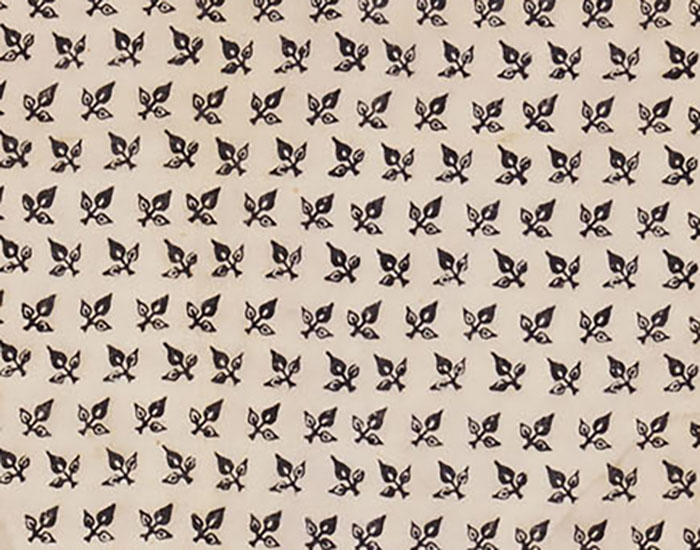
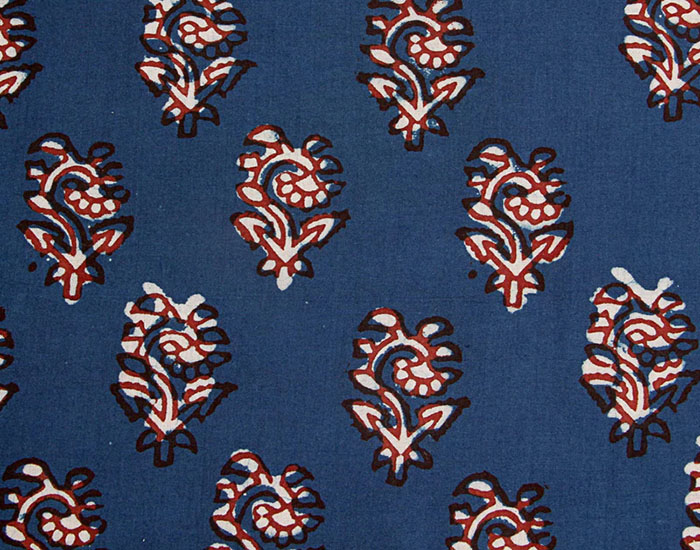
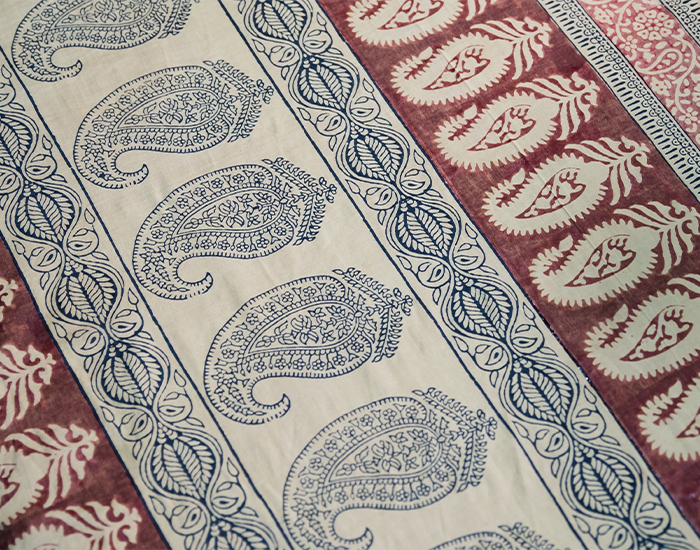
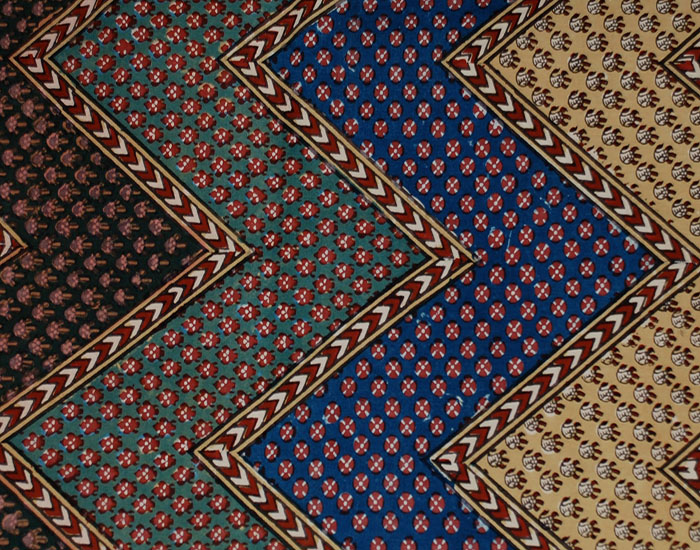
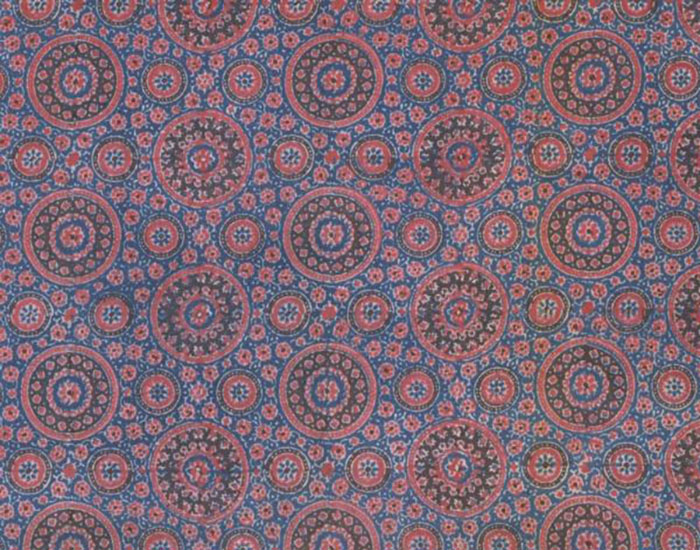
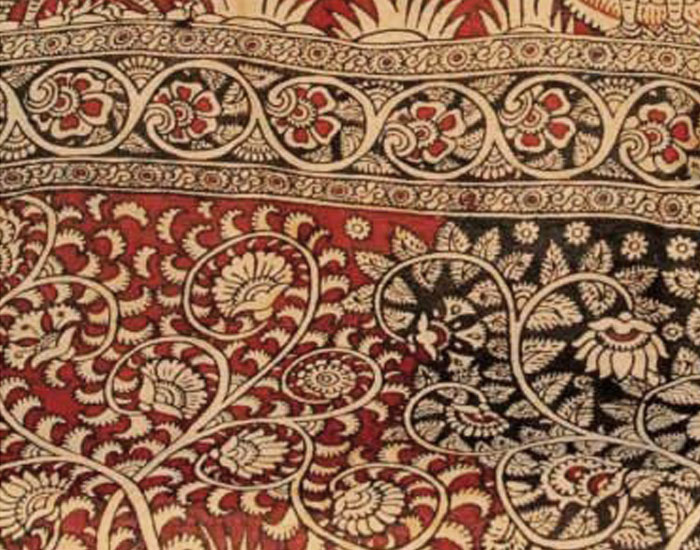
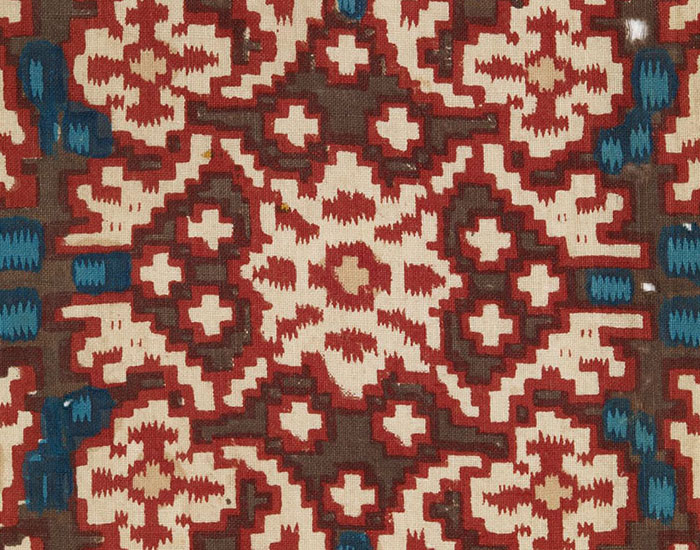
The process of stamping designs on fabric using dye-soaked, hand-carved wooden blocks is known as woodblock printing.
The convenience of combining motifs and intricate patterns on different blocks to create unique designs made the resulting textile affordable and appealing. Some of the more popular block printing traditions include ajrakh, bagh, bagru, sanganeri, saudagiri, mata ni pachedi, namavali and balotra, as well as the less popular traditions of the Chhimba community in Punjab and the more recent printing practices in Serampore of West Bengal.
Although block printing is believed to have been practised in a rudimentary form as early as the Indus Valley civilisation, the earliest material evidence of these textiles and their international trade came from fragments of cloth from Gujarat, found in Egypt and Indonesia, dated to the thirteenth or fourteenth century. The Indian Ocean trade in Indian textiles continued until it was taken over by the British East India Company and the Crown in the nineteenth century.
While several Indian communities practise the craft, the Khatris and Chippas in the country’s northwestern regions are the oldest known communities to have been continuously involved in block printing, going back as far as the sixteenth century.