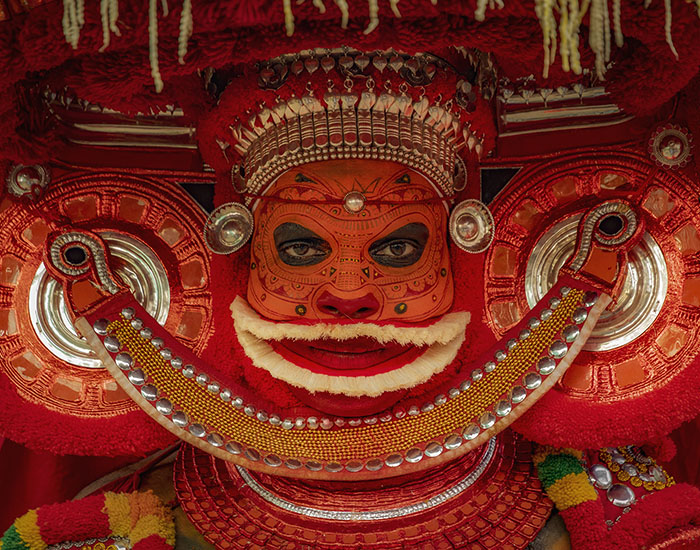
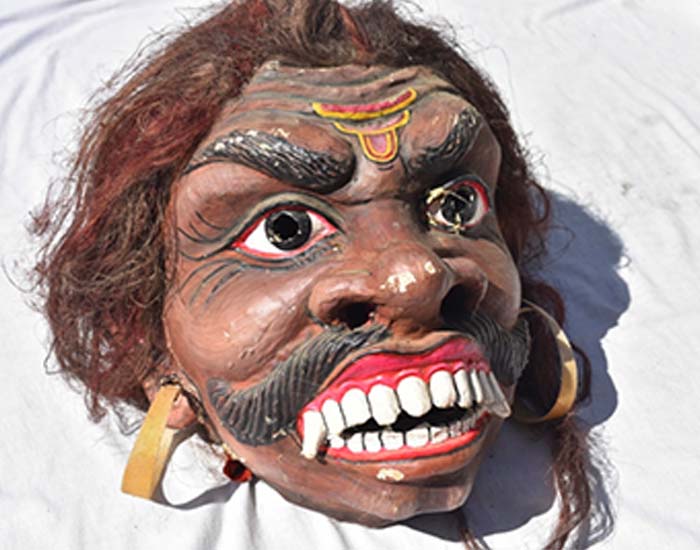
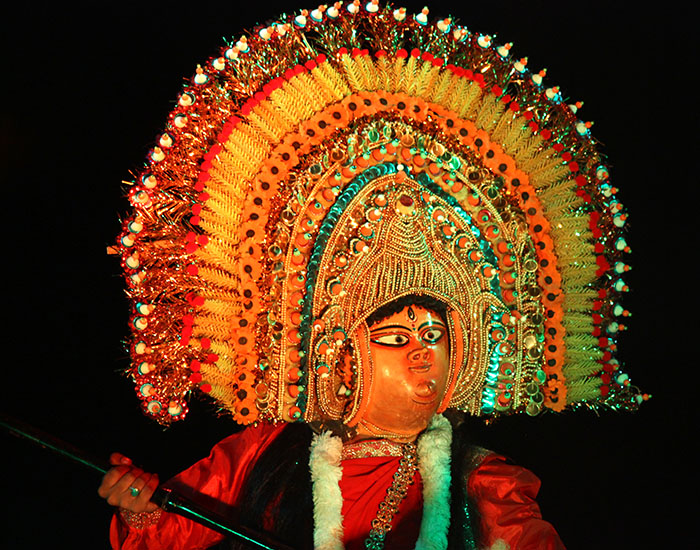
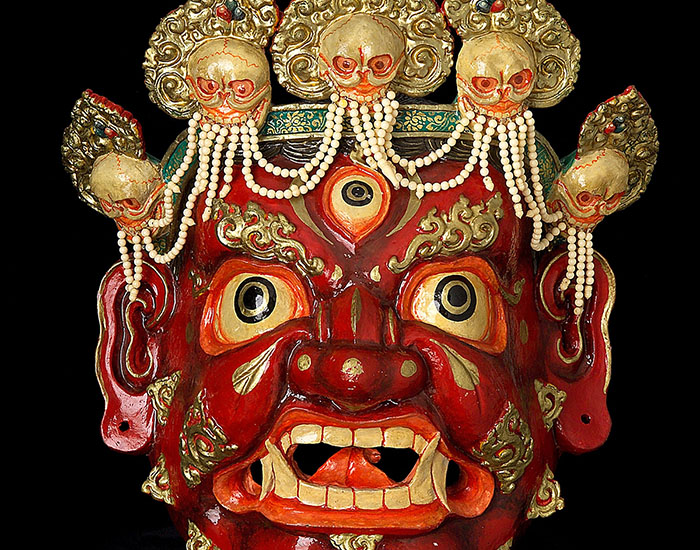
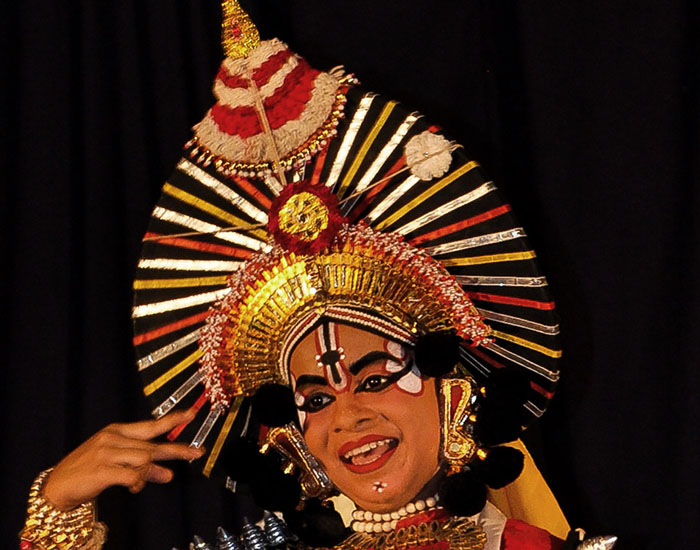
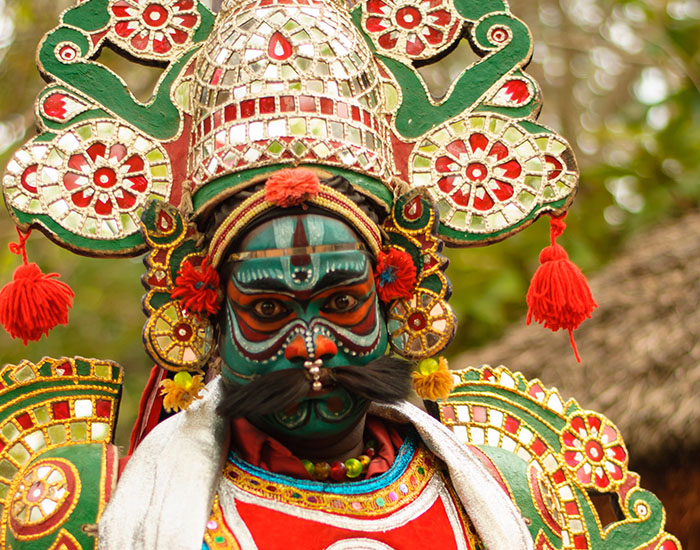
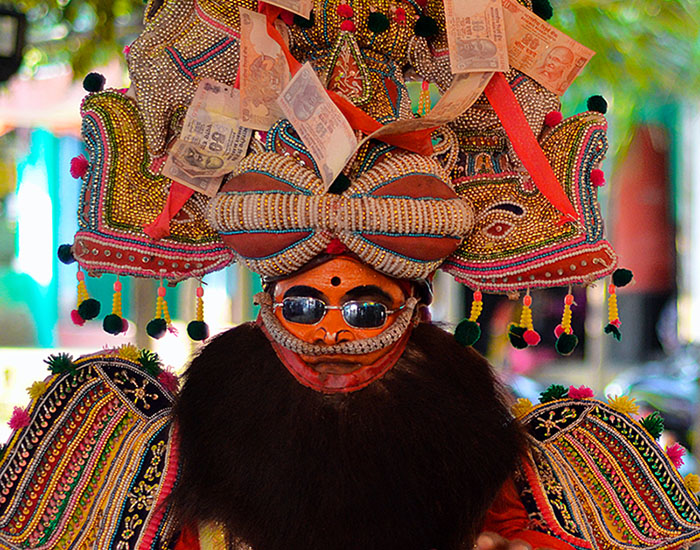
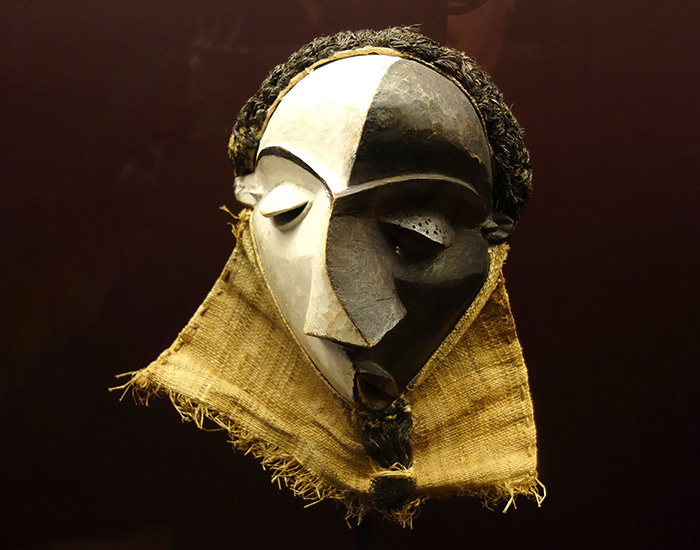
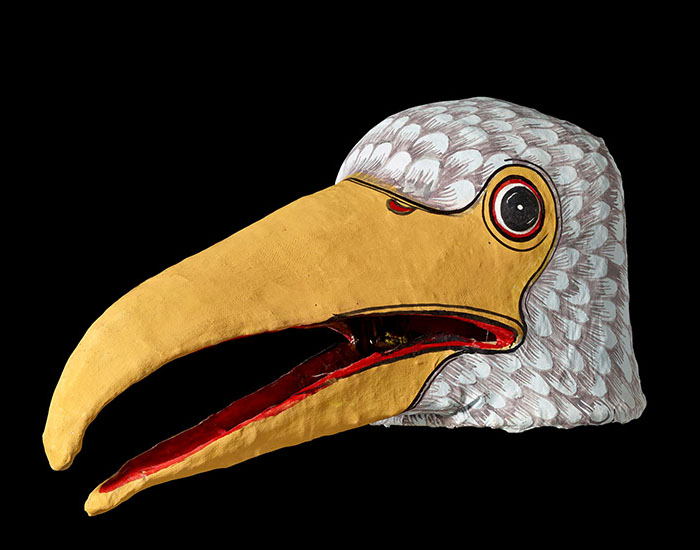
Indian mask-making traditions are typically practised by specific non-dominant castes or Adivasi communities. They are worn as part of a costume in a range of traditional performances from martial arts like Chhau to narrative dance forms like Kathakali. In most dance or theatre forms, masks are used as a way of maintaining iconographical consistency regardless of the performer, while in others, such as Cham and Bhagavata Mela Natakam, the mask is also a way to channel a supernatural entity. In a few traditions, the mask is also considered a sacred object, such as the Bhuta mask or the Narasimha mask used in Prahlad Nataka performances.
Most Indian masks are made of perishable materials like paper pulp or wood, and as a result, surviving historical examples are rare and much more recent than the performances in which they are used. In some cases, such as Kathakali, the mask is actually a thick and vivid layer of make-up that effectively replaces the performer’s face. Exceptions to this perishability include bronze Bhuta masks, examples of which date back to the eighteenth century.
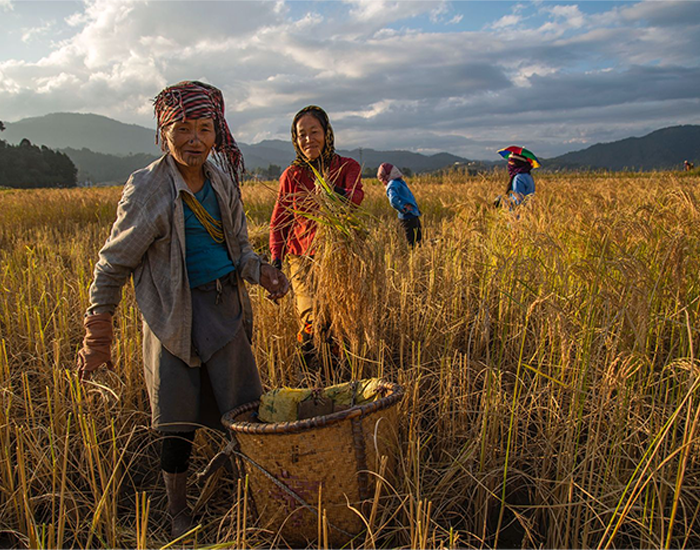
Mask-making, like many Adivasi and folk traditions, is typically inherited and is less frequently practised today due to insufficient commercial incentives.