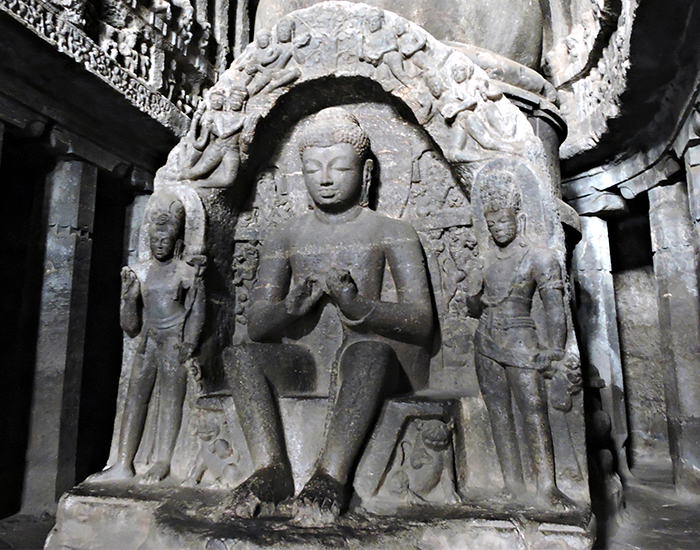
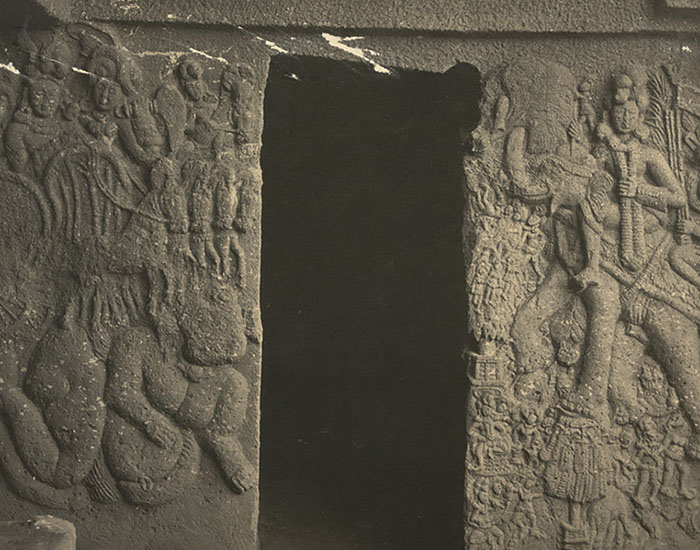
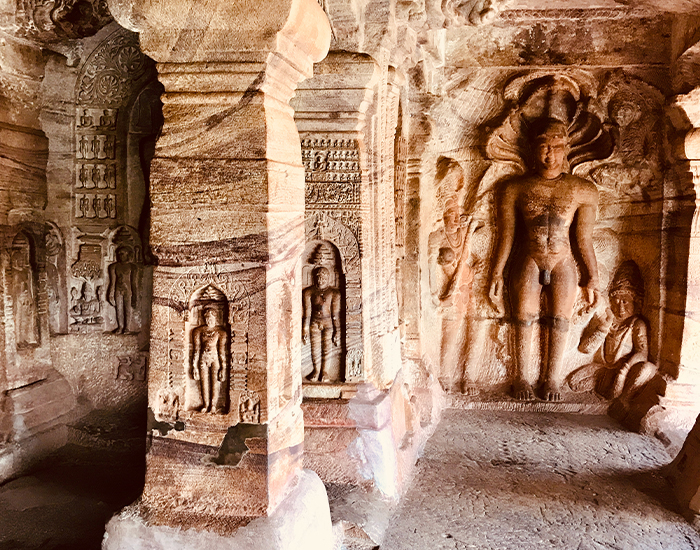
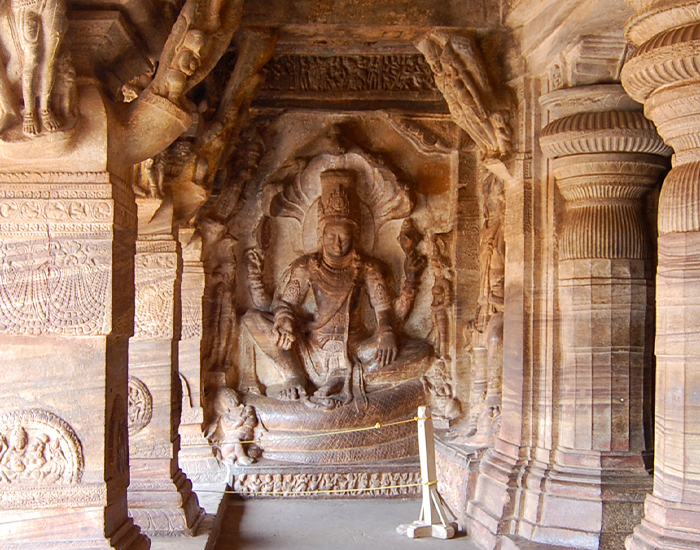
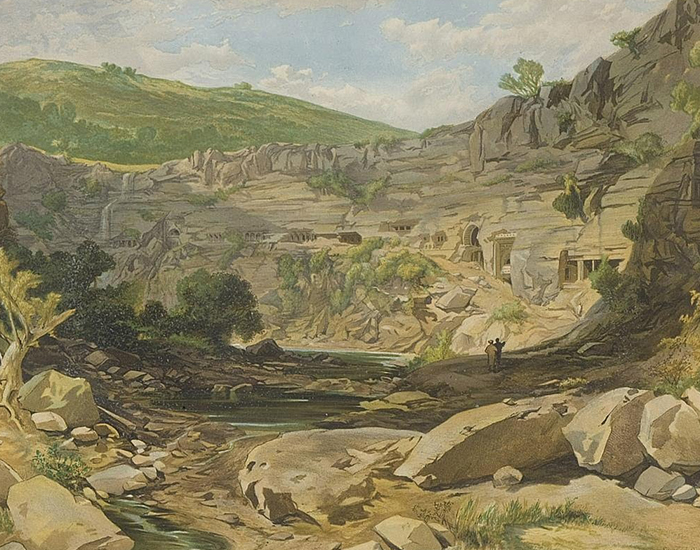
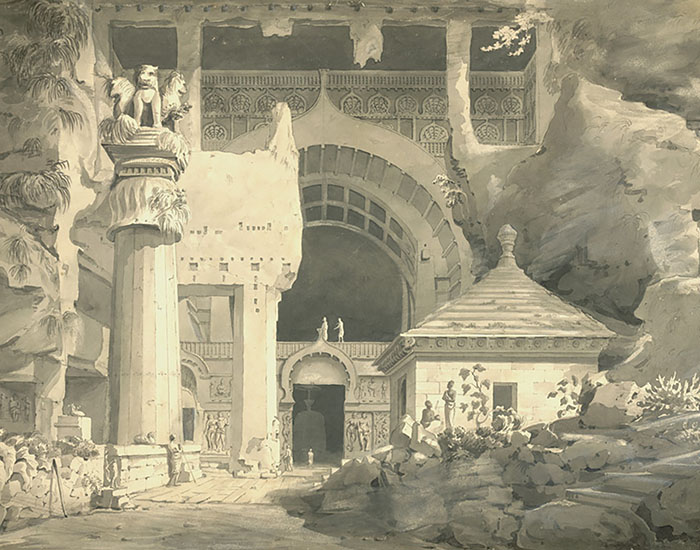
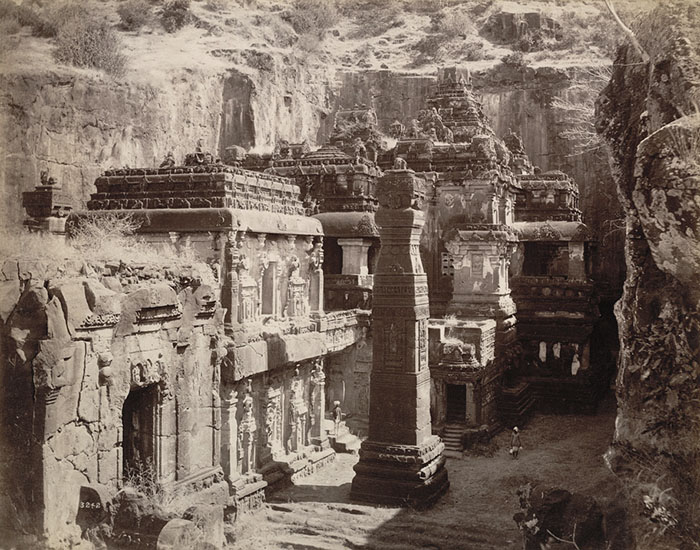
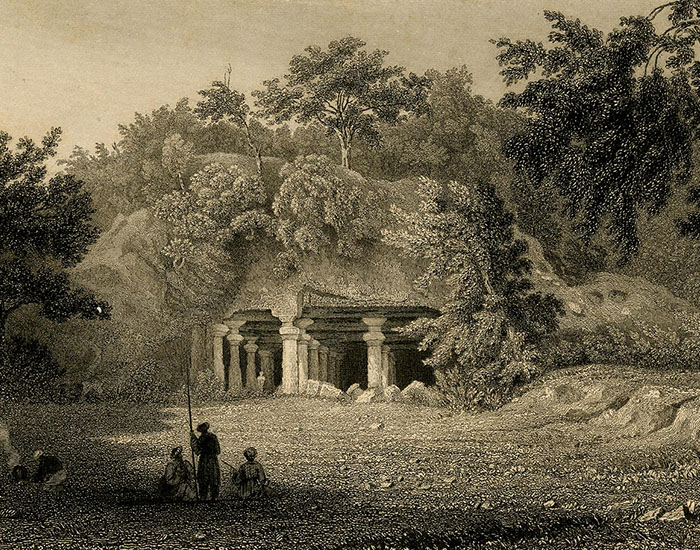
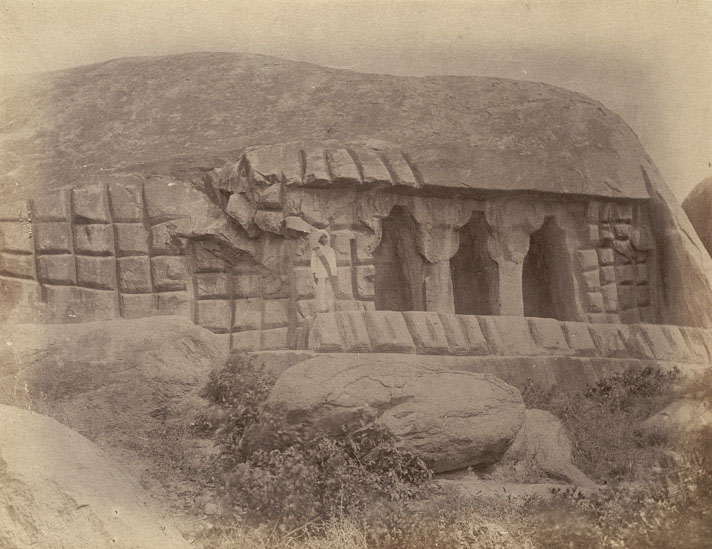
Between the third century BCE and the tenth century CE, various imperial dynasties in the Indian peninsula carved enormous yet intricate temples and monasteries into the volcanic flood basalt of the Deccan plateau and the Western Ghats. Excavated into cliff-sides and ravines are Buddhist viharas, Jain prayer halls and Hindu temples that shaped Deccan architectural vocabulary. The legacy of master artisans and powerful patrons, among them are some of the finest works of religious art, and marvels of architecture and engineering including a sprawling complex hosting the world’s largest monolithic rock-cut monument.
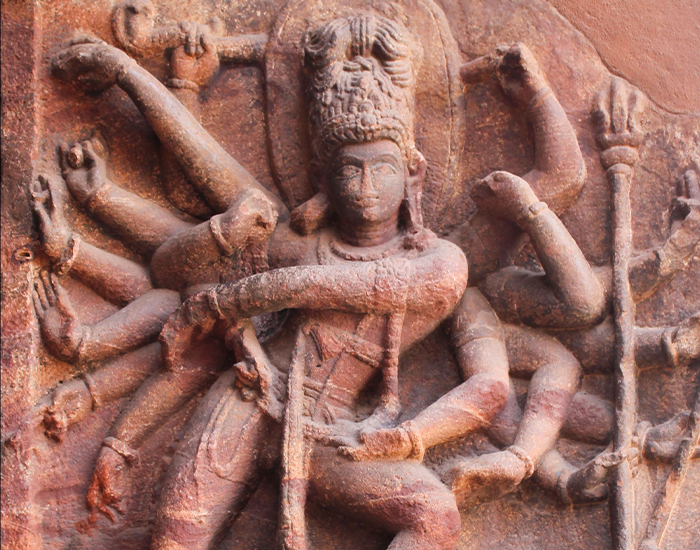
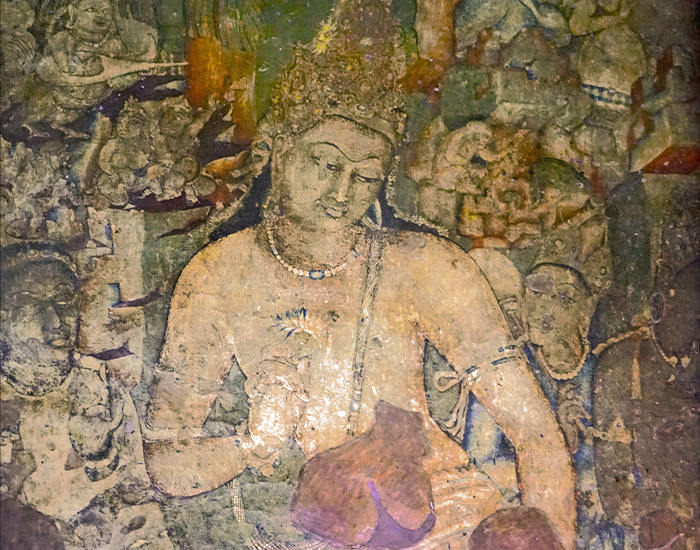
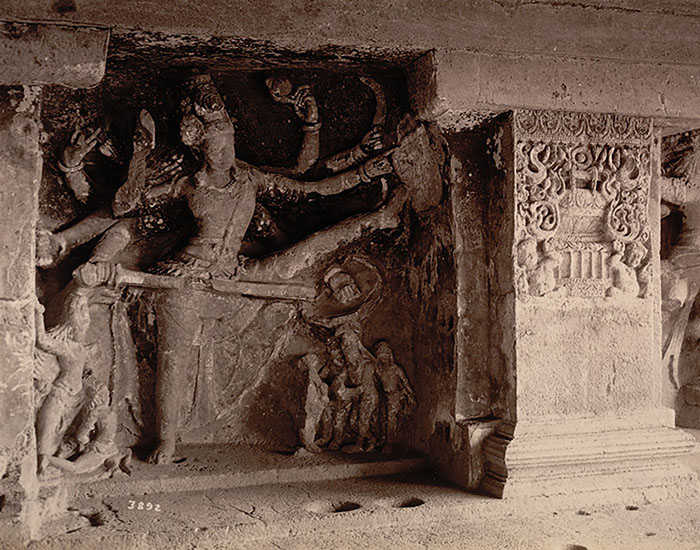
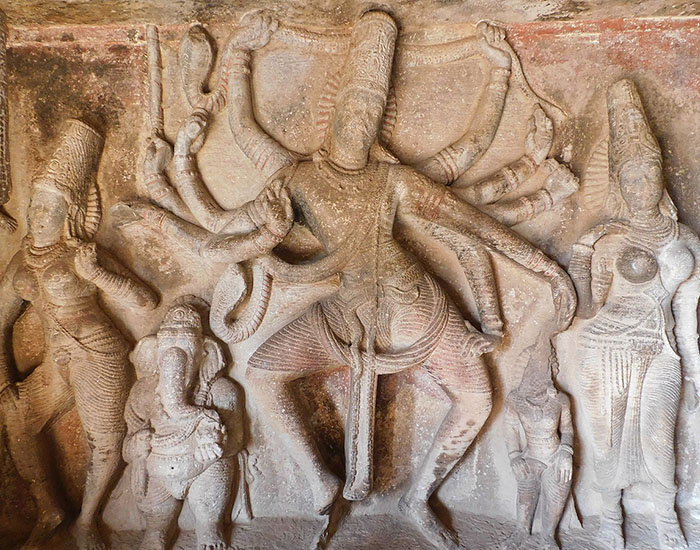
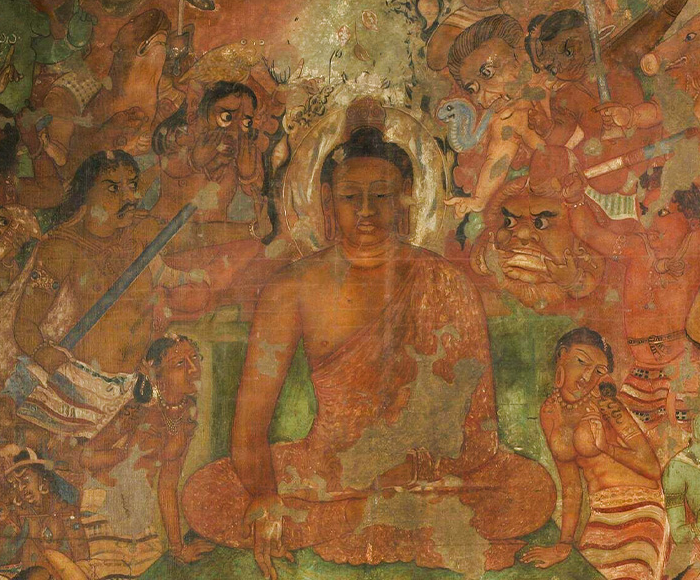
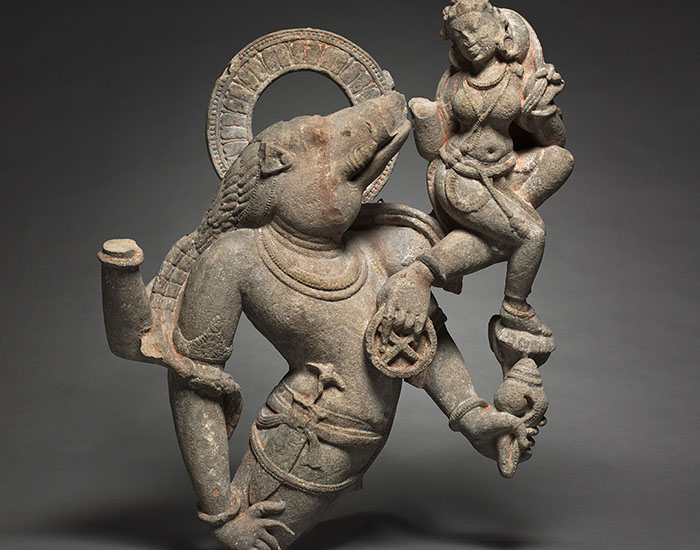
These structures are remarkable not only for their size, architecture and sculptural programmes but also for the interplay of styles and iconography they contain. Stories from the Hindu Puranas and Upanishads merge with Buddhist Jatakas and Jain mythologies in carved friezes and murals at Badami, Ravanaphadi and Ajanta. Deities from across traditions stand alongside each other in the Ellora Caves, some contemporaneous, others the result of shifting powers over time. Changing political ascendancy between dynasties also brought about the conversion of some shrines, such as the Dashavatara Cave, thought to have originally been excavated as a Buddhist shrine before the Rashtrakutas rendered it in Shaiva imagery; as well as the appropriation of the gods of the defeated — the Chalukyas‘ depiction of the Saptamatrikas, their rival Kadambas’ dynastic deities, at the Ravanaphadi Cave is thought to be an example.
The iconography, inscriptions and layering of styles in these monuments also reveals the migrations and influences of a mobile and multicultural community of artisans — expert miners, sculptors, metalworkers and others. Gupta artisans crossed the breadth of the country from northern and eastern India to execute the murals and sculptures at Ajanta; the Rashtrakutas drew Pallava sculptors from the southeastern part of the peninsula for their building programmes at Ellora.
Take a look inside these rock-cut complexes to discover the interwoven religious, political and artistic histories of first-millennium India.