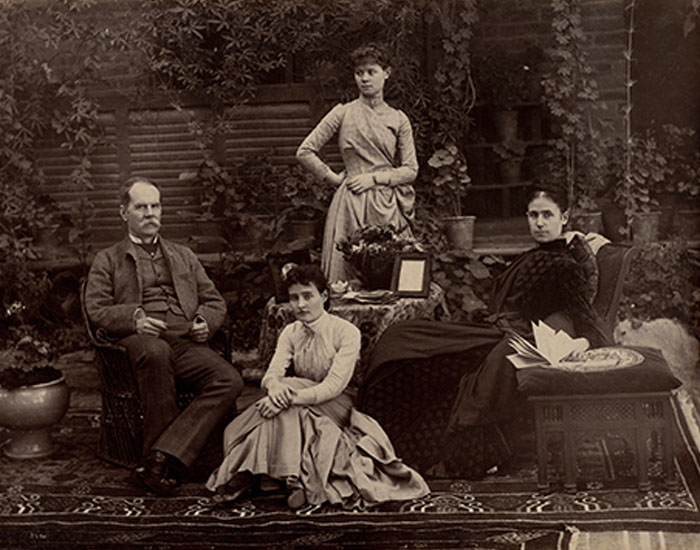
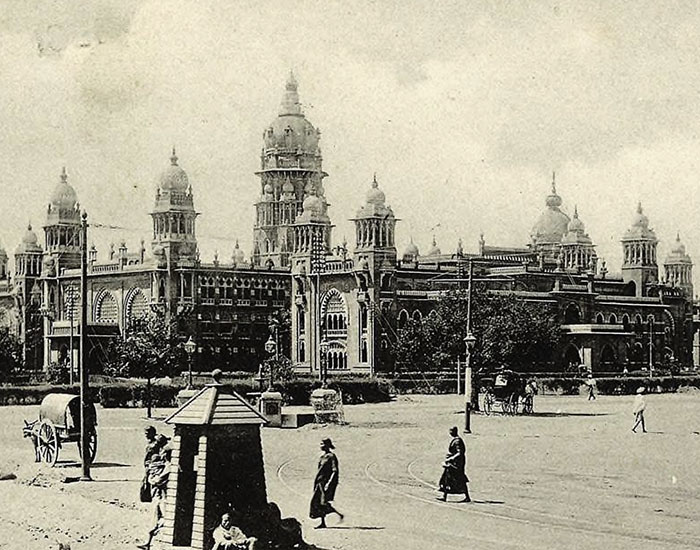
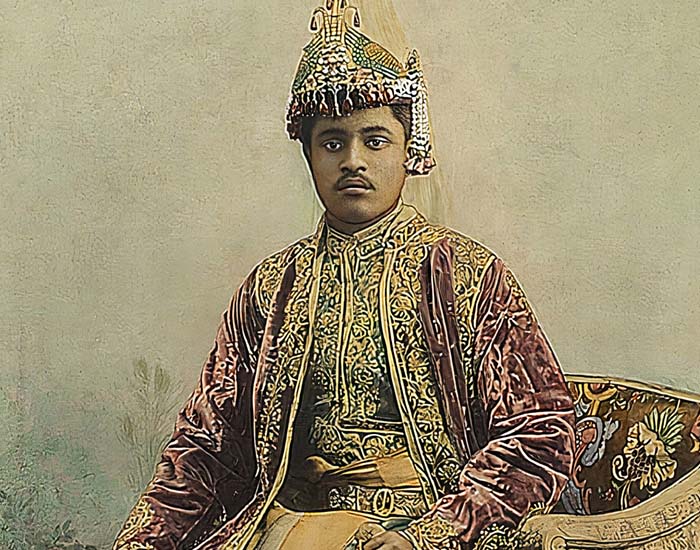
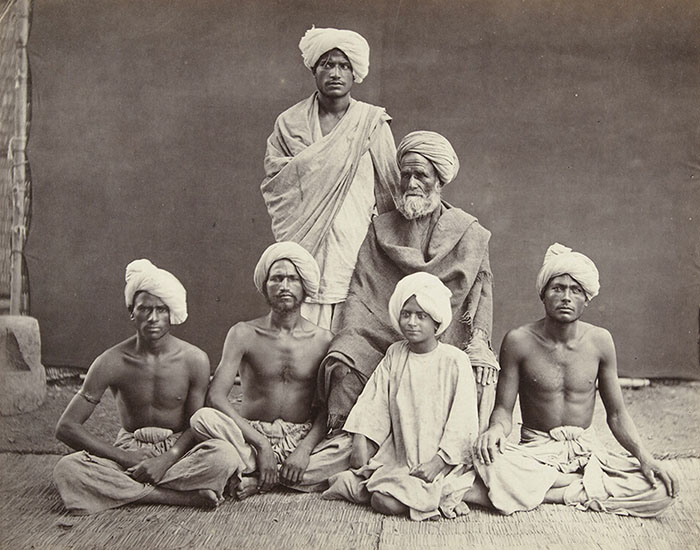
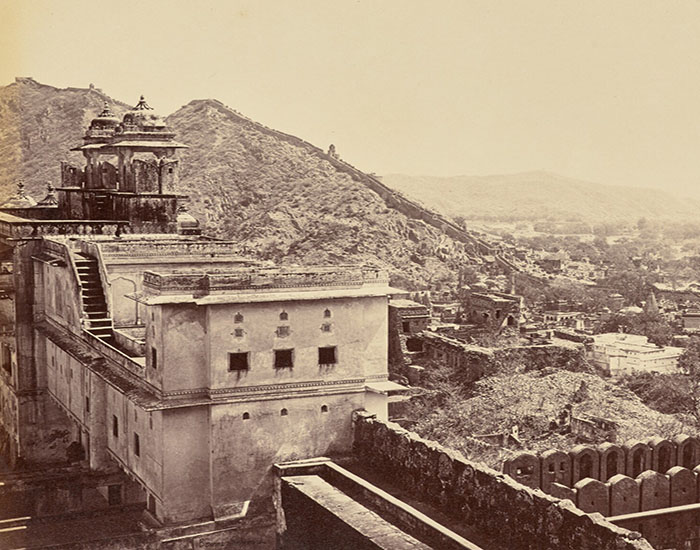
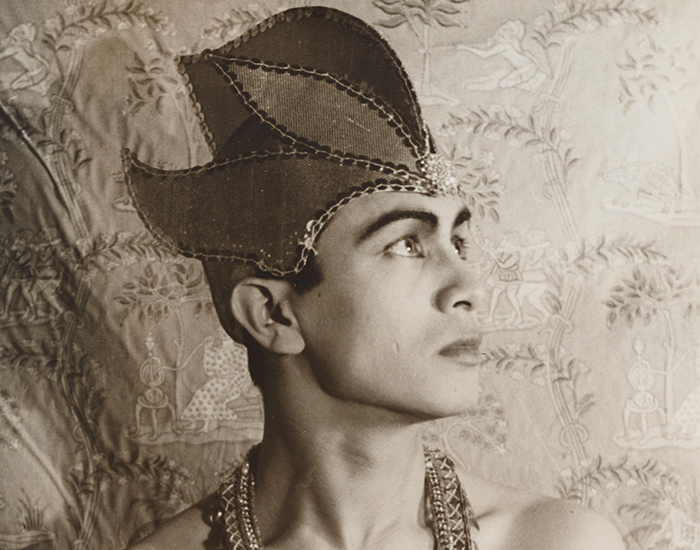
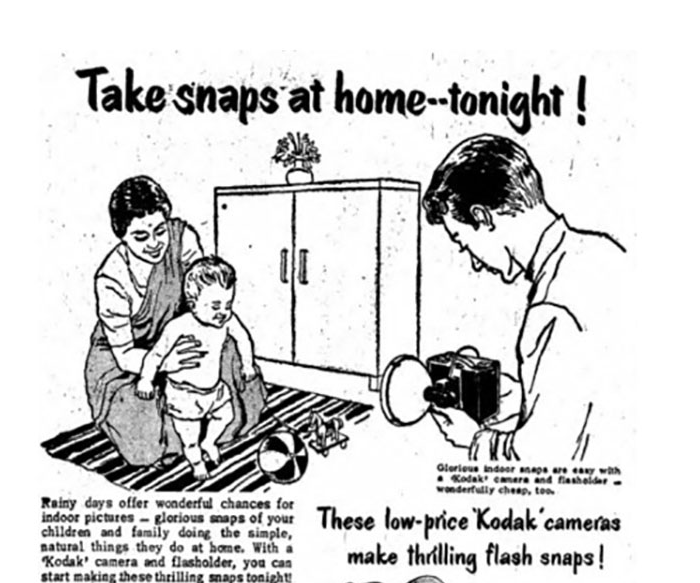
Introduced to India in the mid-nineteenth century by British officers, photography was meant to aid in anthropological and administrative surveys of the population. The practice acquired a commercial dimension through the emergence of photography studios, which were not obliged to fulfil colonial directives and could become a site of aesthetic possibilities. The lone travelling photographer and his limited equipment were soon replaced by purpose-built studios strategically situated in major cities, to better cater to British clientele and Indian royal families. Some grew into franchises that spanned multiple locations across the subcontinent.
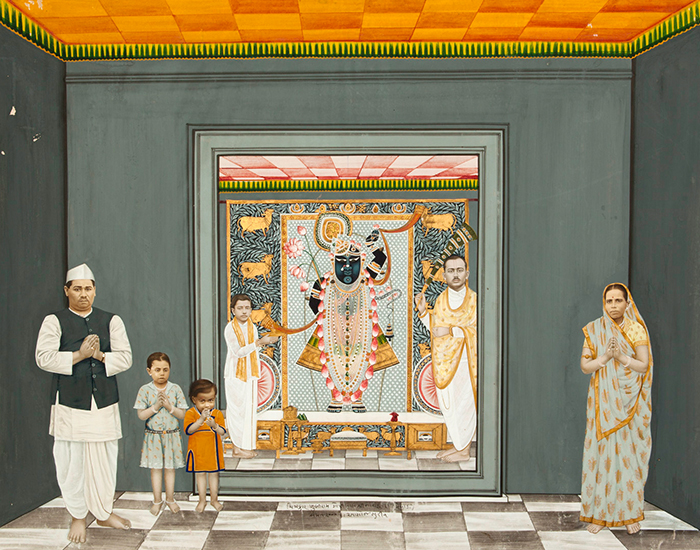
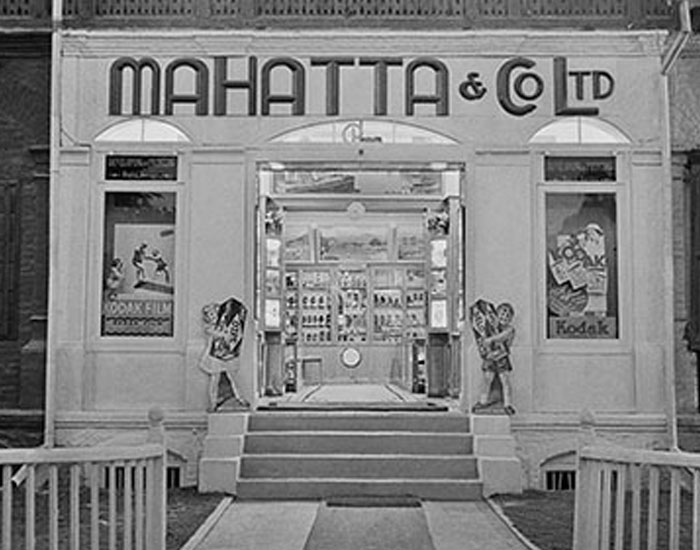
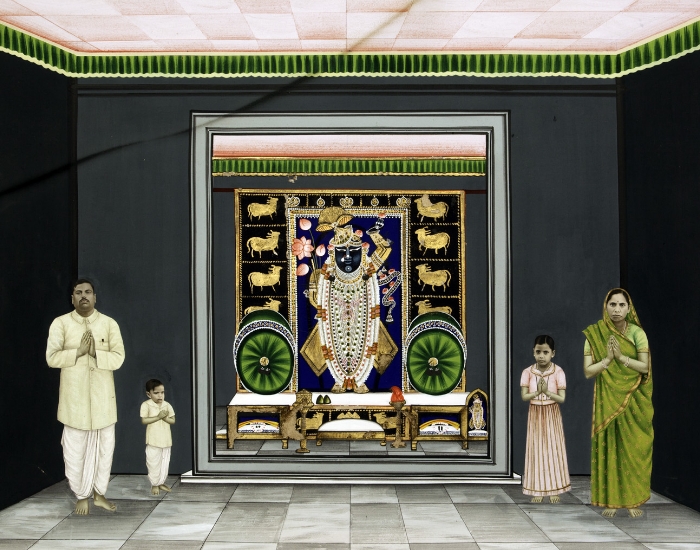
The earliest photography studios in India were run by Europeans, who weren’t affiliated with the East India Company, such as F Schranhofer and Augustus G Roussac in 1849 and 1850 respectively. Soon after, British studios like Bourne & Shepherd, established in 1863, attained significant commercial success. This system of photography was adopted and perfected by Indian studios like Deen Dayal & Sons, established in 1874. Later Indian photography firms were notable for their innovations with the medium as well as the space, such as Mahatta & Co which started its studio on a houseboat, and the combination of painting and photography practised by Khubiram Gopilal in Nathdwara.