-
ChicagoImpart Encyclopedia of Art. "Seated Buddha, Vishvakarma Cave, Ellora." November 16, 2023. https://imp-art.org/articles/seated-buddha-vishvakarma-cave-ellora/.
-
MLA"Seated Buddha, Vishvakarma Cave, Ellora." Impart Encyclopedia of Art, Nov. 16, 2023, https://imp-art.org/articles/seated-buddha-vishvakarma-cave-ellora/.
-
HarvardImpart Encyclopedia of Art (2023) Seated Buddha, Vishvakarma Cave, Ellora. Available at: https://imp-art.org/articles/seated-buddha-vishvakarma-cave-ellora/ (Accessed: 3 March 2026).
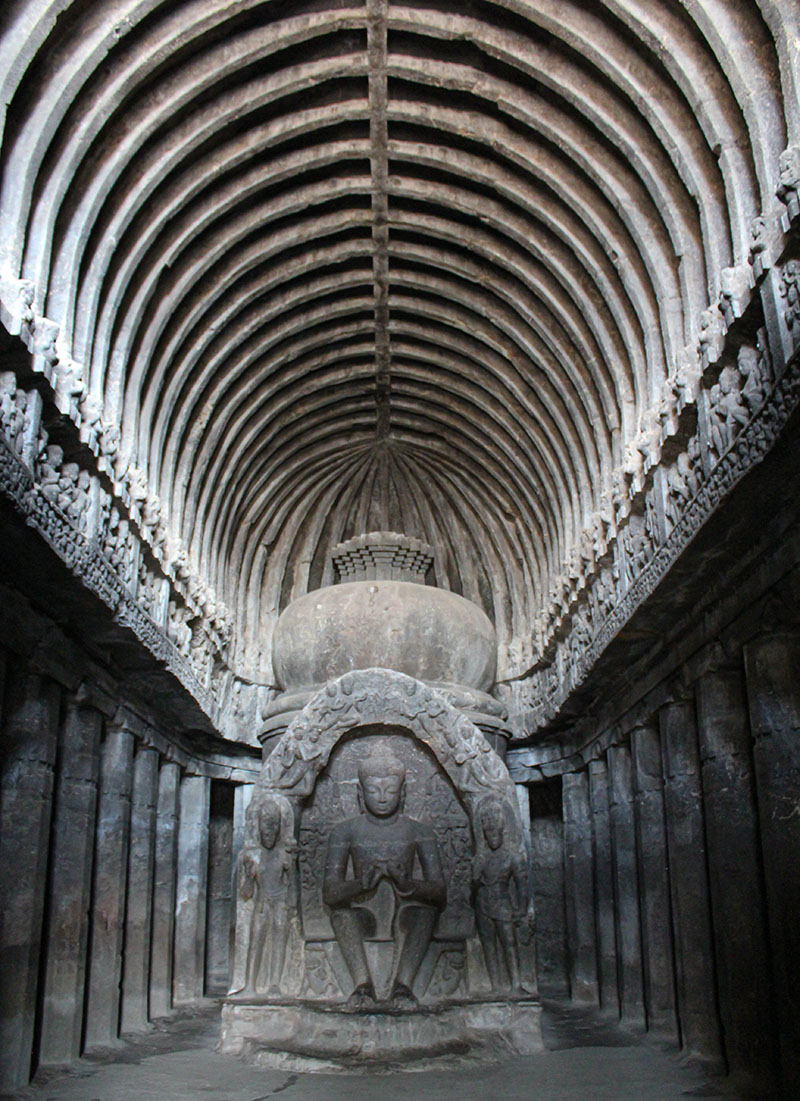
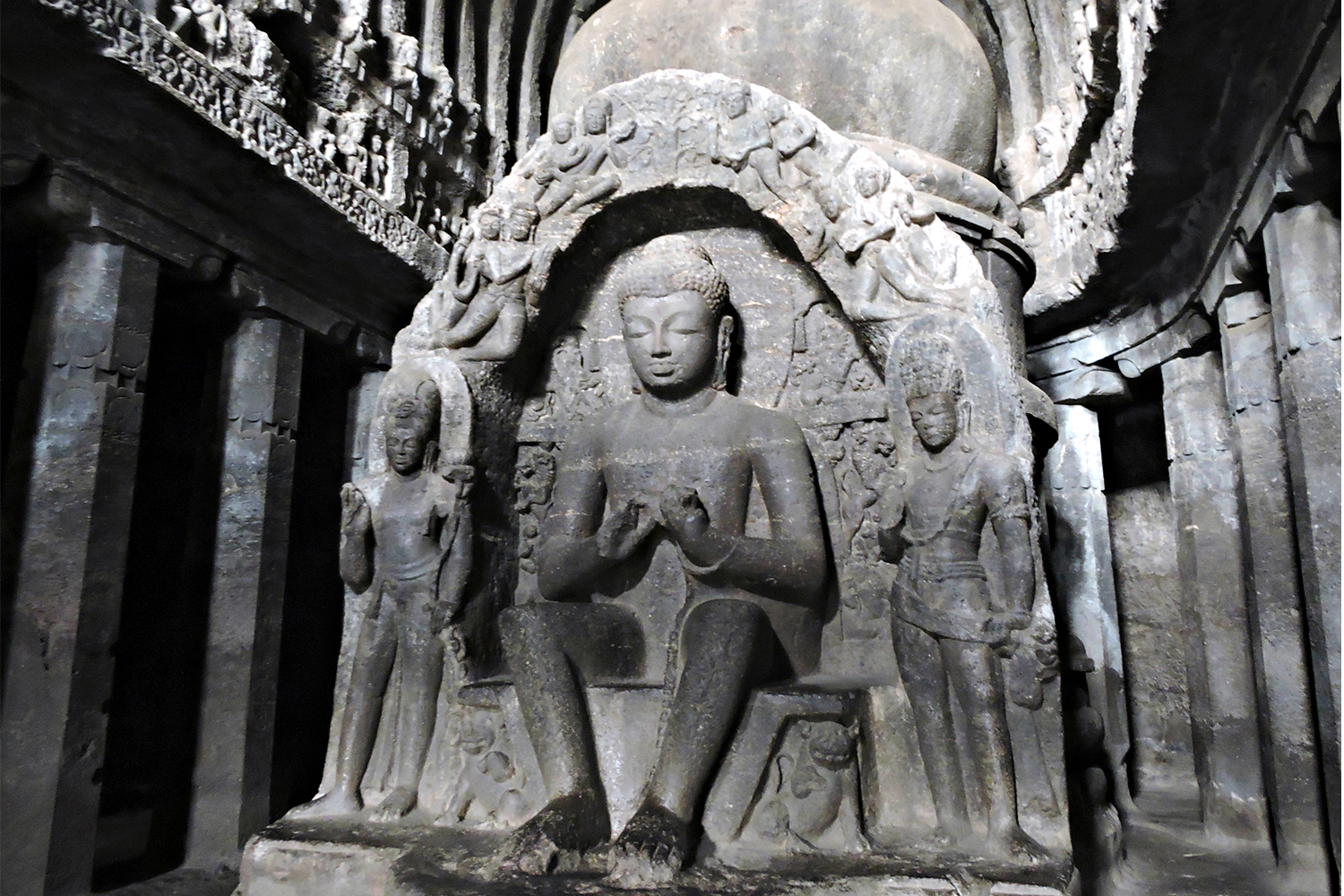
A fifteen-foot-tall sculpture, the figure of the Buddha, with his attendants, is carved in front of a votive stupa in the Vishvakarma Cave, or Cave 10, at Ellora. The statue and the cave have been dated to the seventh century CE.
The sculpture appears at the end of the apsidal hall, in front of its rounded apse. The Buddha is shown seated on a throne-like chair with his feet touching the ground, an uncommon sight, as he is typically depicted seated in the padmasana posture. He may possibly be forming the vyakhyana mudra with his hands, although this is unclear as the fingers have been damaged. The Buddha’s head is surrounded by a circular halo, carved in low relief on the oval stone slab backing the sculpture. The figure is surrounded by mythical creatures, most prominently lions. Carved in high relief along the arch that surrounds the Buddha are floating vidyadharas, who appear to be moving towards the low relief image of the Bodhi tree at the top. Two standing bodhisattvas flank the Buddha on either side, with the one on the left possibly being Avalokiteshvara. The votive stupa behind the sculpture may have been donated by a visiting king or some other high-ranking pilgrim, as such votive shrines and stupas had become favoured offerings by the seventh century CE in the subcontinent.
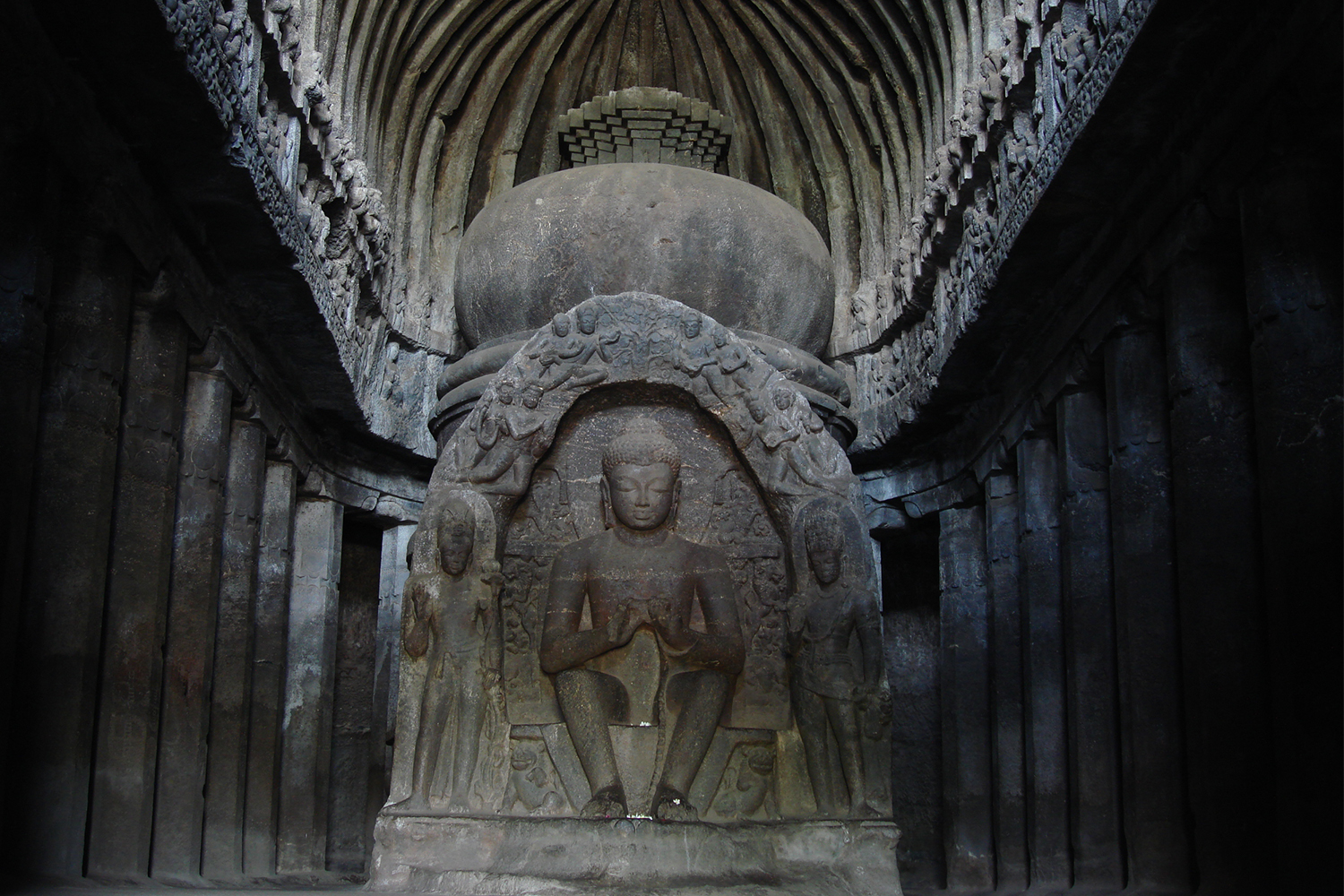
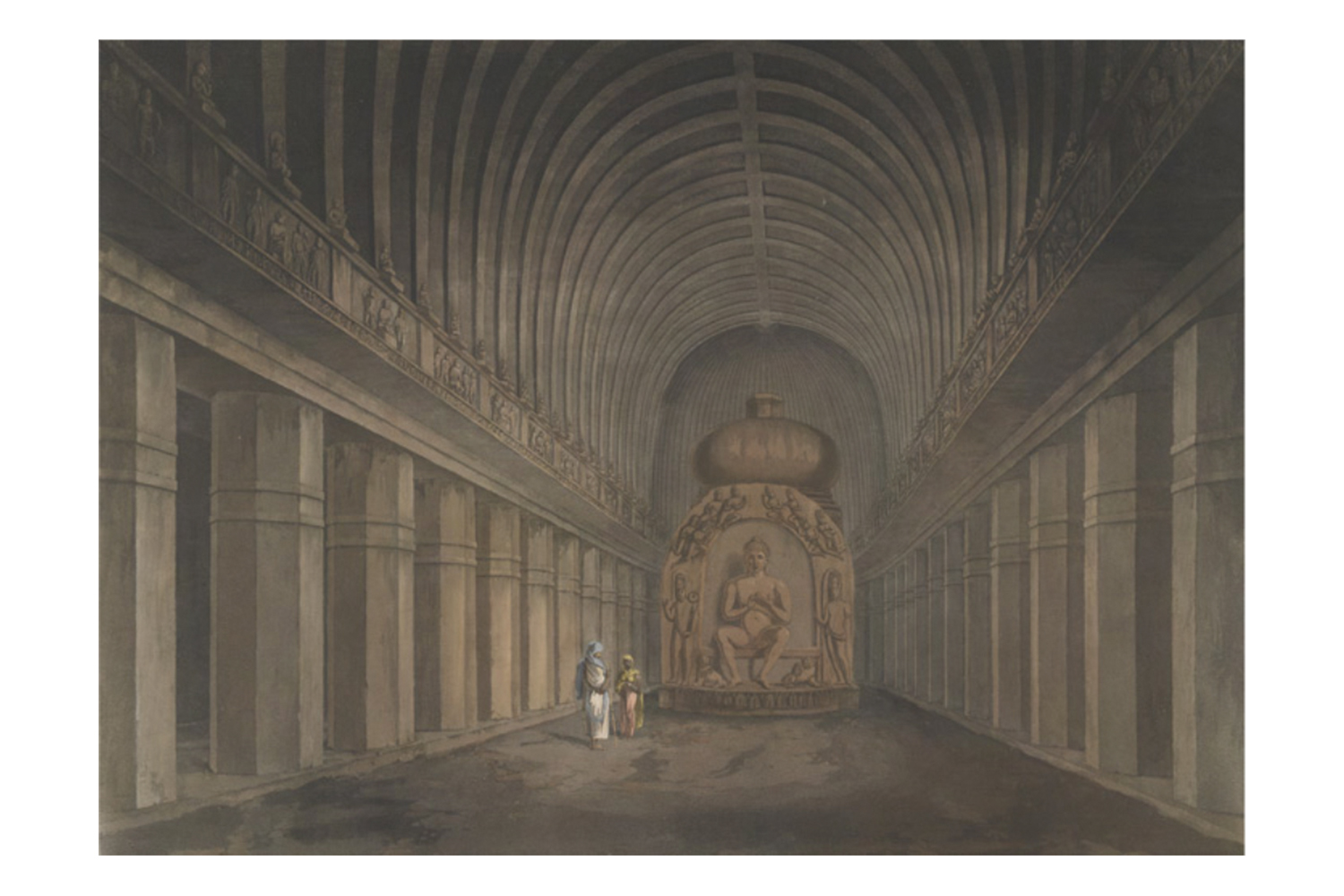
Named after the divine architect of gods, the Vishvakarma Cave was carved in the Kalachuri idiom of architecture. It is the only chaitya hall amongst the Buddhist caves at Ellora and imitates wood-based architecture, especially through its ribbed, barrel-vaulted ceiling which resembles wooden beams. Visitors can approach the sculpture through the central nave which is lined by twenty eight octagonal pillars on the sides. The pillars have plain capitals and a frieze featuring ganas above them. The stupa, behind the Buddha, is positioned at the centre of the nave and extends to cover almost the entire height of the main hall.
First published: 16 November 2023
Image Gallery
Bibliography
“ASI Discovers Two 1200-Year-Old Miniature Stupas At Nalanda.” Outlook. January 12, 2023. Accessed January 13, 2023. https://www.outlookindia.com/national/asi-discovers-two-1200-year-old-miniature-stupas-at-nalanda-news-253066.
“Interior Sootar [Visvakarma] cave [Ellora].” British Library. Accessed January 13, 2023. https://www.bl.uk/onlinegallery/onlineex/apac/photocoll/i/019pho000430s35u00008000.html.
Owen, Lisa N. “The multireligious caves at Ellora.” Smarthistory. July 29, 2021. Accessed January 16, 2023, https://smarthistory.org/the-multireligious-caves-at-ellora/.
Poduval, Jayaram. “The Architecture of Ellora Caves.” Sahapedia. November 12, 2018. Accessed January 13, 2023. https://www.sahapedia.org/the-architecture-of-ellora-caves
“Vignettes of Ajanta & Ellora: Where time and place stand still.” Google Arts & Culture. Accessed January 13, 2023. https://artsandculture.google.com/story/vignettes-of-ajanta-ellora-archaeological-survey-of-india/HQVhGmGkIycnKA?hl=en
Feedback