-
ChicagoImpart Encyclopedia of Art. "Kowdhi Quilts." April 21, 2022. https://imp-art.org/articles/kowdhi-quilts/.
-
MLA"Kowdhi Quilts." Impart Encyclopedia of Art, Apr. 21, 2022, https://imp-art.org/articles/kowdhi-quilts/.
-
HarvardImpart Encyclopedia of Art (2022) Kowdhi Quilts. Available at: https://imp-art.org/articles/kowdhi-quilts/ (Accessed: 3 March 2026).
A patchwork quilting tradition practised by women in northern Karnataka for household use. Kowdhi, variously spelled kaudi, koudi and kowdi, is made by reusing old cloth, typically a mix of printed and plain pieces. The composition of the patchwork and other aesthetic decisions are left entirely to the artisan. These quilts are sometimes gifted to a bride on her wedding day by her mother.
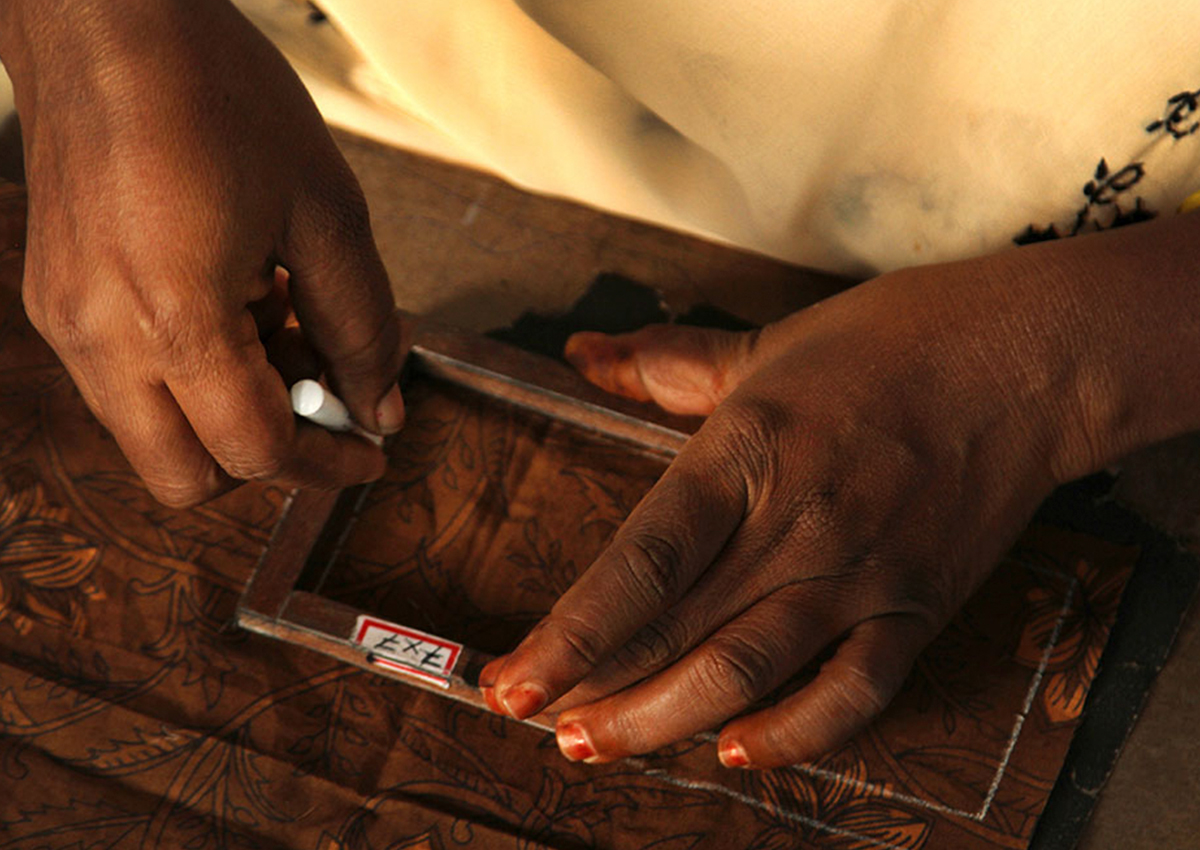
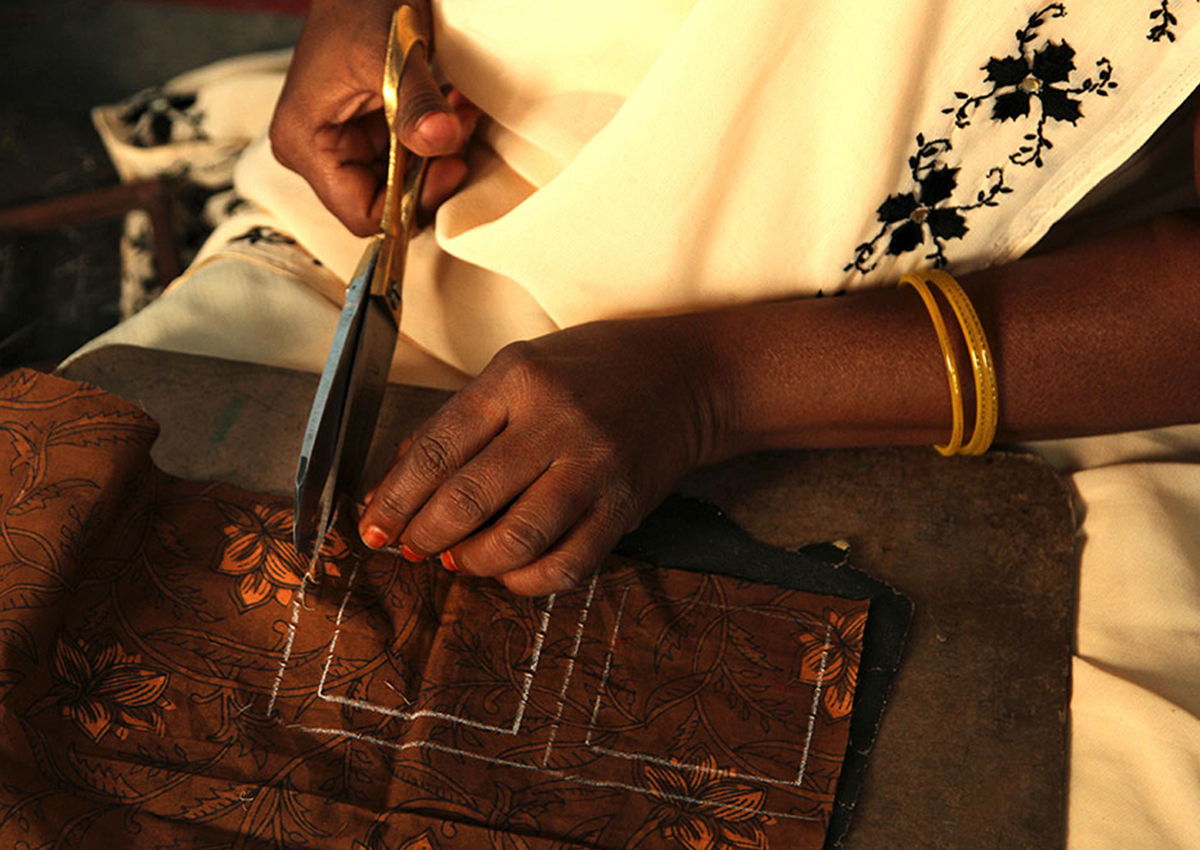
The cloth used in kowdhi quilts is sourced from old clothing, and to a lesser extent from the waste cloth discarded by tailors. Such waste scraps are washed repeatedly to remove excess dye and to make them as soft as old worn cloth. The artisan then uses a pencil and wooden frames to trace outlines of regular geometric shapes onto each piece of fabric. These shapes are cut out of the fabric and sewn together with a single, unbroken thread in a running stitch to form the top layer of the quilt. The middle layer is usually a polyester batting (or filling) to ensure that the quilt is warm. The bottom layer is a cotton sheet whose pattern or colour is chosen to compliment the patchwork on top. All three layers are sewn together in a grid pattern, first with large loose stitches to temporarily hold the cloth in place, and then with short, firm stitches along the patchwork pattern of the top layer. The final stage involves stitching the edges together, either by hemming them in or closing the edges with additional strips of fabric and sewing them down.
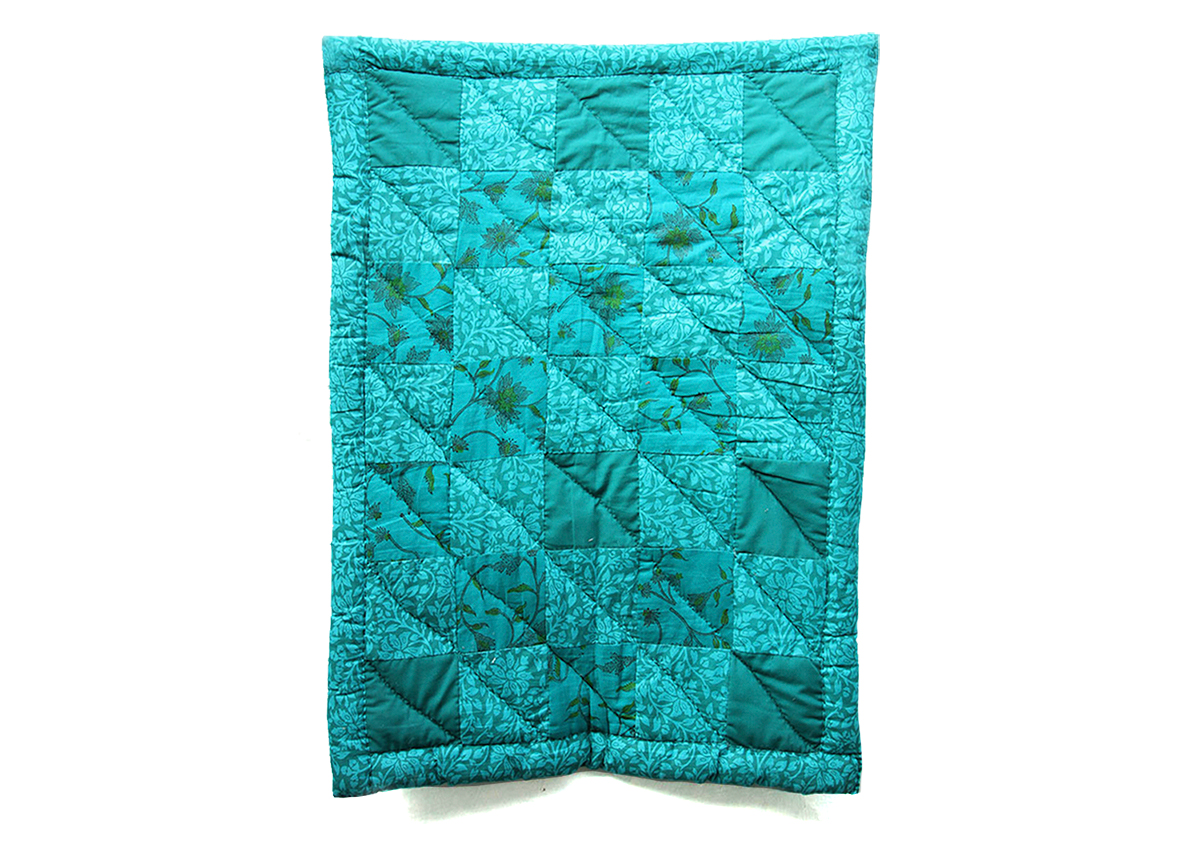
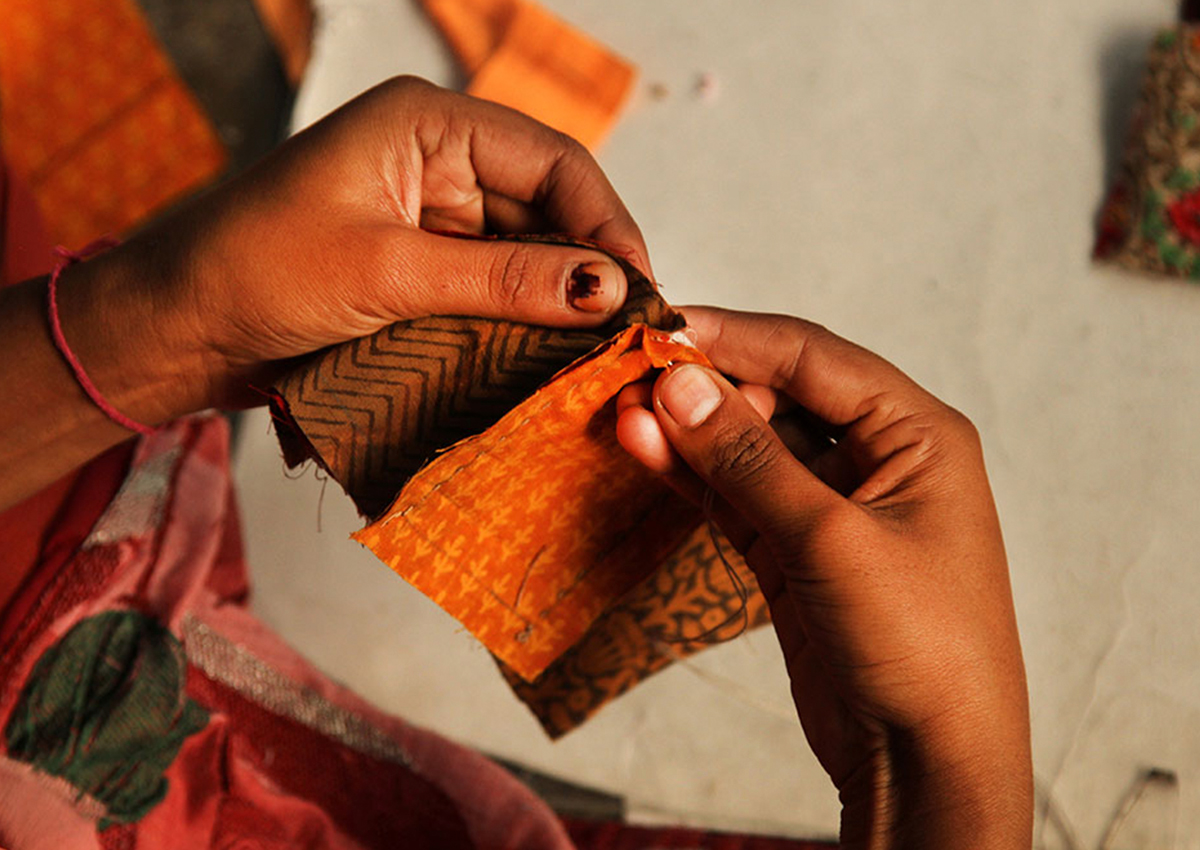
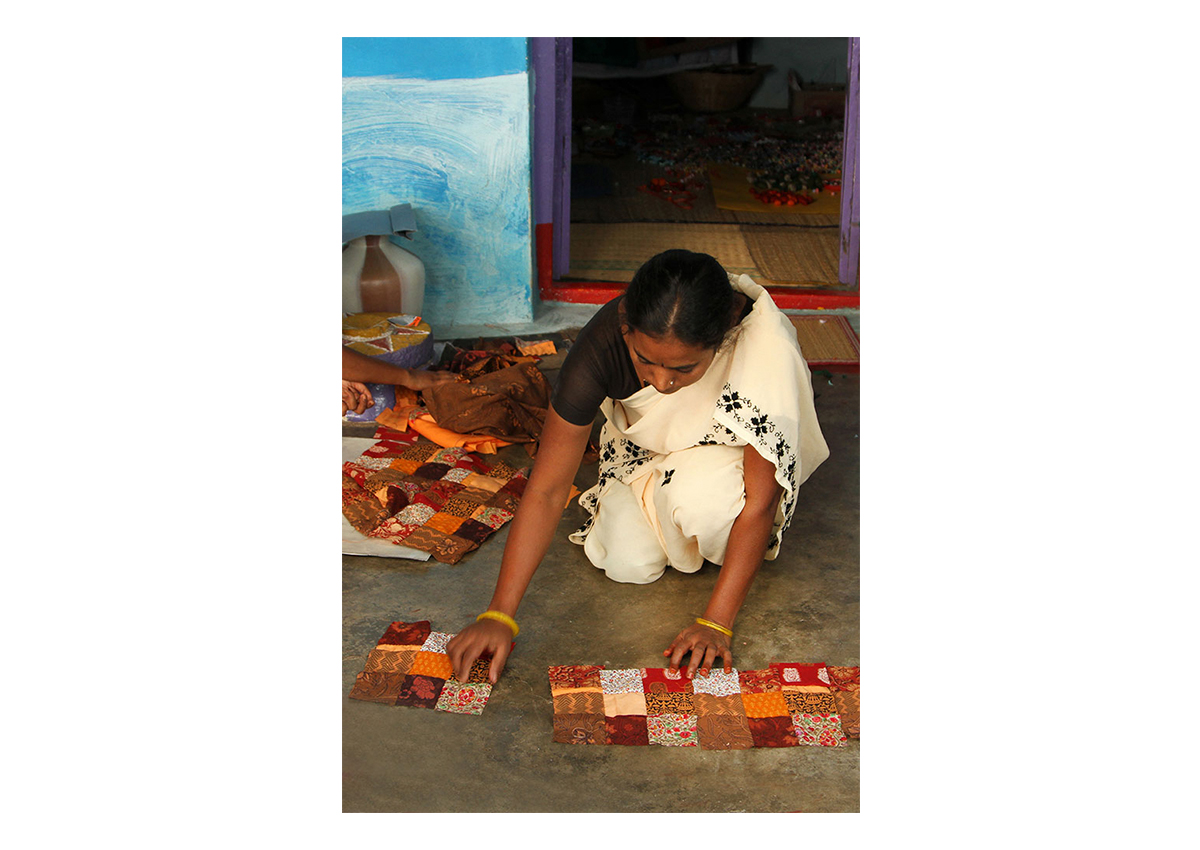
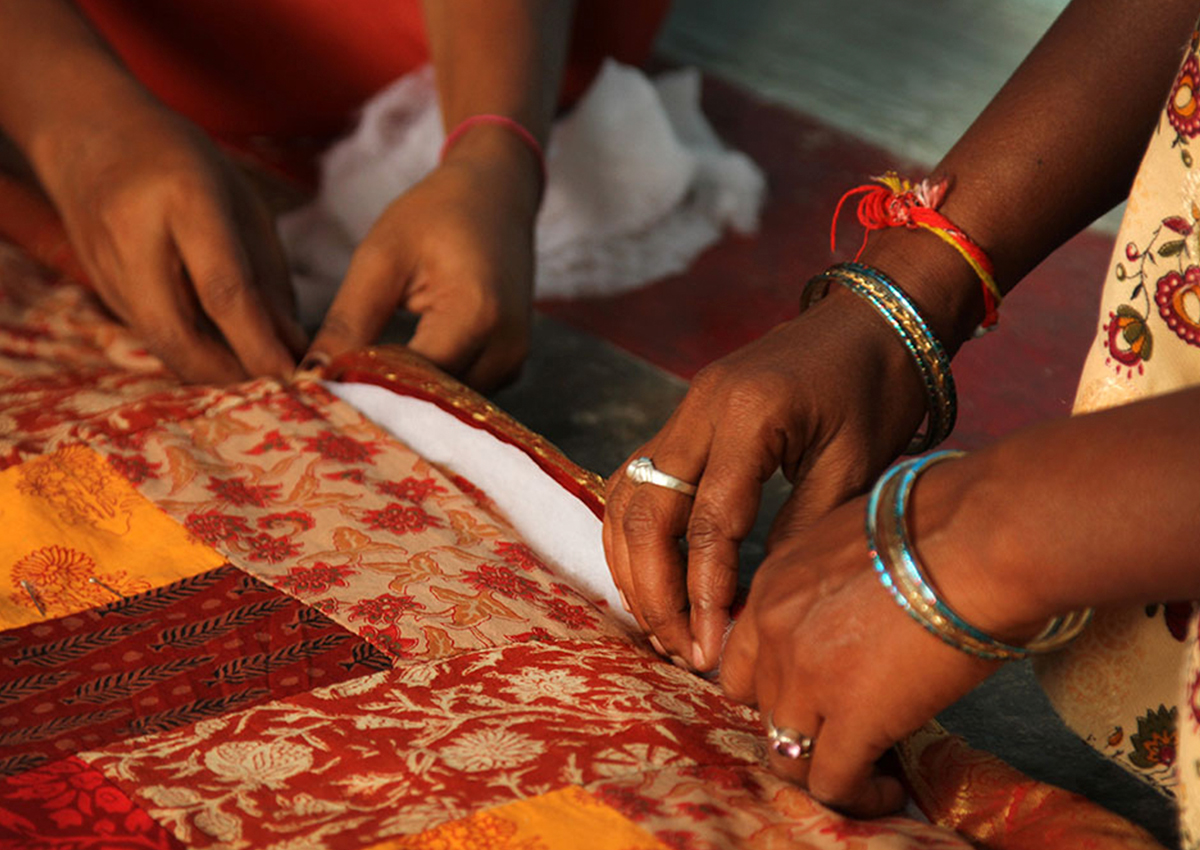
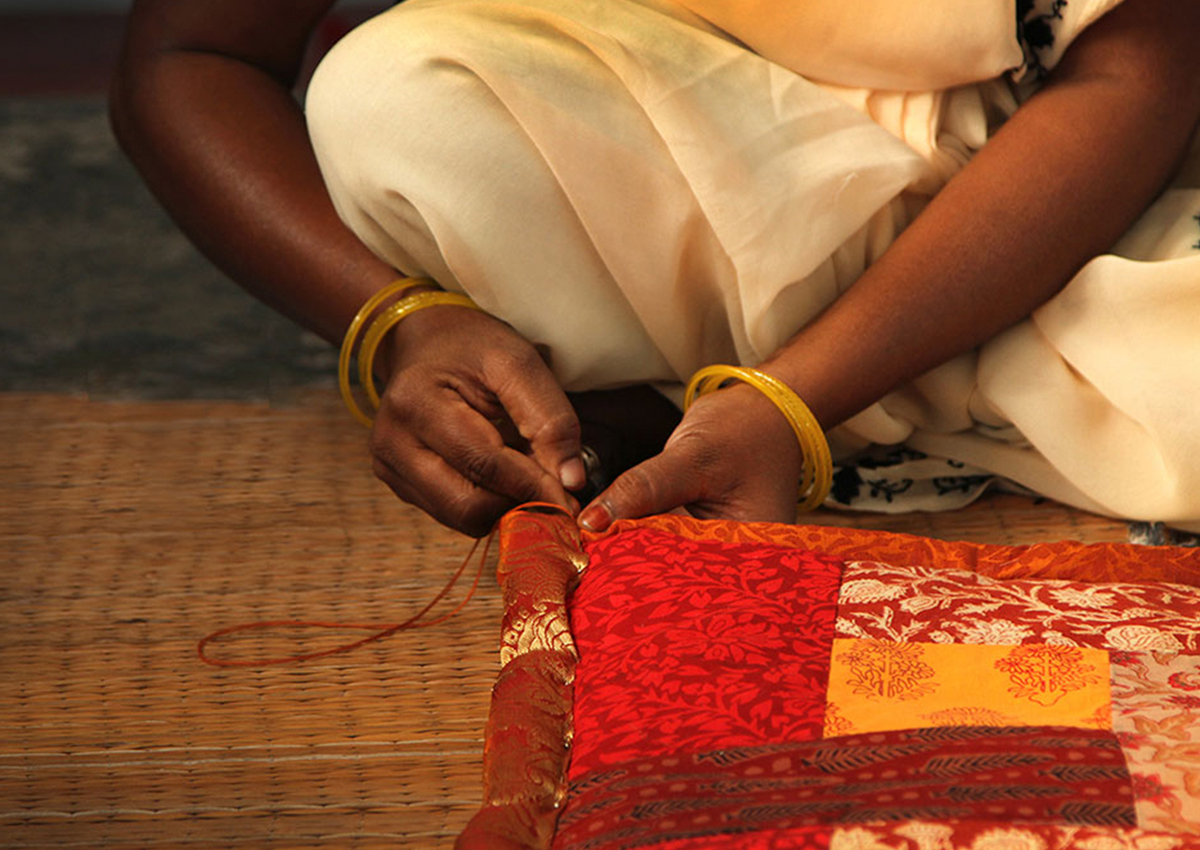
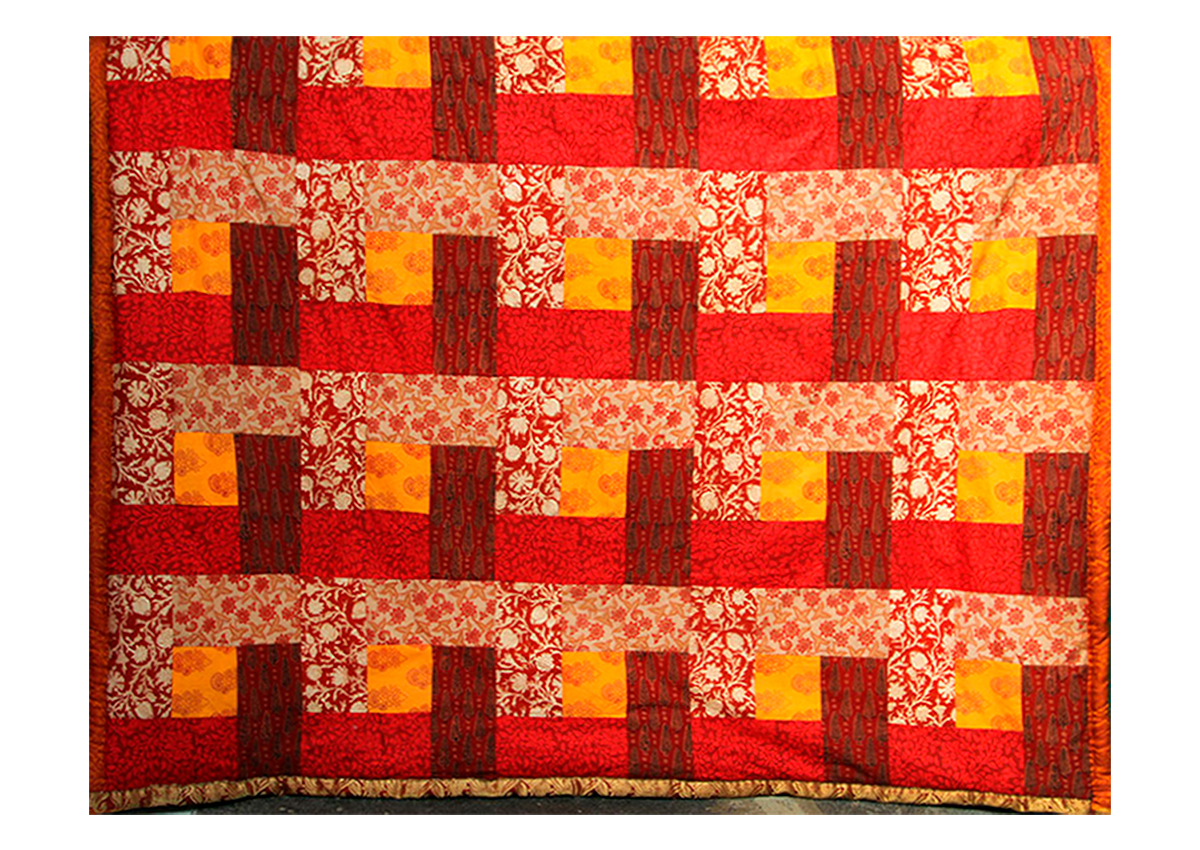
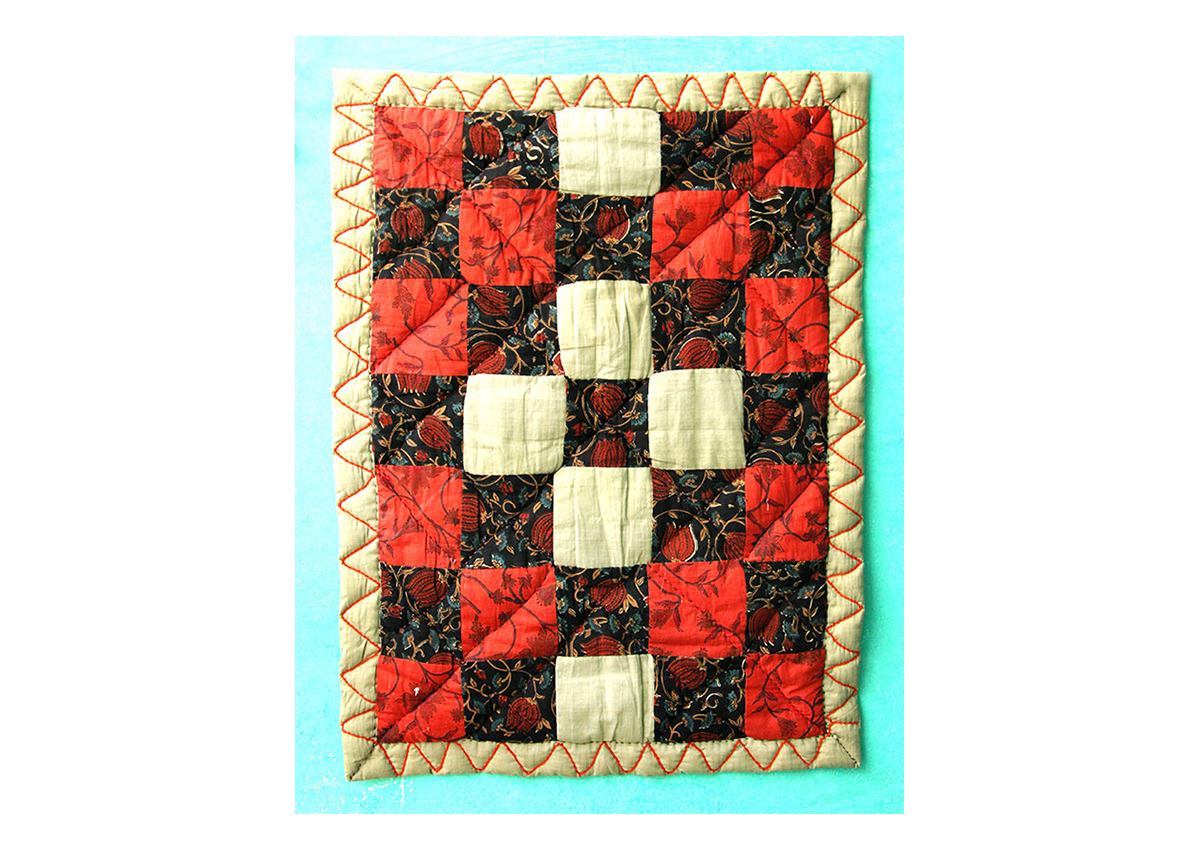
Kowdhi quilting is a small-scale practice that is underrepresented in the handicraft market. Some NGOs, such as BuDa Folklore, have made attempted to keep the tradition alive by holding workshops, commissioning quilts from local artisans and selling these through the craft collective Lyaavi. Although quilts are the traditional form, today kowdhi artisans use the technique to create other household textiles like mats, bags and table runners.
First published: 21 April 2022
Image Gallery
Bibliography
Baral, Bibhudutta, Divyadarshan C. S., and Manmi Dutta. “Kaudi Making – Anegundi, Karnataka.” National Institute of Design, Bengaluru, accessed August 25, 2021, https://www.dsource.in/sites/default/files/resource/kaudi-making-anegundi-karnataka/downloads/file/kaudi-making-anegundi-karnataka.pdf.
“Lyaavi – Handmade Kowdi Quilts by Rural Artisans.” BuDa Folklore. https://budafolklore.in/lyaavi-kowdi-collective.
Matthew, Maya Sara. “Folk Textiles – Kaudi – a Hand Stitched Patchwork Quilt.” A Million Little Stories (blog), 3 June, 2014. http://millionlittlestitches.blogspot.com/2014/06/folk-textiles-kaudi-hand-stitched.html.
Feedback