-
ChicagoImpart Encyclopedia of Art. "Gajalakshmi." September 27, 2023. https://imp-art.org/articles/gajalakshmi/.
-
MLA"Gajalakshmi." Impart Encyclopedia of Art, Sep. 27, 2023, https://imp-art.org/articles/gajalakshmi/.
-
HarvardImpart Encyclopedia of Art (2023) Gajalakshmi. Available at: https://imp-art.org/articles/gajalakshmi/ (Accessed: 3 March 2026).
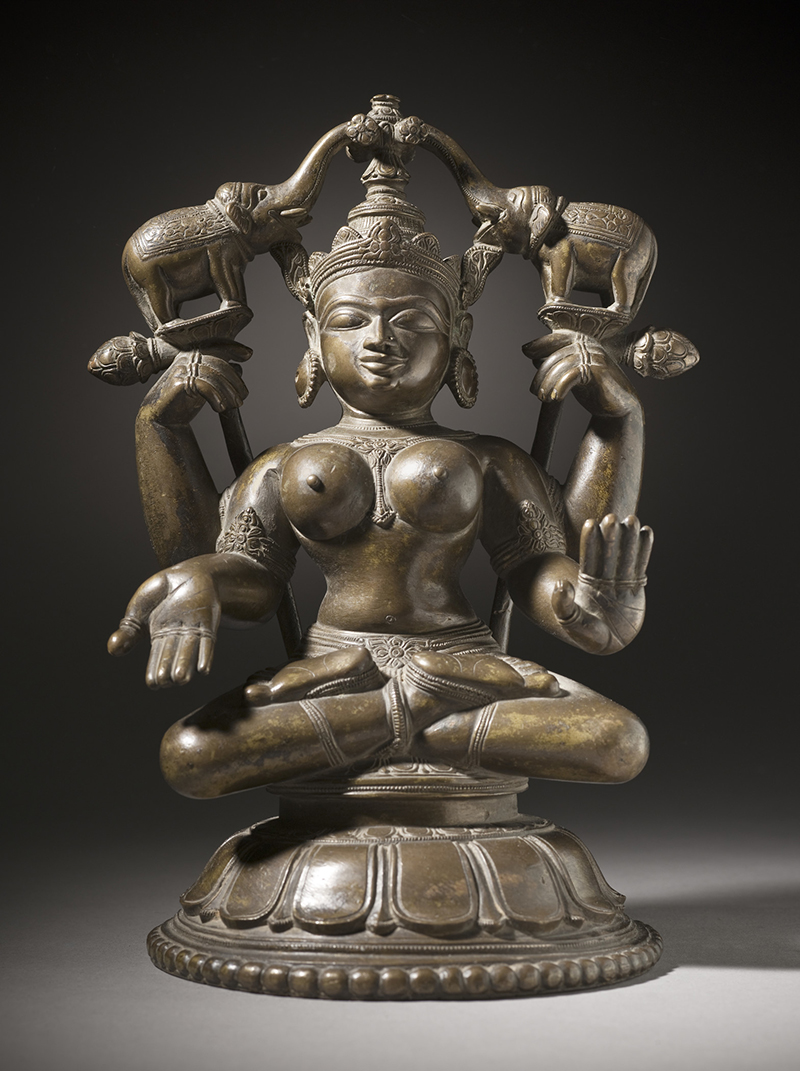
One amongst the eight manifestations of the goddess Lakshmi, Gajalakshmi — ‘elephant Lakshmi’ or ‘Lakshmi with elephants’ — is believed to bestow and symbolise wealth, good fortune, abundance, fertility and well-being. Also known as Kamalatmika — ‘she of the lotus’ — she appears in sculpture, paintings, coins, seals, and gateways and entrances, in Hindu, Buddhist and Jain religious contexts.
The bejewelled goddess is typically depicted on a lotus base, either standing or seated in padmasana, and flanked by two or more elephants. Often pictured on either side of her at shoulder-level and standing on lotus blooms themselves, the elephants shower her with water, either directly from their trunks or poured from pots held in their trunks. The goddess may be depicted with two or four arms, often holding a lotus in full bloom and performing the reassuring abhaya mudra and boon-bestowing varada mudra. She is often depicted surrounded by lotus stalks with blooms.
Associated with divinity and royal power — as Indra’s vehicle Airavata, for instance — elephants are also regarded as harbingers of rain in Indic thought. This makes their presence in Gajalakshmi iconography symbolic of fertility and abundance, with the flow of water or nectar commonly thought to signify the prosperity that Lakshmi is believed to bestow. They are sometimes depicted with wings, referencing their form in mythology as aerial creatures previous to being condemned to terrestrial life.
Early textual references to Gajalakshmi appear in the Shri Suktam — a hymn in praise of Shri or Lakshmi — in the Rigveda. Some of the earliest visual depictions of Lakshmi are in her form as Gajalakshmi. These images, dated roughly to the second and first centuries BCE, appear on medallions on the railings and gateways of stupas at the Buddhist sites of Bharhut and Sanchi. From the sixth century onwards Gajalakshmi images began to be incorporated similarly in Hindu architecture. In a number of these images, the lotuses bearing the goddess and the elephants issue from a pot or vase. Known as a purnakalasha, purna ghata or mangala kalasha, the vessel is a symbol of auspicious abundance. Gajalakshmi images following this schema from this period appear largely on terracotta relief panels as well as on coins issued by various dynasties, discovered in the areas of present-day Mathura, Kaushambi, Ujjain, Sanchi and Ayodhya in northern India.
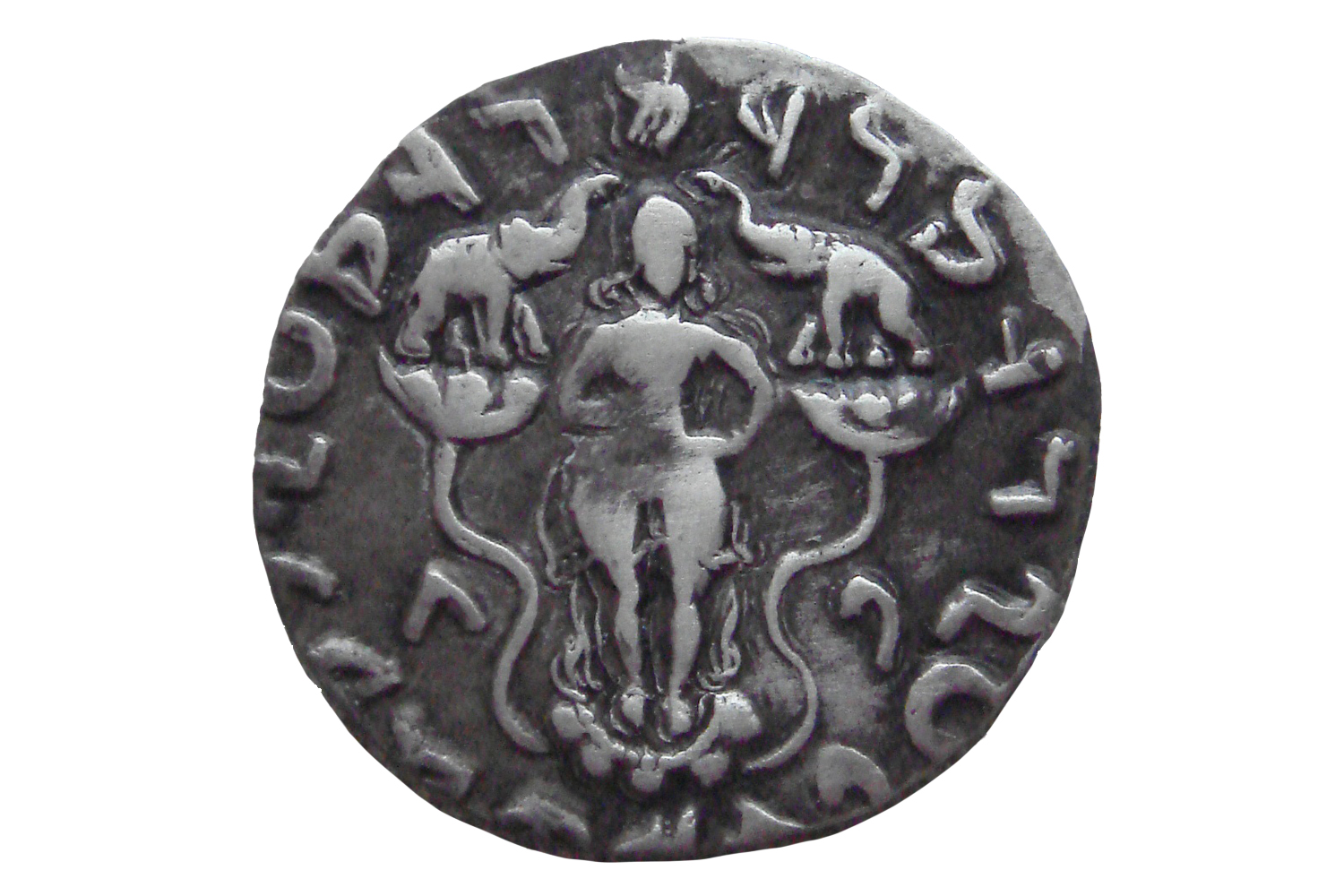
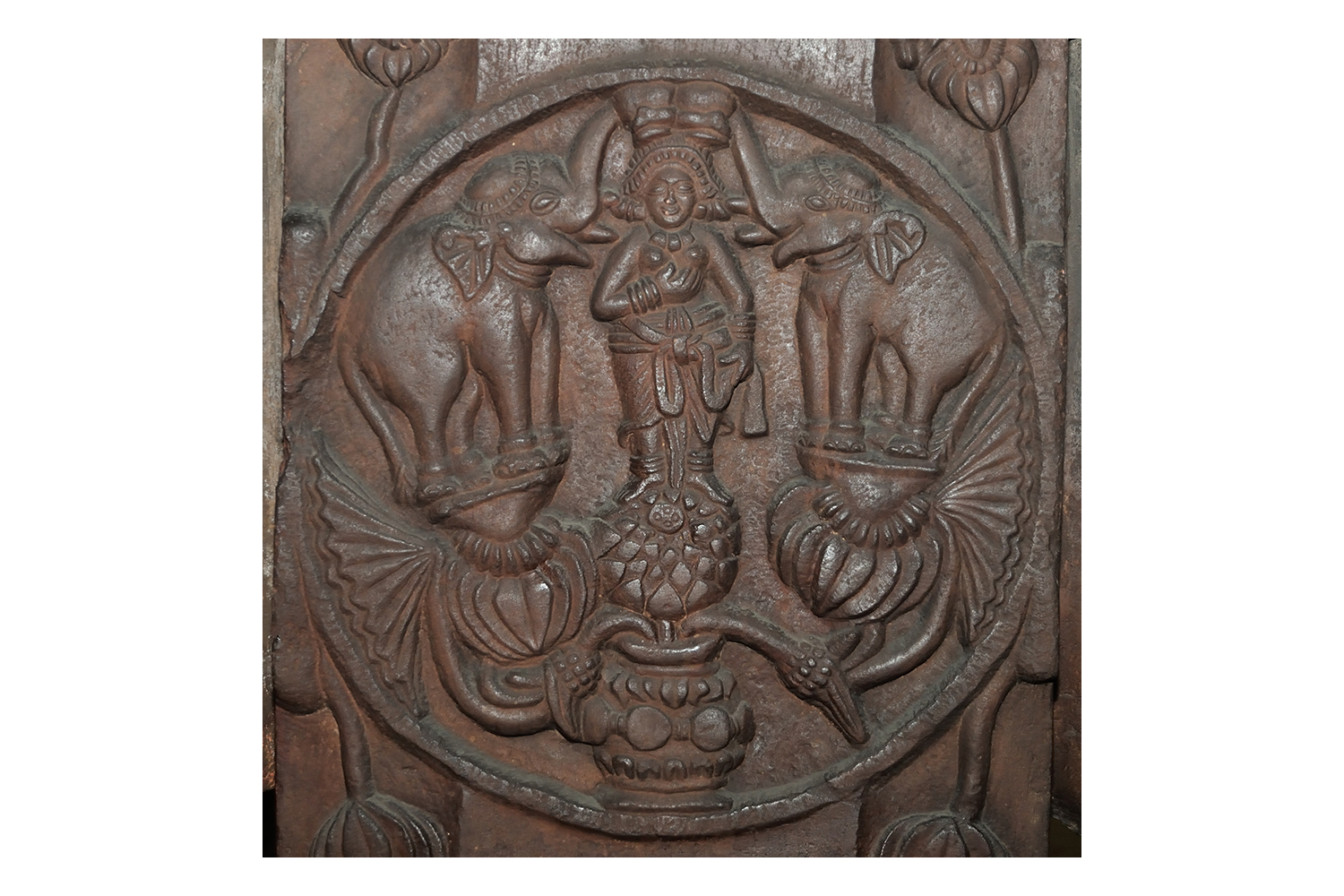
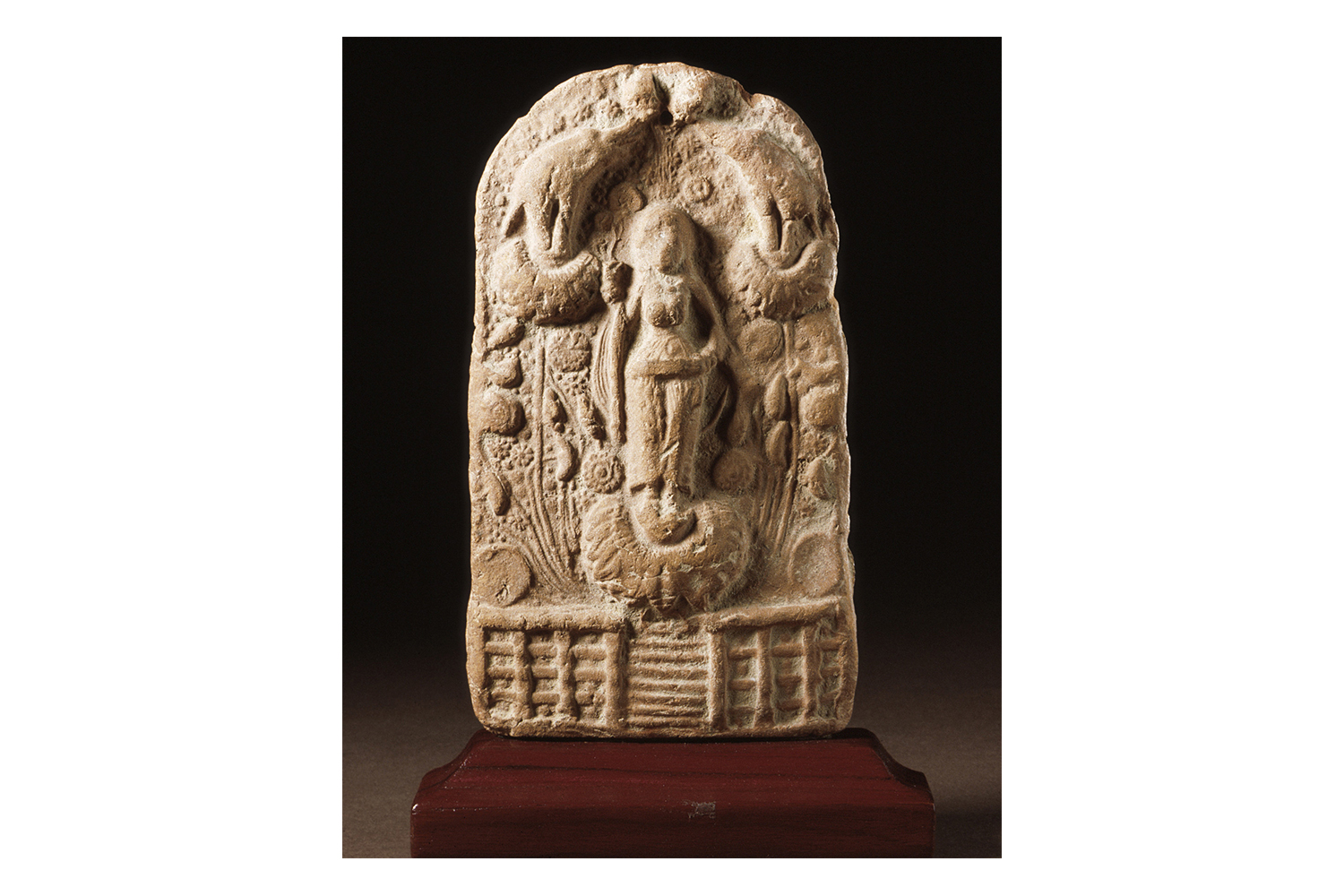
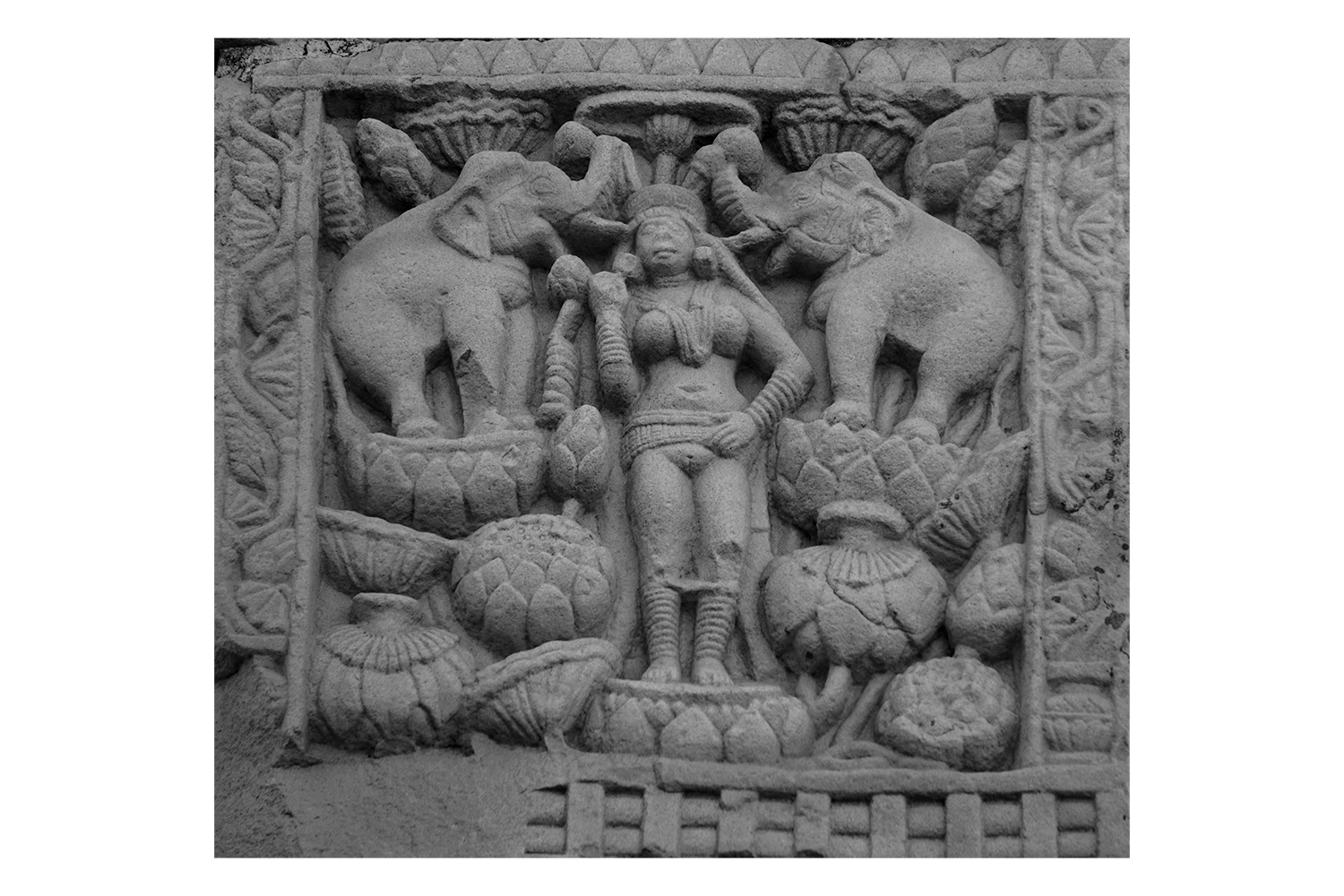
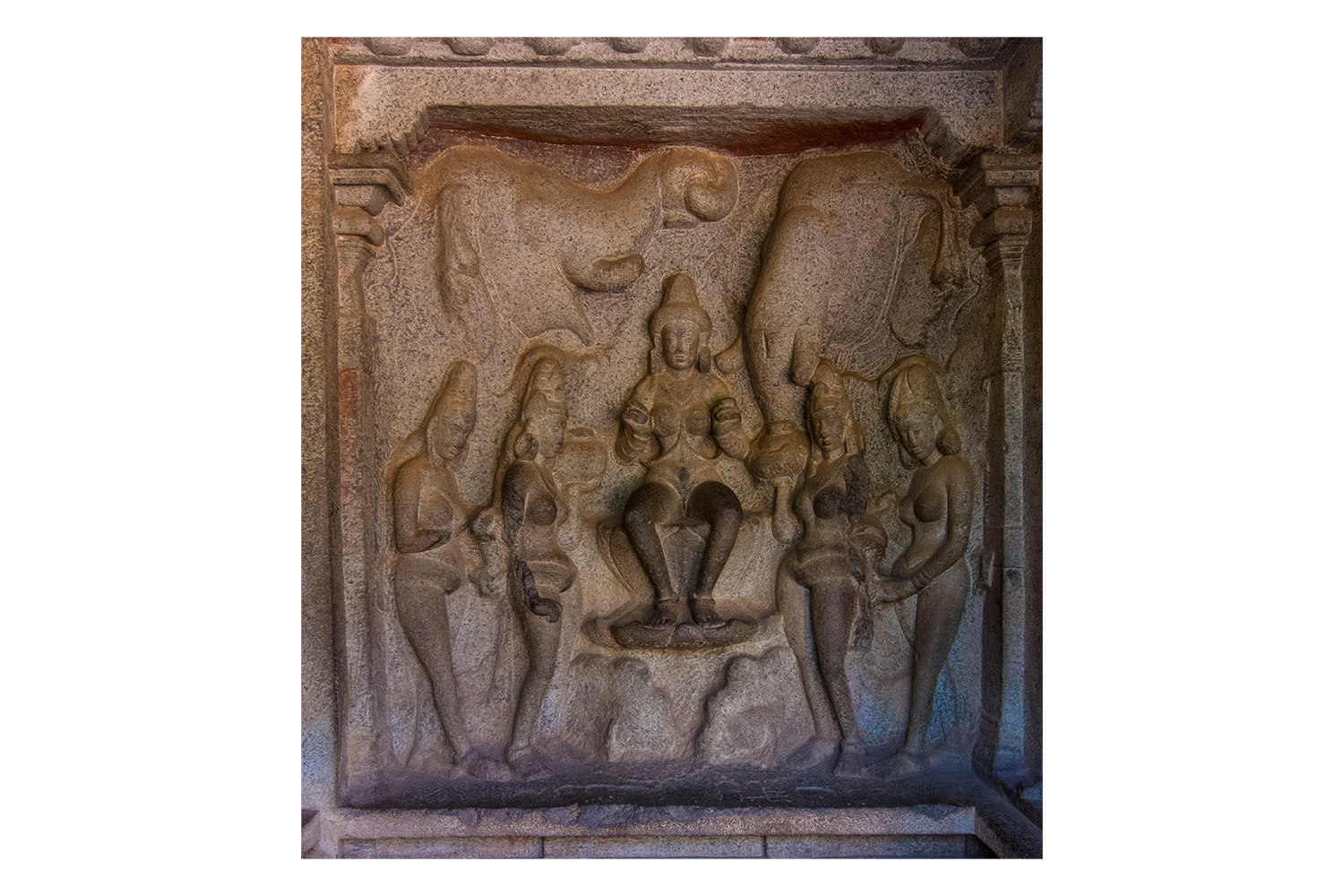
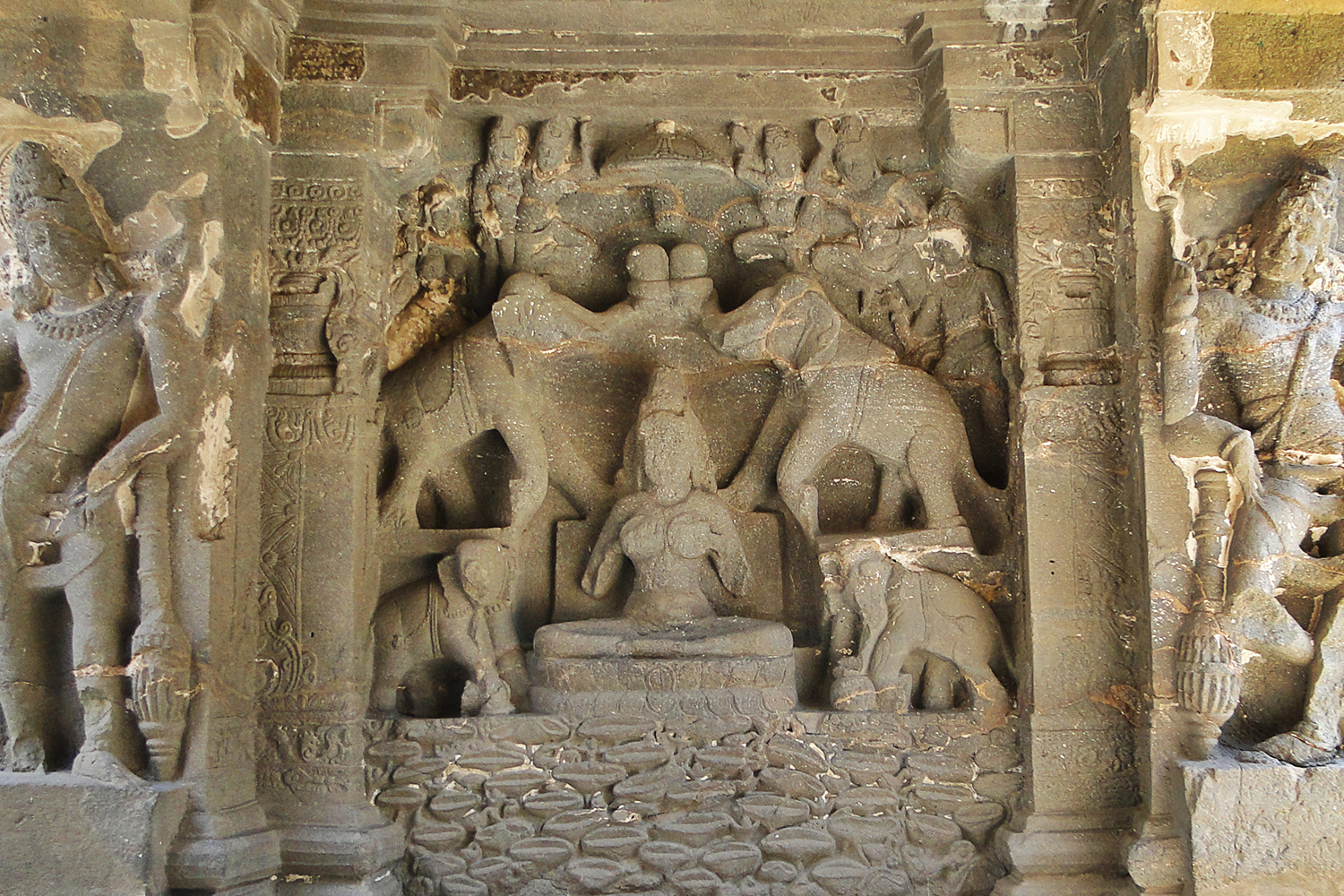
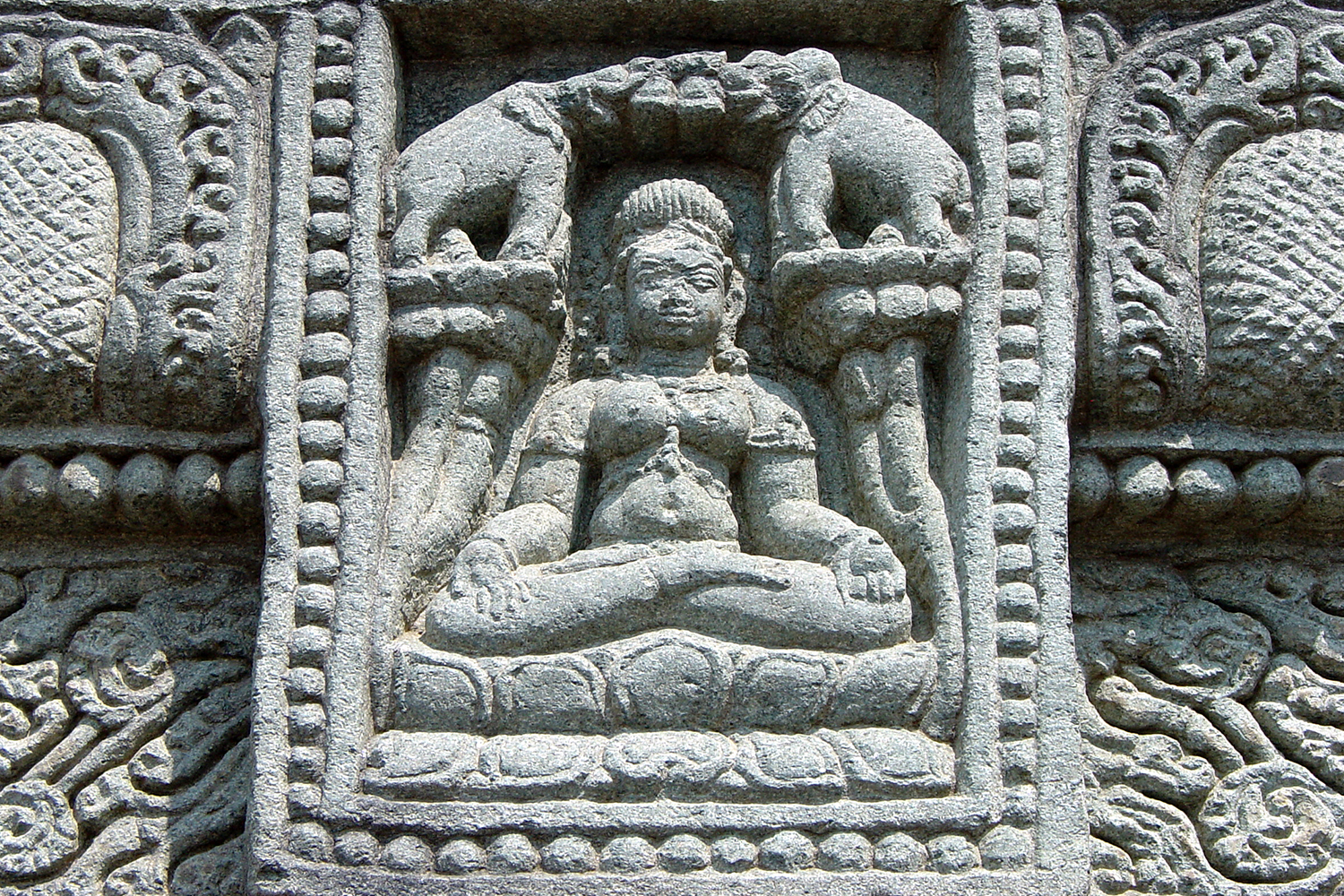
Through the succeeding centuries, Gajalakshmi continued to be depicted in reliefs at religious structures throughout India, with several minor variations in style and iconography. Small images of the goddess appear in places as widely distributed as Dashavatara Temple in Deogarh, Odisha; Kailashanatha Temple in Ellora, Maharashtra; Bhitargaon Temple in Kanpur, Uttar Pradesh; as well as in Jain temples, including the one at Shravanabelagola, Karnataka. A sixth-century example from present-day Jammu and Kashmir, carved from hard stone, shows two lions flanking the deity’s feet, in addition to the elephant in the upper register. A Gajalakshmi image dated to between the eighth and twelfth centuries has also been found from present-day Bangladesh. A popular and auspicious image, Gajalakshmi has generally appeared as a decorative peripheral element in sculptural compositions in religious architecture. Two exceptions appear in the form of full-scale reliefs at the Varaha and Adivaraha caves in Mamallapuram, Tamil Nadu.
In the seventeenth and eighteenth centuries, imagery of the goddess appeared in various schools of Pahari and Rajasthani miniature painting, as well as other regional painting styles, such as Tanjore and Mysore painting. In the colonial period, Gajalakshmi was commonly depicted in paintings and prints made by Kalighat painters and bazaar artists, as well as in Company paintings, particularly in albums of gods and goddesses commissioned by British residents. With the advent of the printing press, images of the goddess became more popular, eventually making their way into textile labels, calendars and other print media.
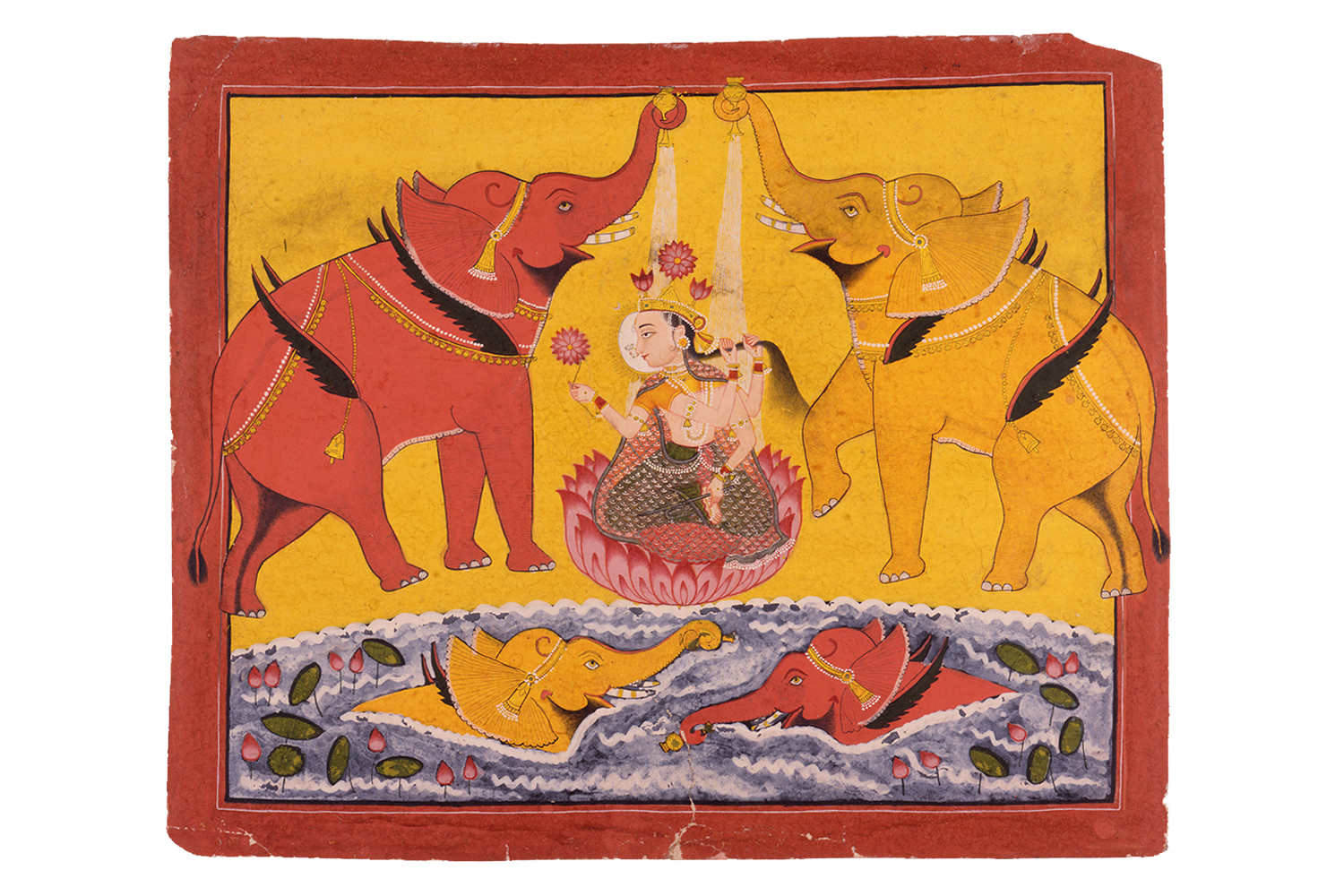
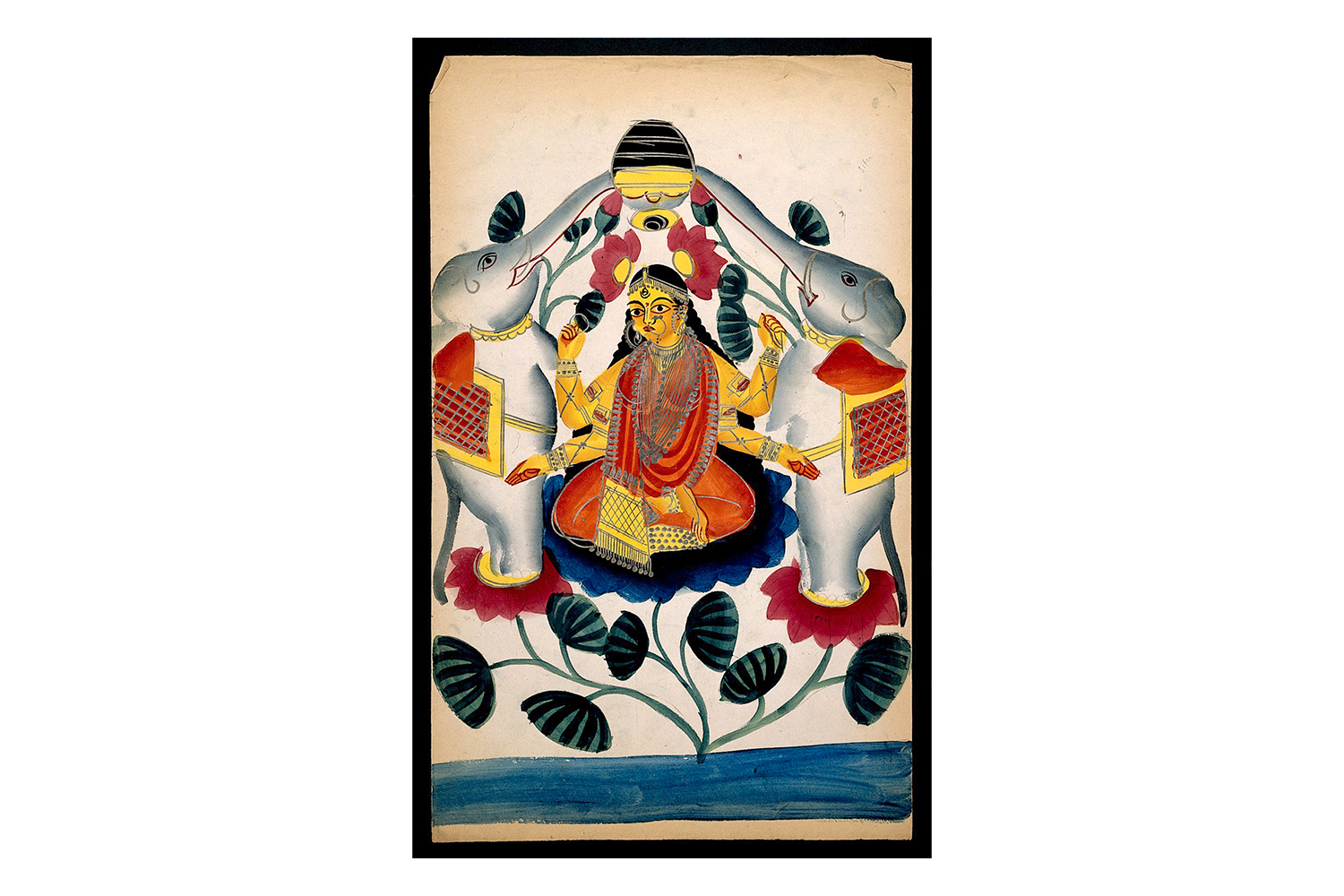
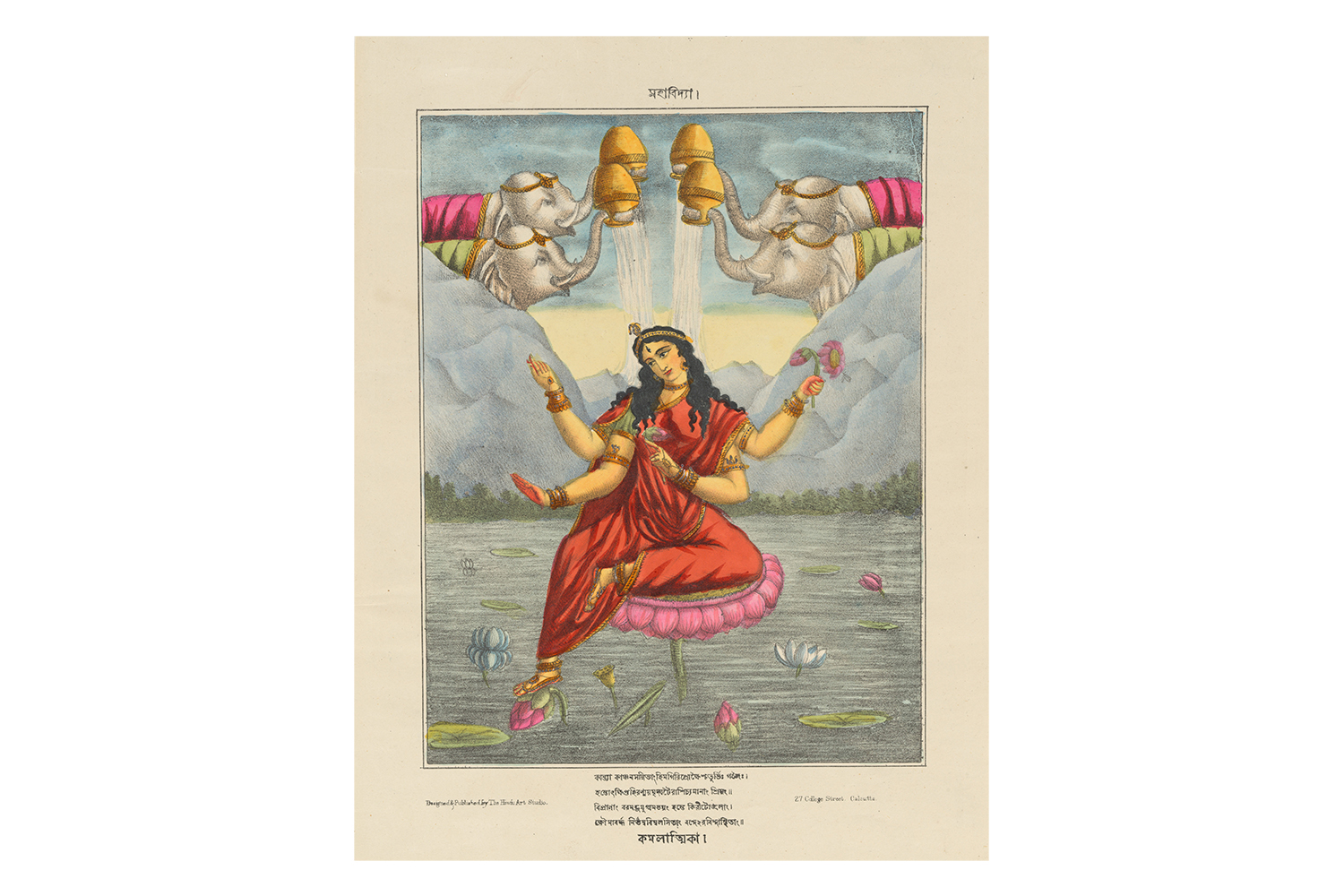
Gajalakshmi remains a ubiquitous figure in the Hindu pantheon, deified particularly by trading communities because of her association with wealth and prosperity. Images of the deity continue to appear in popular religious prints, as well as on ceremonial coins and other ritual paraphernalia.
First published: 27 September 2023
Image Gallery
Bibliography
Bawa, Seema. “From Aditi/Laksmi to Dugdadharini: A Gendered Analysis of Iconography in Post Mauryan Art.” Proceedings of the Indian History Congress 63 (2002): 121–37. https://www.jstor.org/stable/44158081.
Elgood, Heather. “Exploring the Roots of Village Hinduism in South Asia.” World Archaeology 36, no. 3 (2004): 326–42. https://doi.org/10.1080/0043824042000282777.
Sankrityayan, Niharika K. “Association of Elephants with Goddess Lakshmi: Myth, Ritual, and Temples.” Asian Elephants in Culture & Nature, 2016. http://repository.kln.ac.lk/bitstream/handle/123456789/14229/302-311.pdf?sequence=1.
Singh, Upinder. A History of Ancient and Early Medieval India: From the Stone Age to the 12th Century. India: Pearson, 2016.
van der Geer, Alexandra. Animals in Stone: Indian Mammals Sculptured Through Time. Leiden, Boston: Brill, 2008.
Feedback