-
ChicagoImpart Encyclopedia of Art. "Buta." April 21, 2022. https://imp-art.org/articles/buta/.
-
MLA"Buta." Impart Encyclopedia of Art, Apr. 21, 2022, https://imp-art.org/articles/buta/.
-
HarvardImpart Encyclopedia of Art (2022) Buta. Available at: https://imp-art.org/articles/buta/ (Accessed: 3 March 2026).
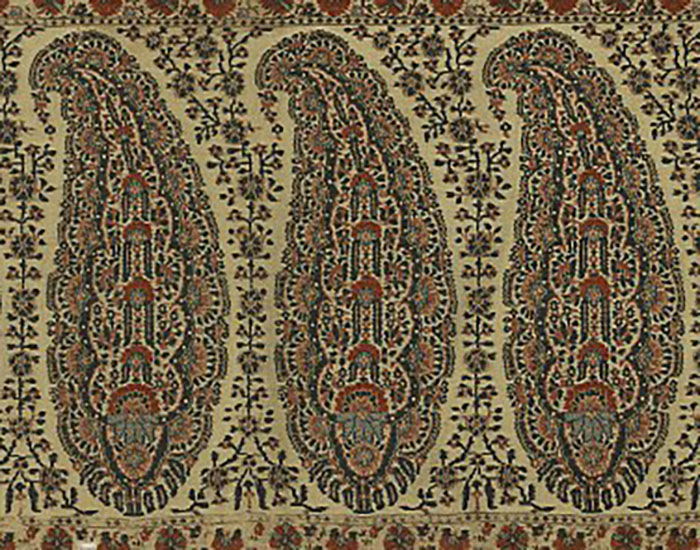
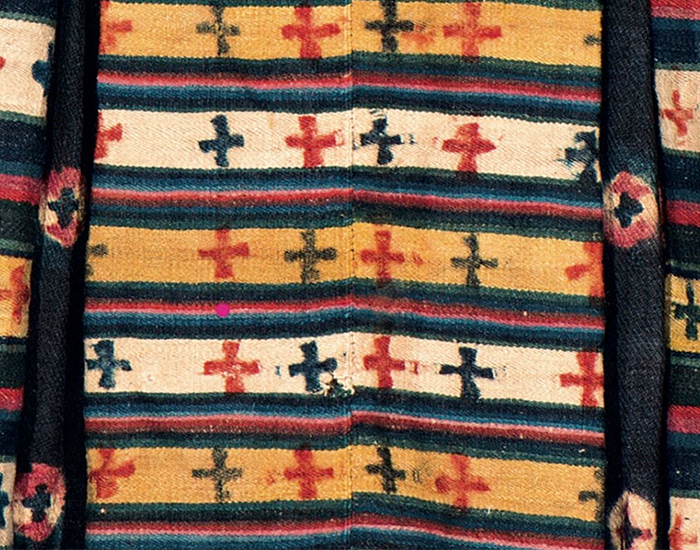
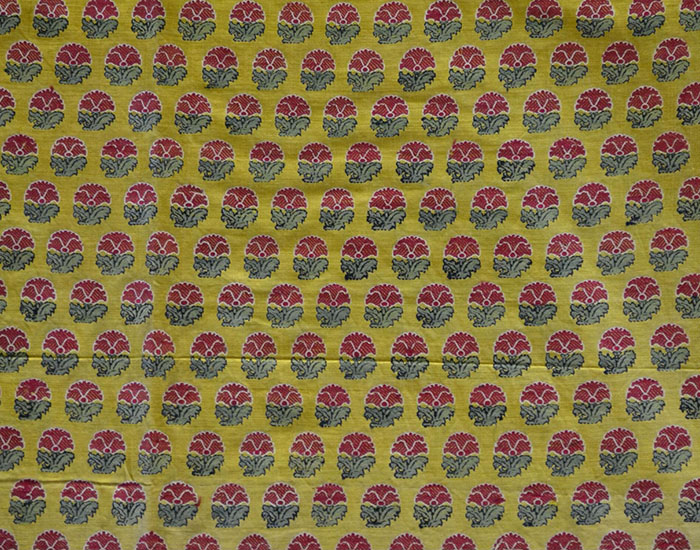
An umbrella term that broadly refers to motifs of flowers, leaves, trees, shrubs and buds. It derives its name from the Persian boteh, meaning “shrub” or “flowering plant” and is commonly used to decorate textiles. Butas appear in various sizes, colours and orientations and often in combination with butis. The term originally referred to the teardrop-shaped motif, also known as Boteh Jegheh, kairi motif, mankolam and paisley.
The motif is believed to have originated in Babylon, c. 1700 BCE, and has been widely used to signify nobility and royalty. Although the exact origins of the buta in India are unknown, it has been in use since the sixteenth century, primarily in Kashmiri shawls, which were popular among the Mughals. While Indian craftsmen adapted the motif to represent indigenous flora and fauna such as genda, kamal, mor and gulab, fabrics meant for royalty portrayed non-indigenous flowers such as tall tulips, irises and poppies, interspersed with smaller butis of rose buds. The late eighteenth century also saw the emergence of the European cabbage rose as a popular motif in Indian textiles. Another widely used buta is the teardrop- or mango-shaped kairi/keri buta, also known as the mankolam, which is used along with symbols such as swastika and om as well as indigenous birds and flowers such as peacocks, parrots and lotuses. This buta is popularly used in Kanchipuram sarees in Tamil Nadu.
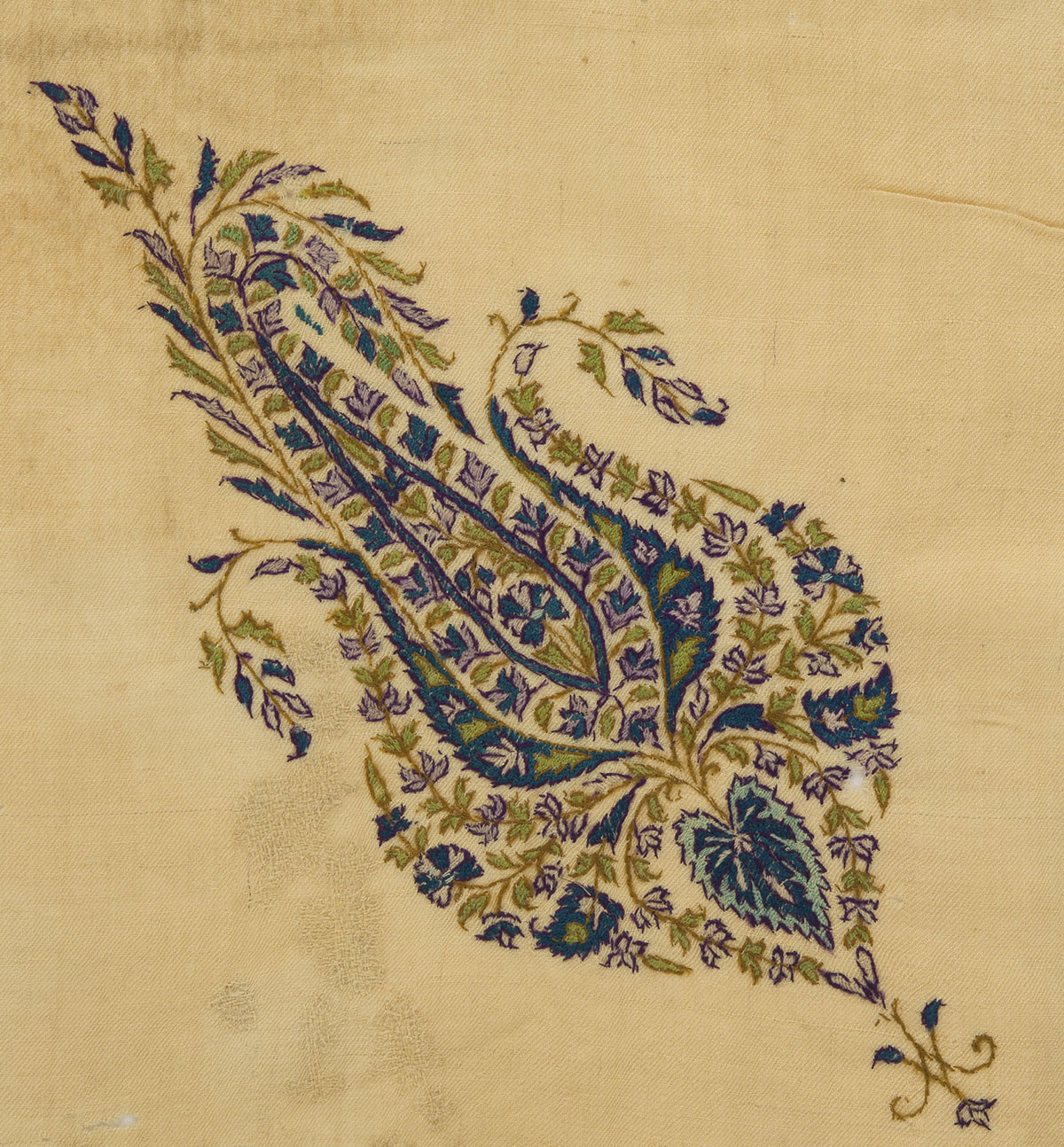
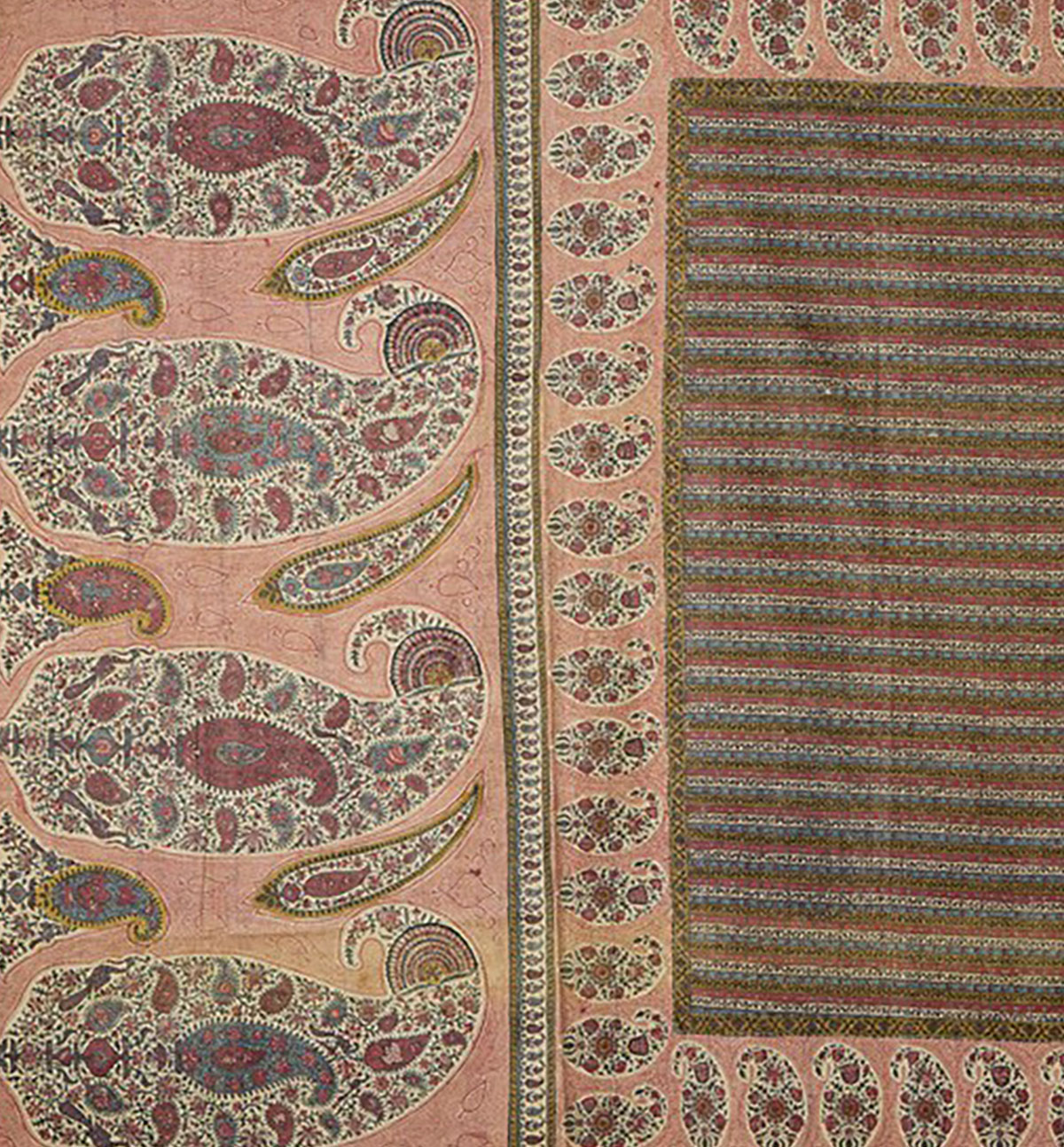
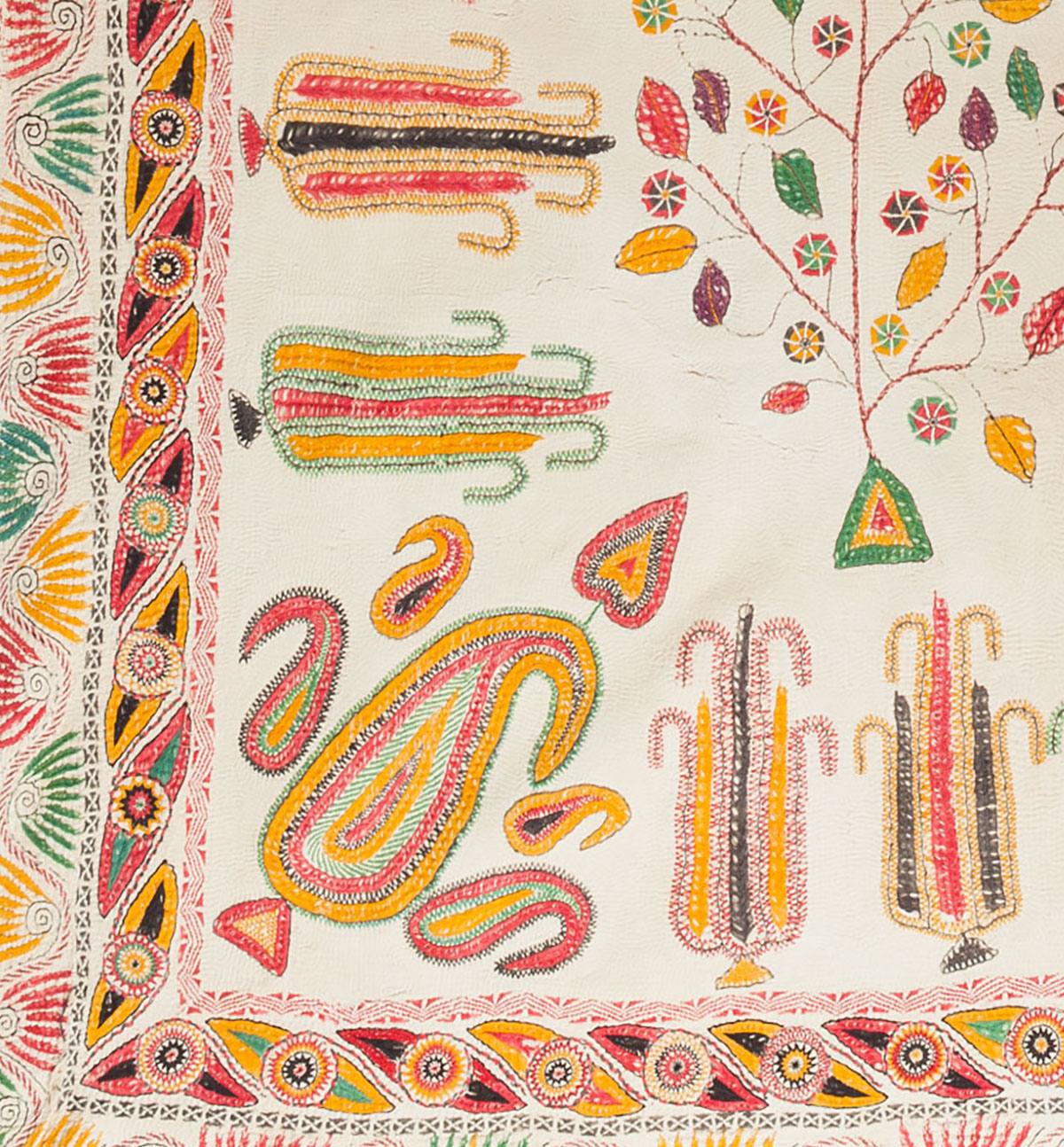
Today, butas are used in a variety of Indian textiles such as shawls, sarees, bedspreads, cushion covers, ghagras and cholis, among other garments. Specific floral butas also appear in Bagru and Sanganeri prints, Benarasi brocades, Ashavali sarees and Pashmina shawls.
First published: 21 April 2022
Image Gallery
Bibliography
“Chapter 92 – A History of Paisley or Boteh Jegheh Design.” n.d. A History of Graphic Design. http://guity-novin.blogspot.com/2018/07/chapter-92-history-of-paisley-or-boteh.html.
Chaudhury, Jyoti Bhasin, and Suman Pant. 2016. “A Study on Design Ornamentation of Banaras Brocades with Motifs Inspired from Nature (Animals and Birds).” American International Journal of Research in Humanities, Arts and Social Sciences 14 (2): 130–32.
Das, Subhamoy. 2017. “38 Sacred Symbols of Hinduism.” Learn Religions. https://www.learnreligions.com/hindu-sacred-symbols-gallery-4123128.
Kaur, Jasminder. “Flora and Fauna Motifs in Sanganeri Print.” International Journal of Recent Research Aspects 4 (2): 1–5.
Nasim, Shahzeen. 2016. “Kashmir to Paisley: Cooper Hewitt, Smithsonian Design Museum.” Cooper Hewitt Smithsonian Design Museum. https://www.cooperhewitt.org/2016/07/29/kashmir-to-paisley/.
Feedback