-
ChicagoImpart Encyclopedia of Art. "Bhumisparsha Mudra." April 21, 2022. https://imp-art.org/articles/bhumisparsha-mudra/.
-
MLA"Bhumisparsha Mudra." Impart Encyclopedia of Art, Apr. 21, 2022, https://imp-art.org/articles/bhumisparsha-mudra/.
-
HarvardImpart Encyclopedia of Art (2022) Bhumisparsha Mudra. Available at: https://imp-art.org/articles/bhumisparsha-mudra/ (Accessed: 3 March 2026).
One of the five common mudras or sacred gestures in Buddhist iconography and practice, the bhumisparsha or ‘earth touching’ mudra represents the moment of prince Siddhartha’s attainment of Buddhahood or enlightenment. It symbolises his invocation of the earth-goddess to witness the overcoming of the final barrier towards enlightenment, and is also known as the ‘earth witness’ mudra. Performed while seated cross-legged on the ground, the mudra is formed with the right hand reaching over the knee so that all four fingers extend downwards to touch the earth. Among the five celestial Tathagata or Dhyani Buddhas, considered to represent cardinal qualities, the bhumisparsha mudra is associated with Akshobhya.
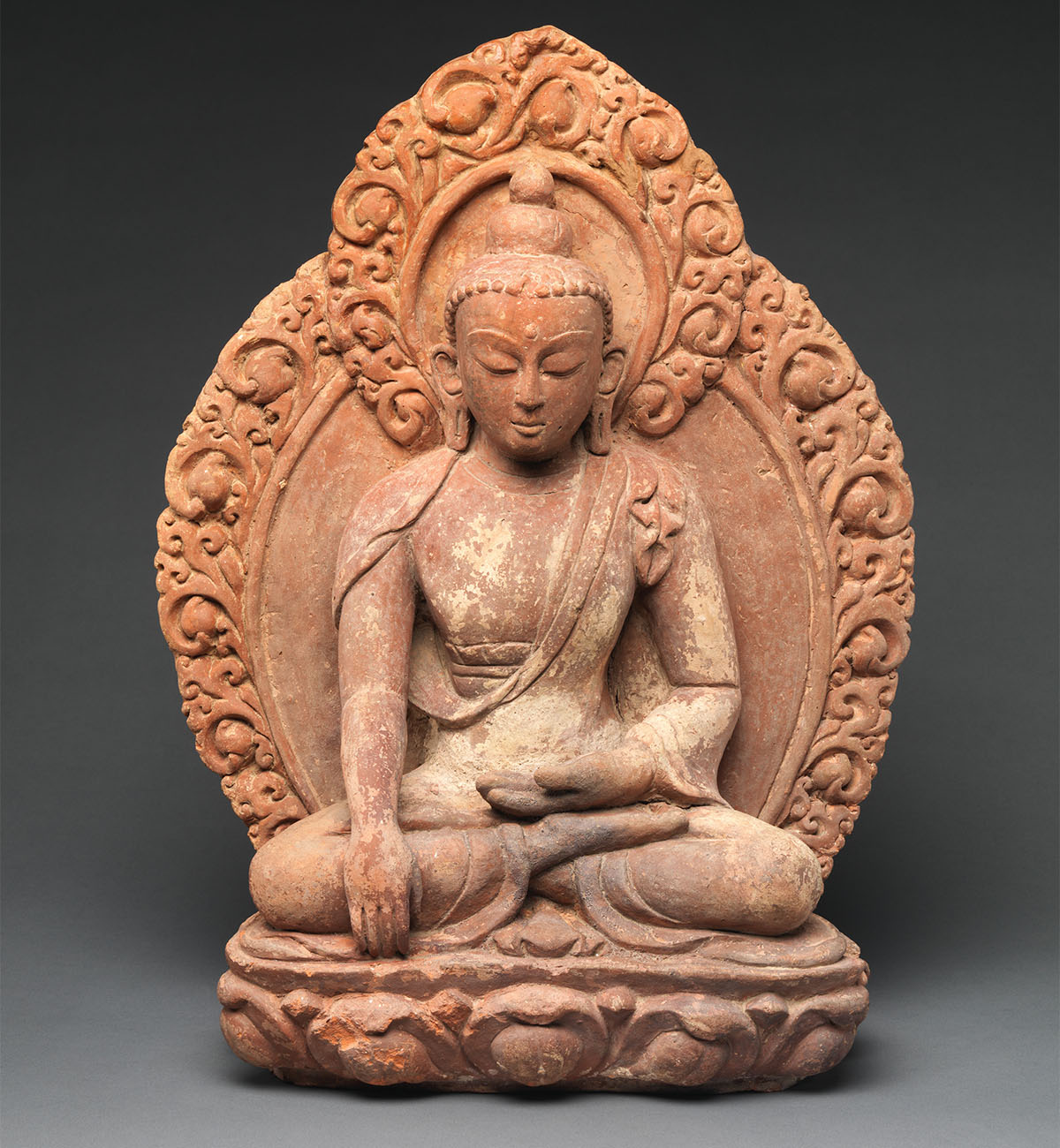
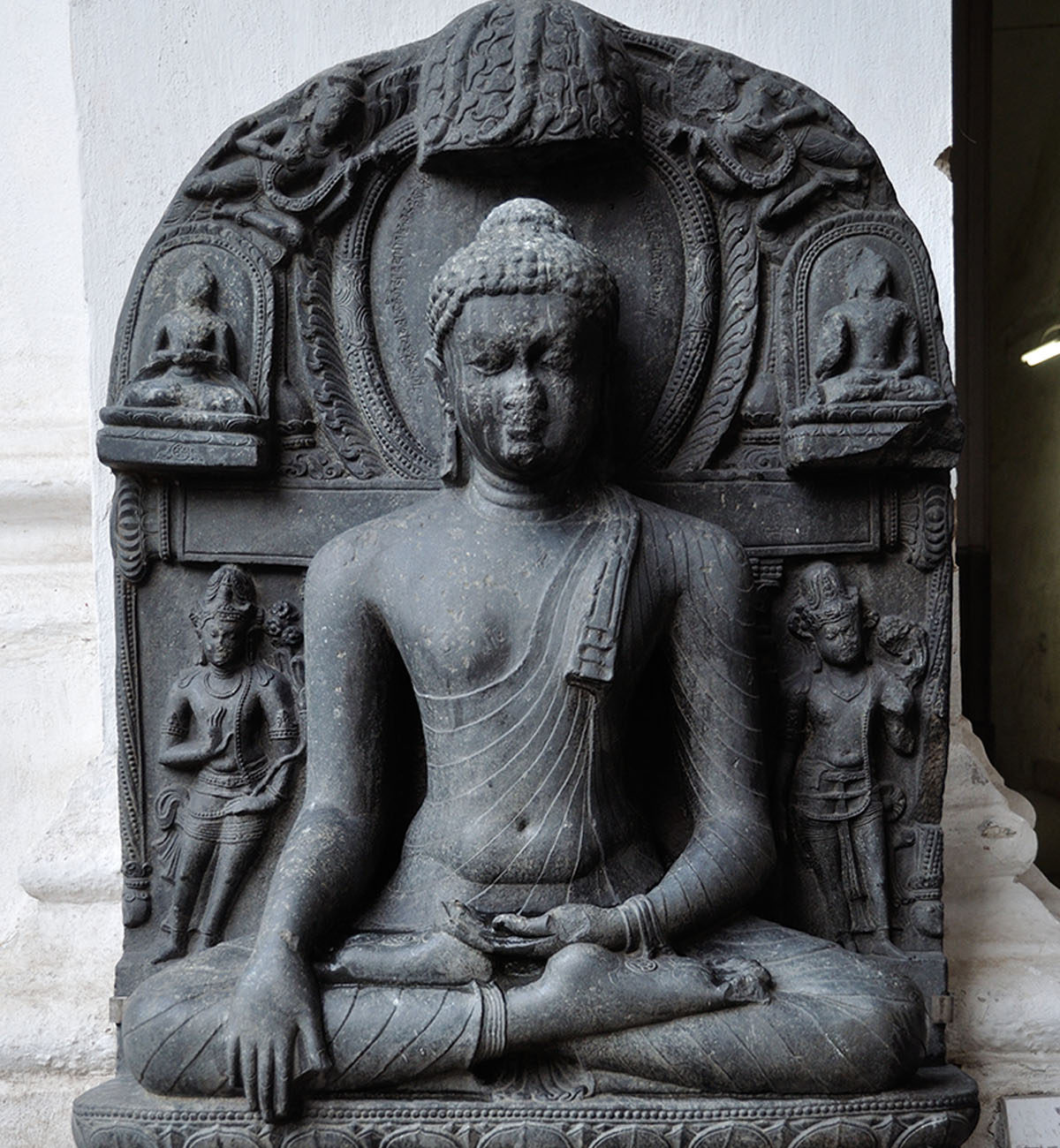
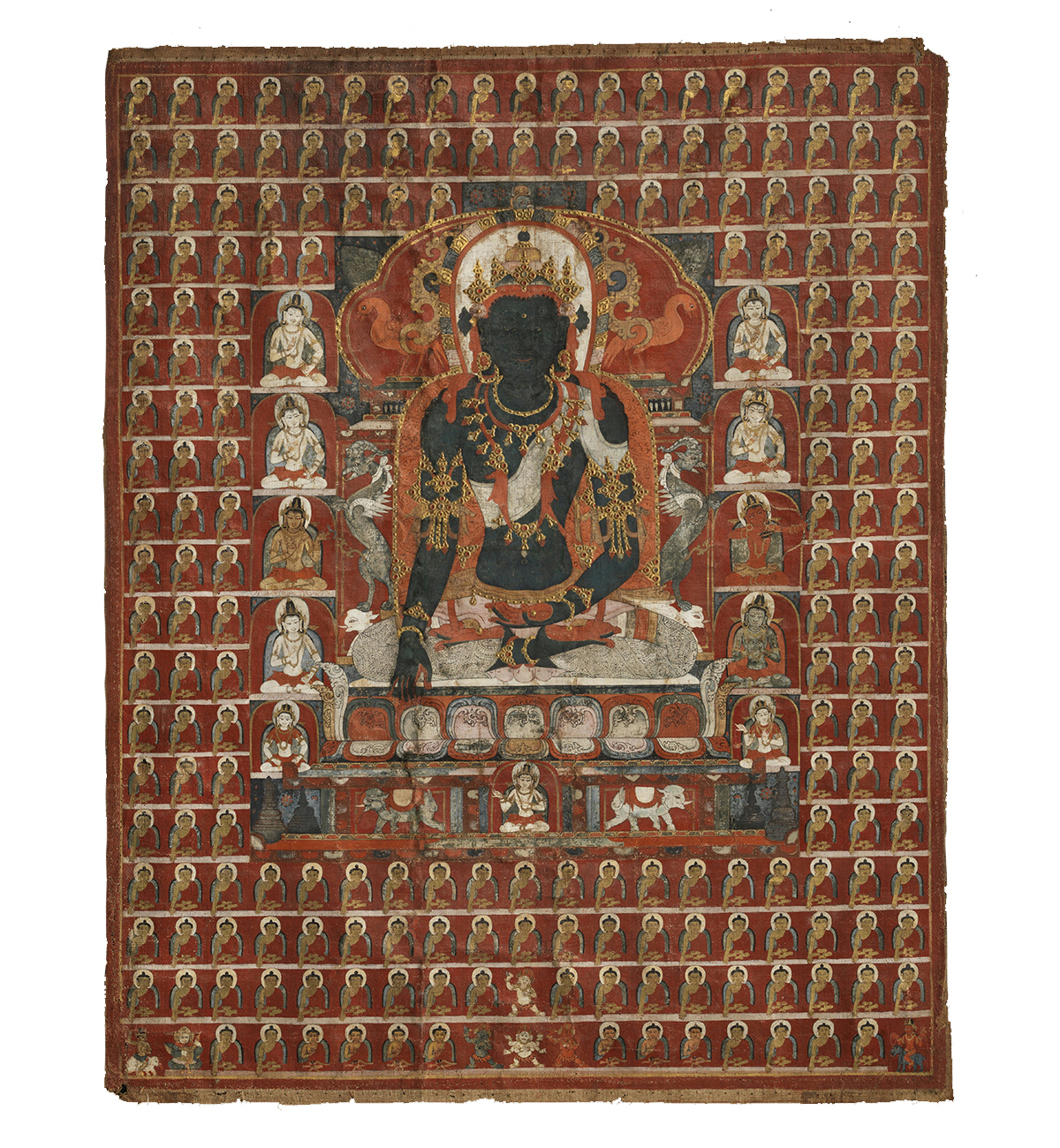
The mudra is associated with Siddhartha’s defeat of the demon king Mara — a popular narrative and important episode in the Buddhist canon. In the final stages of Siddhartha’s meditation under a pipal tree, Mara is said to have appeared to claim the throne of enlightenment for himself, producing his army of demons as witness. In response, Siddhartha is believed to have reached out to touch the ground and declare the earth as his witness; Mara is defeated and Siddhartha attains enlightenment. The gesture is thus understood as a symbol of unshakeability; of moral triumph over temptation and evil intention; and of the liberation of the spirit from its worldly trappings. Accordingly, it is also linked with mastery over one’s senses and emotions, emphasised in Buddhist teachings as the means to achieve true awakening.
When the left hand is simultaneously placed upturned on the lap in the dhyana mudra, the posture is thought to signify the union of skillful means and wisdom — upaya and prajna respectively.
First published: 21 April 2022
Image Gallery
Bibliography
Ables, Kelsey. n.d. “The Complex Meanings behind Hand Gestures in Buddhist Art.” Artsy, March 28, 2019. Accessed July 8, 2020. https://www.artsy.net/article/artsy-editorial-complex-meanings-hand-gestures-buddhist-art.
Asian Art|Mudras: Buddhist Hand Positions. n.d. “Bhumisparsha Mudra.” Accessed 6 August 2020. https://www.burmese-art.com/about-buddha-statues/hand-positions/bhumisparsha-mudra.
Beer, Robert. The Encyclopedia of Tibetan Symbols and Motifs. Boston: Shambhala, 1999.
Behrendt, Kurt. “Tibet and India Buddhist Traditions and Transformations.” The Metropolitan Museum of Art Bulletin LXXI, no. 3 (2014).
Bruce, Fredrick W. Mudras in Buddhist and Hindu Practices: An Iconographic Consideration. New Delhi: D. K. Printworld (p) Ltd, 2005.
Kossak, Steven. “The Arts of South and Southeast Asia.” The Metropolitan Museum of Art Bulletin LI, no. 4 (2011).
Munsterberg, Hugo. Art of India and South East Asia. New York: Harry N. Abrams Inc, 1970.
Samad, Rafi. The Ancient Buddhist Civilization of The Swat, Peshawar, Kabul and Indus Valleys. New York: Algora Publishing, 2011.
Feedback