-
ChicagoImpart Encyclopedia of Art. "Bapta Sari." April 21, 2022. https://imp-art.org/articles/bapta-sari/.
-
MLA"Bapta Sari." Impart Encyclopedia of Art, Apr. 21, 2022, https://imp-art.org/articles/bapta-sari/.
-
HarvardImpart Encyclopedia of Art (2022) Bapta Sari. Available at: https://imp-art.org/articles/bapta-sari/ (Accessed: 3 March 2026).
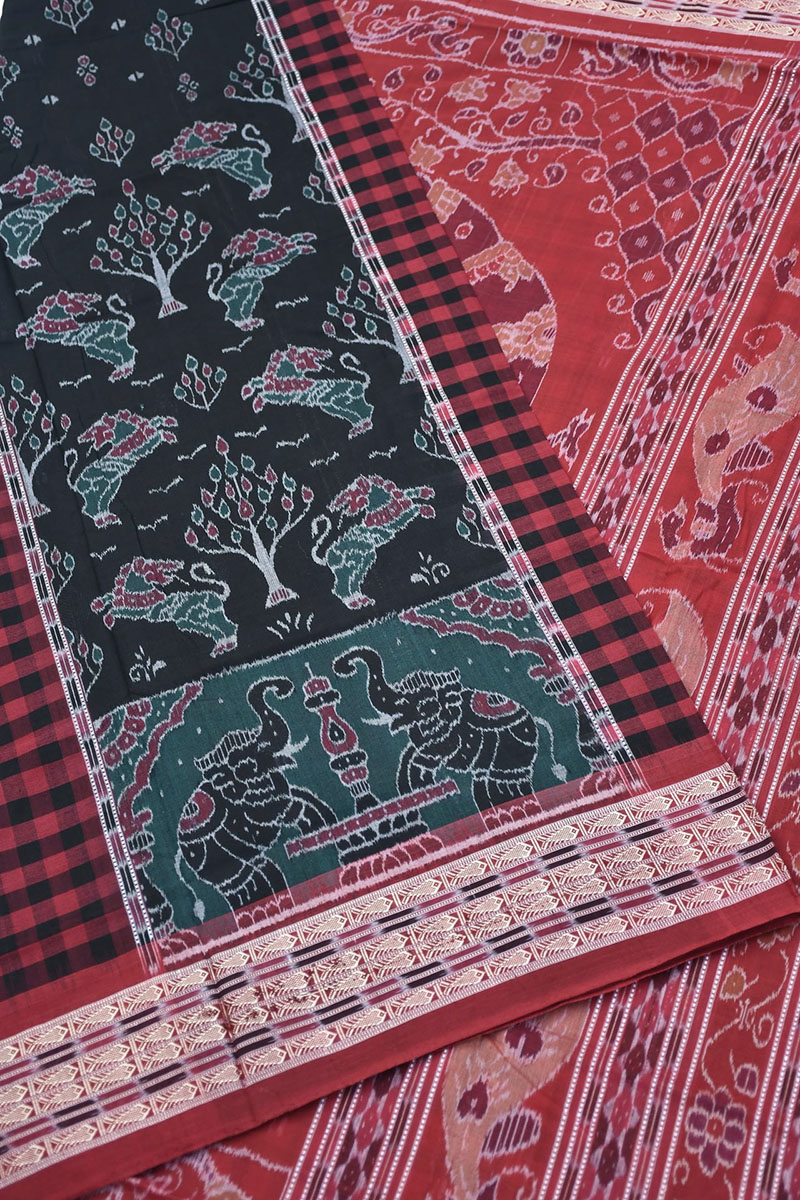
Woven in the Sambalpur district of Odisha (formerly Orissa), bapta saris are named after the handloom fabric from which they are made. The body of the saris is woven with tussar or kosa silk, while the borders and the pallu are made of cotton. These saris are typically worn only on special occasions and are not meant for daily wear.
These saris, woven on a three-shuttle loom, are also often embellished with gold threads in the weave and patterned using the ikat or baandha tie-dyeing technique and is woven with a three-shuttle loom that is worked by two weavers. Intricate motifs are woven on the body of the sari and along its border and throw. The phoda kumbha, or temple motif is usually woven along the borders, giving it the appearance of a jagged edge. The entire production process can take up to two weeks.
The laborious weaving process, coupled with low demand in the market, has dissuaded many weavers from making traditional bapta saris, leading to a steady decline in their production in recent years.
First published: 21 April 2022
Image Gallery
Bibliography
Odisha Handloom. “Bapta Sari – A perfect blend of cotton and silk yarn” Orissa Handloom. Accessed April 8, 2020. https://www.orissahandloom.com/about-sari.php?id=18.
Mishra, Sweta. “Unfolding The Rustic Charm Of Odisha’s Bapta Saree” Odisha Bytes. Last modified August 8, 2018. https://odishabytes.com/unfolding-the-rustic-charm-of-odishas-bapta-saree/.
Chishti, Rta Kapur. Saris: Tradition and Beyond. Edited by Martand Singh. New Delhi: Roli Books, 2010.
Feedback