-
ChicagoImpart Encyclopedia of Art. "Badaam Motif." April 21, 2022. https://imp-art.org/articles/badaam-motif/.
-
MLA"Badaam Motif." Impart Encyclopedia of Art, Apr. 21, 2022, https://imp-art.org/articles/badaam-motif/.
-
HarvardImpart Encyclopedia of Art (2022) Badaam Motif. Available at: https://imp-art.org/articles/badaam-motif/ (Accessed: 3 March 2026).
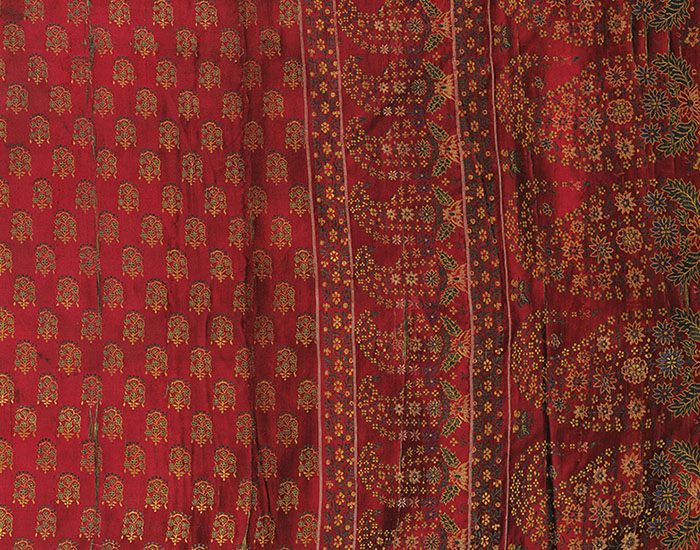
Recognisable by its stylised almond-like shape, the badaam motif bears visual similarities to the Persian boteh, or buta, and the kairi, or kalka motif. Its name is derived from the Persian term badaam, meaning “almond”. The badaam motif has several variants and analogues in various textile traditions, the best-known among which is the Paisley motif.
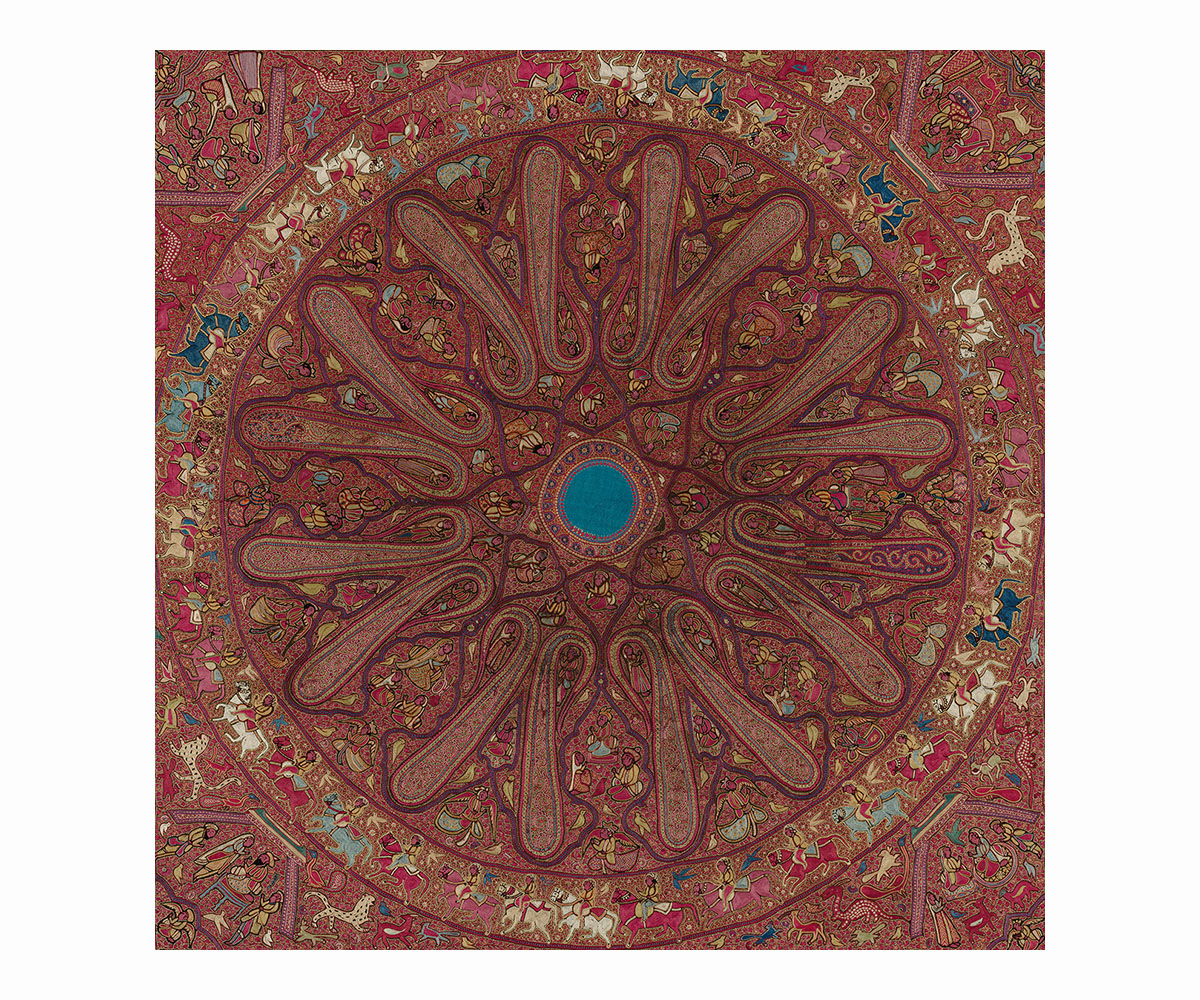
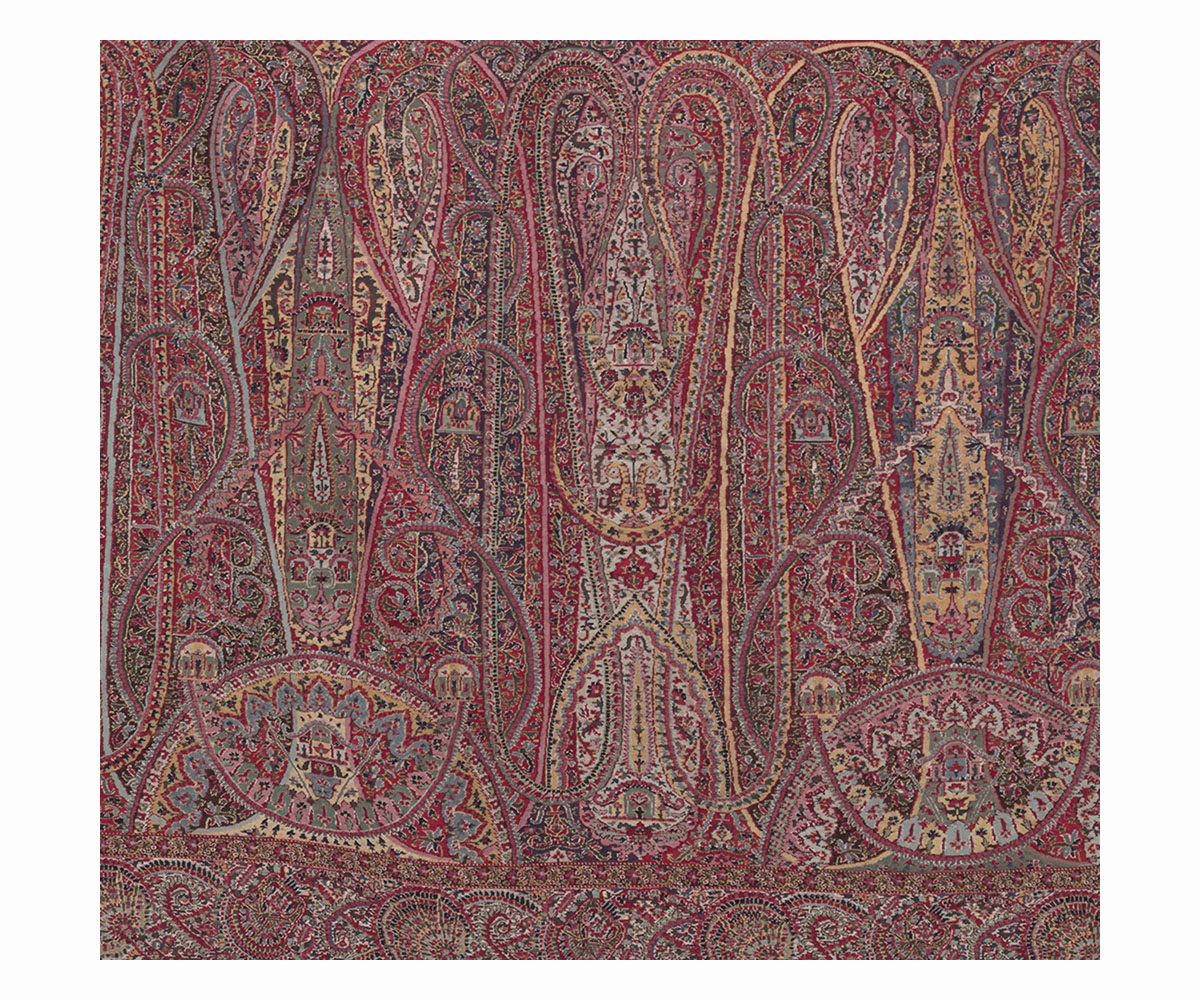
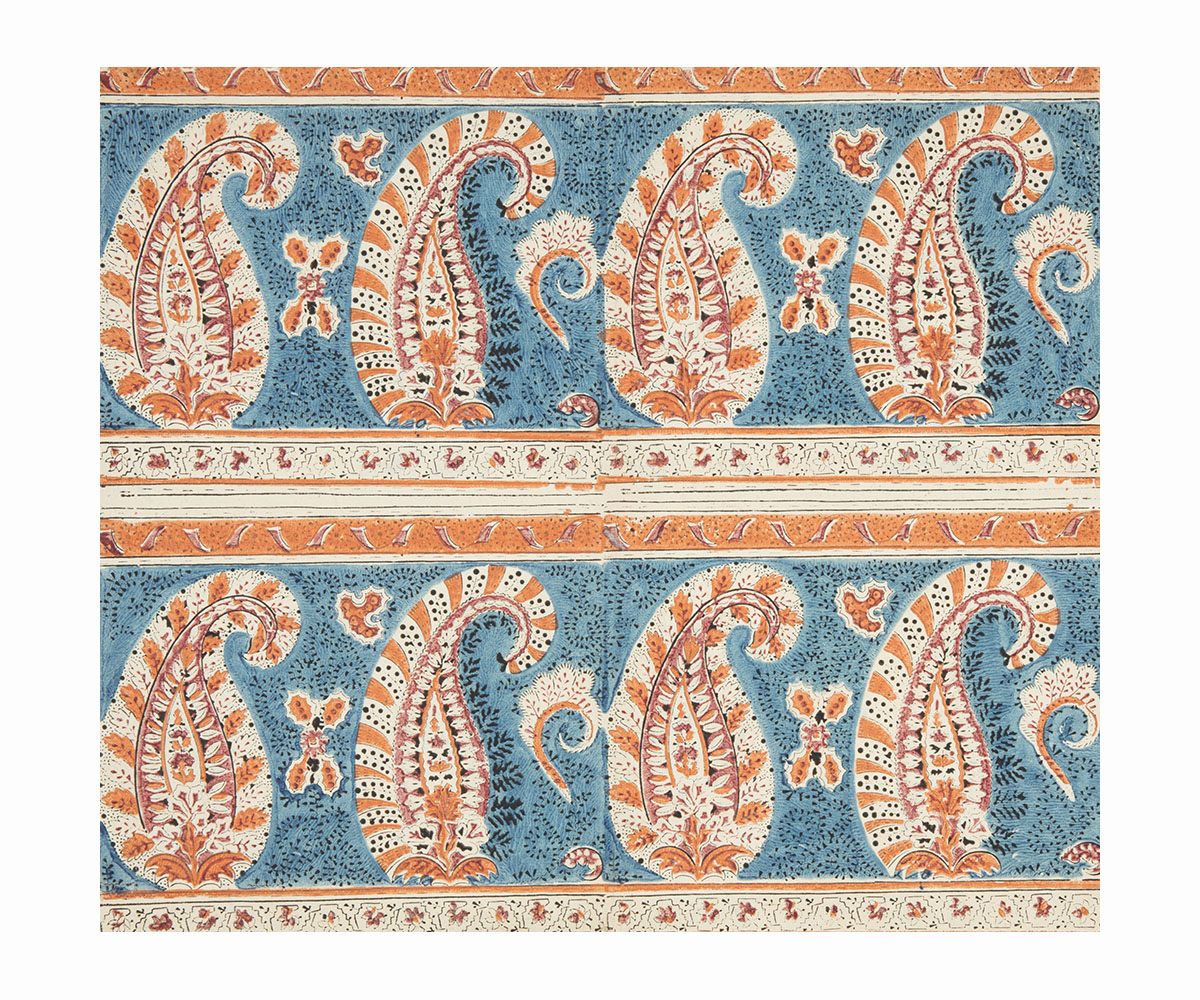
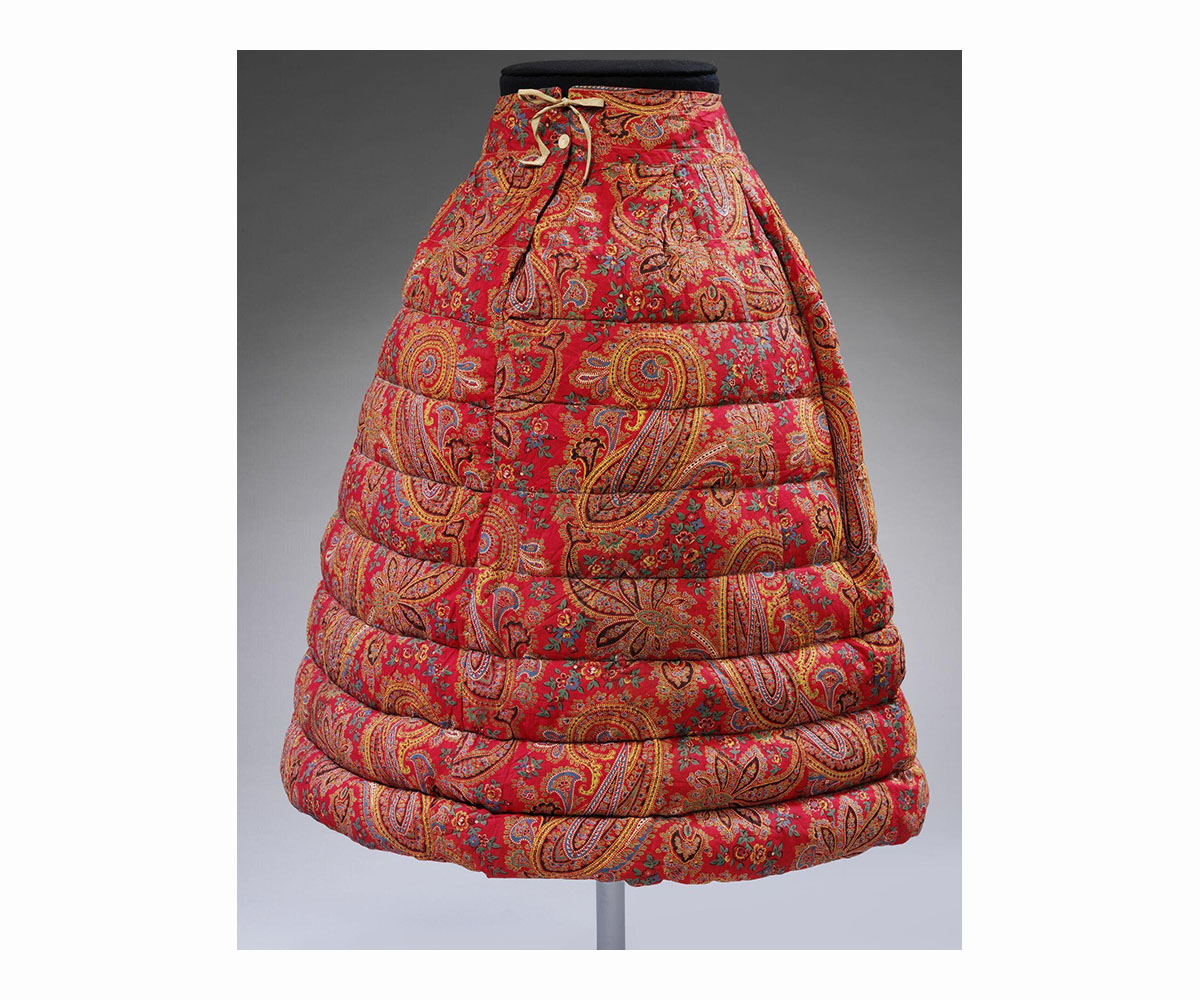
In India, the badaam motif is especially associated with the Kashmir Valley, where it developed in the sixteenth century with the arrival of the Mughals. It appears most commonly on the pashmina shawl as a part of the floral border design or as stand-alone outline motifs filled in with grouped flowers. The use of this motif has since extended beyond the traditional format of the Pashmina shawl and into other forms of printed, woven and embroidered fabric such as shawls and bed linen
The motif entered the popular visual idiom with its adoption and subsequent adaptation by the hippie culture of the 1960s and 70s and, later, the cowboy culture in the American Southwest. This paved the way for its entry into contemporary formal wear produced by large European luxury fashion houses and the couture of high-fashion brands. In India, besides continuing to be seen in traditional Kashmiri shawls, the badaam motif is now also a prominent feature of the chikankari embroidery tradition of Uttar Pradesh.
First published: 21 April 2022
Image Gallery
Bibliography
Gill, Brina. “Motifs Speak.” Trujetter.org, 2016. Accessed December 7, 2020. http://trujetter.com/motifs-speak/.
Naik, Shailaja D. Traditional Embroideries of India. New Delhi: APH Publishing, 1996.
Saraf, D N. Arts and Crafts, Jammu and Kashmir: Land, People, Culture. New Delhi: Abhinav Publications, 1987.
Thapa, Devi, Kiran Chaudhri, and V. S. Navalkar. 1000 Decorative Designs from India. Chelmsford (MA): Courier Corporation, 2007.
Kallan, Ankita. “Evolution of Paisley Motif of Kashmir: A Report on Paisley Motif of Kashmir.” International Journal of Home Science 4, no.1 (2018): 172‒180. https://www.homesciencejournal.com/archives/2018/vol4issue1/PartC/4-1-17-924.pdf.
Feedback