-
ChicagoImpart Encyclopedia of Art. "Sola Topi." April 22, 2024. https://imp-art.org/articles/sola-topi/.
-
MLA"Sola Topi." Impart Encyclopedia of Art, Apr. 22, 2024, https://imp-art.org/articles/sola-topi/.
-
HarvardImpart Encyclopedia of Art (2024) Sola Topi. Available at: https://imp-art.org/articles/sola-topi/ (Accessed: 3 March 2026).
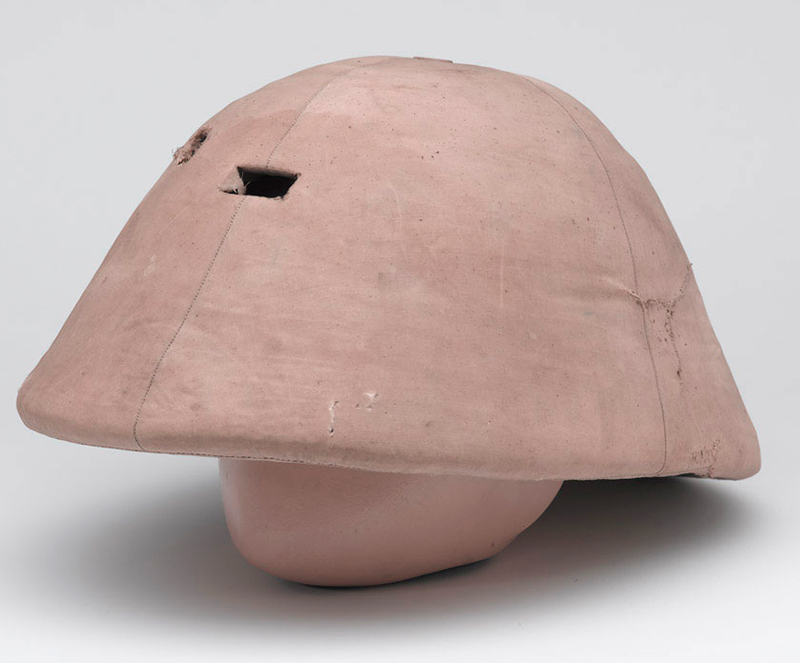
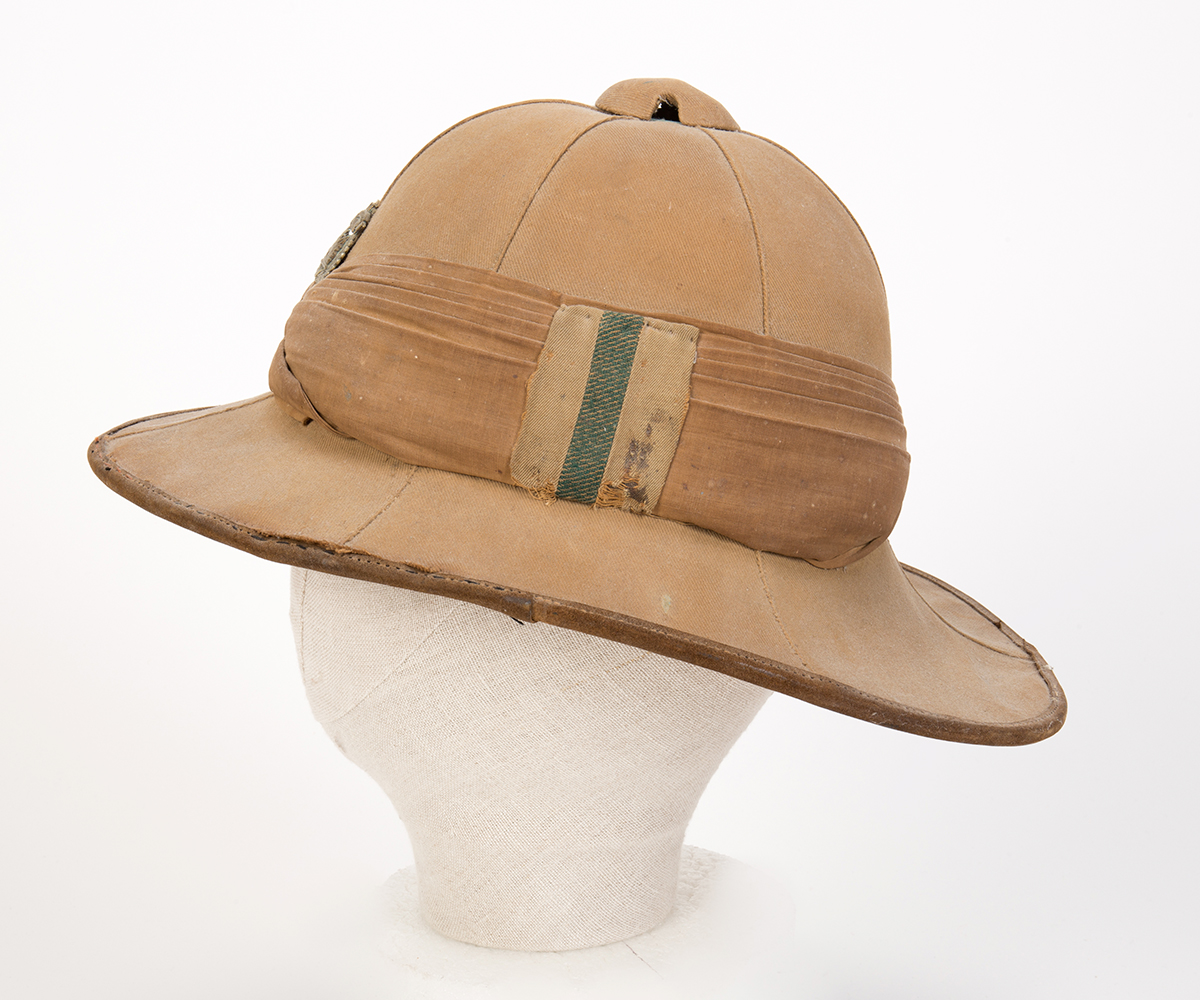
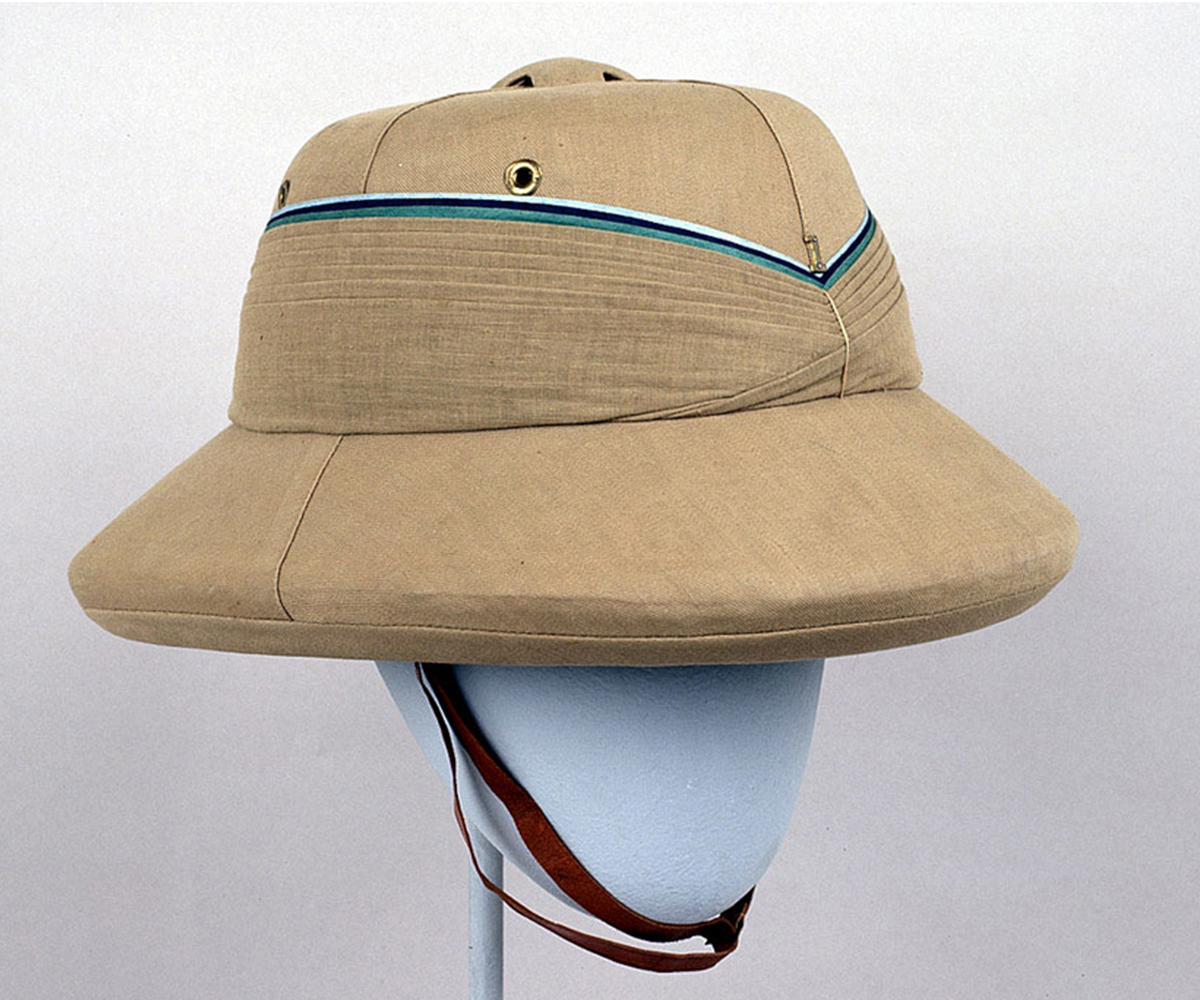
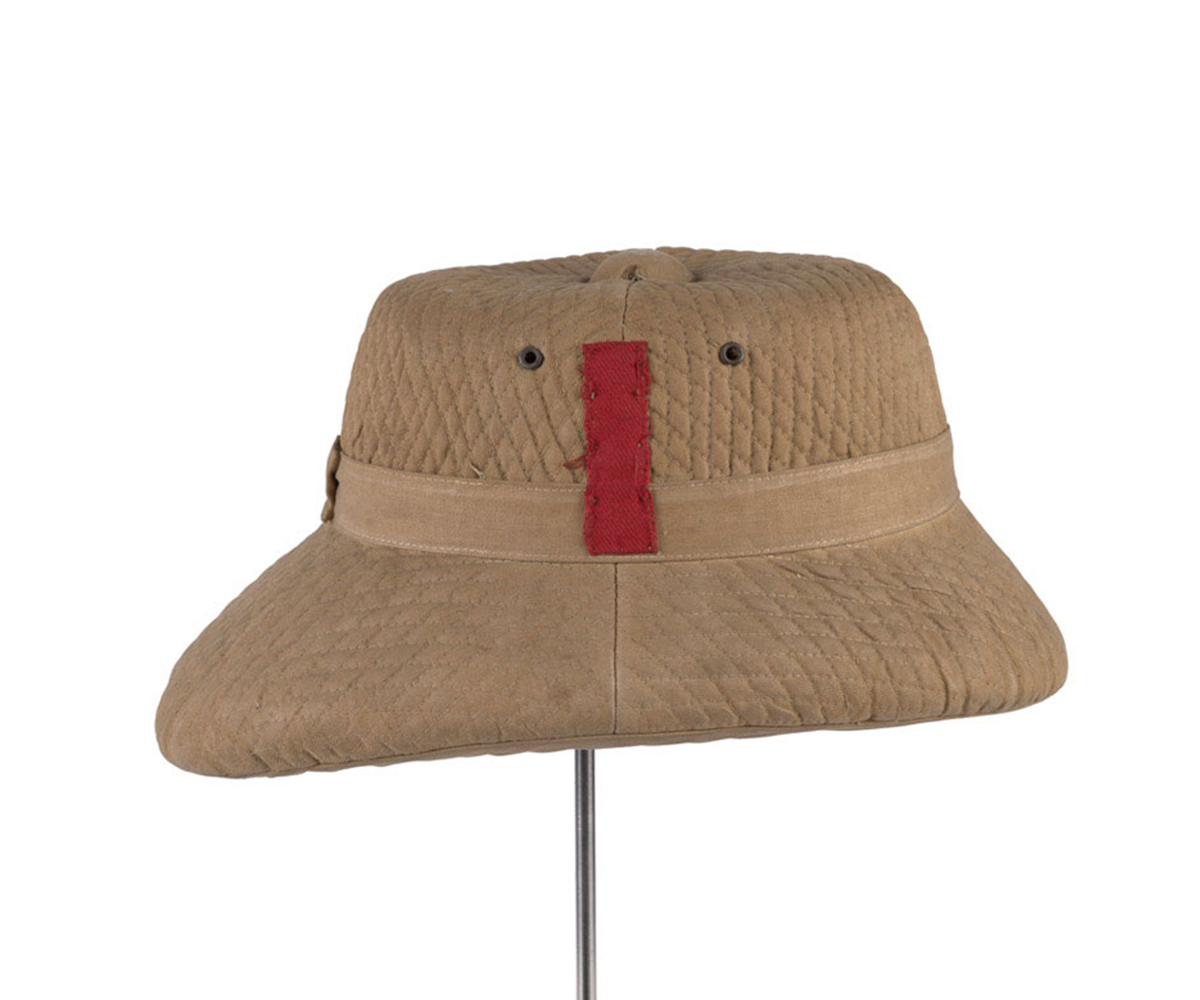
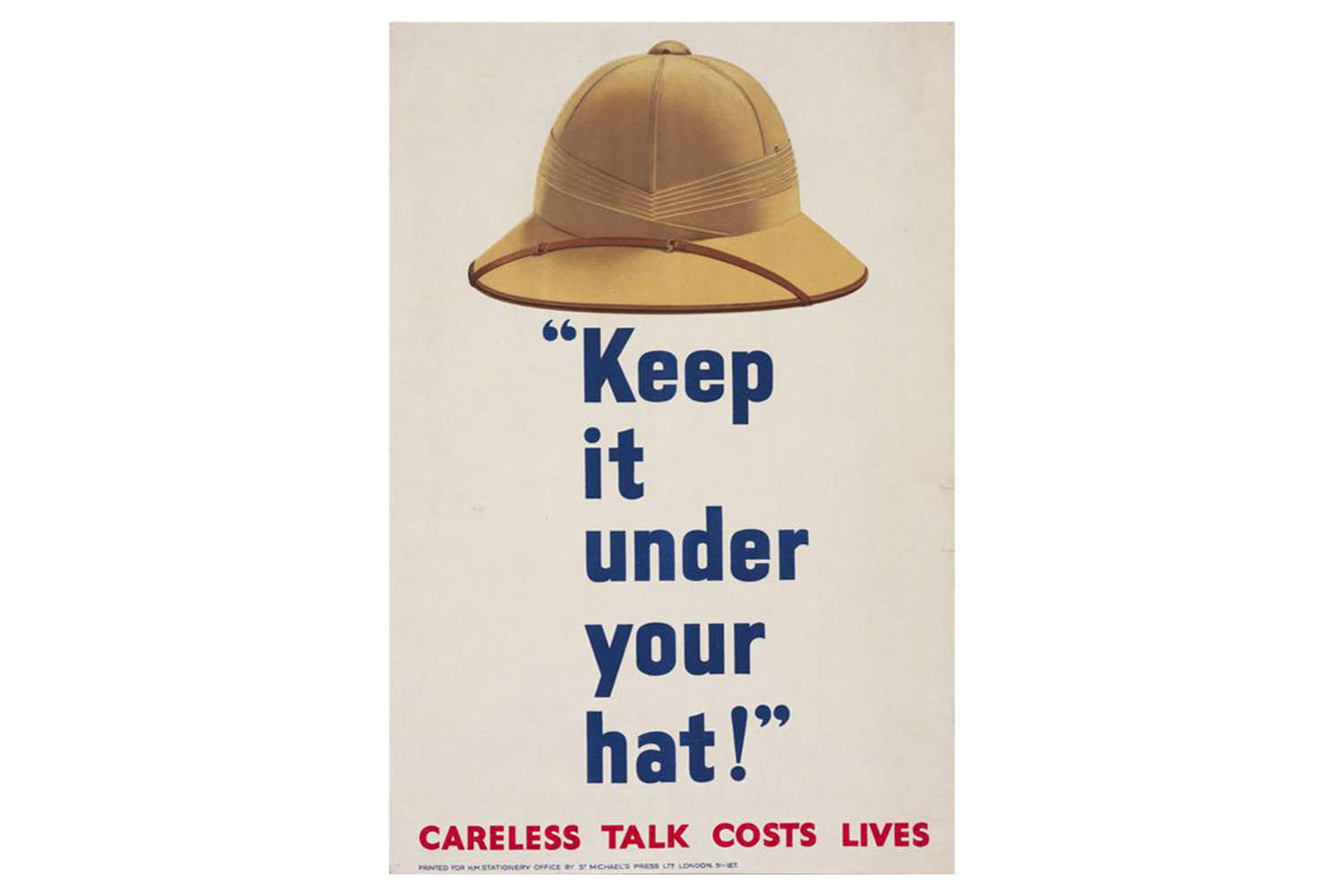
A rigid, brimmed hat popular among the British and Anglo-Indians in colonial India between the mid-nineteenth and mid-twentieth centuries, the sola topi gets its name from the sola plant (Aeschynomene aspera) whose stem provides the material used to make it. Also known by the general term ‘pith helmet’, it has a high, dome-like crown covered in fabric, featuring holes for ventilation, and a wide, sloping brim. Although devised and worn for protection against heat, it became a pervasive symbol of colonial rule, and was later adopted by other imperialist forces in tropical colonies around the world as well. Today part of some martial uniforms, the hat remains globally synonymous with imperialism as a motif in popular visual culture. Other names for the sola topi include ‘safari helmet’, ‘tropical helmet’, ‘sun hat’, or simply ‘topi’ — a Hindustani term that refers to a hat or cap in general, but which began to signify this hat in particular as it gained popularity in the middle of the nineteenth century.
Origins
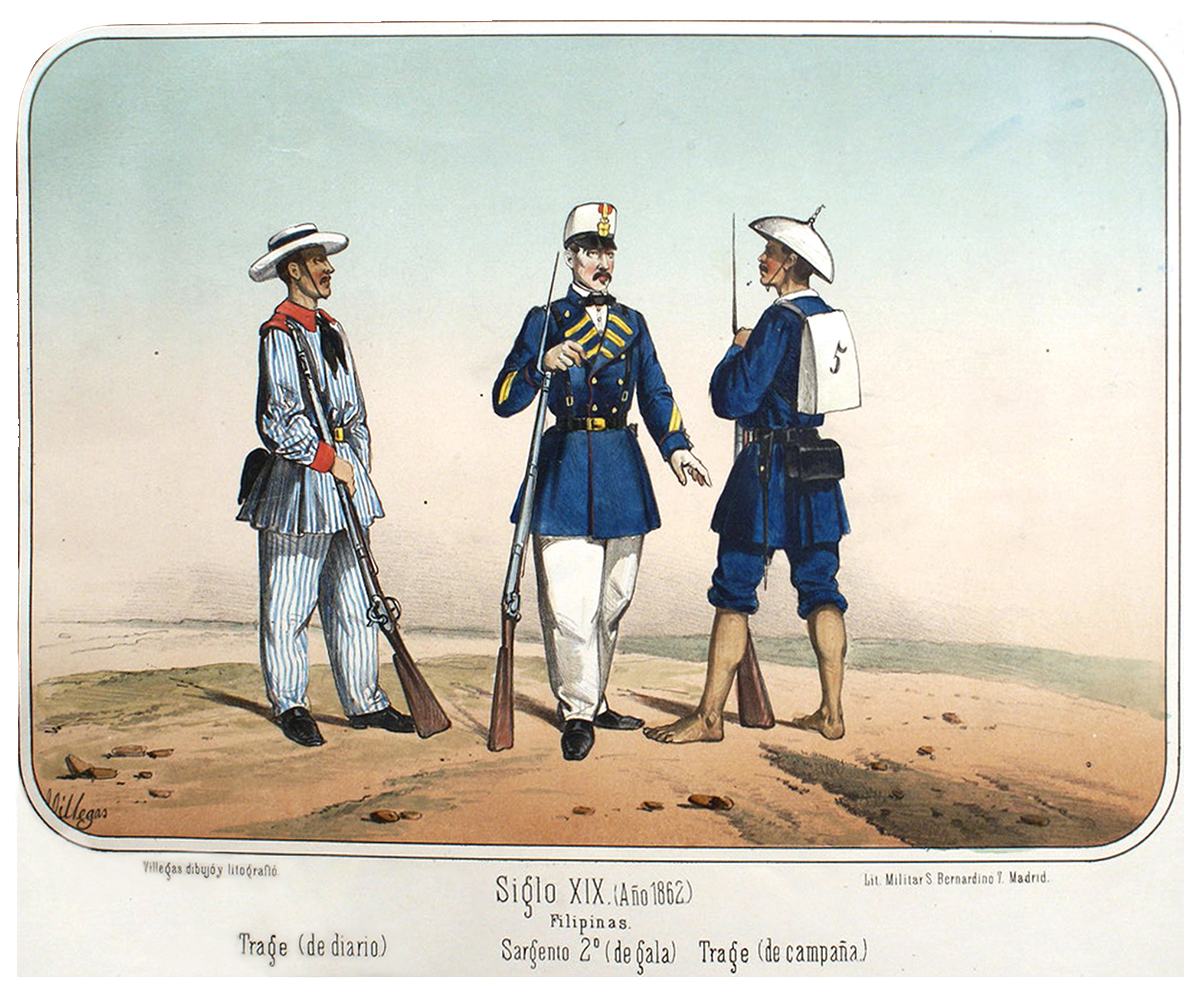
Heatstrokes were a common ailment among European officials and their family members posted in the tropical colonies, whose parasols and narrow-brimmed hats, as much as they warded off the sun, did little to alleviate the heat. The sola topi is thought to have evolved from the Filipino salakot, a shallow domed or conical hat woven out of reeds, traditionally worn in the region by farmers and fisherpeople. Spanish colonial forces in the Philippines in the eighteenth century adapted the salakot design for hats for their officials and troops, and other imperial regimes in South Asia followed. The sola topi itself is considered the innovation of Julius Jeffreys, a British surgeon who designed it while hiking in the Himalayan range in 1824.
Material and design
Jeffreys fashioned the frame of his prototype out of wicker, which he lined with silk and then wrapped with strips of cotton. His notes specify that the top of the hat extended slightly above the crown of the head to enable the circulation of air. He later improved on the design by adding a wide, downward sloping brim all around, and moulding the hat from the light, porous sola wood. Commonly mistaken as the pith, the spongy, cork-like material is the wood of the sola, a leguminous swamp plant native to the Indian subcontinent and Southeast Asia; it is also known for its use in the sholapith craft of the Indian states of West Bengal and Odisha. Besides being very lightweight, its low heat conductivity served to protect the hat’s wearer from heat. The entire sola core of the hat was tightly covered with cloth.
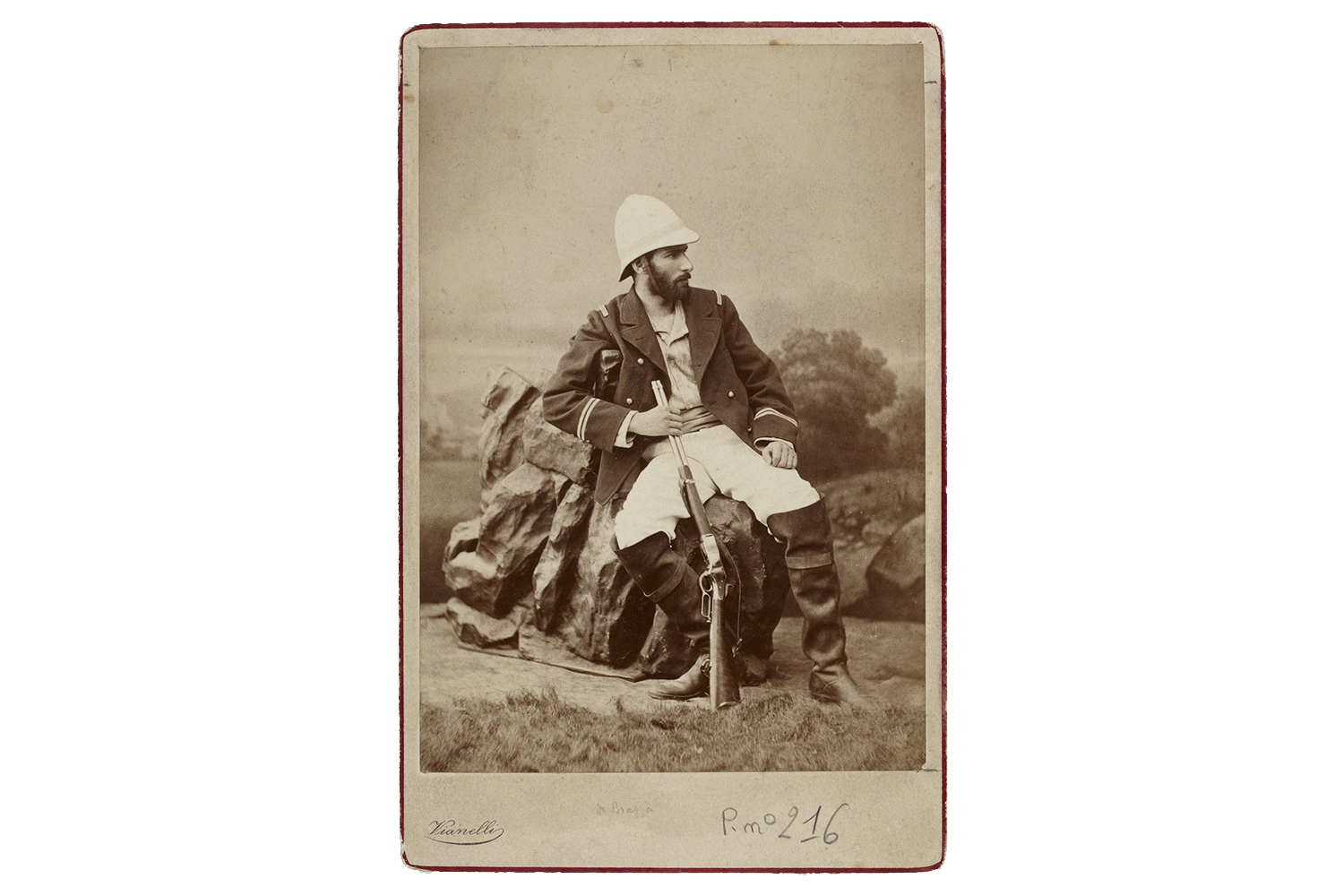
The most recognisable version of the sola topi is white or khaki on top — to prevent the absorption of heat — with a green lining under the brim, and a leather chinstrap that rests over the brim in front when not in use. The dome of the hat features a few ventilation holes on the sides, as well as one at the top in some versions. Wet cotton or silk cloth was often wrapped around the dome — just over the brim in the manner of a pagri or turban — to offer additional cooling; this wrapped strip later became a permanent stylistic feature of the hat. Some wearers added cloth that hung down the back of the hat to protect the neck. When medical practitioners later noted that even the spine was susceptible to sun-damage, a spine pad was designed to be worn in addition to the hat. Owing to its primary function of sun-protection, the hat has often been incorrectly called the ‘solar’ topi.
Use and connotations
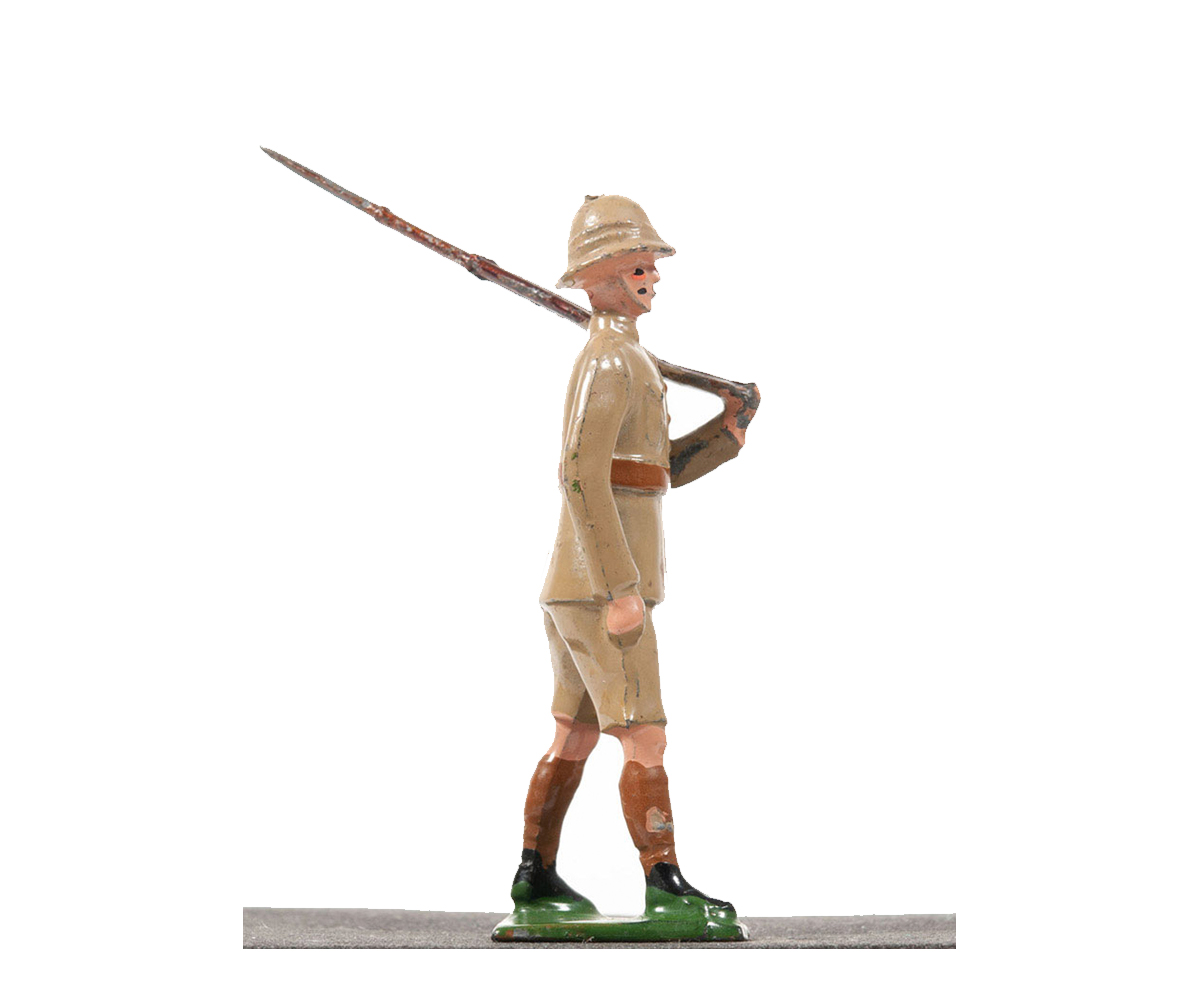
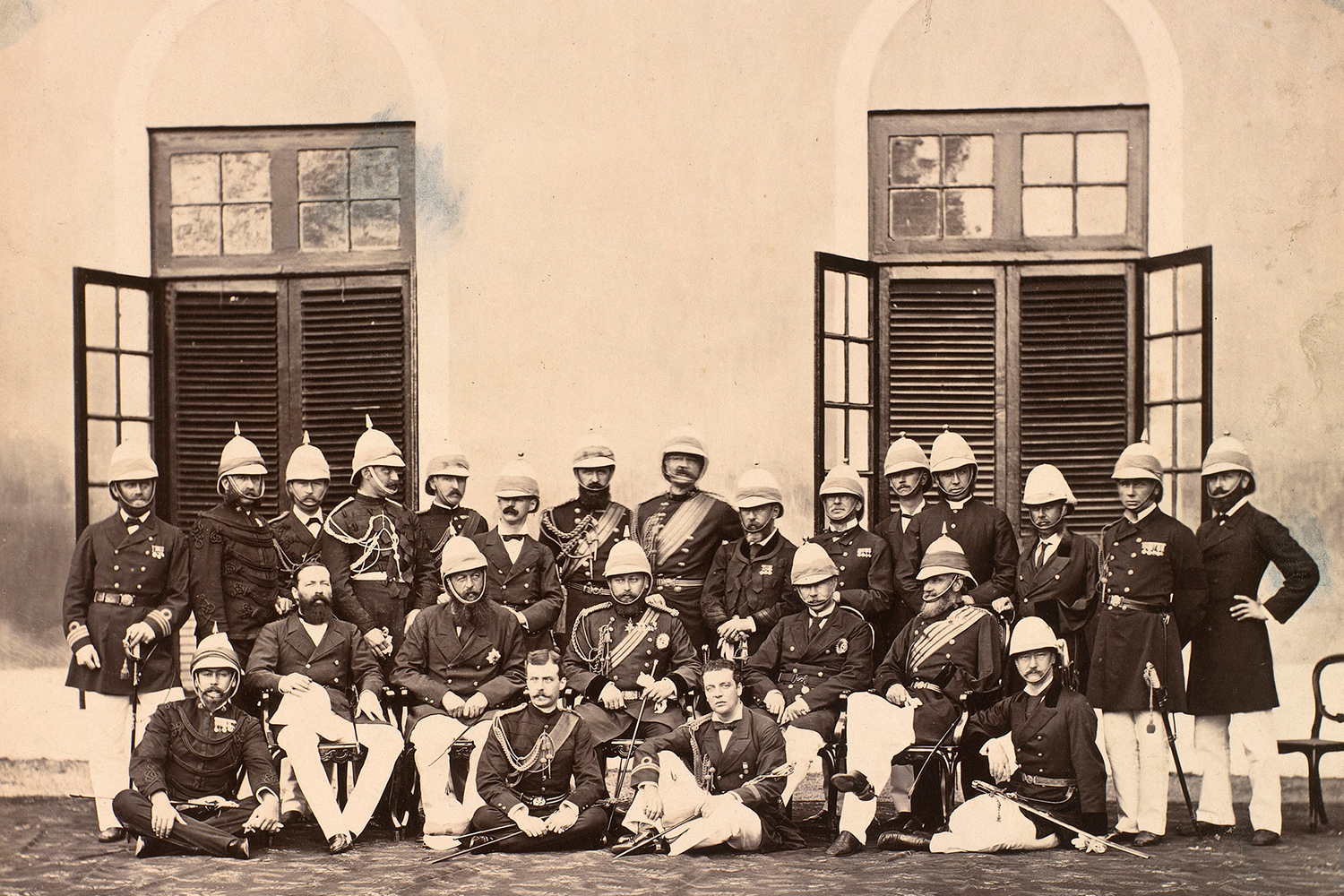
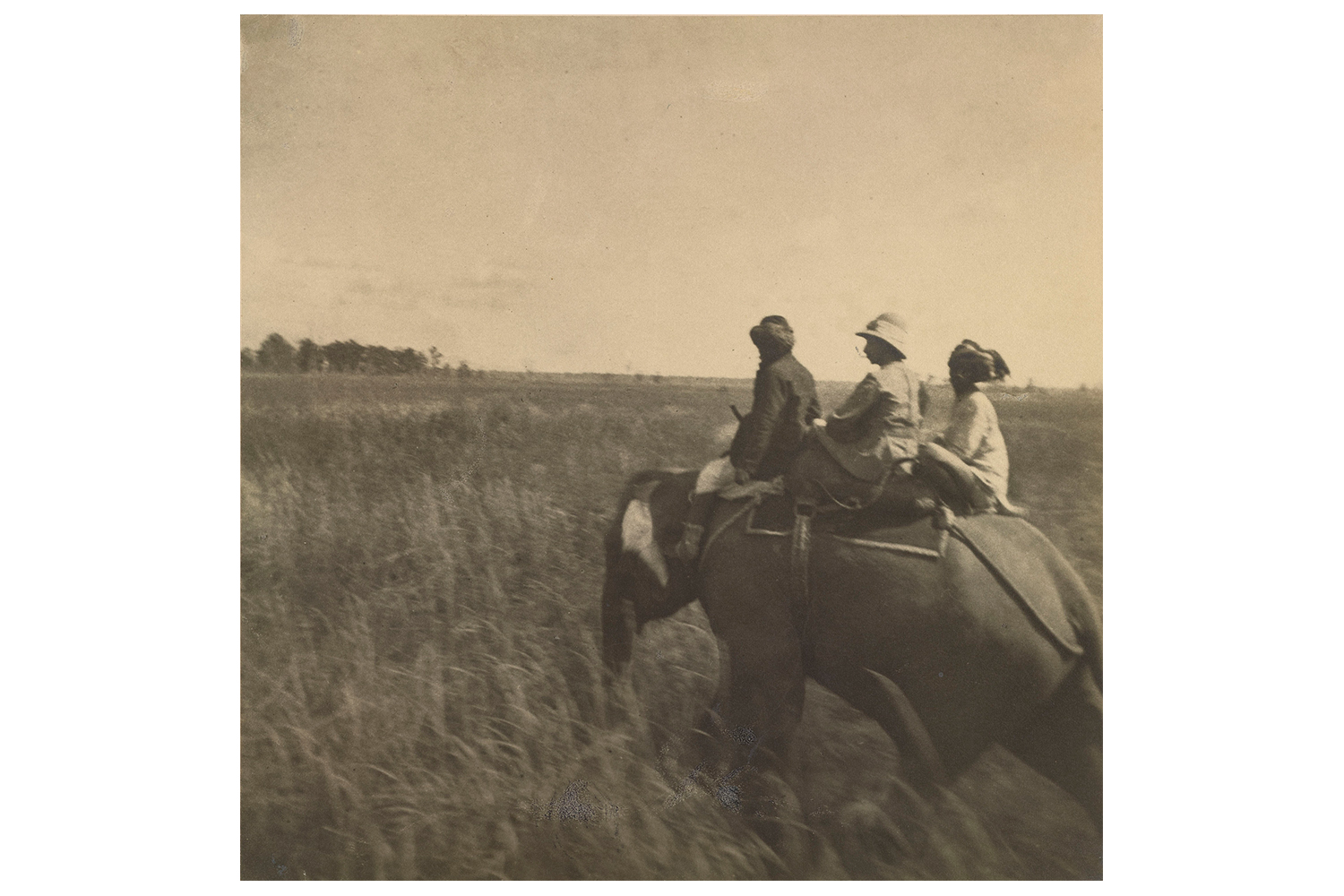
The hat was worn by British soldiers for the first time during the Anglo-Sikh Wars in the 1840s. Following this, demand skyrocketed during the Revolt of 1857, with the arrival of more British soldiers in India, many of whom were stationed in the hot plains. Jeffrey’s sola topi was adopted as part of the de facto official dress of the colonial dispensation. The hat also became a default component of British civilian clothing in India, so much so that Indians referred to the British as the topiwallas or ‘hat-wearers’. British people of all ages wore it while outdoors, and to go out without one came to be seen as foolhardy and inappropriate, and in some cases, unlawful and even treacherous. The hat also became especially popular among Anglo-Indians, who saw it as a means to emphasise the British part of their identity and set themselves apart from Indians. Calcutta (now Kolkata), the then-capital of British India, was the main centre of production of sola topis in India. European travellers to the tropics, among whom were scientists, archaeologists and explorers, are also known to have bought sola topis at Port Said in Egypt, which served as the gateway to the East. Here, iconic stores such as Simon Arzt stocked the hats among a number of other speciality items, and the purchase and discarding of the sola topi is noted as a rite of passage for these travellers on the way to and back from the tropics.
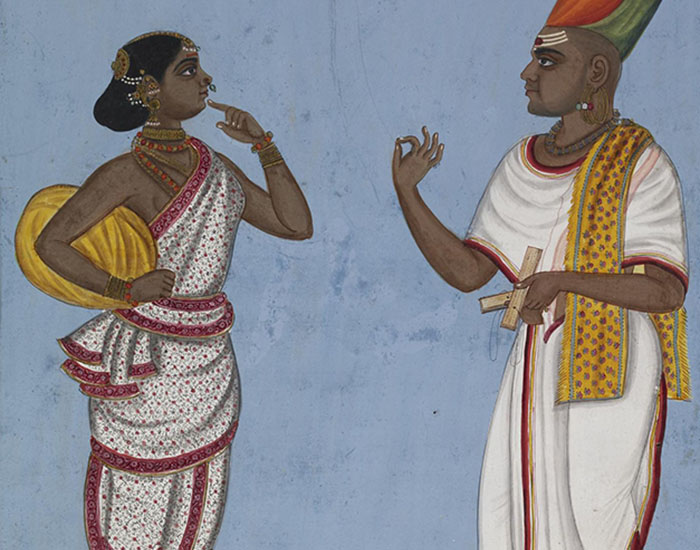
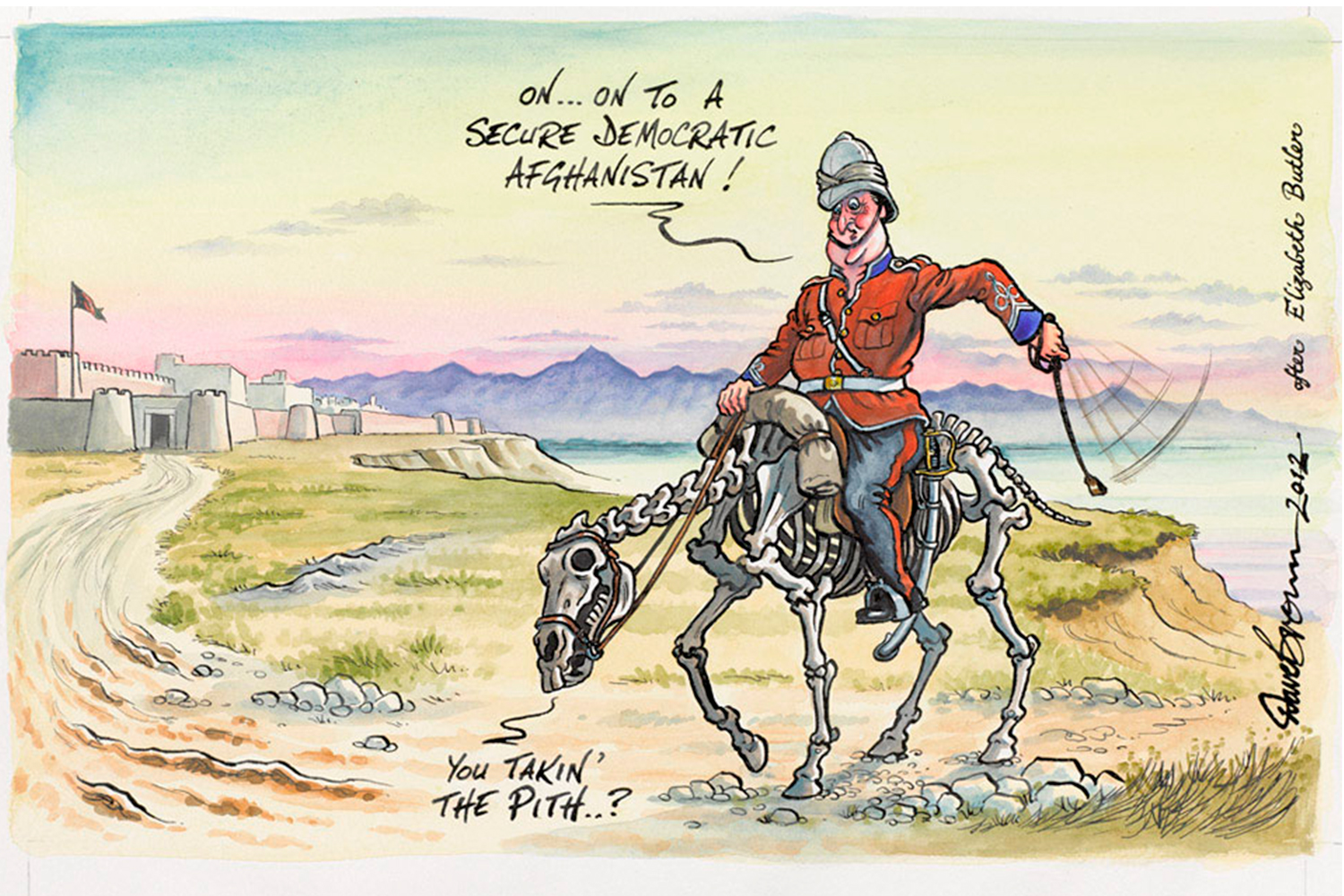
Aware of the ubiquitous use of headwear in India to indicate identity — members of different castes and regional groups wrapped turbans in particular styles — the British also used the sola topi to distinguish themselves and underscore their imperial authority. Their rhetoric around the hat also included quasi-scientific theories about the Europeans’ need for additional sun protection as compared to the native population, which presumed their racial superiority.
Owing to its strong colonial connotations, the sola topi was not widely worn by Indians apart from army officials. However, some scholars note that the hat’s practicality appealed to the anti-colonialist leader MK Gandhi, who donned it in an ensemble with his dhoti and shawl in the early twentieth century, and expressed a desire to adopt it as a piece of pan-Indian headwear. He gave this up in light of the aggressive criticism it sparked, which claimed the use of the hat as an act of disloyalty to the national cause.
Outside South Asia
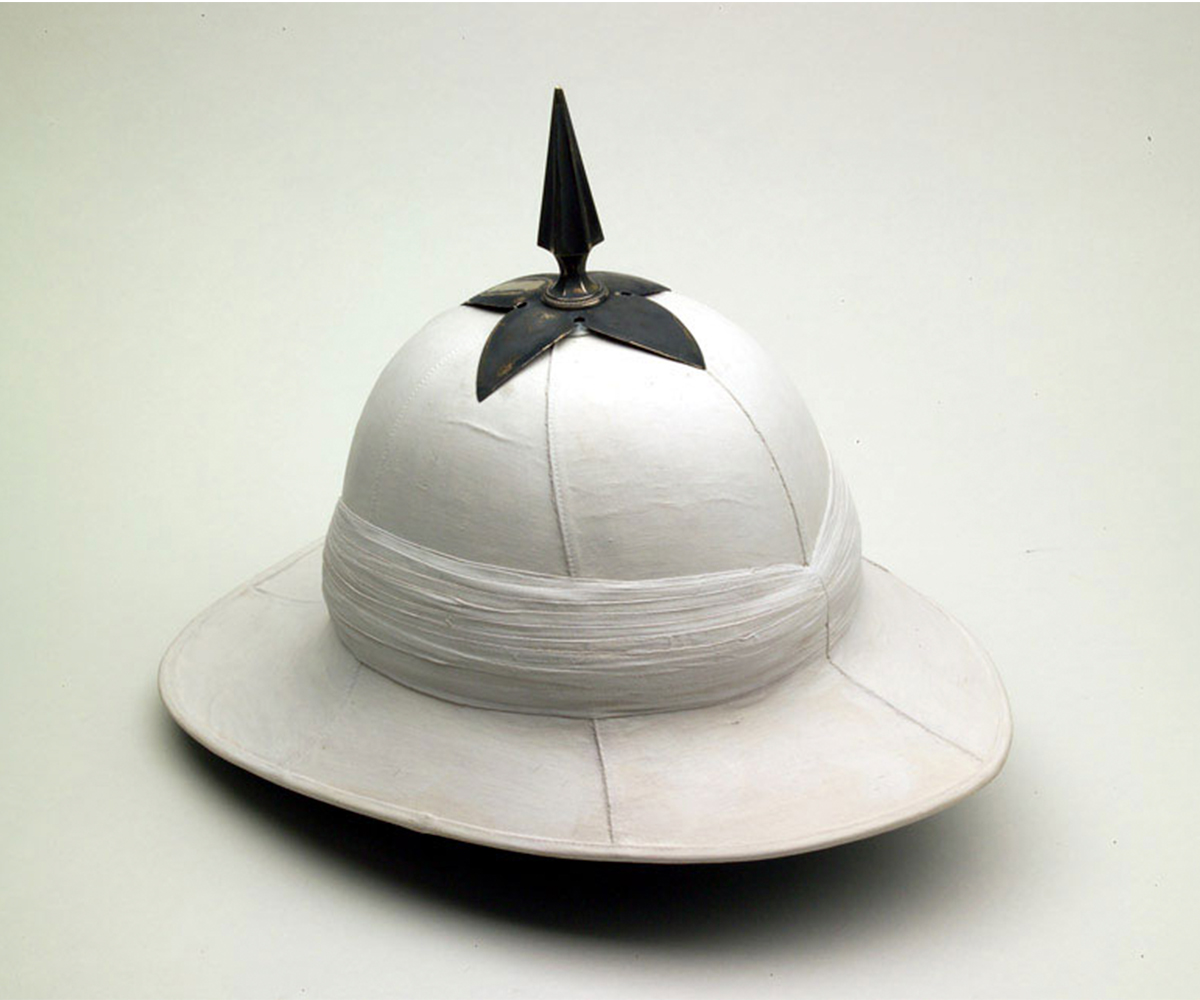
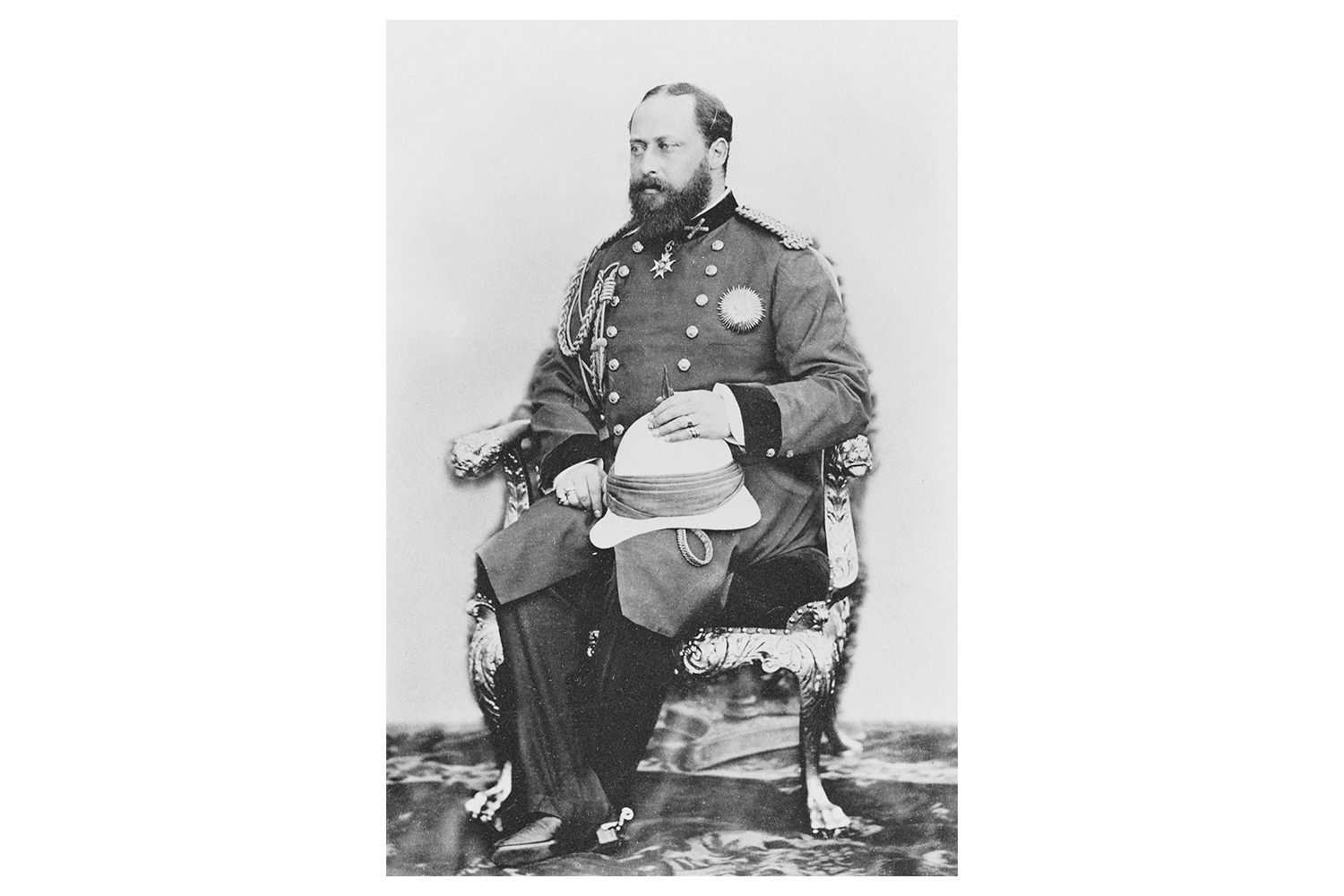
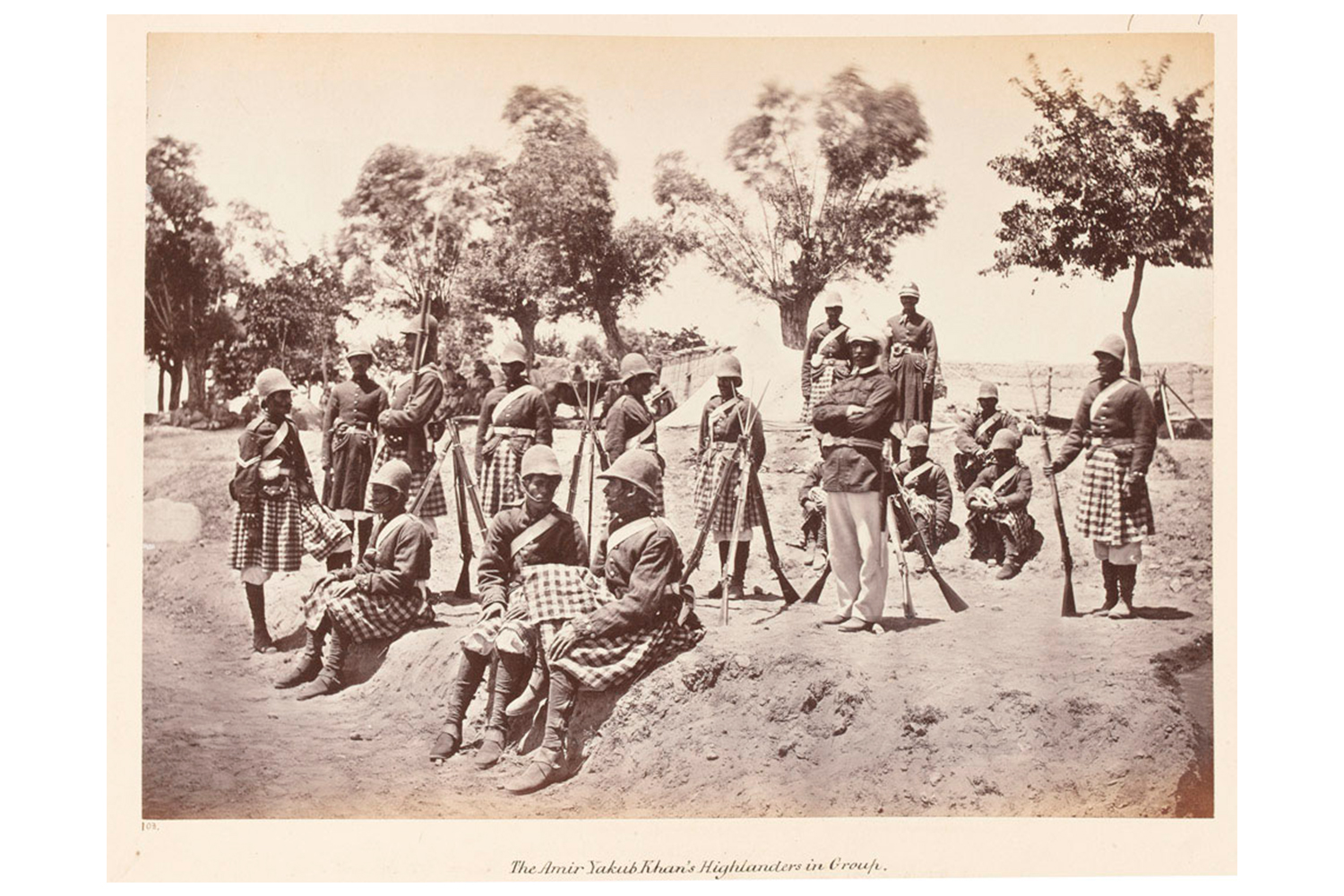
Apart from the British, the French, Dutch and Spanish adopted the sola topi as a staple piece of headgear in their colonies. During the First World War, it was worn by the Turkish, Germans and Belgians, and was adopted by the Italians during the Second World War. The American army is also known to have used the pith helmet in the Philippines. With the hat’s use by the militia, its shape and the materials used in its making changed. By the early years of the twentieth century, it was made of cork in many parts of the world and came to resemble the German pickelhaube — with a short, sloping brim that jutted out of the front and back of the crown, which was topped with a knob, a spike, or plumes. It was customised as per the stylings of various imperial powers, often bearing a badge or coat of arms, as well as rank.
Decline and present-day
The popularity of the sola topi began to dwindle by the middle of the twentieth century, possibly because new British military recruits who made their way to India during the Second World War did not ascribe it with the significance their predecessors did. The pith helmet in various forms continues to be part of the uniforms of some police forces around the world and is still worn by royal guards in ceremonial events in Southeast Asia today. As a visual motif, it remains a common trope in popular media from comic books to films to depict colonial officials, archaeologists and explorers.
First published: 22 April 2024
Image Gallery
Bibliography
Bellanta, Melissa, and Lorinda Cramer. “Tropical Whites: Hegemonic Masculinity and Menswear at the Crossroads of Australia and Asia, 1900–1939.” Gender & History 0, no. 0 (August 2022): https://doi.org/10.1111/1468-0424.12640.
Chico, Beverly. Hats and Headwear around the World: A Cultural Encyclopedia. Santa Barbara: Bloomsbury Collections, 2013.
Cohn, Bernard S. Colonialism and Its Forms of Knowledge: The British in India. Princeton: Princeton University Press, 1996.
Collingham, E. M. Imperial Bodies: The Physical Experience of the Raj, c. 1800-1947. Cambridge, UK: Polity Press; Blackwell Publishers, 2001.
De Caro, Francis A., and Rosan A. Jordan. “The Wrong Topi: Personal Narratives, Ritual, and the Sun Helmet as a Symbol.” Western Folklore 43, no. 4 (1984): https://doi.org/10.2307/1500107.
HatHistorian. “I Plead the Pith: A History of the Pith Helmet.” Uploaded June 1, 2022. Video, 09:55. https://www.youtube.com/watch?v=qLh4PsjAHws.
Hobson, John M. The Eastern Origins of Western Civilisation. 1st ed. Cambridge: Cambridge University Press, 2004. https://doi.org/10.1017/CBO9780511489013.
Nochesada, Elmer I. “The Filipino and the Salacot.” Tagalog Dictionary. Articles & Essays. Accessed February 22, 2024. https://www.tagalog-dictionary.com/articles/the-filipino-and-the-salacot.
Rovine, Victoria L. “Pith and Power: Colonial Style in France and French West Africa.” Journal of Material Culture 23, no. 3 (September 2022): 280–312. https://doi.org/10.1177/13591835221090603.
Tarlo, Emma. “Competing Identities: The Problem of What to Wear in Late Colonial and Contemporary India.” PhD diss., School of Oriental and African Studies, University of London, 1992.
Rankin, Robert H. Military Headdress: A Pictorial History of Military Headgear from 1660 to 1914. London: Arms and Armour Press; New York: Hippocrene Books, Inc., 1976.
Ross, Robert. Clothing: A Global History: Or, The Imperialists’ New Clothes. Cambridge: Polity, 2008.
Feedback