-
ChicagoImpart Encyclopedia of Art. "Ellora Caves." April 21, 2022. https://imp-art.org/articles/ellora-caves/.
-
MLA"Ellora Caves." Impart Encyclopedia of Art, Apr. 21, 2022, https://imp-art.org/articles/ellora-caves/.
-
HarvardImpart Encyclopedia of Art (2022) Ellora Caves. Available at: https://imp-art.org/articles/ellora-caves/ (Accessed: 3 March 2026).
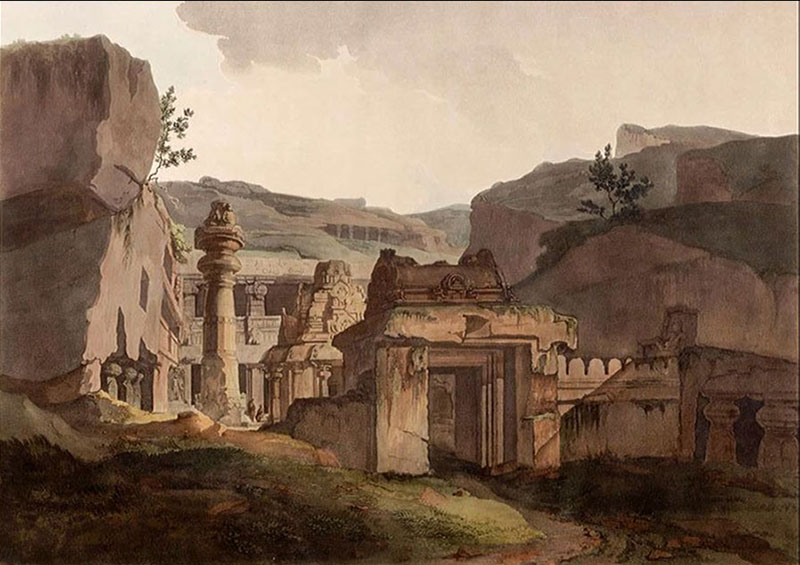
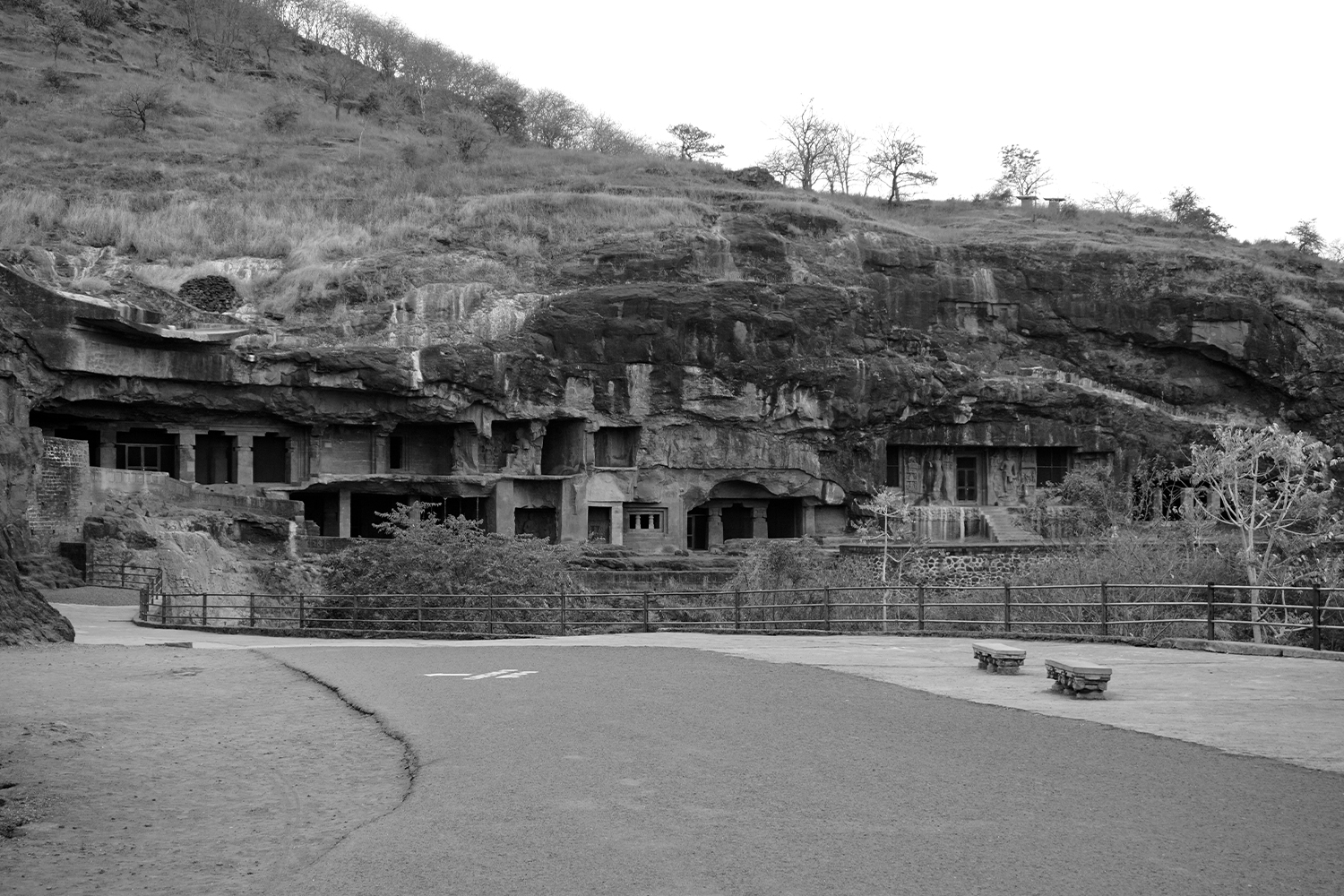
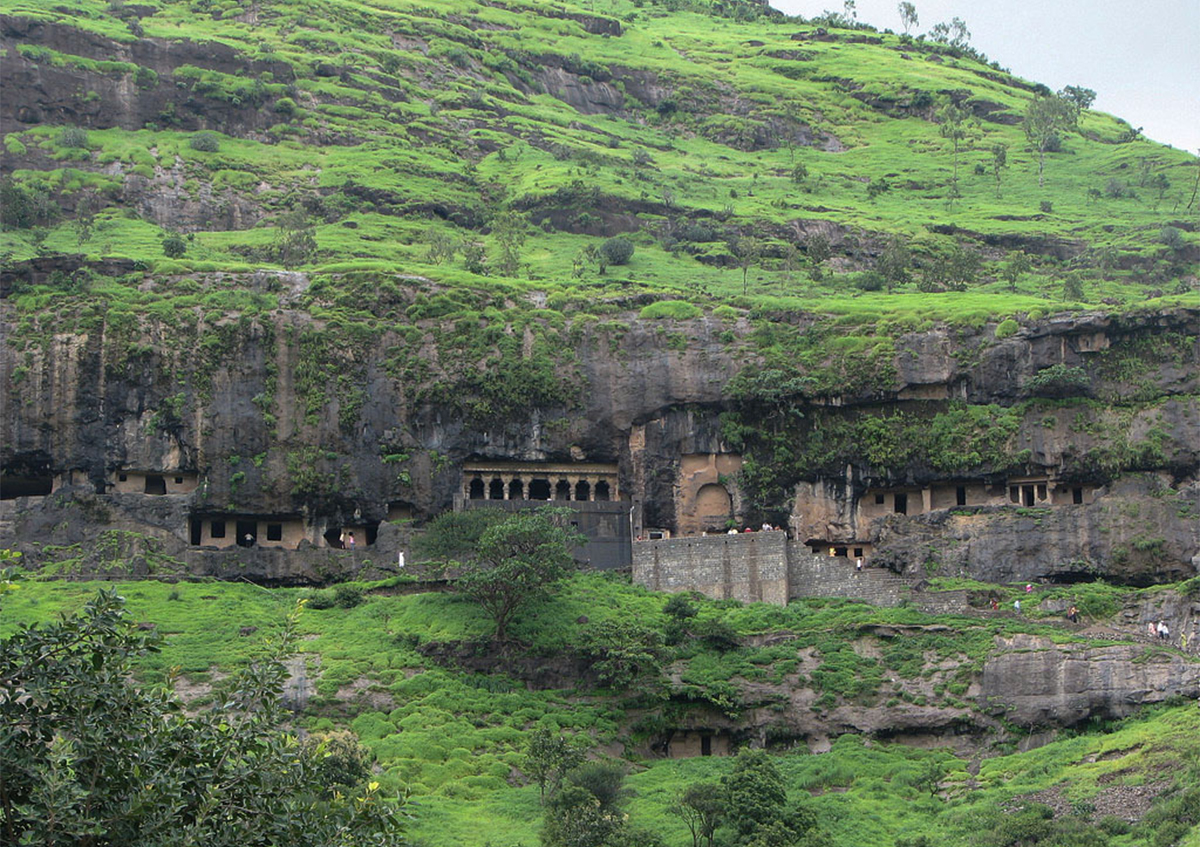
Located in the Aurangabad district of Maharashtra, the Ellora caves are the world’s largest complex of rock-cut temples and monasteries. Their name comes from the town of Ellora, formerly Elapura and known today as Verul. The caves date to between the sixth and twelfth centuries CE. Numbering thirty-four in total, twelve caves are dedicated to Buddhist deities, seventeen to Shaiva or Vaishnava deities, and five to Jain deities, together extending over two kilometres toward the north and south.
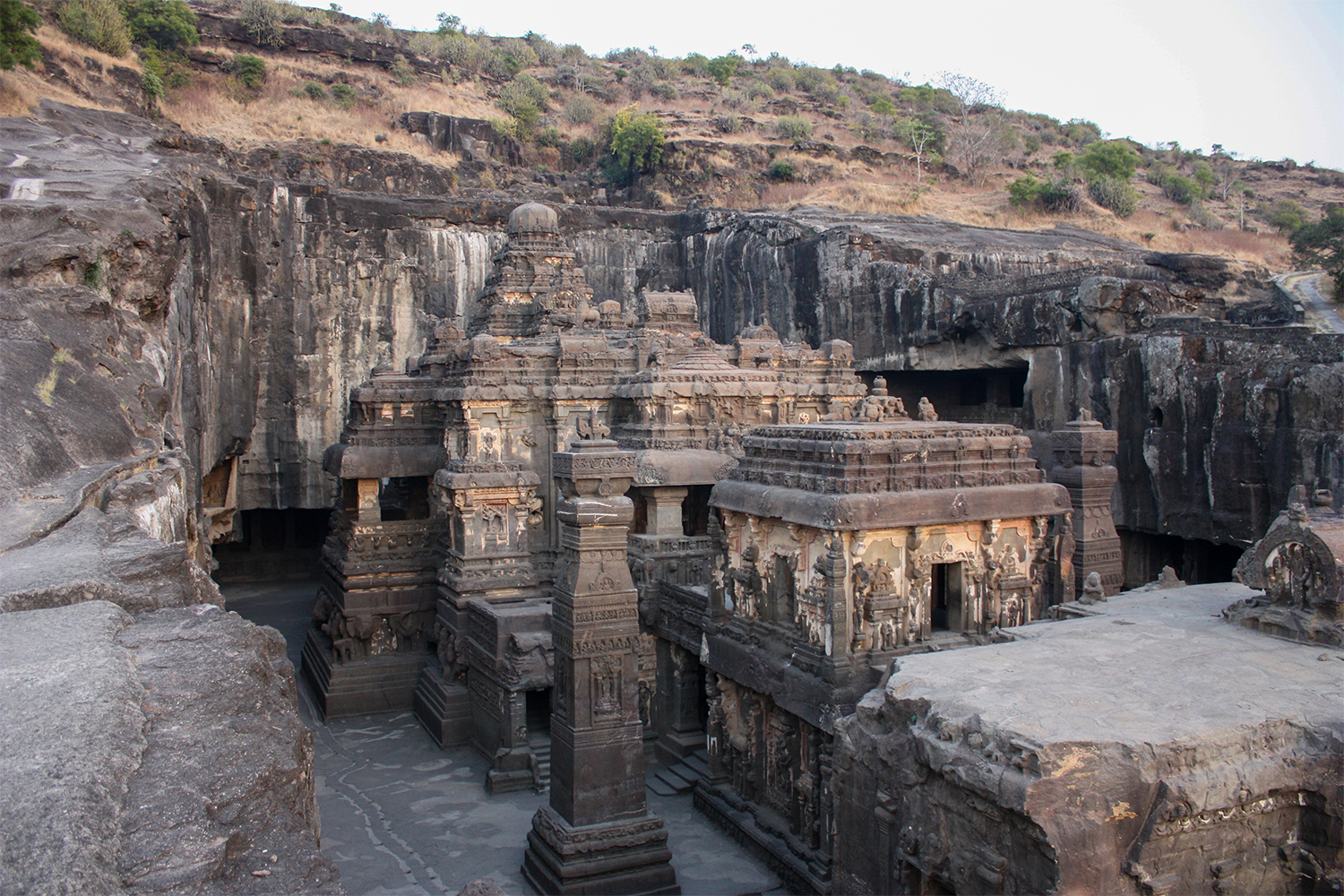
Carved into the basalt terraces of the Deccan traps, the shrines at Ellora represent the ongoing development of Deccan cave temple architecture, seen in its earliest forms in the Buddhist monasteries of the Western Ghats in the early centuries CE. The cave complex was the site of continuous activity through the early medieval period, contributing to and drawing on artistic and architectural developments of various kingdoms in the region. Some shrines at Ellora such as the Kailasanatha temple continued to receive patronage well into the eighteenth century.
The chronology of the caves is a matter of considerable debate. A much-endorsed theory is that the first of the Shaiva and Buddhist caves were carved around the same time, approximately in the second half of the sixth century; more continued to be added through the seventh and eighth centuries. Most of the Jain caves were completed in the ninth and tenth centuries CE, but iconographic and stylistic similarities have led some scholars to suggest that sculptors may have worked simultaneously on some of the Jain and Shaiva caves. The Jain caves are today an important visual record of the faith’s artistic and devotional activities in early medieval India. Apart from the sequentially numbered caves, the Ellora cave complex also include a cluster of smaller excavations on the hillside called the Ganesh Lena group.
The earliest caves at Ellora appear to feature influences from across the regions. Some scholars have suggested that these influences were brought to Ellora by itinerant sculptors who moved between various sites of the western Deccan, driven by the military activities and patronage of the Kalachuris, the early Western Chalukyas, and the Rashtrakutas. However, more recent scholarship has shown that Ellora was a major site of pilgrimage and worship in its own right, owing to its proximity to major trade routes; this suggests that the influences in cave temples here may result from a cosmopolitan community of local patrons and artisan guilds.
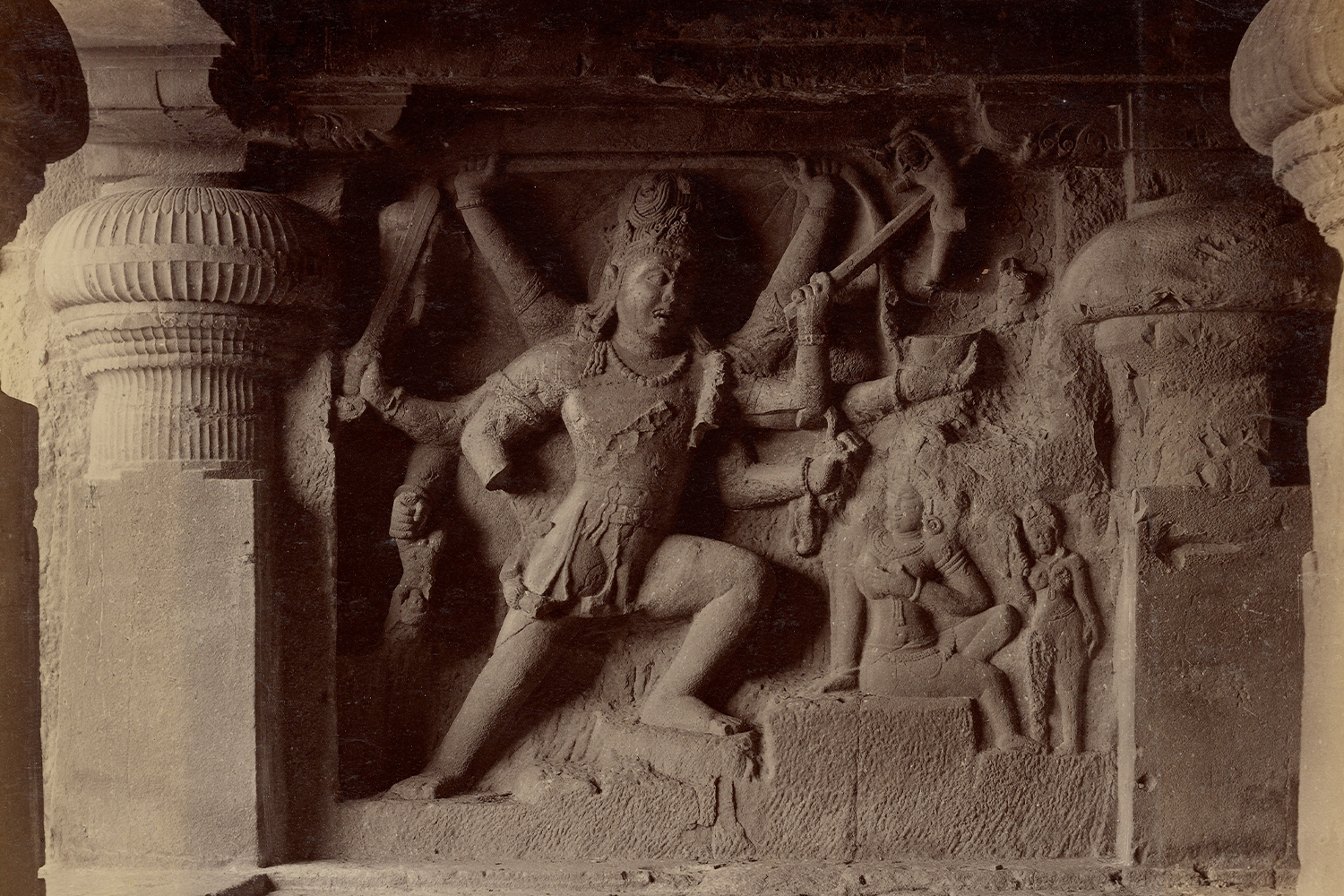
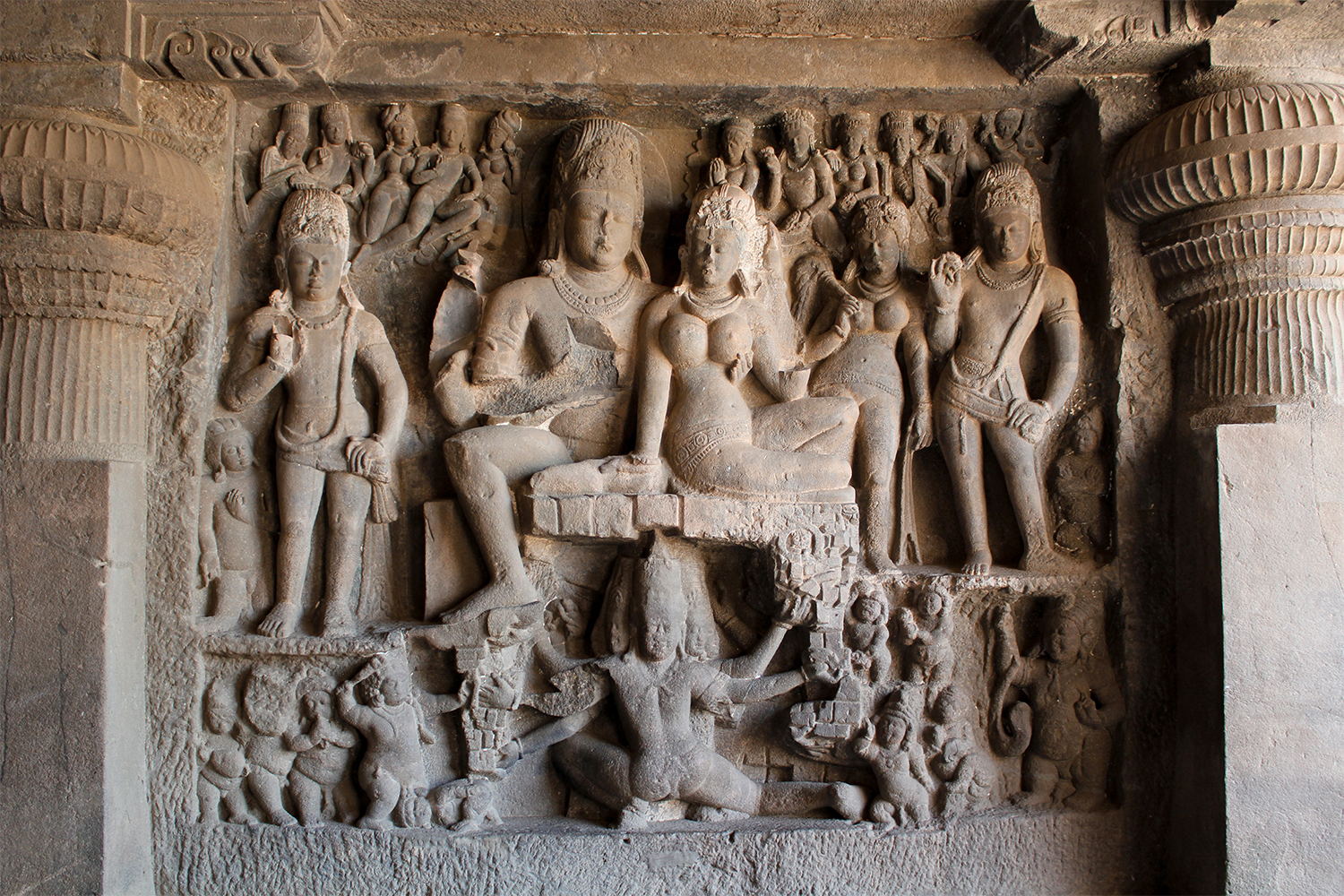
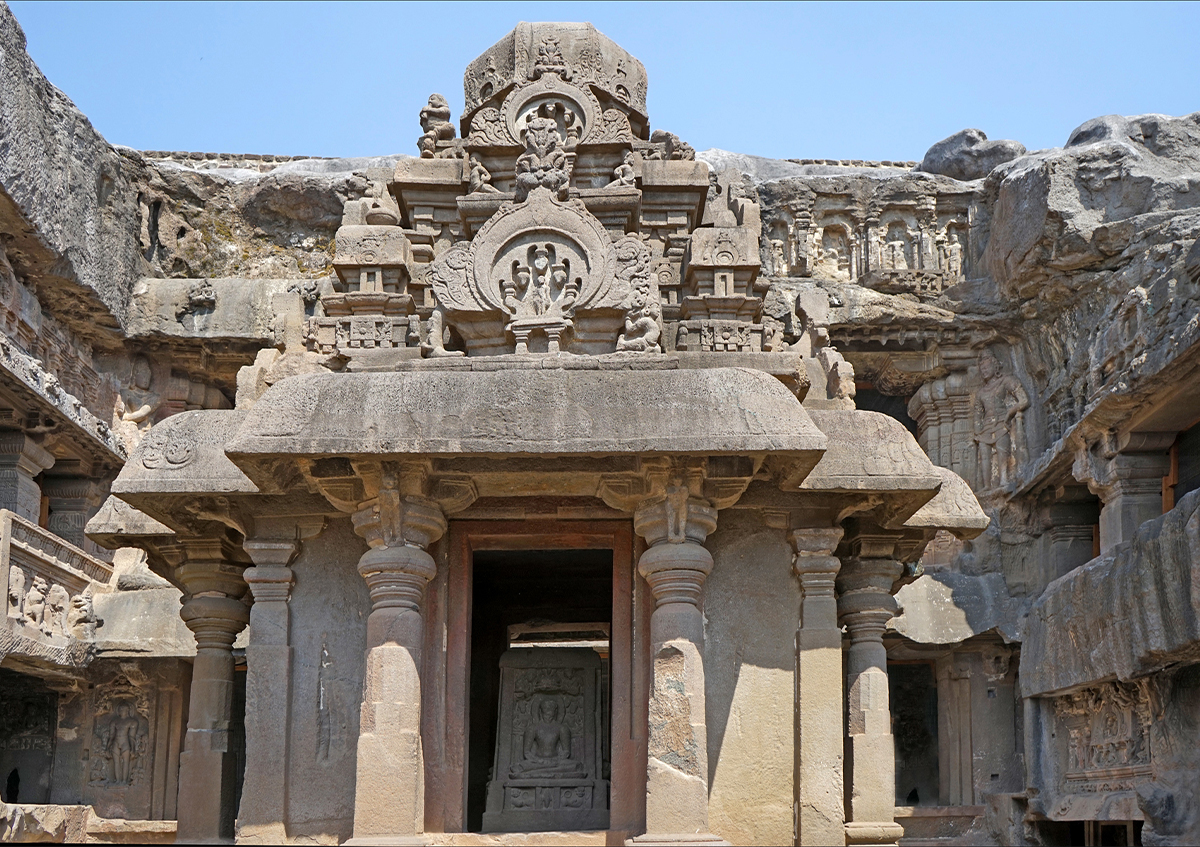
The Shaiva cave shrines, which display some variety in iconographic content and spatial organisation, generally have an axial floor plan consisting of a wide, shallow mandapa; a garbhagriha and, in some instances, a circumambulatory passage. While earlier temples tended to feature relatively static compositions, a trend towards more dynamic and energetic figures is discernible from the eighth century onwards, especially in the Dashavatara temple, also known as Cave 15. Arguably the culmination of rock-cut temple building in the region was the Kailasanatha temple, a large freestanding monolith replicating the form and structure of a Deccan temple.
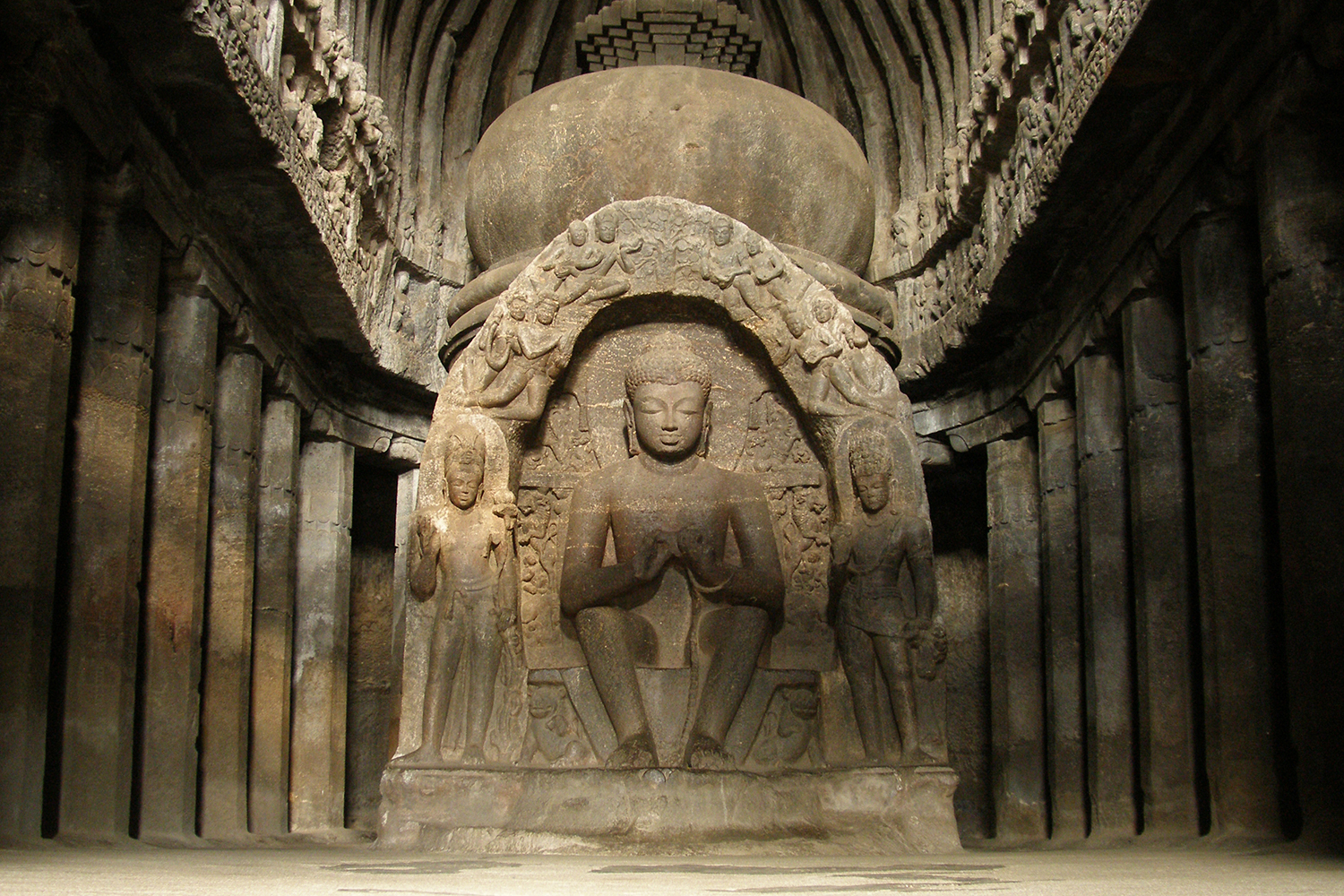
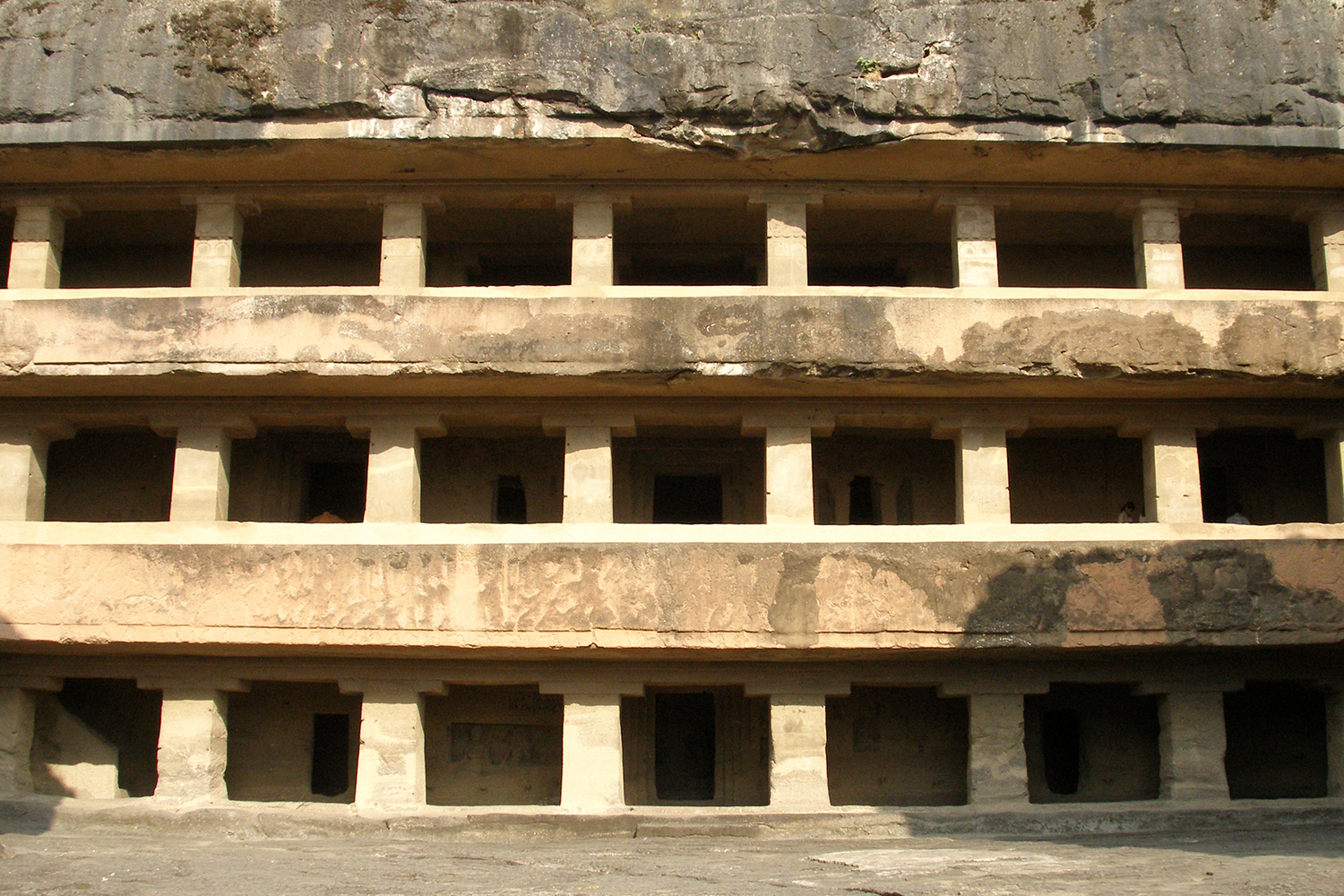
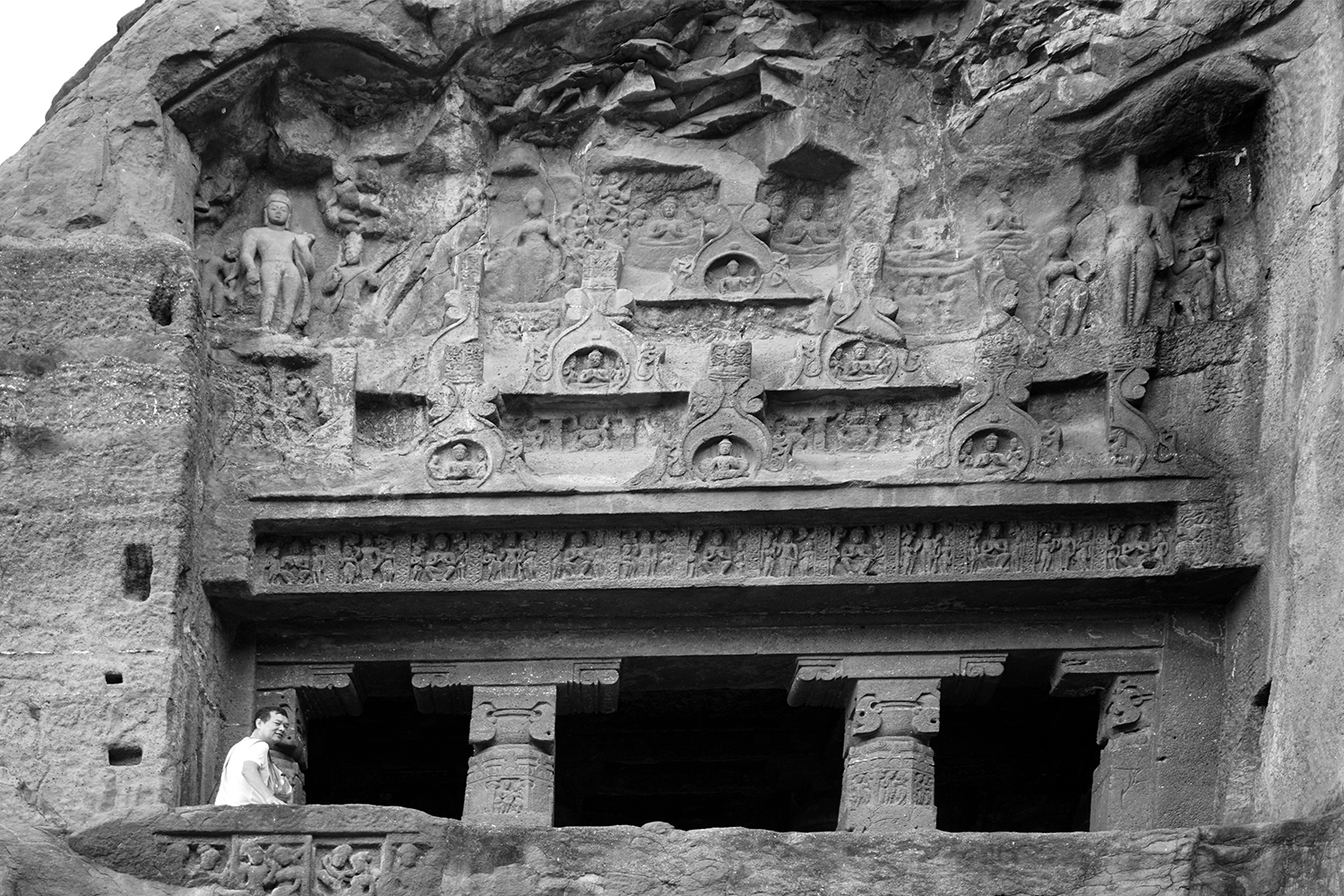
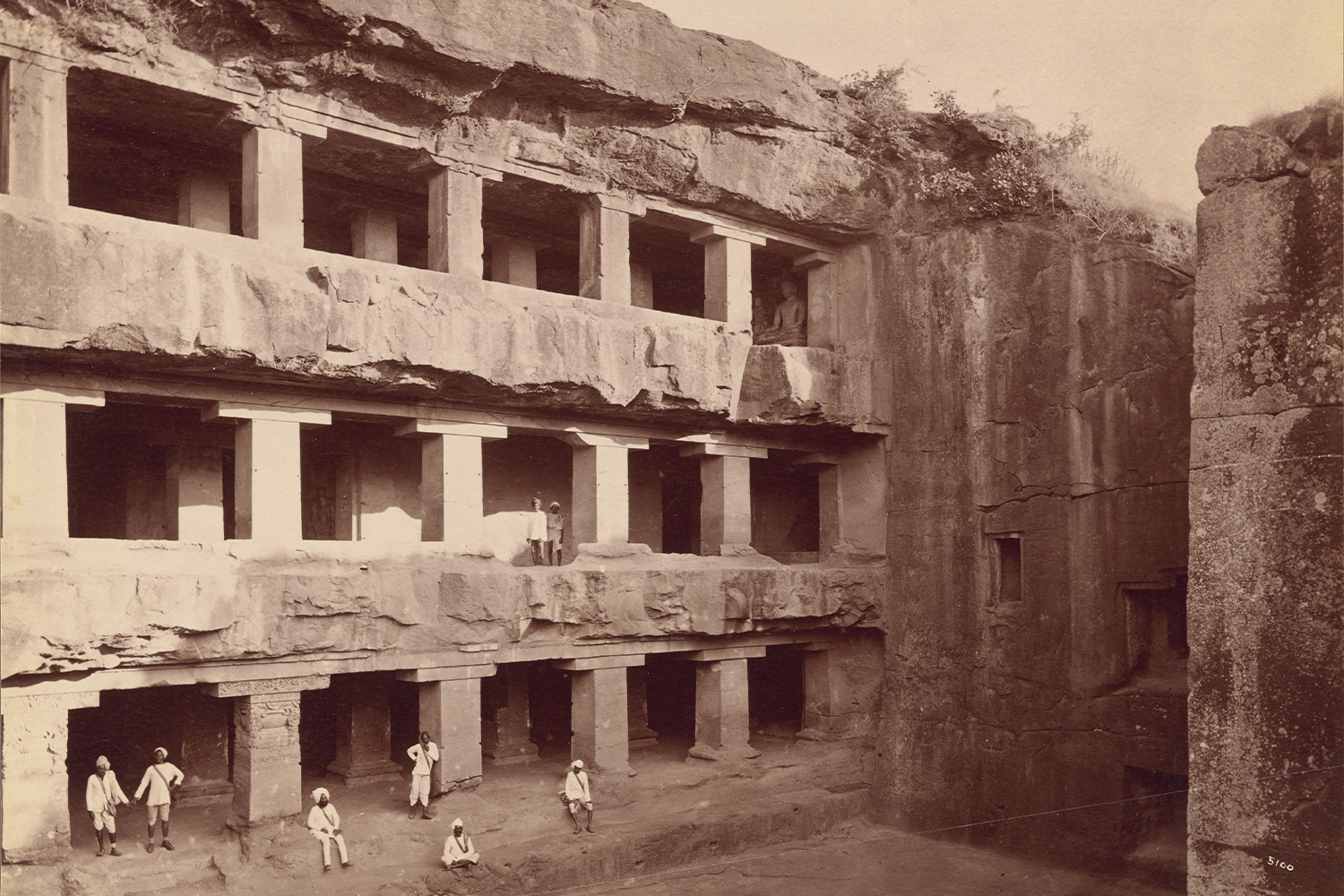
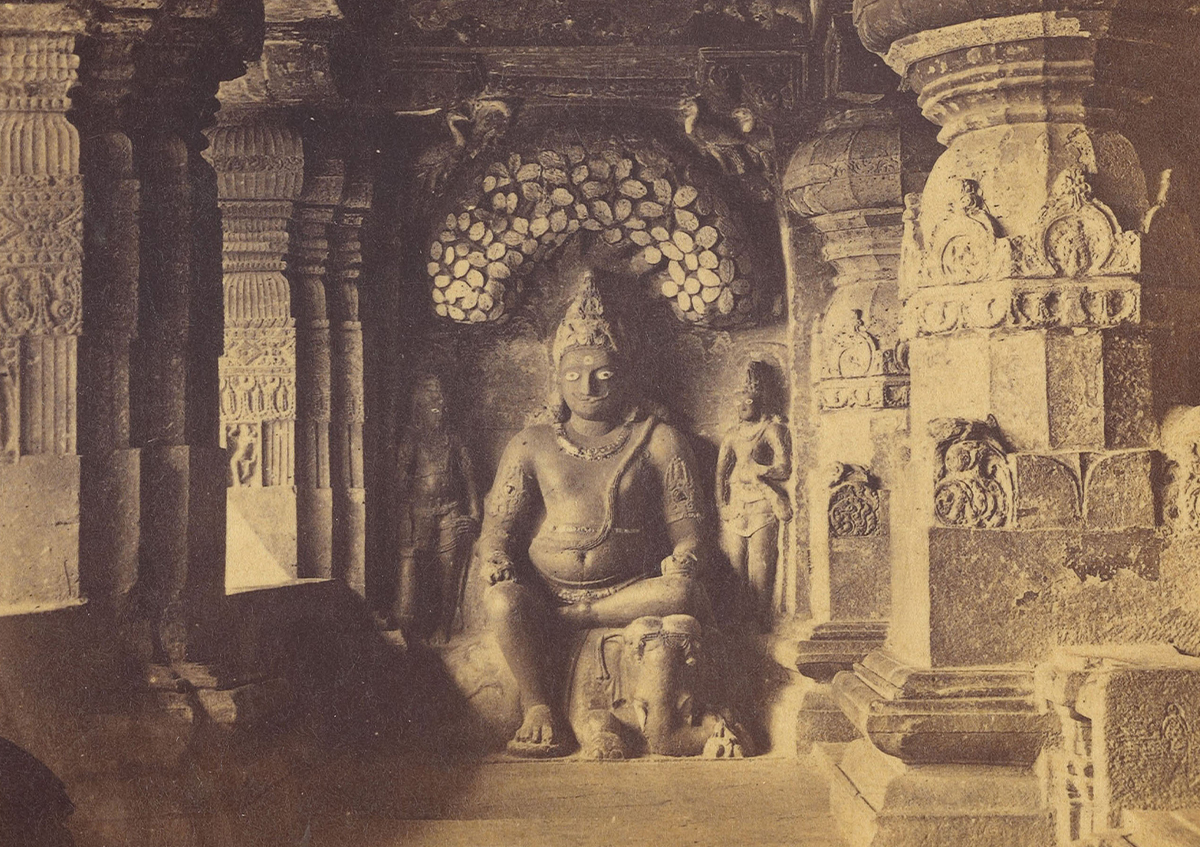
The Buddhist caves of Ellora reflect the increasing sway of Mahayana Buddhism by the beginning of the early medieval period, and suggest a gradual shift towards demarcating exclusive monastic spaces. The basic monastery or vihara plan – which consisted of a central hall surrounding cells that served as living quarters – was elaborated in some caves, with the introduction of colonnaded galleries on either side of the hall lined with recessed sculptures of the Buddha and associated figures. Other caves were widened or deepened to accommodate more subsidiary shrines; the Vishvakarma, Do Tal and Tin Tal caves feature additional stories; in some cases, monastic cells are totally eliminated. Scholars have interpreted the varied architecture of the Buddhist shrines as indicative of profound changes in doctrine, liturgy and aesthetic ideals. Iconography also varies considerably, as does sculptural work, which appears in the inner sancta, bays along the walls of pillared side-chambers, and in door-guardian figures, or dvarapalas. The Buddha’s images are prominently positioned; the some caves also include mandalas and bodhisattvas, suggesting influences from the Tantric Buddhism of the medieval period.
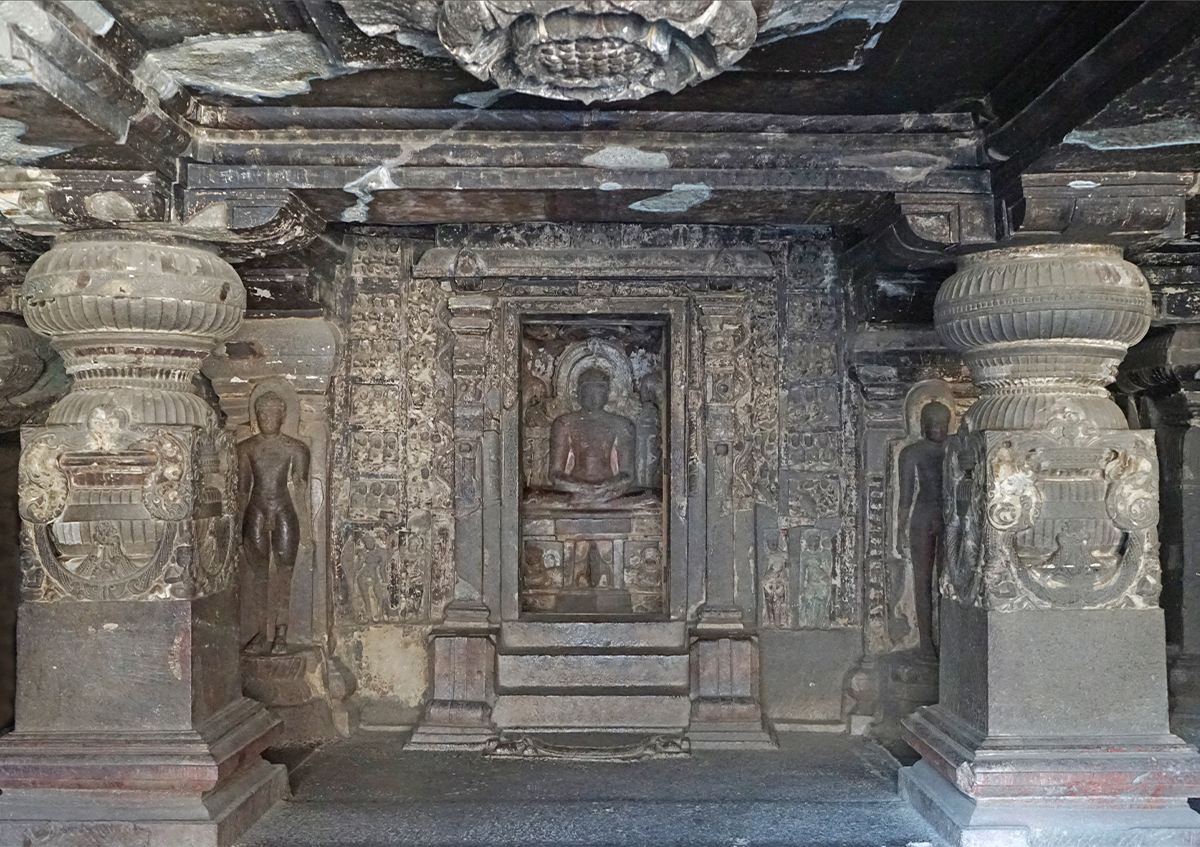
The Jain caves at Ellora form the northernmost group in the complex. They have a similar architectural composition to the Shaivite caves, consisting of a pillared veranda, a quadrangular mandapa and a shrine carved into the back wall of the temple. Installed in the main shrines and carved on the side walls are images of Jinas or Tirthankaras in standing or meditative poses; similar sculptural schemes are seen in some of the more elaborate Buddhist caves. The forms and characteristics of the Jina, which emerged in the first century CE, appear to have remained relatively unchanged by the time Ellora’s ninth and tenth-century caves were carved. Unlike many Jain images produced in the medieval Deccan, those at Ellora rarely feature elements distinguishing between Jinas. The reasons for this are debated, with earlier scholars attributing it to conservatism while others see it as an emphasis of the universality of the Jina. Uniquely, although the Jain caves have separate entrances, they are all interconnected, forming one large excavated space.
Although distinguished stylistically, Ellora’s caves cannot be delineated into distinct chronological brackets as the phases of building of all three groups overlapped with each other at different points of time, with excavatory activity often crossing religious borders. This unique attribute highlights the site’s dynamism as a multi-religious centre in the medieval period. In recognition of this, the Ellora caves were designated a UNESCO World Heritage Site in 1983 and remain a popular destination for, among others, religious tourists from across and beyond India.
First published: 21 April 2022
Image Gallery
Bibliography
Dhavalikar, MK. Ellora. New Delhi: Oxford University Press, 2003.
Fogelin, Lars. An Archaeological History of Indian Buddhism. New York: Oxford University Press, 2015.
Goetz, H. “The Kailāsa of Ellora and the Chronology of Rāshtrakūta Art.” Artibus Asiae 15 (1952): 84–107. Accessed July 9, 2020. doi:10.2307/3248615.
Harle, J.C. The Art and Architecture of the Indian Subcontinent. New Haven: Yale University Press, 1994.
Owen, Lisa. Carving Devotion in the Jain Caves at Ellora. Leiden: Brill, 2012.
Soar, Michaela. “Ellora”. Grove Art Online, accessed 20 July 2020. https://doi.org/10.1093/gao/9781884446054.article.T025879.
UNESCO. “Ellora Caves.” https://whc.unesco.org/en/list/243/.
Feedback