-
ChicagoImpart Encyclopedia of Art. "Abhaya Mudra." April 21, 2022. https://imp-art.org/articles/abhaya-mudra/.
-
MLA"Abhaya Mudra." Impart Encyclopedia of Art, Apr. 21, 2022, https://imp-art.org/articles/abhaya-mudra/.
-
HarvardImpart Encyclopedia of Art (2022) Abhaya Mudra. Available at: https://imp-art.org/articles/abhaya-mudra/ (Accessed: 3 March 2026).
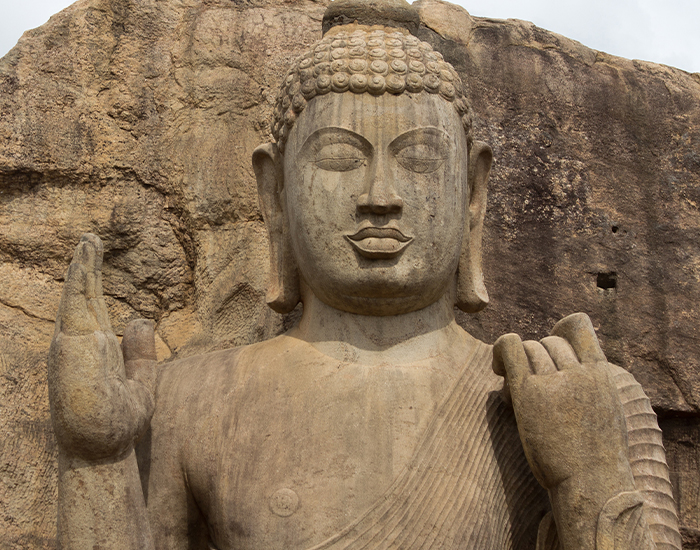
One of the five common mudras or sacred gestures in Buddhist iconography and practice, the abhaya or ‘fearlessness’ mudra represents protection, reassurance and pacification; it is believed to have been used by the Buddha to calm a rampaging elephant sent to attack him. It is performed by facing the right palm forward, close to the body and with the fingers loosely joined and upright; it sometimes employs both hands. Among the five celestial Tathagata or Dhyani Buddhas, considered to represent cardinal qualities, the abhaya mudra is associated with Amoghasiddhi.
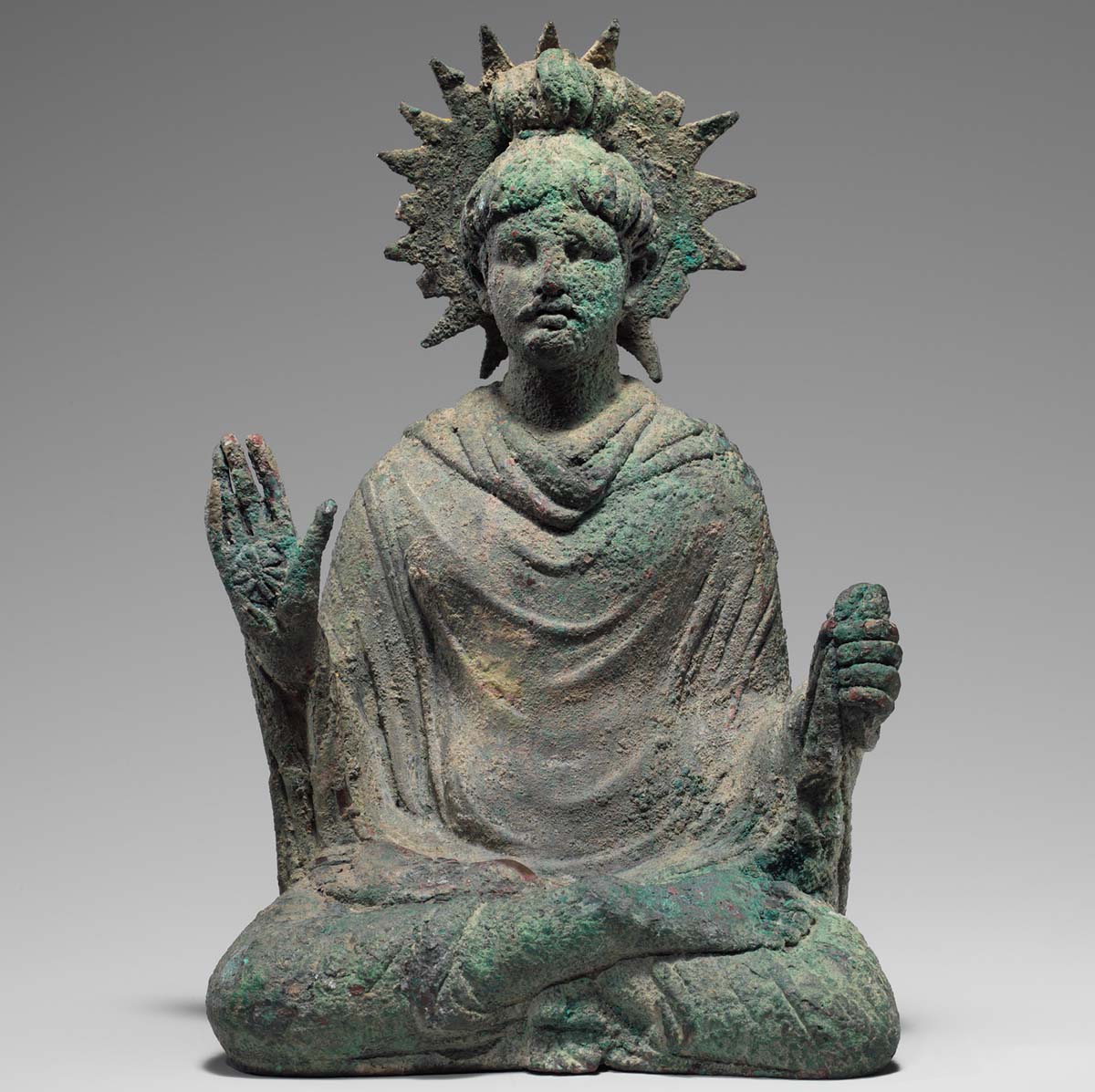
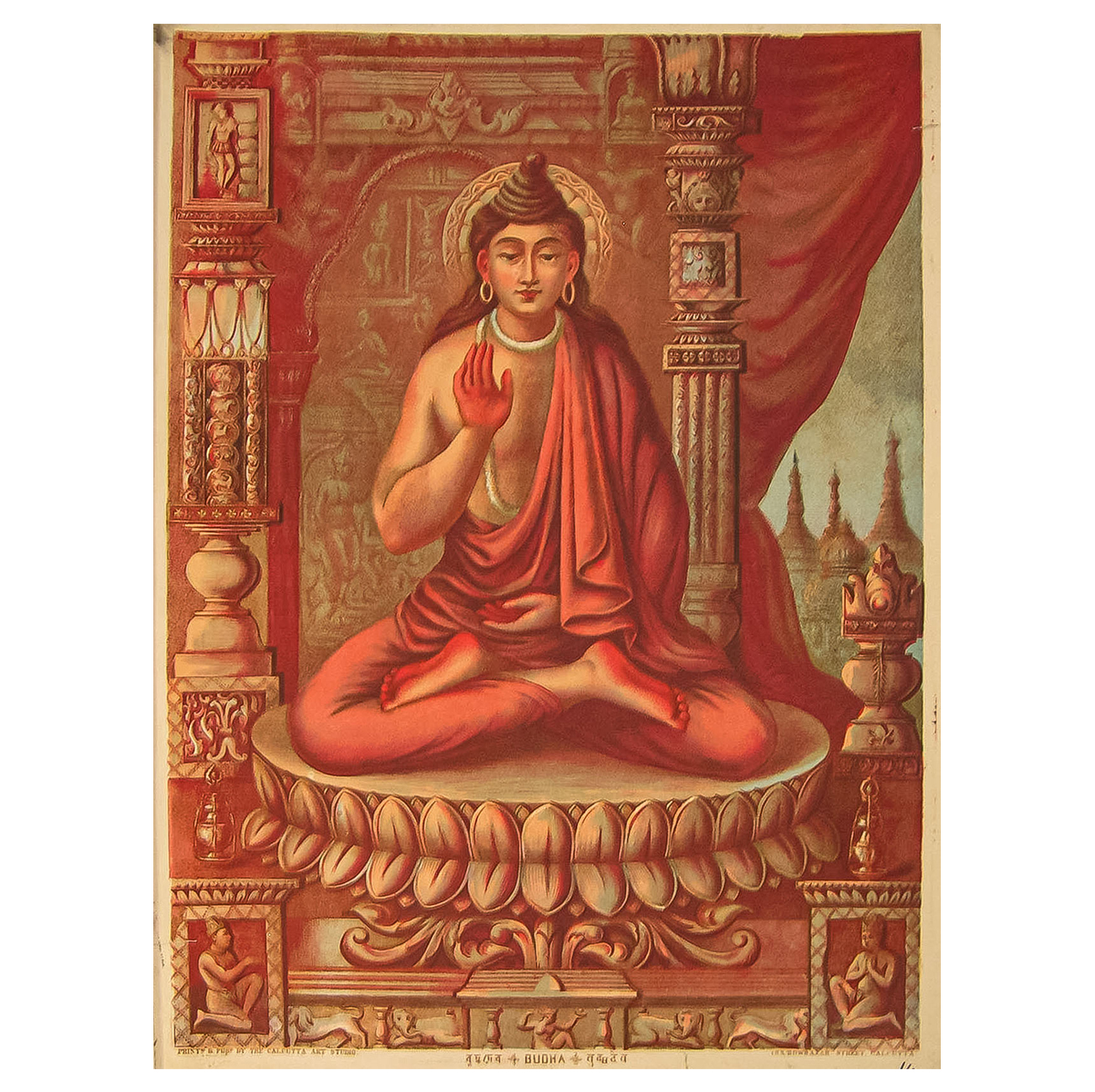
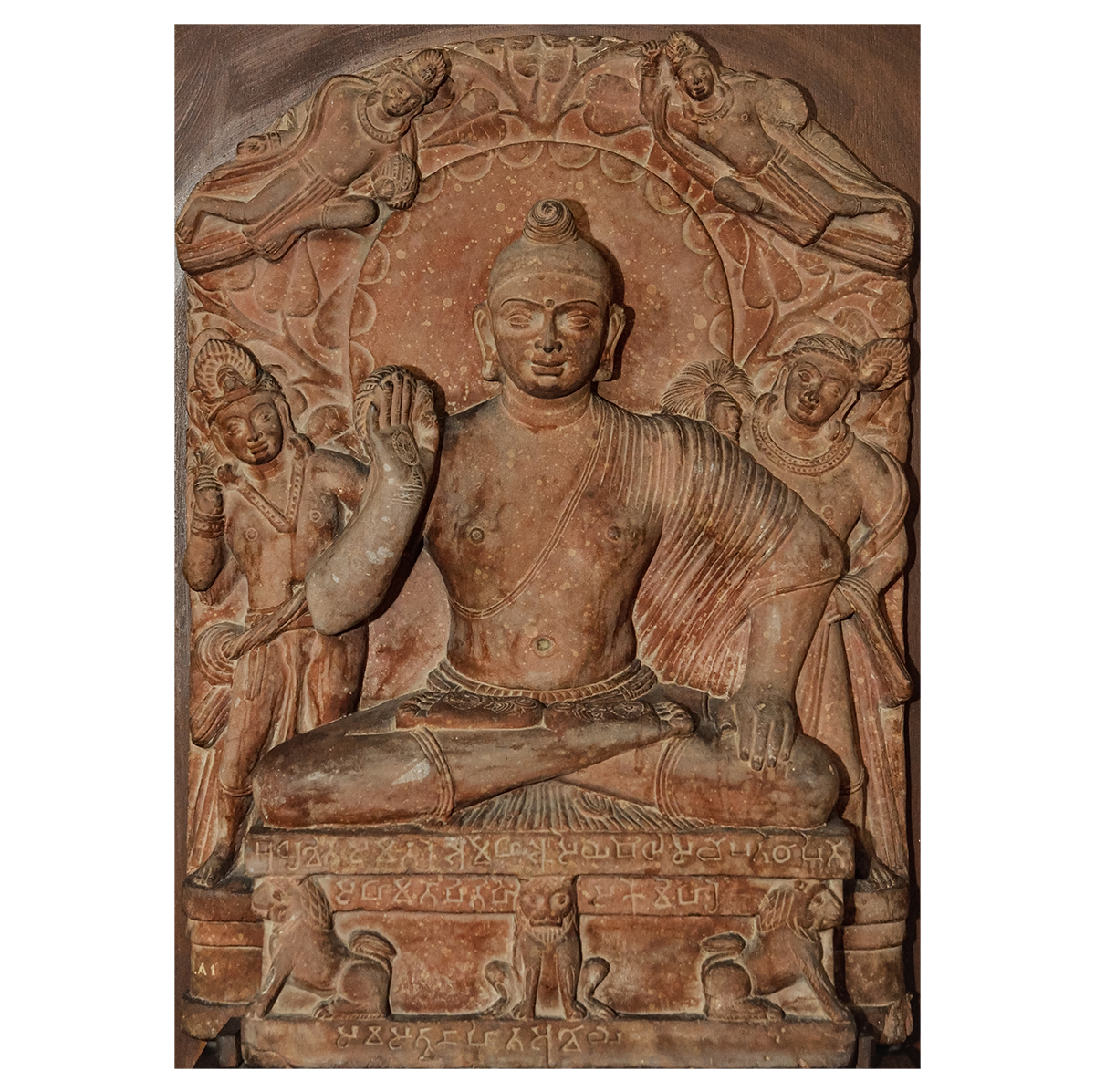
This mudra is one of the most recognisable and widely used symbolic and ritual gestures, not only in Buddhism but also in Hinduism, Jainism and Sikhism. Across South and Southeast Asia, deities, saints and gurus are seen performing the gesture, which has come to be associated with benevolence and divinity. In various cultures, including pre-Buddhist ones, the raising of one or both open hands has symbolised the absence of weapons, and thereby peace or goodwill, as well as power.
In Gandharan art, where the first depictions of the abhaya mudra are found, the gesturing hand is held up at the shoulder level, and frequently denotes the act of preaching; later, from the fifth century CE onwards, the hand is often represented lower. When the right hand is in the abhaya mudra, the left hand usually hangs loosely by the side of the body or assumes the varada mudra. Occasionally the left, rather than the right, hand is seen in the abhaya mudra. Though primarily seen in representations of the standing Amoghasiddhi in Buddhism, the abhaya mudra is also associated with the walking Buddha in the Theravada sects of Thailand and Laos.
First published: 21 April 2022
Image Gallery
Bibliography
Ables, Kelsey. “The Complex Meanings behind Hand Gestures in Buddhist Art” Artsy, March 28, 2019. Accessed July 8, 2020. https://www.artsy.net/article/artsy-editorial-complex-meanings-hand-gestures-buddhist-art.
Asian Art. “Abhaya Mudra.” Mudras: Buddhist Hand Positions. Accessed 6 August 2020. https://www.burmese-art.com/about-buddha-statues/hand-positions/abhaya-mudra.
Beer, Robert. The Encyclopedia of Tibetan Symbols and Motifs. Boston: Shambhala, 1999.
Behrendt, Kurt. “Tibet and India Buddhist Traditions and Transformations” The Metropolitan Museum of Art Bulletin LXXI, no. 3 (2014).
Kossak, Steven. “The Arts of South and Southeast Asia.” The Metropolitan Museum of Art Bulletin LI, no. 4 (2011).
Munsterberg, Hugo. Art of India and South East Asia. New York: Harry N. Abrams Inc., 1970.
Samad, Rafi. The Ancient Buddhist Civilization of the Swat, Peshawar, Kabul and Indus Valleys. New York: Algora Publishing, 2011.
Feedback