-
ChicagoImpart Encyclopedia of Art. "Theyyam Masks." June 24, 2022. https://imp-art.org/articles/theyyam-masks/.
-
MLA"Theyyam Masks." Impart Encyclopedia of Art, Jun. 24, 2022, https://imp-art.org/articles/theyyam-masks/.
-
HarvardImpart Encyclopedia of Art (2022) Theyyam Masks. Available at: https://imp-art.org/articles/theyyam-masks/ (Accessed: 16 October 2026).
Part of the costuming of Theyyam performers in Kerala, Theyyam masks combine face painting and masks to represent deities during performances.
Once the performer’s face and body are painted in preparation for the performance, they wear the masks and headgear in accordance with the deity being invoked; for instance, the mask for Gulikan, a local form of the Hindu god Shiva, features a trident on the forehead and a monumental headdress. Another important deity, the goddess Edalavuratha Chamundi, is depicted using masks made of wood, painted showing a tongue sticking out of the mouth.
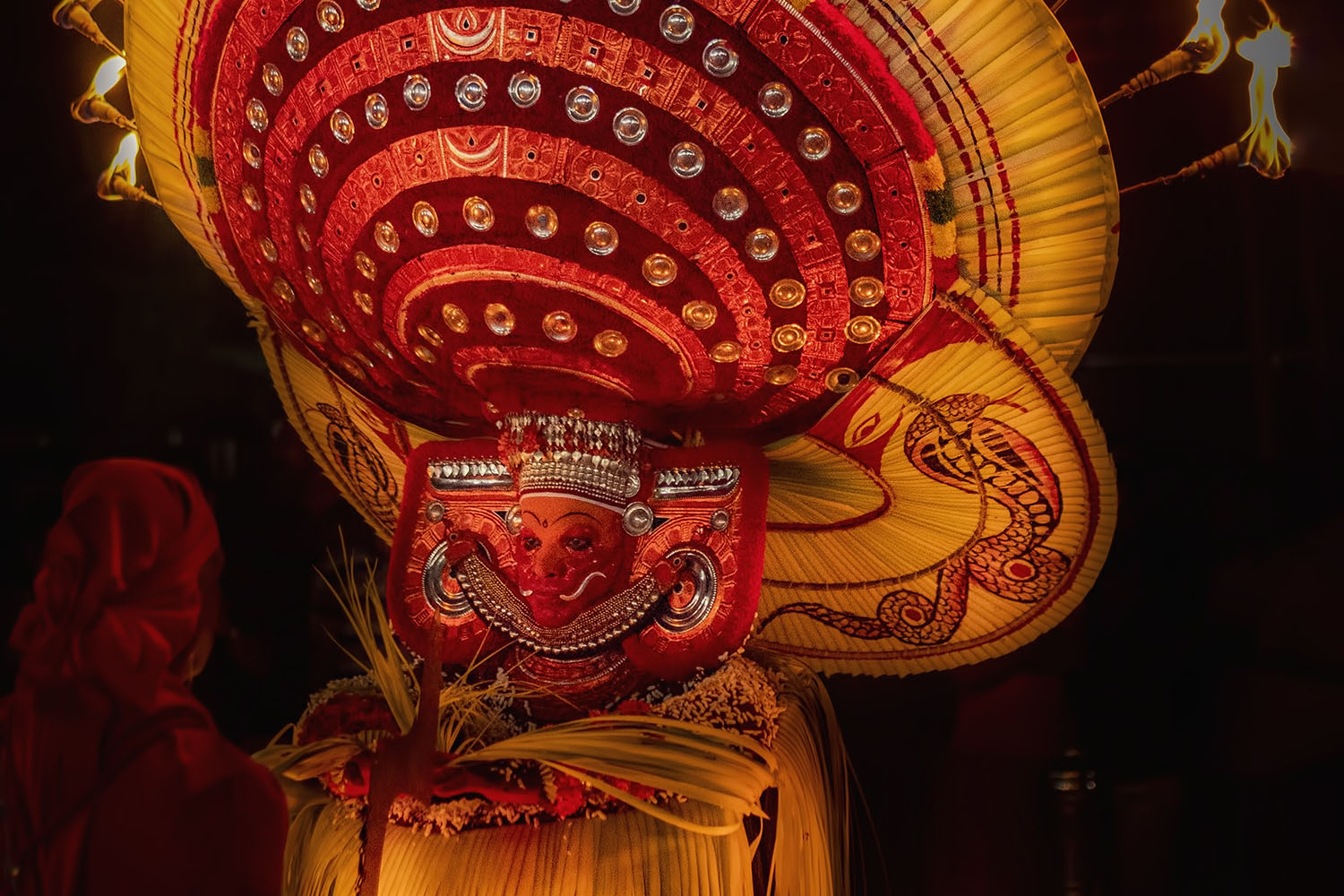
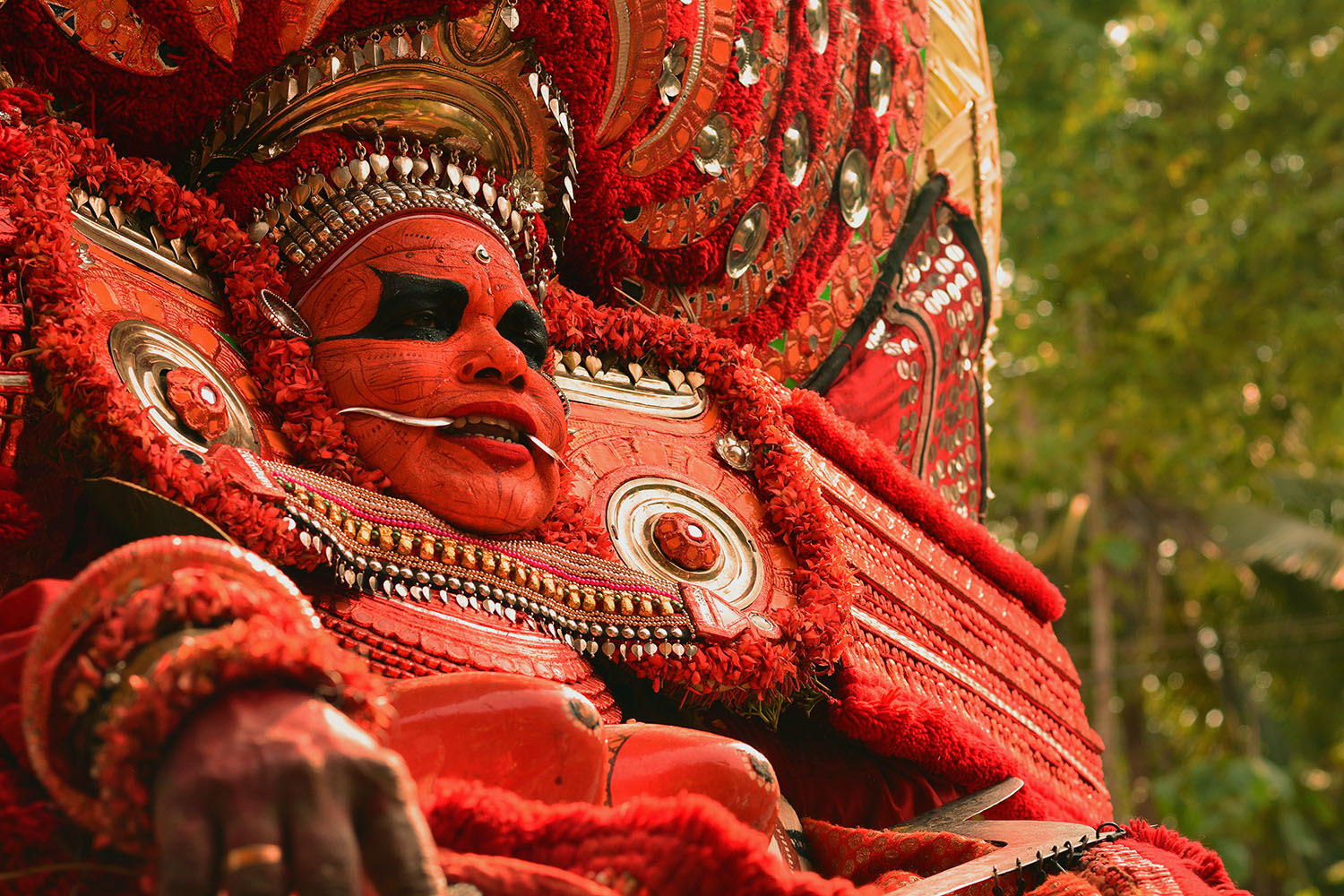
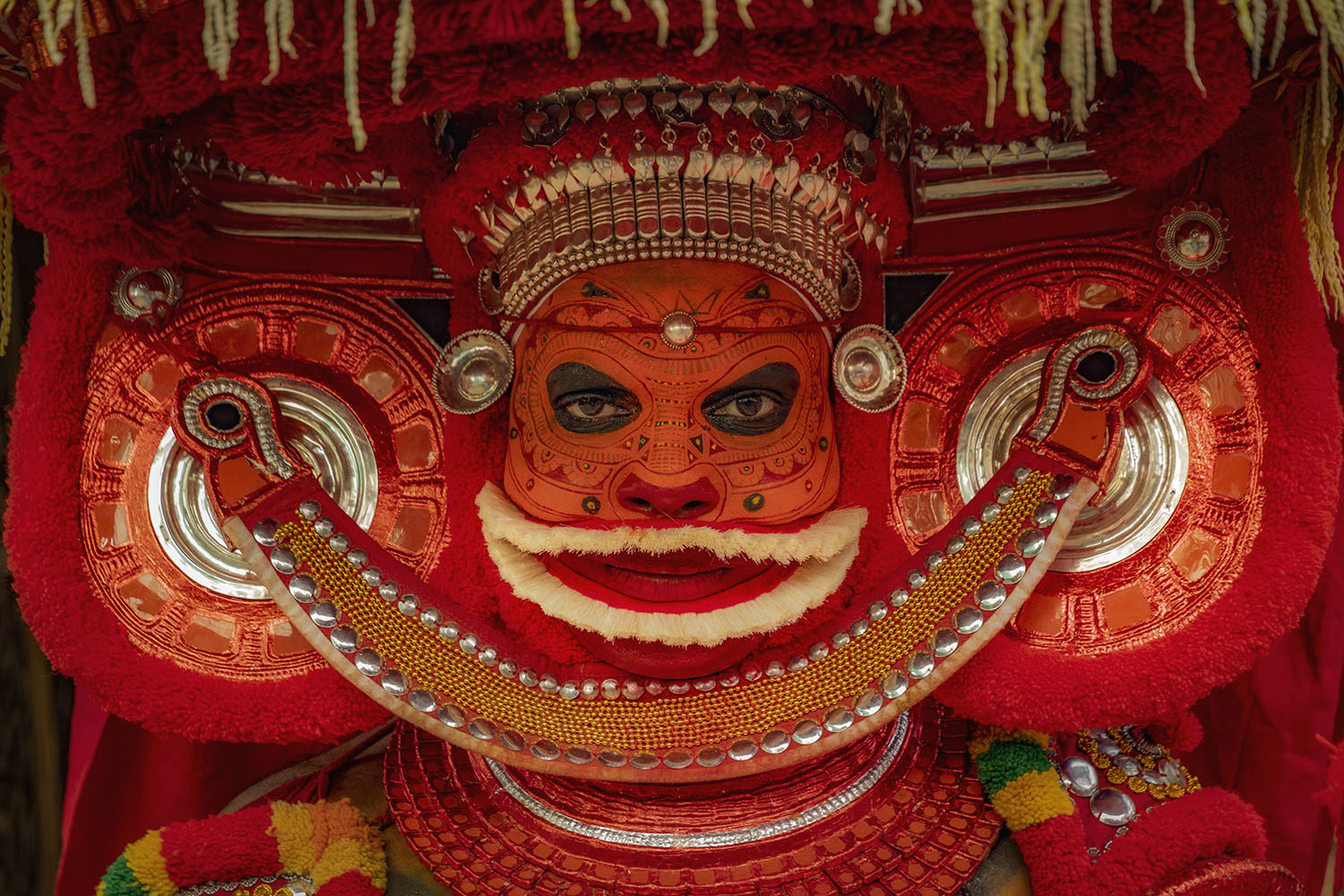
The masks are usually made of areca palm wood, decorated with palm leaves and painted with bright colours, mainly orange, white, yellow and red. Black is used to highlight the eyes. Strong contrasts are used in the colour schemes to suggest the deities’ forceful personalities.
First published: 24 June 2022
Image Gallery
Bibliography
Gopi, Anil. “Gods and the Oppressed: A Study on Theyyam Performers of North Malabar.” Contemporary Voice of Dalit 13, no. 2 (2021): 1–9. doi.org/10.1177/2455328X211008363.
Kerala Tourism. “The Dance of the Divine.” Accessed March 21, 2022. https://www.keralatourism.org/images/ebooks/pdf/theyyam.pdf.
M., Subbaiah. “Masks and Camouflaging.” Indian Journal of Arts 3, no. 9 (2013): 24–28. http://www.discoveryjournals.org/arts/current_issue/2013/A19.pdf.
Nambiar, Balan. “Gods and Ghosts – Theyyam and Bhuta Rituals.” Marg, 1981.
Seth, Pepita. “The Theyyams of Malabar.” Asianart.com. Accessed March 24, 2022. https://asianart.com/exhibitions/pepitaseth/32.html.
Feedback