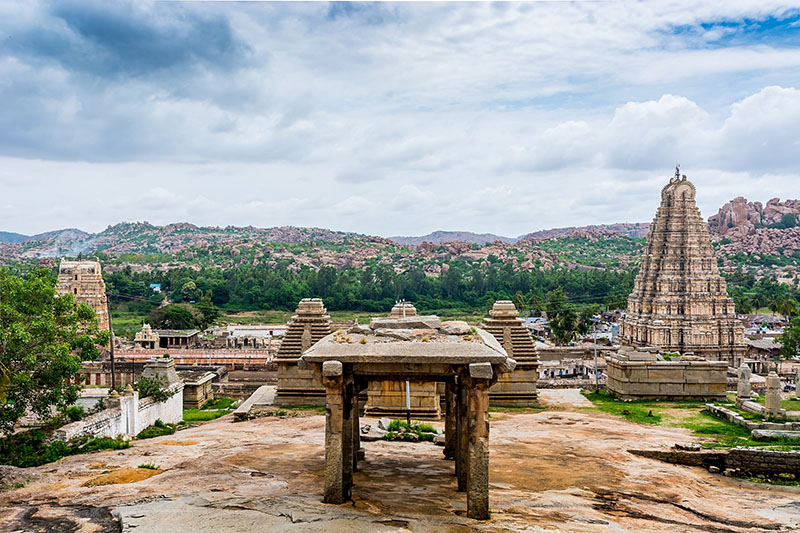
A form of Shiva, he was the tutelary deity of the Vijayanagara empire (1336–1646 CE). Within Hindu mythology, he is believed to have married Pampadevi, a local deity worshipped in Vijayanagara, and incorporated her and her followers into the religion.
More Definitions
Devi Upanishad
A minor Upanishad often classified as one of the eight Shakta Upanishads, it is one of the nineteen late-Vedic texts…
Tathagata Buddha
A term used by the Gautama Buddha to refer to himself or other Buddhas in the Pali canon. It is…
Vajrasattva
A bodhisattva in the Mahayana and Vajrayana traditions of Buddhism, he is primarily associated with the Akshobhya Buddha. Iconographically, he…
Manushi Buddhas
A Buddha in human form, they attain enlightenment once they perform their allotted task on Earth and are released from…
Vajrabhairava
Also known as Yamantaka, he is a deity considered to be the destroyer or conqueror of death in Buddhism and…
Parashurama
The sixth avatar or incarnation of the Hindu deity Vishnu, he is known for his aggression, bravery, patience and serenity.…
Vishwamitra
In Hindu Puranic and epic literature, one of the seven maharishis (great sages). He is also known as the royal…
Durga
The Hindu goddess of war, identified as the principal form of the goddess Parvati. Durga is depicted as riding a…