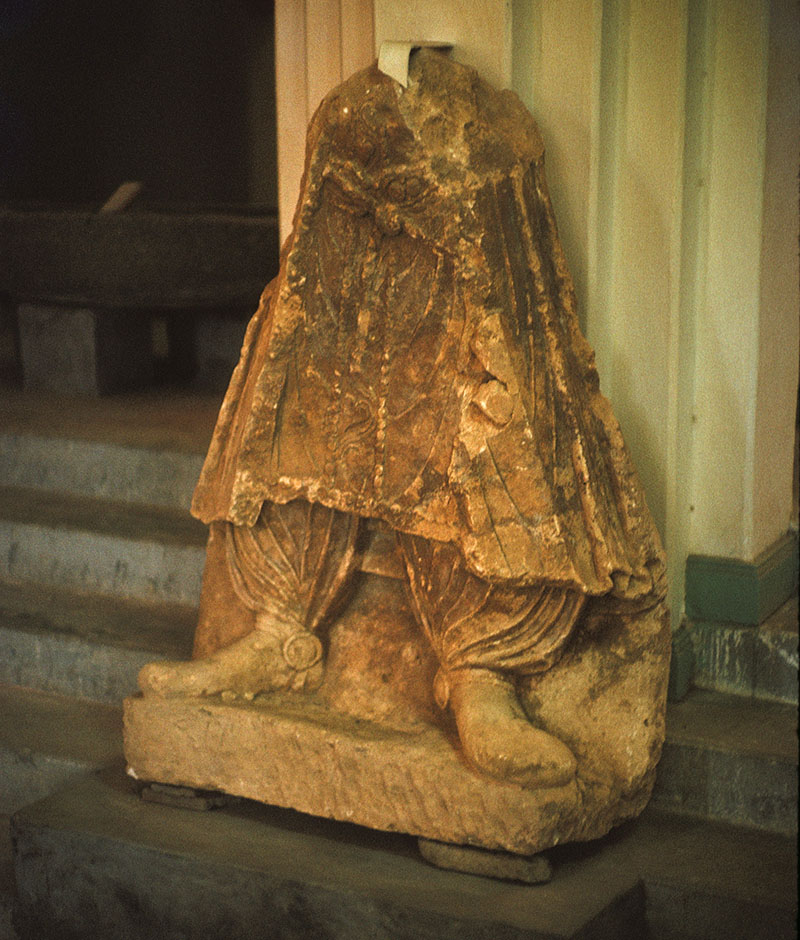
An archaeological site in present-day Afghanistan that was excavated between 1952 and 1965. The excavations uncovered an architectural complex, including a temple, and artefacts such as inscriptions and sculptures in costumes that are similar to the headless Kanishka statue unearthed near Mathura, India. The inscriptions suggest a date congruent with the reign of Kanishka, the third Kusana Emperor, or one of his successors. The temple is speculated to be a dynastic shrine dedicated to the Kusana rulers.
Surkh Kotal
Link copied!