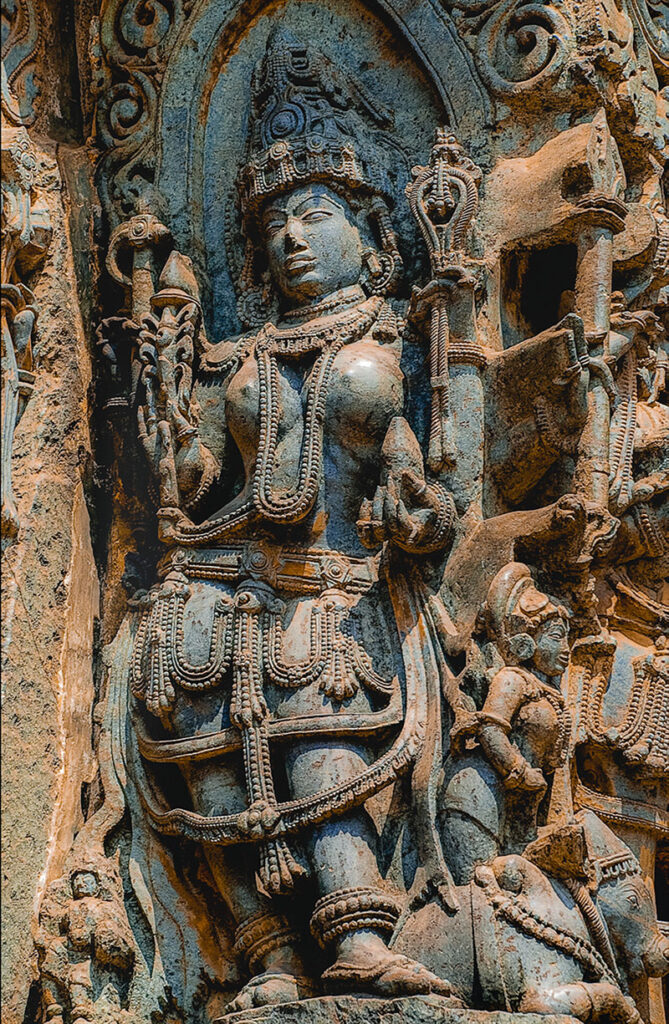
The primordial cosmic energy that represents the dynamic forces of the universe in the Shaktism sect. The figure is the personification of cosmic energy and is considered creative, sustaining and destructive. The manifestation of Shakti is known by several names, including Adi Para Shakti (from the Sanskrit, meaning “primordial inconceivable energy”), Anaadi (“without beginning or end”) and Nitya (“forever”). From the Sanskrit word shakti, meaning “energy.”
More Definitions
Kanjur
A sacred text of the Tibetan Buddhist canon that outlines the principles of vinaya (rules governing monastic communities), monastic discipline,…
Samsara
The concept of the continuous cycle of birth, death and rebirth, fundamentally seen in most Indian religions, including Buddhism and…
Thiruvilaiyadal Puranam
A sixteenth-century Tamil text attributed to Paranjothi Munivar, which comprises sixty four stories narrating the miracles of the Hindu deity,…
Nrittamurti
The term used for a deity’s dancing form in Hindu religious iconography. It is most commonly associated with the Shiva,…
Bharthari
Also known as Jogi Sant Bharthari, he is a popular king from the folk legends of northern and central India.…
Hermes
Deity of the Greek Olympian pantheon, believed to be the messenger of the gods and a trickster who frequently travelled…
Indra
A major Vedic deity, he is believed to be the king of the realm of gods within Hinduism and Buddhism,…
Mahayogi
An epithet for the Hindu god Shiva where he is represented as an ascetic, sitting with his legs crossed and…