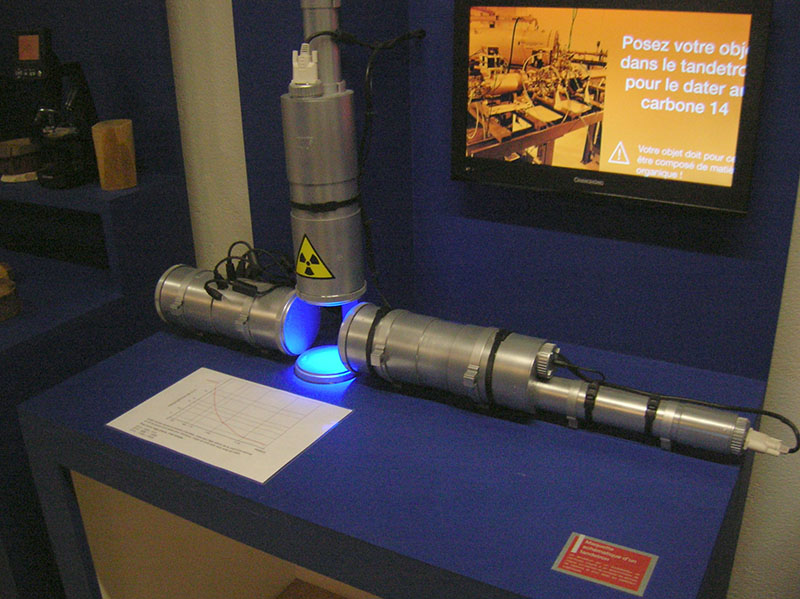
A method of determining the objective age of carbon-based materials by measuring the amount of carbon-14, formed when the nitrogen of radiocarbon decays, against an internationally used standard reference. William F Libby is credited with developing the method in 1946. It is used widely in disciplines such as archaeology and other natural sciences to determine the age of biological specimens and artefacts.
More Definitions
Schiffli
A multi-thread machine used to create machine embroidery and lace, invented in 1893 by Swiss inventor Isaak Grobli. The term…
Ginning
The process of removing debris and dirt from raw cotton fibre, either manually or by running it through a mechanical…
Offset Printing
A printing technique in which an inked image is impressed on a rubber cylinder or blanket through a printing plate…
Single-Spindle
A technique of spinning yarn that incorporates one spindle, as seen in the charkha used to spin khadi.
Lohori Running Stitch
A form of kantha embroidery that is characterised by running stitches that resemble waves. From the Persian word lehr, meaning…
Back Stitch
A variety of the stem or split stitch, wherein individual stitches are made in the opposite direction of the embroidery.…
Assemblage
Art made by assembling disparate elements from everyday or found objects. Assemblages are often associated with movements such as Dadaism,…
Extra Weft
Also known as the supplementary weft technique, it is a design method where additional weft threads are added to the…