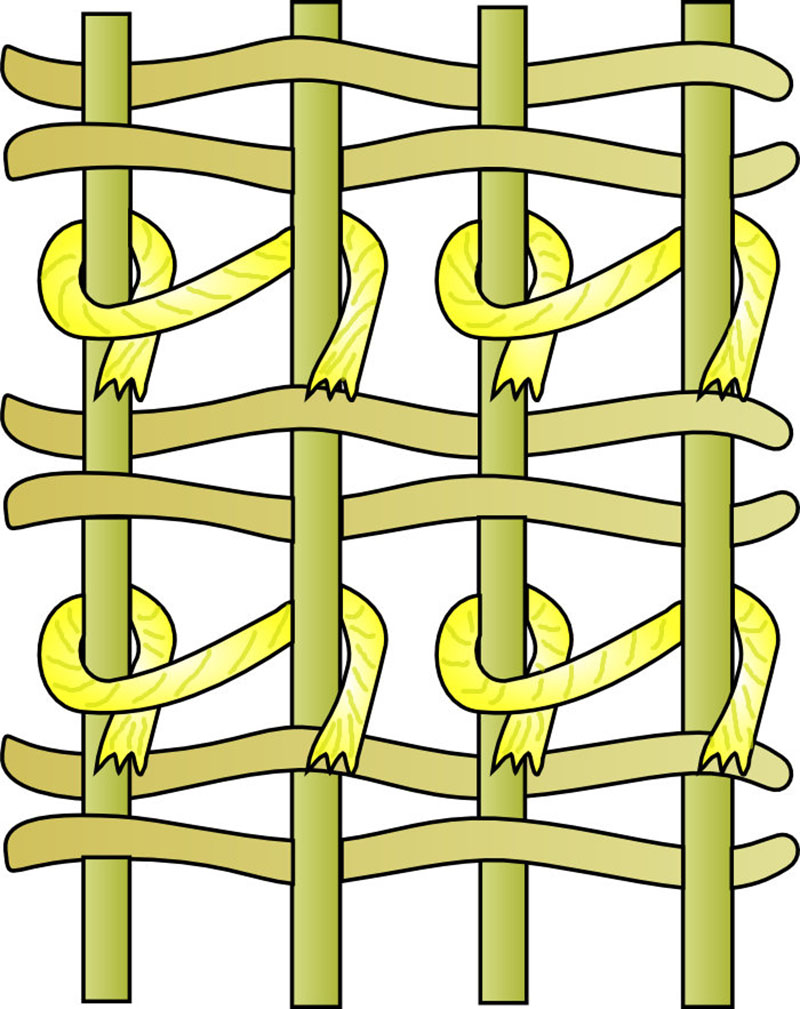
Also known as a Senneh knot, it is a technique of hand-knotting found in rugs from eastern Iran, India and Pakistan. Half of the weft thread is knotted tightly with the warp with the other end is left loose, resulting in an asymmetric knot, which can be manipulated further to create more complex designs. The technique is typically used to create rugs with high knot counts and detailed designs.
More Definitions
Waxed Paper Negative
A photographic negative using a base of paper coated with oil or beeswax before the application of dry and stable…
Tapestry Weave
A weft-facing technique of weaving, wherein coloured weft yarns are interlaced with plain-coloured warp. The design is created using the…
Cable-Edging
A motif with a raised surface, it is often found in textiles. Cables are created by knitting out of order,…
Etching
The process of using a mordant or acid to cut into exposed areas of a metal plate to create raised…
Kani
A term referring to both the weaving technique and the final textile created by this method. It may also refer…
Naqshaband
The designer of the naqsha (map or design plan) of Banarasi brocade. They sketch and create the map of motifs…
Impasto
A painting technique in which paint is thickly applied to the canvas, creating a surface texture. This can aid in…
Gilt
An object that is covered with a thin layer of gold, often used in jewellery, ornamentation and textile. From the…