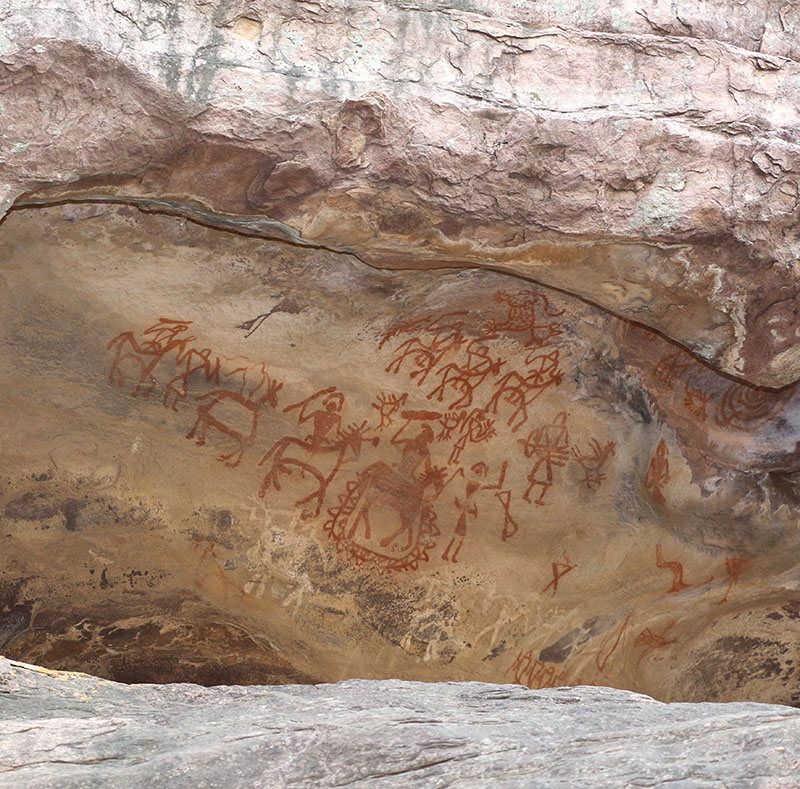
Also called the Old Stone Age, this is the period of human history marked by the development and use of stone tools. The period ranges from the first use of stone tools around 3.3 million years ago to the end of the Pleistocene Epoch around 11,650 years ago. Tools made from obsidian and chert, as well as bone tools, are associated with this period. The earliest examples of cave art are also dated to this era.
More Definitions
FO Oertel
Friedrich Oscar Oertel (b.1862; d.1942) was a German engineer and archaeologist best known for his excavations at Sarnath in 1904–05,…
Upper Palaeolithic Period
The final stage of the Palaeolithic period, lasting from roughly fifty thousand to twelve thousand years ago. This period was…
Indus Valley Civilisation
A Bronze Age civilisation located along the basin of the Indus river, in the northwestern regions of South Asia comprising…
Stone Age
A prehistoric period characterised by the invention and use of stone tools by early humans, it began around 3.3 million…
Mesolithic Period
The period between Upper Paleolithic and Neolithic periods, characterised by the presence of material culture, including pottery and cave art,…
Taxila
An archaeological site in present-day Rawalpindi, Pakistan. Founded c. 1000 BCE, the site was located along trade routes between Central…
TA Gopinatha Rao
TA Gopinatha Rao (b.1872, d.1919) was an Indian archaeologist and epigraphist with the Archaeological Survey of India. In 1908, he…
Hollowed Bone
A tool made from shaping human or animal bone and used by prehistoric people as tools as well as to…