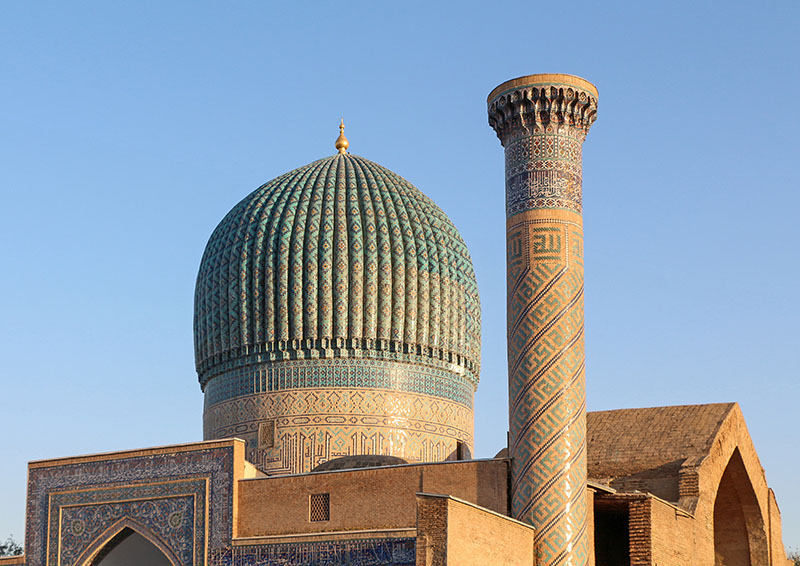
Medieval Turkic-Mongol dynastic empire (r. 1370–1507) that controlled at its height all of Central Asia, most of West Asia including present-day Iran, Iraq and Afghanistan, southern Russia, and parts of Pakistan. The dynasty was founded by the conqueror Timur in 1370 and had its capital at Samarkand in present-day Uzbekistan. Timurid patronage supported a vibrant and sophisticated intellectual and artistic culture centred in Iran and Central Asia, through syncretism between artisans and traditions from across the empire’s vast territories. Timurid architecture — characterised by monumentality, double domes, complex vaulting, and elaborate decoration over the entirety of the building in the form of colourful tile mosaics and carved stone — was an important achievement in the Islamic building tradition and left a lasting influence on subsequent styles across Central and West Asia and Mughal India. The death of Timur’s son Shah Rokh in 1447 marked the beginning of a period of internal conflict and fragmentation that ultimately led to the dynasty’s loss of power in 1507. In 1526, the Timurid prince Babur founded the dynastic line of the Mughal empire in India.
Timurid empire
Link copied!