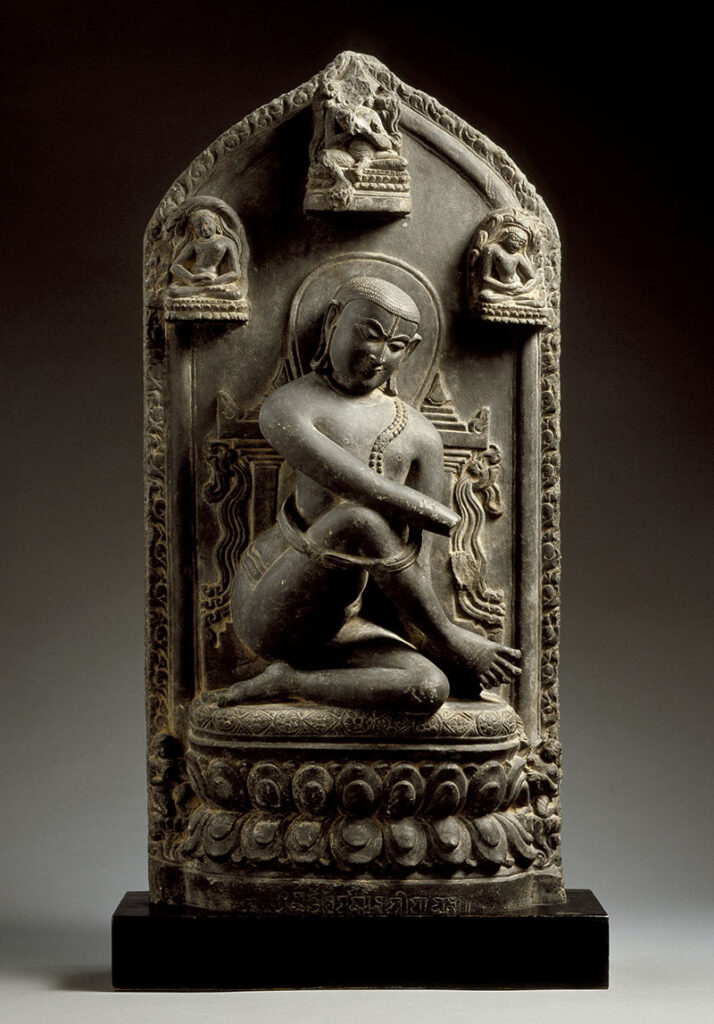
A term used in Tibetan and Tantric Buddhism for someone who embodied the perfect siddhi (psychic or supernatural abilities) through their sadhana (practice) of yoga and tantra. There are about eighty-four mahasiddhas that have been referenced in hagiographies and poetic verses, and they are considered to be the founders of Vajrayana Buddhism. Scholars have suggested that these figures likely lived between c. 750–1150 CE. From the Sanskrit mahasiddha, meaning “great adept.”
More Definitions
Upanishad
A body of texts written in Sanskrit and considered to be the latter part of the Vedas. They cover issues…
Nayika
The heroine in dramatic representation, as outlined in the Natyashastra, who is represented in different scenarios with the nayaka, who…
Devi Mahatmya
Also known as Durga Saptashati, it is one of the foremost texts within the Shaktism tradition and focuses on the…
Tarikh-i-Khandan-i-Timuriya
An illustrated manuscript that details the history of Timur and his descendants in Iran and India. It was commissioned by…
Thiruvilaiyadal Puranam
A sixteenth-century Tamil text attributed to Paranjothi Munivar, which comprises sixty four stories narrating the miracles of the Hindu deity,…
Rigveda
Earliest extant text from the Vedic corpus, dated roughly between 1700 and 1200 BCE. Like the other Vedas, the Rigveda…
Kamasutra
An ancient Sanskrit text on sexuality and eroticism, dating to c. 400 BCE–300 CE and attributed to Vatsyayana. It is…
Dhamma
The Pali word for dharma, it stands for the “the law of nature” or “the truth” and primarily refers to…