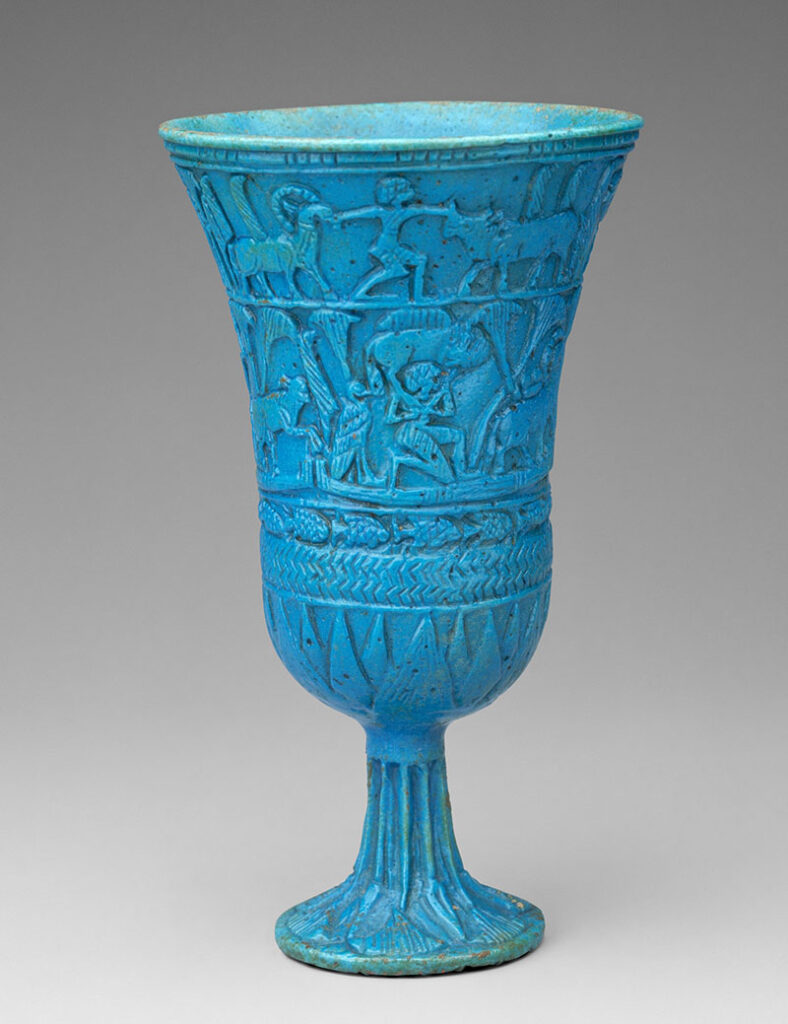
A design element shaped like an inverted lotus. It is an important iconographic symbol in Ancient Egyptian art, seen on artefacts such as chalices, as well as Ashokan art, where the base of pillars often bore this shape.
More Definitions
Jyotirlinga
An aniconic representation of the Hindu deity Shiva in the form of a lingam (phallus), representing Shiva as a stambha…
Volute
Derived from the Latin word voluta meaning "scroll," it is a spiral, scroll-shaped ornament. A key element in the Ionic…
Ayudhapurusha
The anthropomorphic representation of divine weapons in the Hindu pantheon. These personified weapons are depicted either in human form or…
Vajrapradama Mudra
Meaning the "mudra of unshakeable self-confidence," it is made by interlocking the fingers, placing the hands in front of or…
Jatamukuta
A hairstyle or headdress in the Indian iconographic tradition in which long, matted hair is twisted and piled atop the…
Vrishabha-Kunjara
A composite artistic motif, which depicts an elephant and a bull with a common head. It derives its name from…
Mrigashirsa Mudra
A single-handed gesture in South Asian iconography in which the thumb and little finger are extended outward, while the remaining…
Anantashayana
A representation of the Hindu god Vishnu, which shows him reclining atop a coiled form of the serpent Ananta, on…