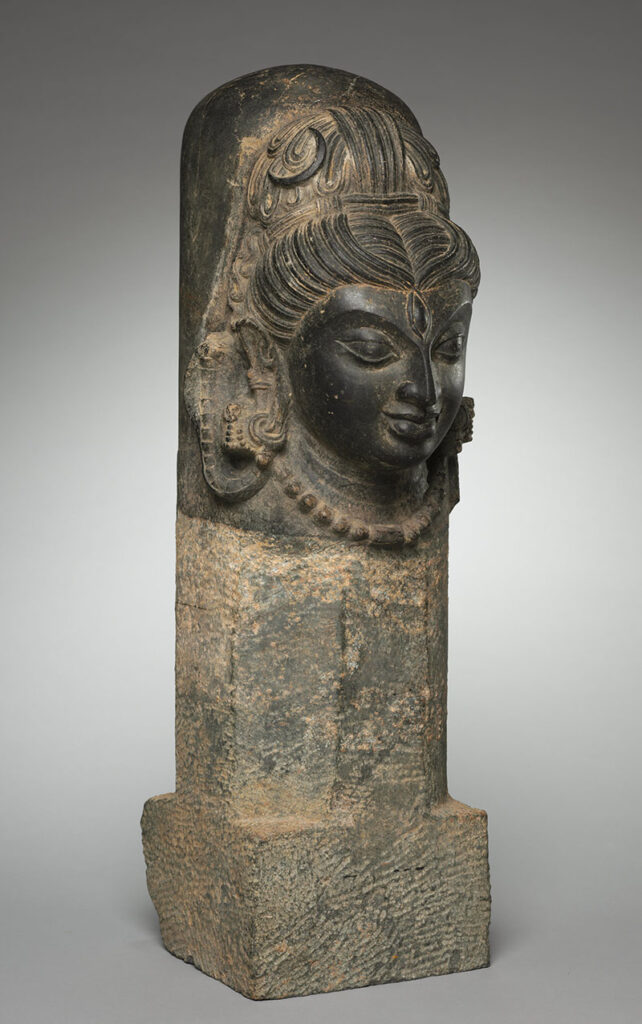
An aniconic representation of the Hindu deity Shiva in the form of a lingam (phallus), representing Shiva as a stambha (pillar) with no beginning or end. According to the Shiva Purana, there are believed to be sixty-four jyotirlinga sites in the Indian subcontinent, which are considered shrines to the deity. Twelve of these, considered the holiest, are known as Maha Jyotirlingam.
More Definitions
Jatamukuta
A hairstyle or headdress in the Indian iconographic tradition in which long, matted hair is twisted and piled atop the…
Bel
A popular floral motif, it depicts a climber or vine. Also known as Bel Buti, the motif is found in…
Anantashayana
A representation of the Hindu god Vishnu, which shows him reclining atop a coiled form of the serpent Ananta, on…
Phoda Kumbha
A temple motif common to several sari-weaving traditions of Odisha, it consists of triangular shapes that run along the border…
Dhawadi
A flower motif based on the dhawadi flower (Woodfordia fruticosa), commonly found in bagh prints.
Yoni
It symbolises the goddess Shakti as well as the feminine procreative power within Hindu iconography. The word itself literally translates…
Thazhampoo Reku
Textile motif comprising jagged triangular forms, repeated as a band along sari borders, particularly Kanjivaram saris from Tamil Nadu in…
Vismaya Mudra
A single-handed mudra or gesture that is meant to convey wonder. The palm faces inwards, towards the body, while the…