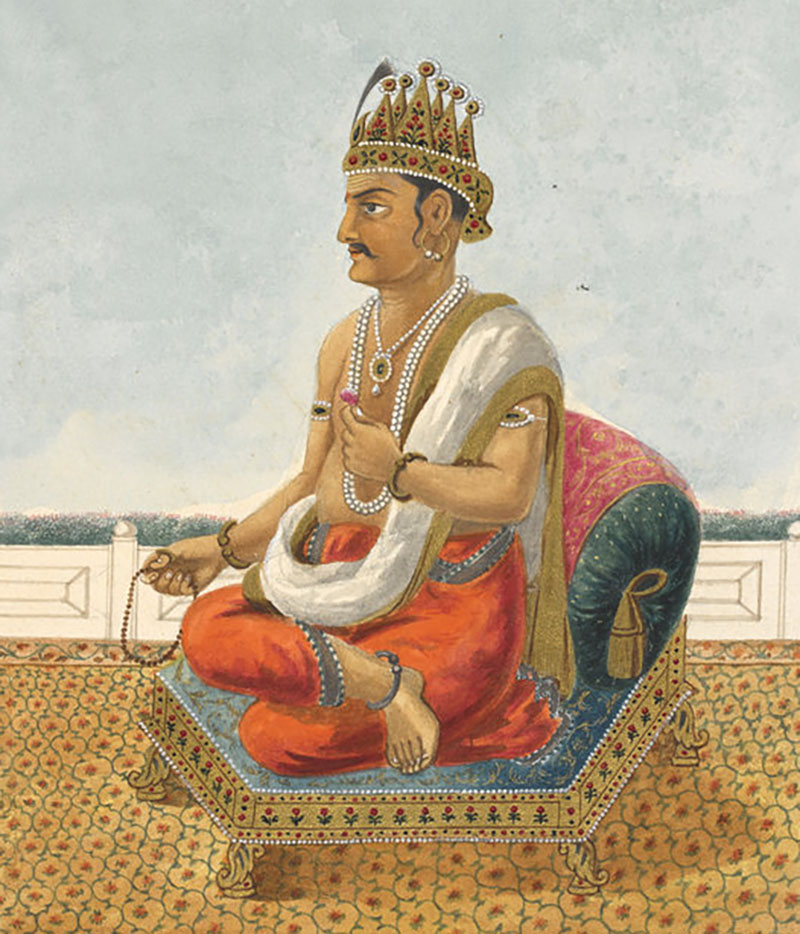
In the Indian epic Ramayana, the father of Sita and father-in-law of Rama. In later Vedic texts, Janaka is stated to be a ruler of Videha, a region corresponding to parts of present-day Bihar and Nepal, and historians suggest a possibility of him having been a historical figure who may have lived and ruled between the ninth and seventh centuries BCE.
More Definitions
Bhairavi
The consort of Bhairava and a form of Devi, the supreme goddess in Hinduism. She is also one of the…
Vrishabhavahana
A benevolent form of the Hindu deity Shiva in which he appears with the bull Nandi, his mount or vahana.…
Tathata
A central concept in Buddhism that denotes the essential or true nature of reality, which is beyond the range of…
Padmasambhava
A Tantric master in Vajrayana Buddhism considered to have disseminated Vajrayana in Tibet between c. eighth and ninth centuries CE.…
Somaskanda
A representation of the Hindu deities Shiva and Parvati with their son Skanda, the god of war. This representation emerged…
Sramana
A non-Vedic ascetic movement that practised austerity and rejected domestic life. Sramana thinkers first conceptualised the philosophies of samsara (the…
Skanda Purana
The largest of the eighteen major Puranas, it comprises over eighty-one thousand verses written honour of Skanda, the son of…
Hermes
Deity of the Greek Olympian pantheon, believed to be the messenger of the gods and a trickster who frequently travelled…