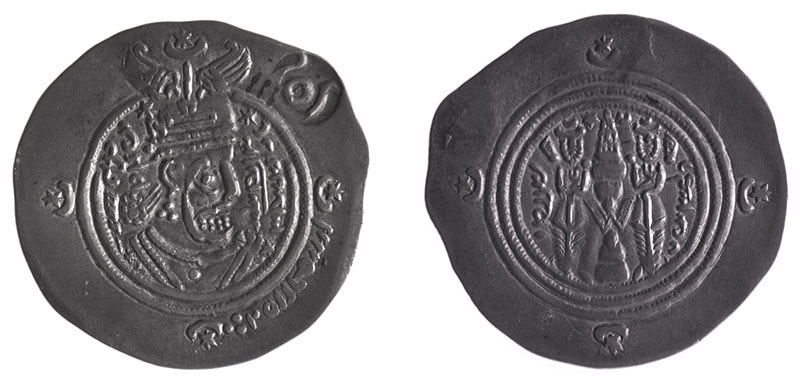
Also known as the White Huns, they were a predominantly nomadic set of people living in Central and South Asia during the fifth and sixth centuries CE. Historical information about their origin, society and culture is unclear and conflicting. They are notable for producing numerous coins imitating those of the Sasanians of Persia.
More Definitions
Patua
An artisanal community from the eastern states of the Indian subcontinent, primarily West Bengal, Odisha, Bihar and Jharkhand, as well…
Vaniya
A community, with historical roots in the precolonial Indian subcontinent and now predominantly based in India, consisting of merchants, bankers,…
Mahayana
The largest sect of Buddhism in the world, it is characterised by the reverence of bodhisattvas, coupled with the pursuit…
Ajivika Sect
An early sramana (ascetic) sect led by Makkhali Gosala in the fifth century BCE, it was a nastika (heterodox) school…
Rajput
A ethnic community from the north-west region of Rajasthan, which was historically known as Rajputana. Rajputs regard themselves as descendants…
Khatri
A community of predominantly Kshatriya Hindus, as well as Muslims and Sikhs, whose origins can be traced to the Punjab…
Shaliya
A traditional Indian artisanal community of weavers, known for their skills in crafting cotton saris and — since the twentieth…
transhumance
Seasonal movement of pastoral groups over long distances, between higher and lower altitudes, or other climatic zones, for the grazing…