-
ChicagoImpart Encyclopedia of Art. "Mudhi, Mudha." August 28, 2026. https://imp-art.org/articles/mudhi-mudha/.
-
MLA"Mudhi, Mudha." Impart Encyclopedia of Art, Aug. 28, 2026, https://imp-art.org/articles/mudhi-mudha/.
-
HarvardImpart Encyclopedia of Art (2026) Mudhi, Mudha. Available at: https://imp-art.org/articles/mudhi-mudha/ (Accessed: 16 October 2026).
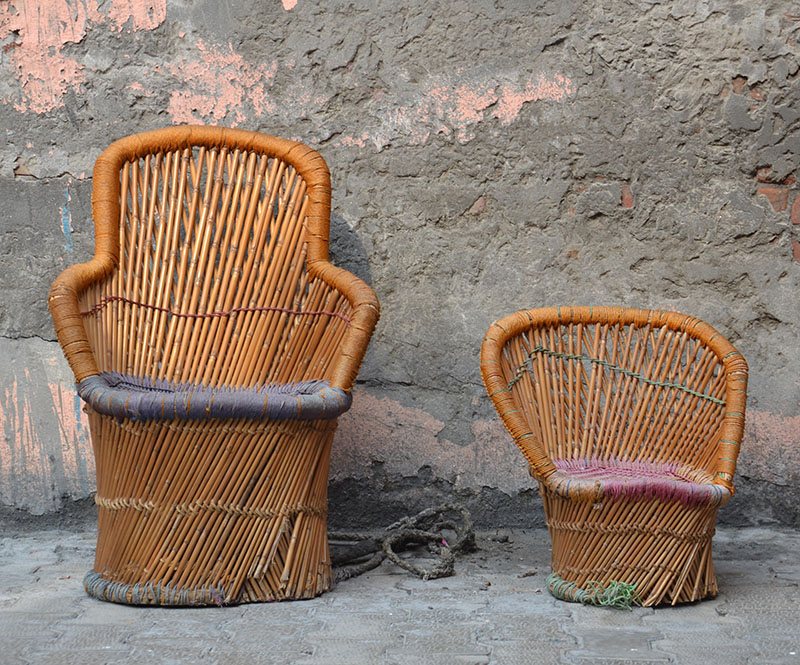
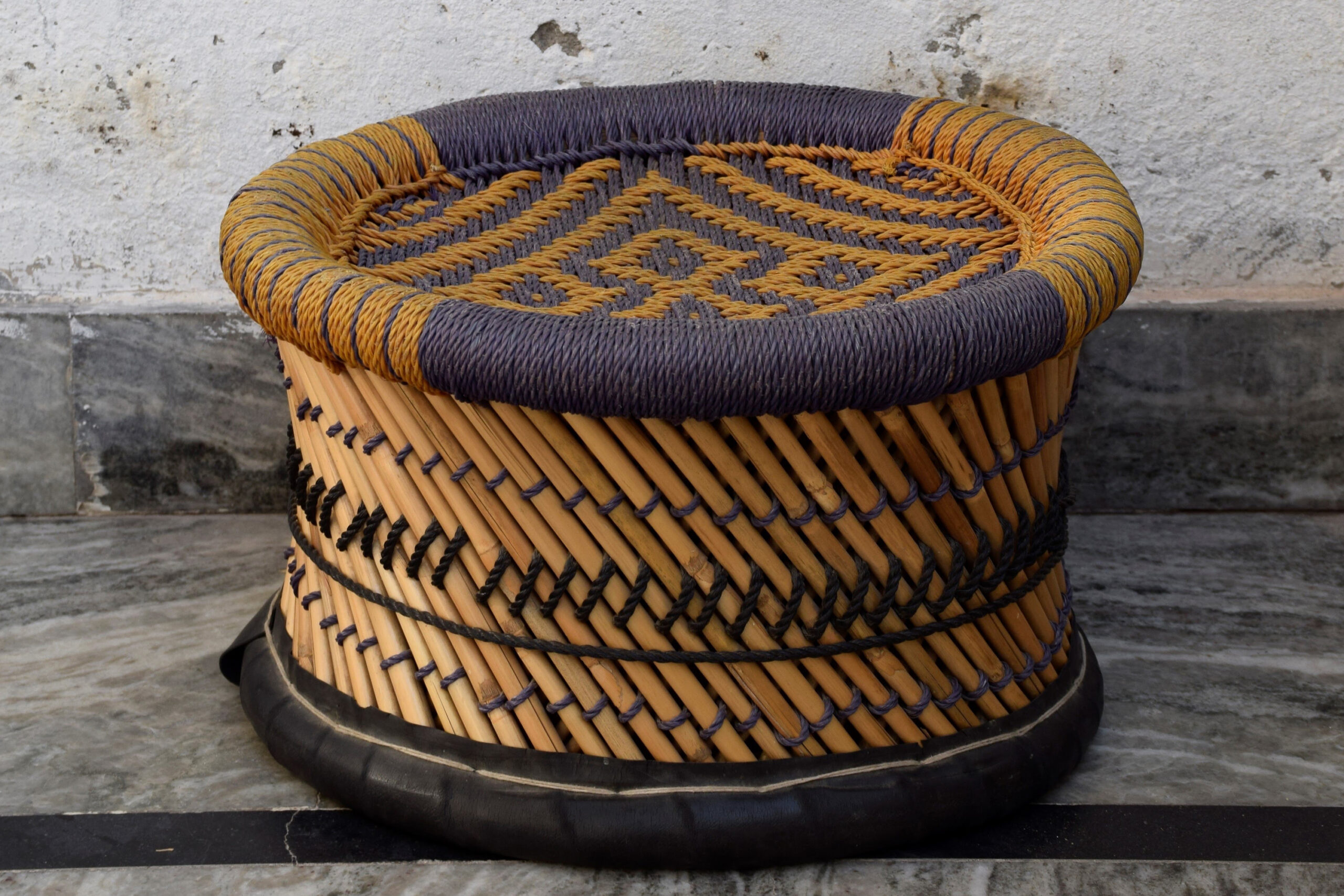
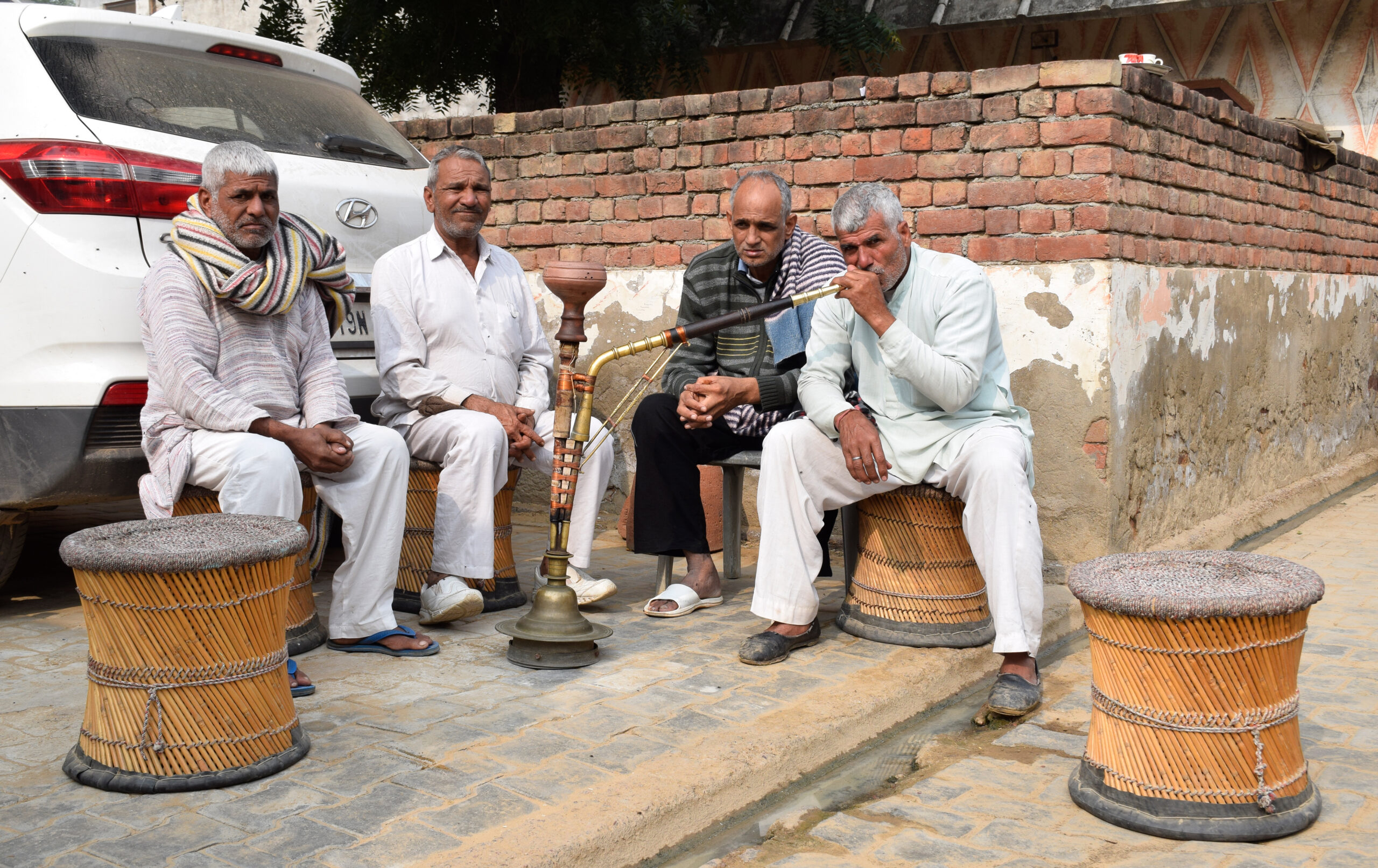
A round stool or armchair made of sarkanda grass, a mudhi or mudha is a common item of vernacular furniture in Punjab, Haryana and parts of Rajasthan, as well as the rest of India where the raw materials are abundantly available.
Terminology
In Punjab, Haryana, and parts of Rajasthan, ‘mudhi’ refers to the stool, whereas ‘mudha’ is the armchair. In other parts of Rajasthan, ‘mudha’ may denote both. In parts of Haryana the smaller armchairs may also be called ‘mudhi’.
‘Mudha’ also refers to a distinct flat cushion for floor seating in Punjab, made from woven and coiled coir or grass rope.
Design and construction
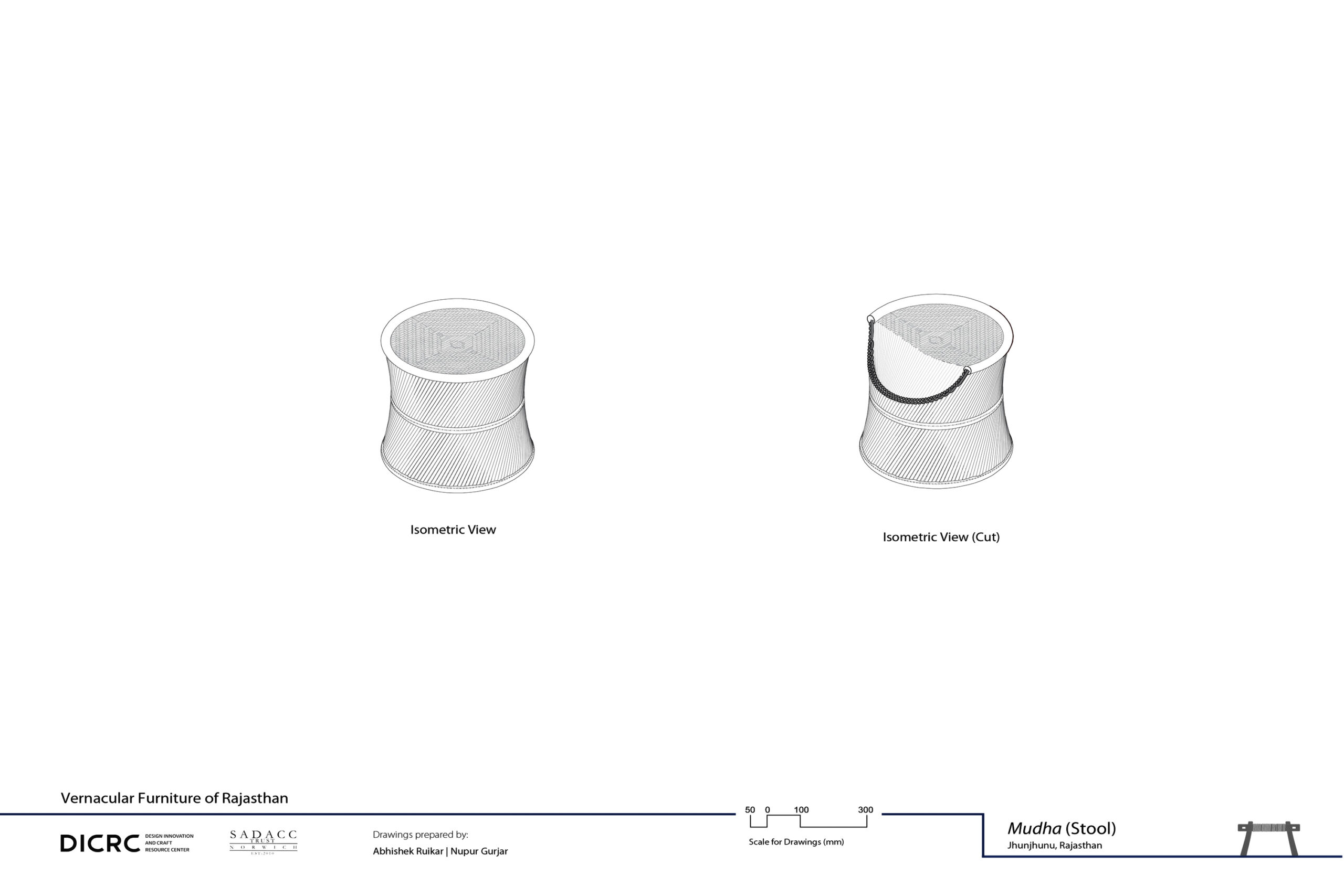
The stool and armchair share the same construction, differing only in size, and the presence of a back and armrests in the latter case. The seats are most commonly constructed using sarkanda (Tripidium bengalense, synonymous with Saccharum bengalense and Saccharum munja), a wild grass native to South Asia that grows abundantly and requires little effort to cultivate and maintain, making it an inexpensive raw material. In some cases, bamboo (Bambusa tulda) is also used. Mudha are often made by artisans who also make baskets (tokri), winnowers (chhavla or chhajj), chik (bamboo) blinds, and other such items from these grasses.
The sarkanda grass is harvested seasonally when it dries out; its various parts — stem, sheath and flower stalk — are processed and used for making the seats. The feathery flower stalk at the top of the plant, known as munjh, is moistened with water, crushed, and rolled into rope (munjh ki rassi) using a rolling pin; this is used for various components of the seat. Other parts of the plant are flattened using wooden implements such as thapi and thokni.
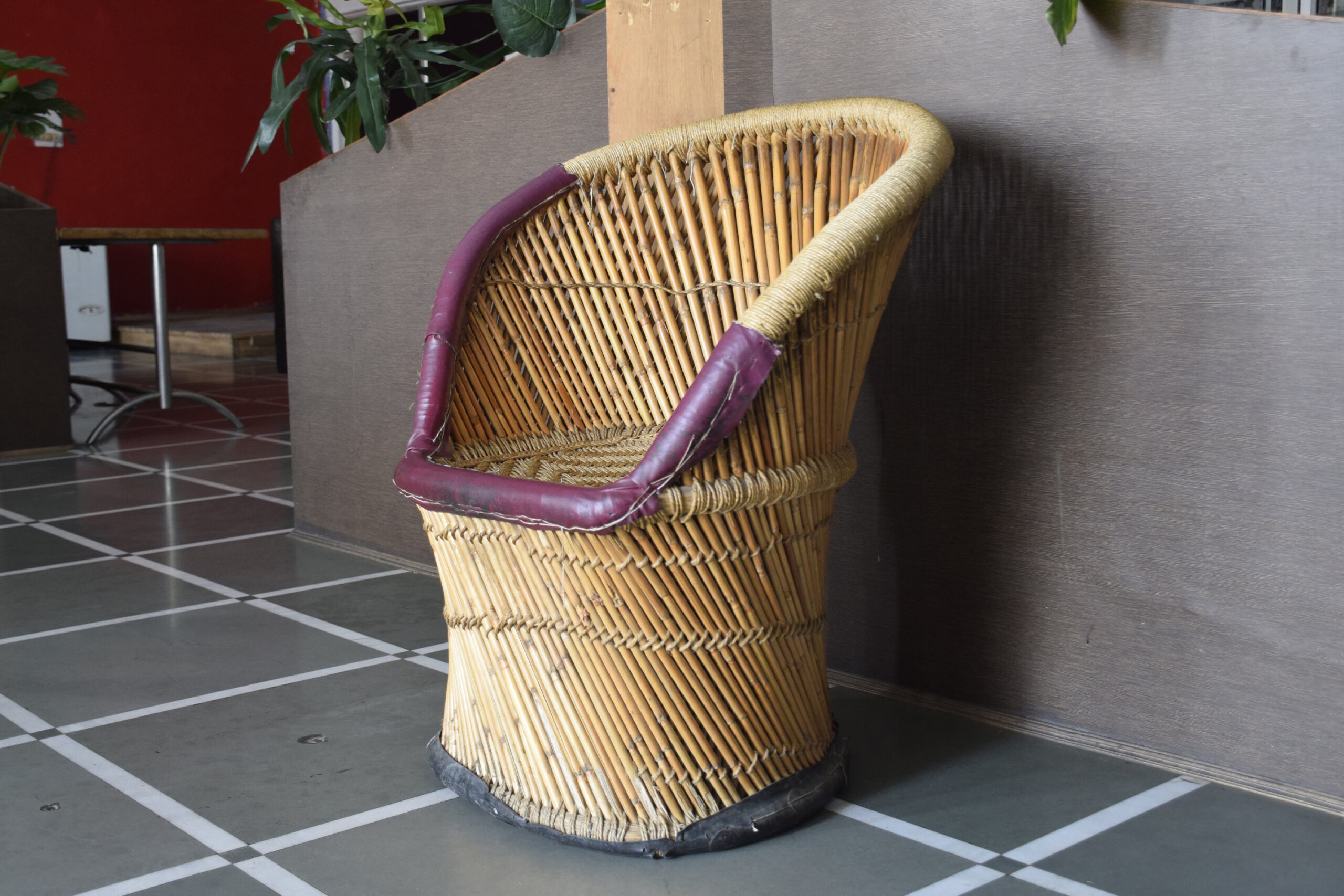
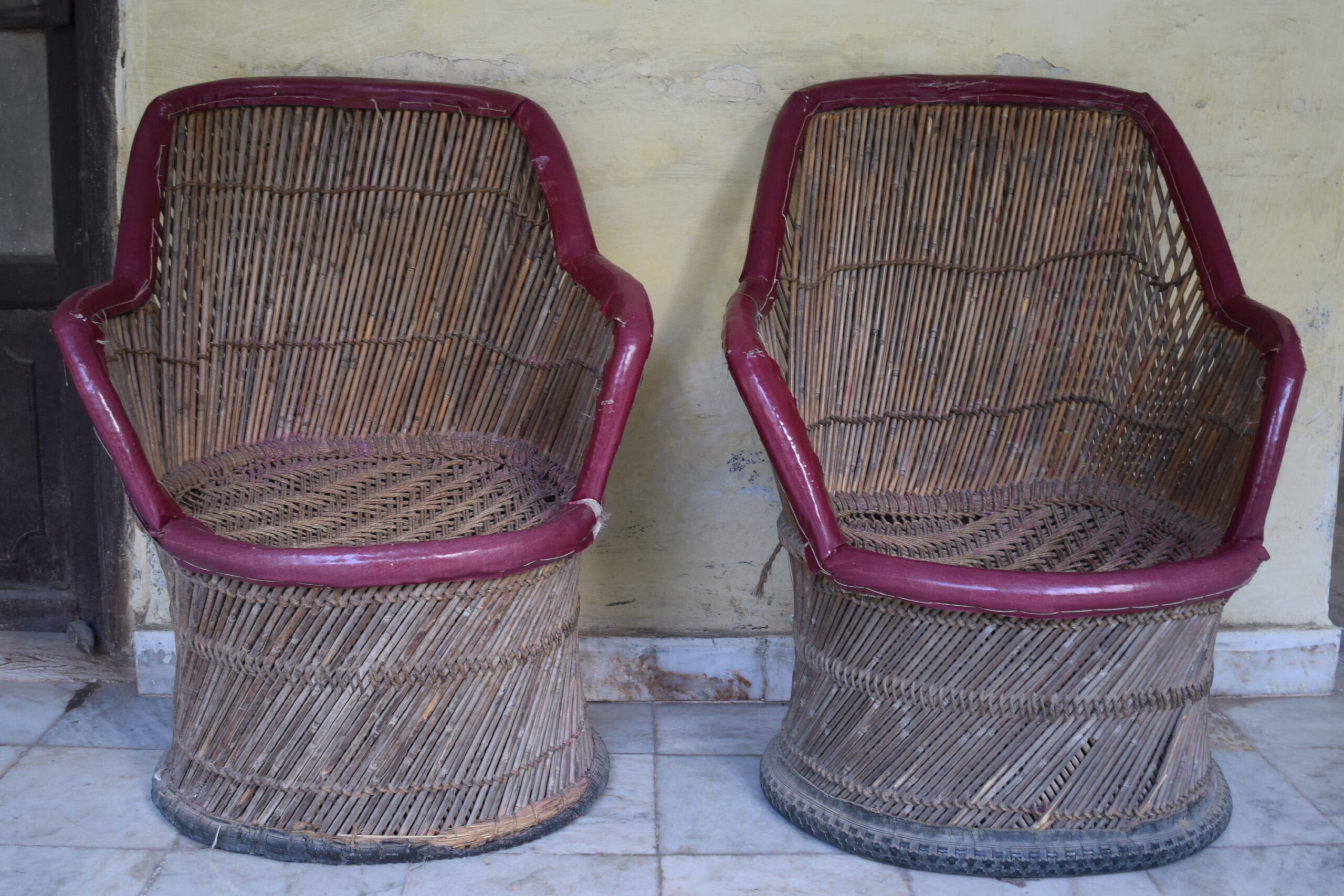
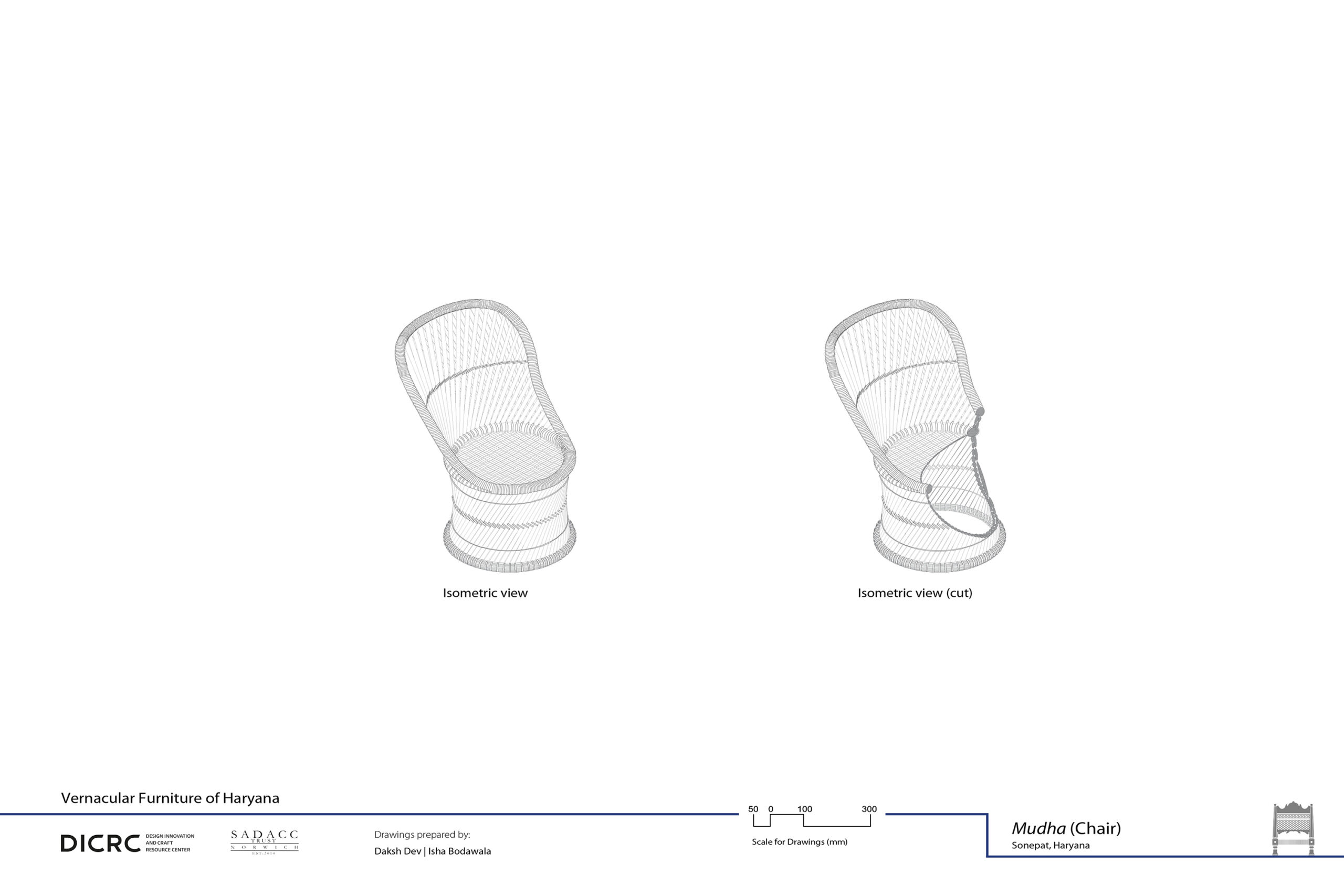
The hollow cylindrical body of the seat is typically made of rigid sarkanda stems or stalks arranged diagonally in two layers (in opposite directions) and bound at the top, middle and bottom with munjh rope. It is slightly narrower around the middle, creating a mildly concave surface. A thick circular rim is attached to the bottom and top to stabilise and provide rigidity to the structure; these are made by bundling the sheaths of sarkanda stalks and wrapping them with munjh or cotton rope. The munjh rope is also woven into a webbing for the seat. To create a mudha, the stalks are kept longer at the back and sides to serve as back- and armrests, whose rims are also lined with the bundled sarkanda sheaths wrapped in munjh or cotton rope.
To reduce wear and tear, leather might be used to cover the rims, and in some cases to upholster the seat, as seen in mudha in traditional mansions (haveli) in the Shekhawati region of Rajasthan. Today, faux leather or old rubber tyres are often used instead to protect the rims; these are also easier to replace than a rope wrapping.
Mudha and mudhi may be made in various sizes, depending on the user’s needs. In Haryana, the smaller chair known as the mudhi is often made to seat children.
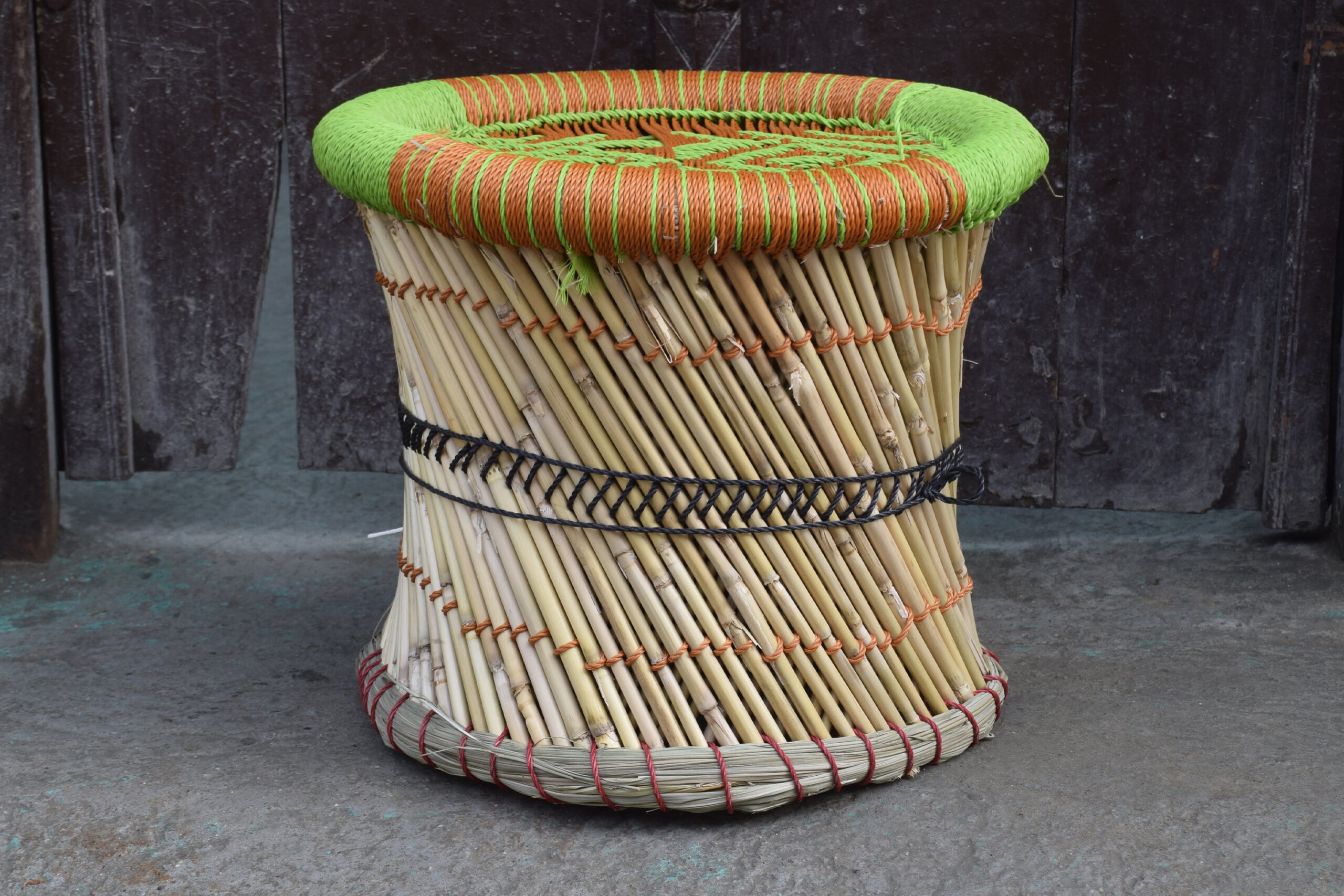
Webbing
The webbing is woven using ropes of jute or coloured cotton that are sometimes made by the artisans themselves; this is increasingly being replaced by inexpensive readymade nylon rope. Historically, deer horn (singdi) was used to work the rope for the webbing and other parts of the mudha or mudhi; now metal tools are used. The webbing is often woven in decorative patterns. In Punjab, these patterns — similar to those seen in the charpoy — sometimes resemble those seen in phulkari embroidery.
Production
Across India, the ready availability of bamboo and sarkanda grass and the migration of artisan communities has led to the formation of craft clusters where mudha and mudhi are made, along with other items made of sarkanda and other natural fibres. In Haryana, it was recorded that some in these clusters may be artisans who learned the craft as children; others may be temporary migrants from other areas who travel to these clusters in the peak period of production; still others learn the craft from their neighbours and assist with various parts of the work. Those who do not know the craft help to sell finished products in nearby markets. Men and women both participate in various aspects of the work. Many craftspeople work from the courtyards of their homes. Some work year round; others take a break in the monsoon.
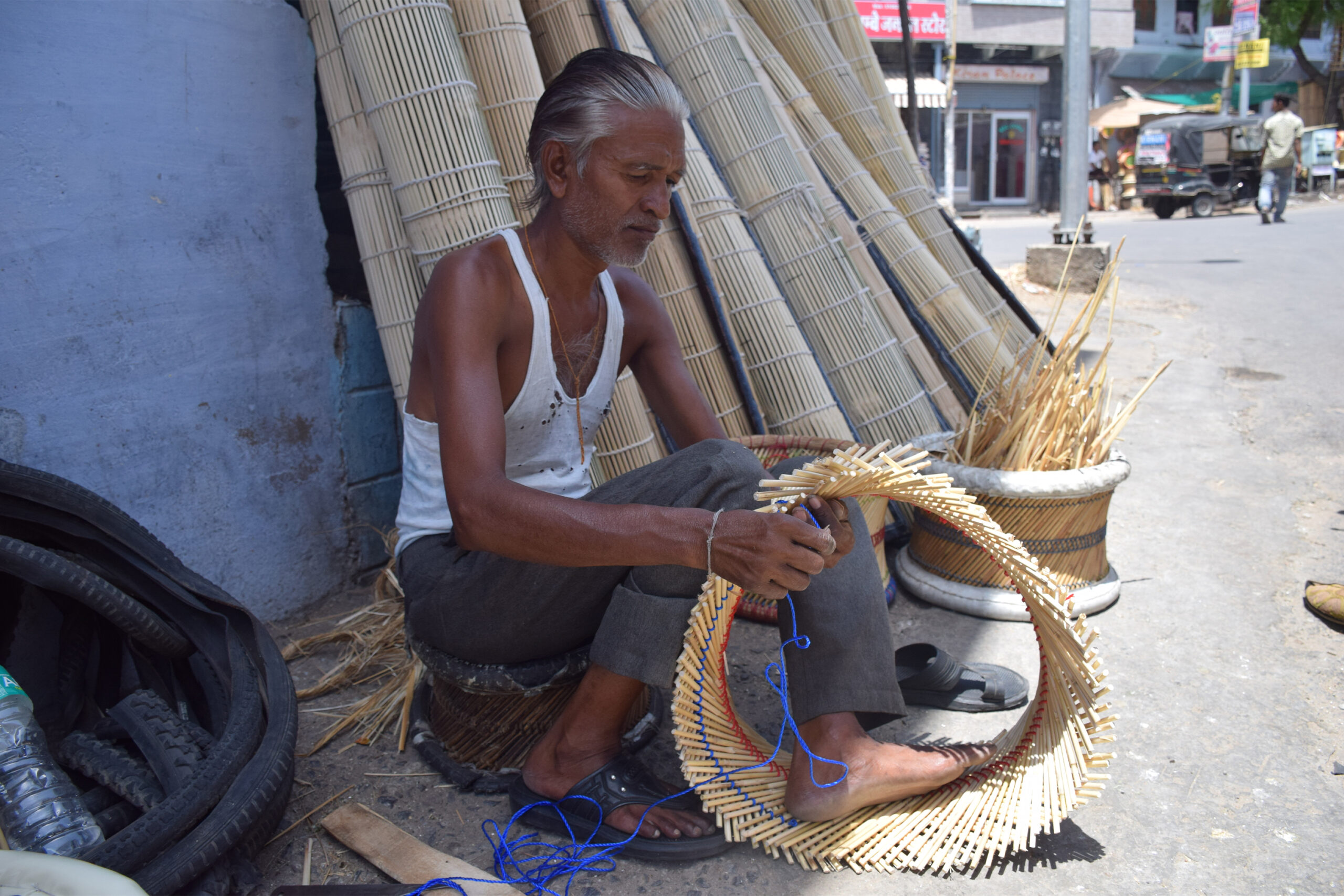
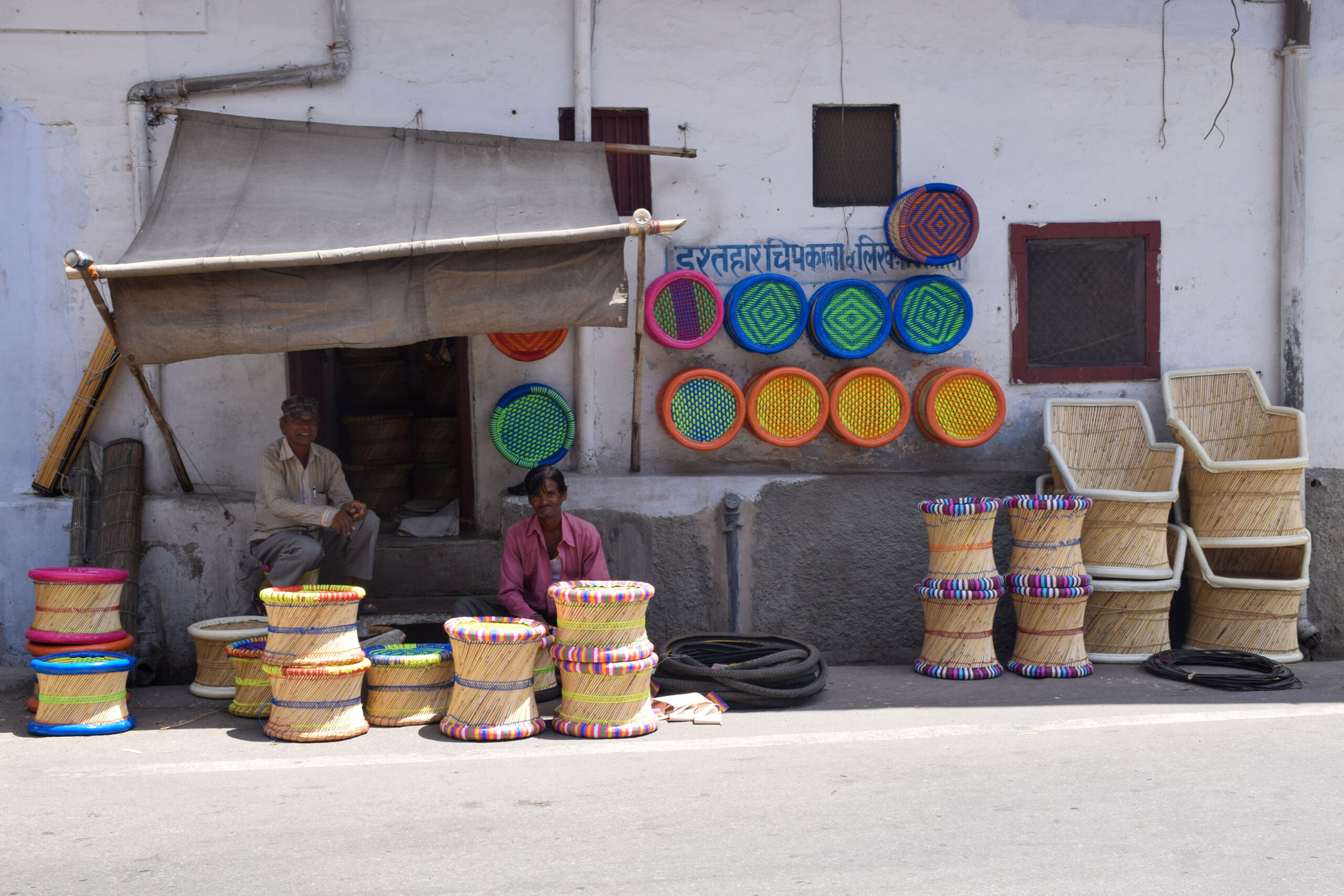
In Rajasthan, mudha and mudhi are sold in shops that double as workshops for their production. Raw materials are stored inside and artisans work outside in front of the shop, where finished products are also displayed. Typically, one artisan can make approximately four mudhi in a day, while a mudha takes a full day to produce.
Ownership and use
Mudhi have been used since at least the eighteenth century, as seen in a 1750 Bhagavata Purana illustration showing Krishna stealing butter. The lightness and portability of the mudhi and mudha make them convenient to seat large groups of people. In Punjab and Rajasthan, they are largely used in the home. Families may often have several mudha stored away to be used while entertaining guests; while stored, these might be covered with stitched or unstitched cloth covers. In Haryana, mudha and mudhi are also commonly seen in rural community spaces (chaupal), where male guests are hosted during weddings and other large celebrations and local men rest or socialise on a daily basis. Many chaupal are documented as being equipped with twenty to fifty mudha and mudhi, in addition to other vernacular furniture such as the khaat (charpoy). These may be donated by villagers, purchased with community donations, or commissioned by the village council.
This article is adapted from the outcomes of Vernacular Furniture of North-West India — a collaborative research and documentation project by the Design Innovation and Craft Resource Centre (DICRC), CEPT University, India, and The South Asian Decorative Art and Crafts Collection Trust (SADACC), UK — shared with the Encyclopedia of Art through an Impart partnership. Explore more from this series in our Collection Objects Alive: Vernacular Furniture of North-West India.
First published: 28 August 2026
Image Gallery
Bibliography
Rao, Mansi S., Ben Cartwright, and Samrudha DIxit. Anaikya: Vernacular Furniture of Rajasthan. Ahmedabad: CEPT University Press, 2021.
Rao, Mansi S., Ben Cartwright, Jay Thakkar, and Abhishek Ruikar. Smarya: Vernacular Furniture of Punjab and Haryana. Ahmedabad: CEPT University Press, 2026.
Vernacular Furniture of India. Accessed February 1, 2026. https://vernacularfurnitureofindia.com/.
Feedback