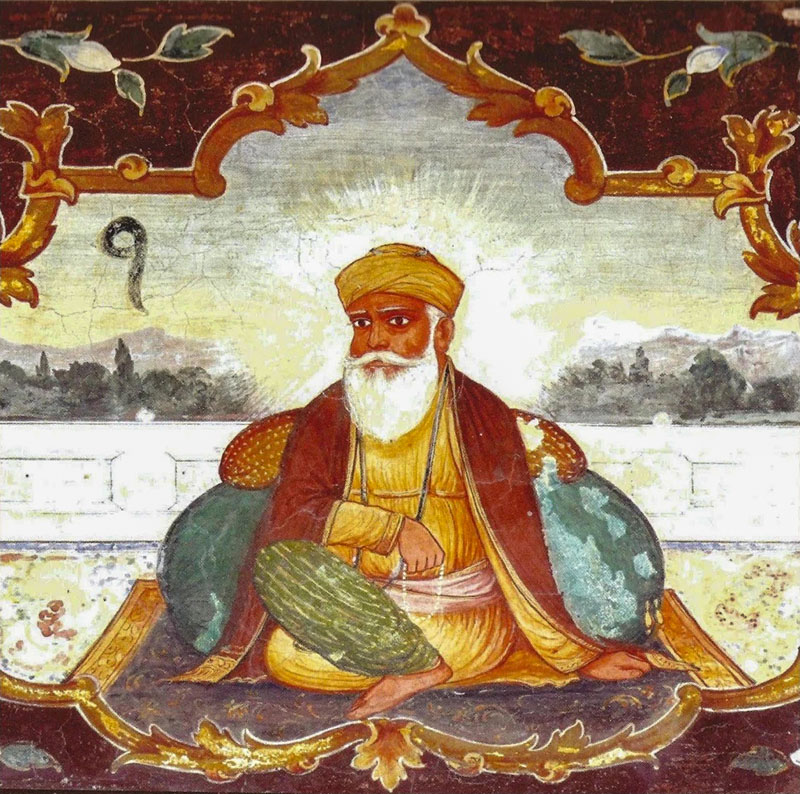
The first of the ten Sikh gurus, Guru Nanak (b. 1469, d. 1539) was the founder of Sikhism. Born in present-day Nankana Sahib, Pakistan, he is believed to have travelled across South Asia preaching his message of “ik onkar” (One God), which are recorded in the form of hymns and poems in the holy text of the Sikhs, the Guru Granth Sahib.
More Definitions
John Forbes Watson
John Forbes Watson (b.1827; d.1892) was a physician and writer. Watson served as the Reporter for the Products of India…
Lokesh Ghai
An artist and researcher based in Dehradun and Ahmedabad, Gujarat. He is the founder of Katab: Not Only Money, a…
Abu’l-Fazl ibn Mubarak
An official in Akbar's court, Abu'l Fazl (b. 1551; d. 1602) was a close confidante of the emperor and wrote…
Thomas Holbein Hendley
Thomas Holbein Hendley (b. 1847; d. 1917) was a British medical officer and author on Indian art. He served as…
Sivama Sada
Sivamaka Sada (b. n.d.; d. n.d.) was a ruler of the Sada dynasty, which governed a part of present-day Andhra…
Shakyamuni Buddha
An epithet used for the Buddha, the founder of Buddhism, who lived sometime between the fourth to sixth century BCE.…
Domingo Paes
Domingo Paes (b. n.d.; d. n.d.) was a Portuguese horse trader who visited Vijayanagara, the capital of the Vijayanagara empire,…
Sassanka
The first independent ruler of the Gauda kingdom, who reigned c. late sixth to mid seventh century. His reign was…