-
ChicagoKhanbhai, Mustafa. "The Enduring Rituals of Islamic Bibliomancy." Impart Perspectives, July 24, 2026. https://imp-art.org/perspectives/features/bibliomancy-and-divination-practices-in-islamic-cultures/
-
MLAKhanbhai, Mustafa. "The Enduring Rituals of Islamic Bibliomancy." Impart Perspectives, Jul. 24, 2026, https://imp-art.org/perspectives/features/bibliomancy-and-divination-practices-in-islamic-cultures/. Accessed 27 Sep 2026.
-
HarvardKhanbhai, M. (2026) The Enduring Rituals of Islamic Bibliomancy, Impart Perspectives. Available at: https://imp-art.org/perspectives/features/bibliomancy-and-divination-practices-in-islamic-cultures/ (Accessed: 27 September 2026).
The Enduring Rituals of Islamic Bibliomancy
Bibliomancy and its associated objects are less aberrations than indicators of a persistent tension within Islamic societies — between prescription and practice, orthodoxy and lived experience.
By Mustafa Khanbhai
Link copied!
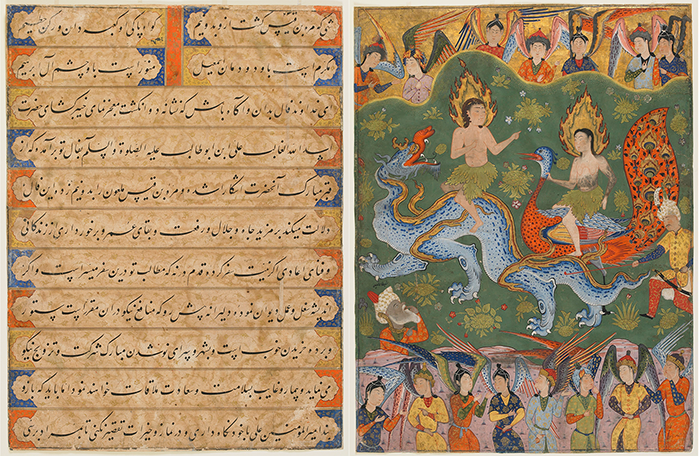
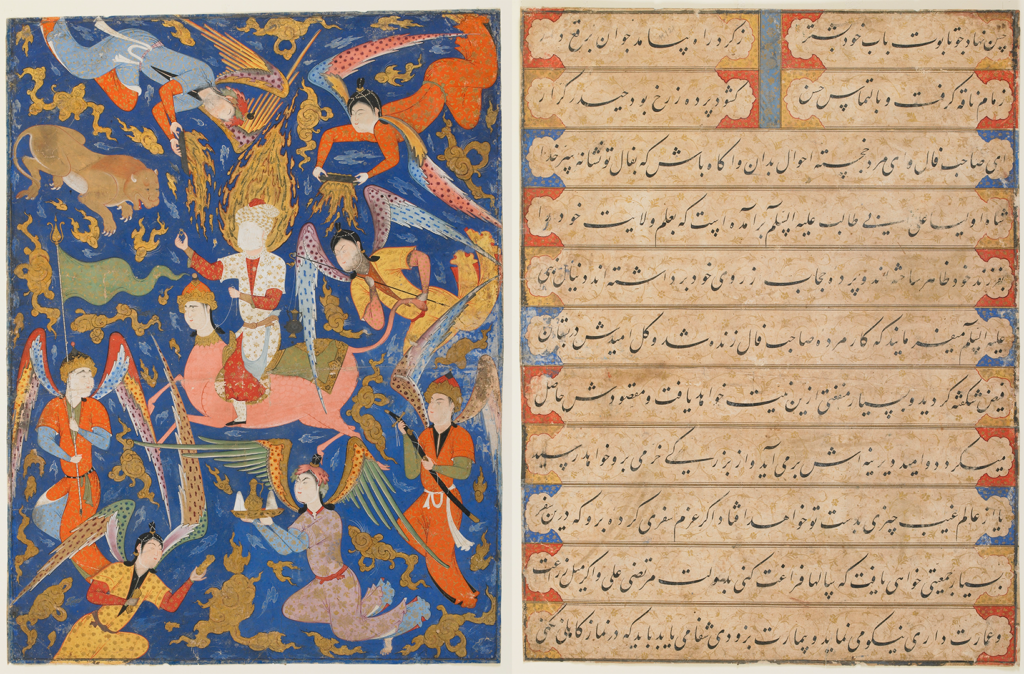
Folio from a Falnama (Book of omens); verso: Expulsion of Adam and Eve; recto: text; Arthur M. Sackler Collection. Courtesy Smithsonian's National Museum of Asian Art
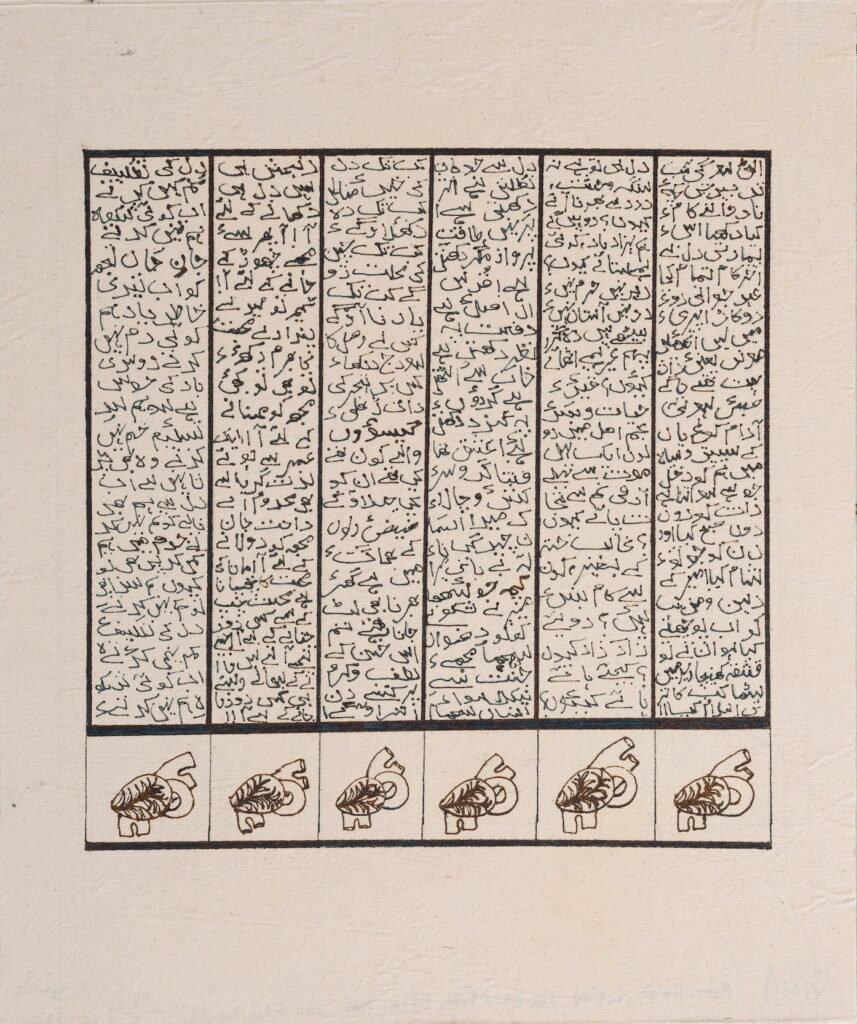
Growing up in a Muslim household in South Asia, it can be difficult to separate regional and personal idiosyncrasies from the mainstream rituals of the religion. A fairly common sight in my childhood home — but never in a mosque, never in public — was my grandmother carrying out a ritual that I would later understand to be bibliomancy, a branch of divination using books. In its simplest form, it consists of a person making a prayer, fixing a question in their minds, opening the Quran to a random page, and blindly selecting a line or verse. The querent then interprets the words as a good, bad, or neutral omen, in response to the original question. My grandmother was wary of my own curiosity about the practice, however, concerned perhaps that the lure of the ‘occult’ (which is how such things are treated in Abrahamic thought) would overpower the naive mind of a child. She would emphasise that she never consulted the Quran in this way over trivial matters, reserving the practice for only the gravest questions. Looking back, I think the actual results seemed to matter little, as it was more of a self-soothing ritual than anything else.
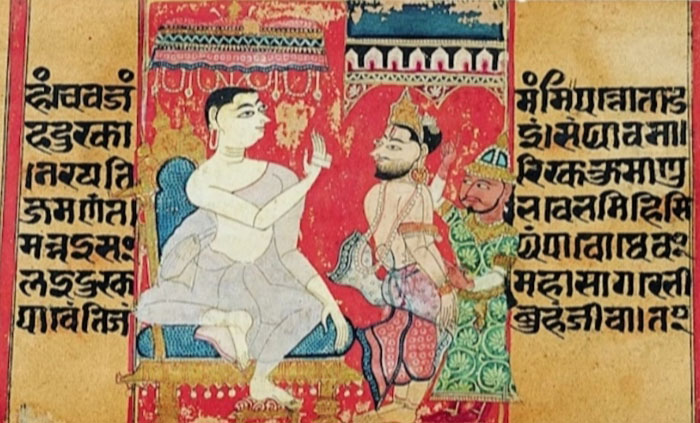
Bibliomancy itself long predates Islam, possibly originating in the second century BCE in the Mediterranean and West Asia, where culturally significant texts — from Homeric epics to the Bible — were opened at random to solicit guidance. In Persianate contexts, this practice was not only preserved but elaborated upon, appearing in both pre- and post-Islamic literary traditions. References to the consultation of texts for divinatory purposes occur in connection to popular medieval Persian poetry, such as the Divan of Hafez and Rumi’s Masnavi, where the act of seeking meaning through seemingly arbitrary signs is reframed as a mode of attunement to the Divine.
The emphasis on oral transmission throughout most of South Asian history and the lack of evidence for bibliomancy in the region before the establishment of Persianate kingdoms suggests that the practice was largely introduced after the Islamic conquests of the Late Medieval period.
Divination is strictly forbidden in the Quran and hadiths, on the grounds that any desire to gain knowledge about the future means challenging the path set by God. Such prohibitions exist in all Abrahamic religions, including Judaism and Christianity. In all likelihood, such measures were instituted to safeguard the authority of central religious institutions from the potentially diluting effects of the many divination practices that have been endemic to West Asia for millennia, often couched in the study of nature. Astrology is perhaps the best known, but the list also includes ornithomancy (patterns in the activities of birds) and scapulimancy (fracture patterns in the roasted shoulder blades of various animals).
However, across centuries, bibliomancy and other forms of divination have remained popular despite Islamic injunctions against them in both West Asia and South Asia. Even though they have been kept out of mainstream Islamic rituals, barring a few exceptions, divination practices continue to exist, largely confined to recreational fortune telling in Iran and in domestic spaces as personal habit or ritual.
Bibliomancy applied to the Quran — the ‘Word of God’ — in particular is widely practiced across the Islamic world as it is associated with the practice of istikhara — ‘seeking guidance’ from God. According to French-Lebanese scholar Toufic Fahd’s Encyclopaedia of Islam, bibliomantic Islamic practices did not begin in the sixteenth or even the tenth century but rather in the seventh century, within the lifetime of the Prophet Muhammad. Art historian Christiane Gruber, citing Fahd’s work, refers to the Prophet Muhammad consulting key chapters of the Quran when he fell ill, which happened within the first century of Islam. She argues that predictive practices using scripture, such as “early Judaic exegetical exercises to medieval Christian and Central Asian Buddhist traditions,” which existed before the birth of Islam, may have influenced Islamic traditions of divination by the Quran. She also refers to the practice of rhapsodomancy (ʿilm al-qurʿa) that began in the seventh century where detached letters and verses in the Quran were interpreted by believers for whom the sacred text was “brimming with divine signs (ayat), marks (alamat), pointers (isharat) and traces (athar).”
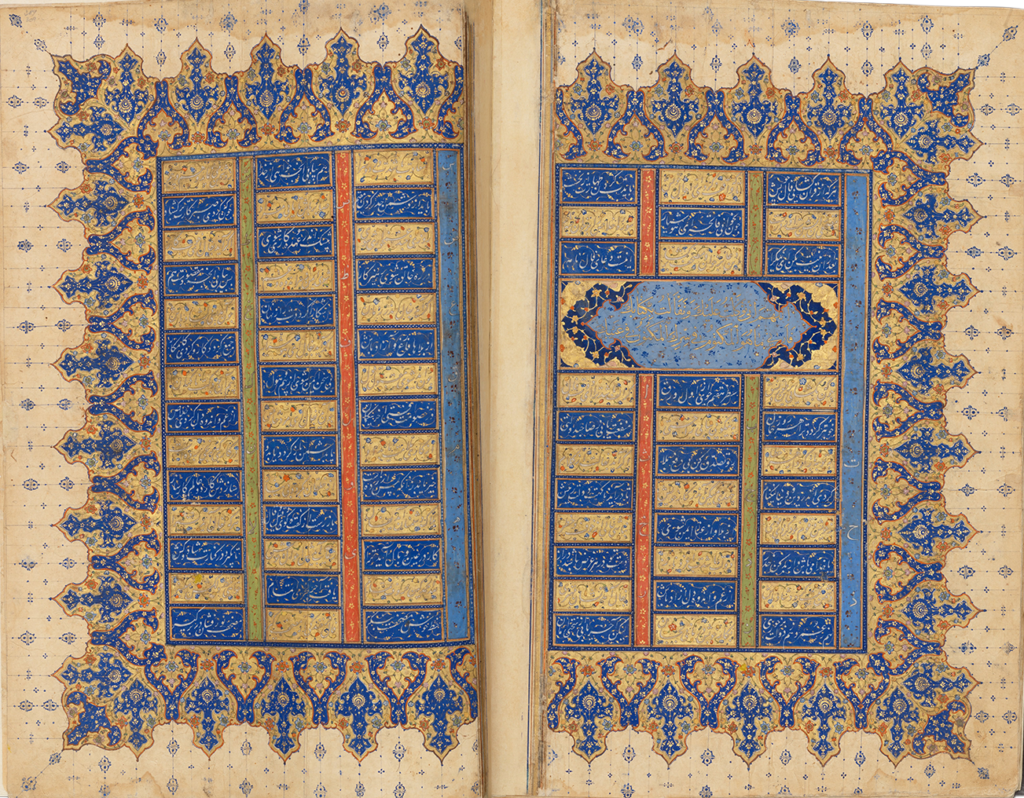
As mentioned earlier, the Divan-i Hafez and Rumi’s Masnavi were also sometimes consulted, largely by Persian communities, in addition to the Quran. To legitimise the practice, especially when using a secular text for divination, some practitioners read aloud a few verses from the Quran as a preamble to their bibliomancy session. For Muslim communities who do not understand the original Arabic text but have been taught the script (such as most non-clergy in South Asia), the Quran is legible in the literal sense, while remaining functionally incomprehensible without mediations, like translations or explanations by the clergy. As such, a household’s Quran is often treated as a sacred object sometimes to an even greater extent than as a sacred text. This kind of bibliolatry results in the Quran being treated as an enigmatic source of hidden truths — a belief that is fundamental to the use of any object or text as a divinatory tool.
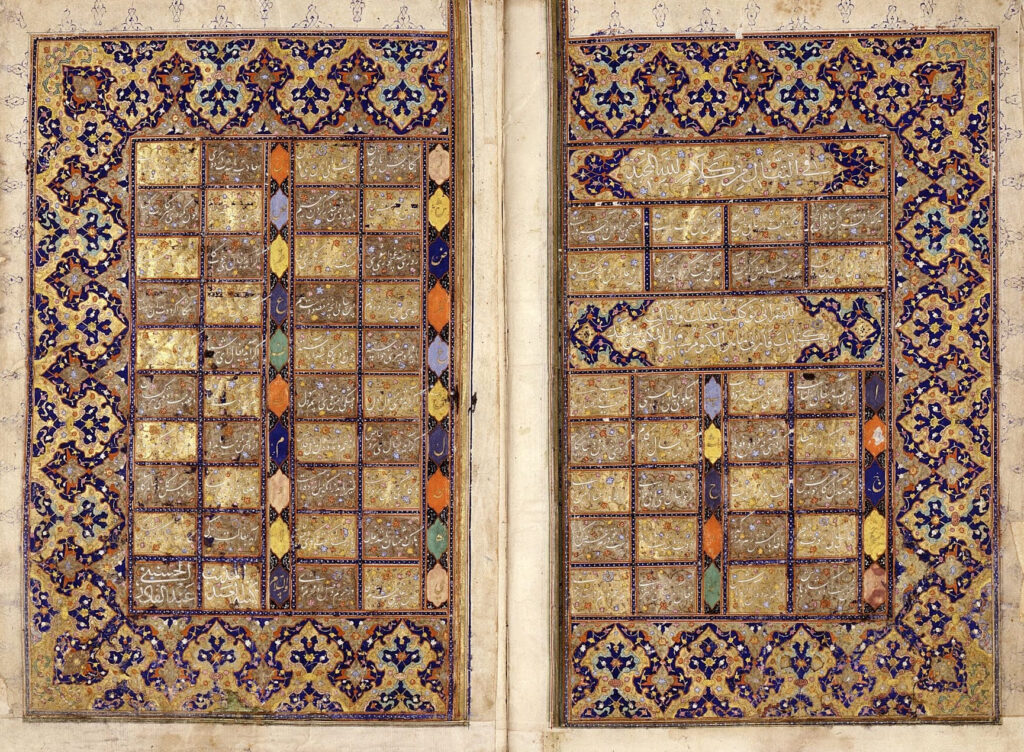
While most practitioners were content with using the Quran and other culturally significant texts for their bibliomancy, special fal-i Qurans (“Omen Quran” in Farsi) began to be produced in Safavid Iran in the sixteenth century. These fal-i Qurans, in addition to the Quranic text proper, would contain divination instructions — sometimes in the form of a table meant to assist devotees in interpreting the results of their divination rituals or a notation in the corner of each page indicating how it should be read. Gruber notes that in addition to medium and large-sized ornamental manuscripts, Safavid fal-i Qurans also came in miniature sizes. Embedded within cases, these fal-i Qurans were hung around the neck or tied to hats, arms, and stomachs — like amulets. They were also attached to battle banners carried by troops. These portable fal-i Qurans not only provided wearers a “textual intimacy” with the sacred text but also protection, by offering a chance to consult and heed the “glorious Word of God” (kalãm Allah al-majid) while on the move. Even today, print versions of fal-i Qurans with tables or notations are available to buy, and, like other divination tools, there are also digital versions of fal-i Qurans on websites but with undecorated and practical designs.
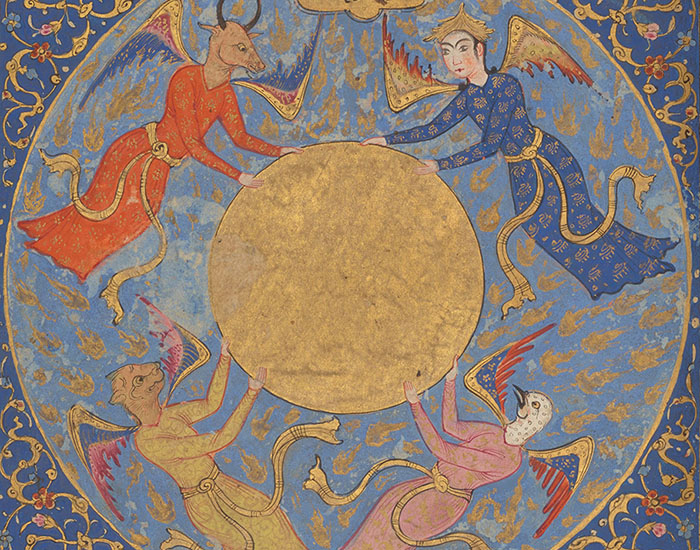
Falnamas (“book of omens”) were also used for bibliomancy, but these featured both secular and Quranic verses alongside illustrations. Heavily ornamented manuscripts were produced exclusively for the cultural (and economic) elite who indulged in artistic and literary curiosities. Falnamas did not follow a singular narrative but were a curated set of scenes from various larger stories and texts, usually ones that would be familiar to the intended readers. They featured a mix of religious parables, folk tales, mythological stories and, more rarely, historical events across the larger Abrahamic canon. The few falnamas that survive are surprisingly richly decorated for what has long been considered a marginal or illicit ritual practice.
During the reign of Shah Ṭahmasp I (r. 1524–1576), adding divination texts to the end of Qurans became a particularly widespread practice. Within the Safavid court, falnamas and fal-i Qurans were used to predict the outcomes of important undertakings, such as weddings and battles. Shah Ṭahmasp in his autobiography, Tazkira-i Shāh Ṭahmāsb, even wrote about how he practiced bibliomancy using texts that ranged from the Quran to Divan-i-Hafez and Bustan (The Orchard) by the poet Saʿdi of Shiraz. Scholars have noted that bibliomancy and other forms of divination became popular during this period in the Islamic world because it was a few years before the impending millennial anniversary of the birth of Islam. Apocalyptic fears around whether this milestone would usher in the last era before Judgement Day, combined with the instability caused by periodic wars between the Safavid and Ottoman empires (late sixteenth to mid-seventeenth century) intensified interest in prognostic practices. The use of falnamas had already spread to the Ottoman Turks as early as 1450. Sultan Mehmed II, who conquered Constantinople in 1453, is known to have commissioned a book of divination to help guide his military campaigns.
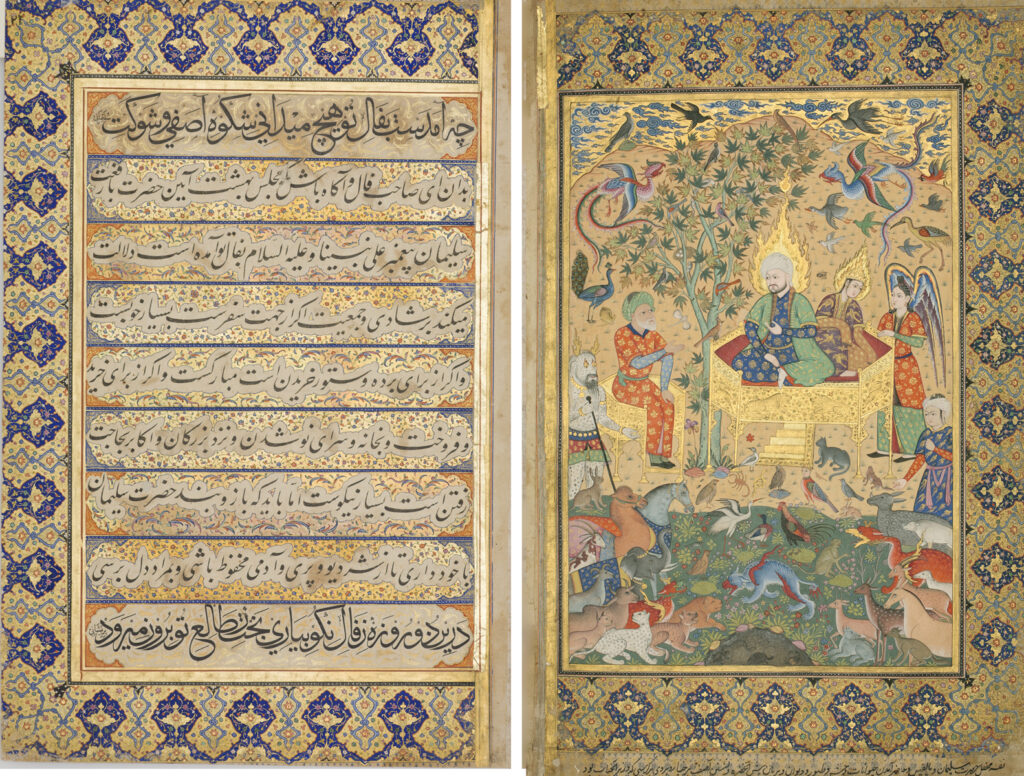
In South Asia, we find the Khalili falnama from Hyderabad — a relatively late example — produced in the early seventeenth century, and the only surviving Indian manuscript of its kind. The Persianate Golconda and Bijapur Sultanates often followed trends in Iran, with another notable example of the Deccan elites’ interest in divination being the Nujum al-Ulum, a text on astrology and mysticism produced in Bijapur circa 1570. In both these manuscripts, the visual iconography suggests a porous boundary between Islamic and non-Islamic traditions. Motifs, narrative structures, astrological charts, and even compositional strategies taken from both Persian and Indic visual cultures points to a broader ecology of exchange. Rather than emerging in isolation, the Khalili falnama appears as a product of layered inheritances, ranging from the astrological to the literary and artistic, that exceed strictly functional boundaries.
The degree to which falnamas and fal-i Qurans were decorated — particularly the Khalili manuscript — suggests that their production may have been an exercise in aesthetic experimentation and personal entertainment. In some ways, illustrated falnamas with their heavy use of gold leaf, dynamic paintings, and elaborate borders, betray a much more worldly interest in material elegance than otherworldly concerns about seeking God’s guidance. It is likely that the royalty and nobility who commissioned them saw them as luxury objects with novelty value. By contrast, a smaller, unadorned Quran owned by a more involved bibliomancer would be heavily dog-eared, warped and weathered.
The existence of falnamas points to an attempt to stabilise what is otherwise an inherently unstable act: the extraction of meaning from chance. In this sense, falnamas do not simply facilitate divination, but regulate it. By embedding divinatory practice within a framework of illustrated scenes — drawn from didactic stories, episodes on tests of faith, or tales of cosmic judgment from the larger Abrahamic canon — the falnama shifts the emphasis from prediction to reflection. The user is not simply told what will happen; they are presented with an allegorical scenario whose moral valence must be interpreted.
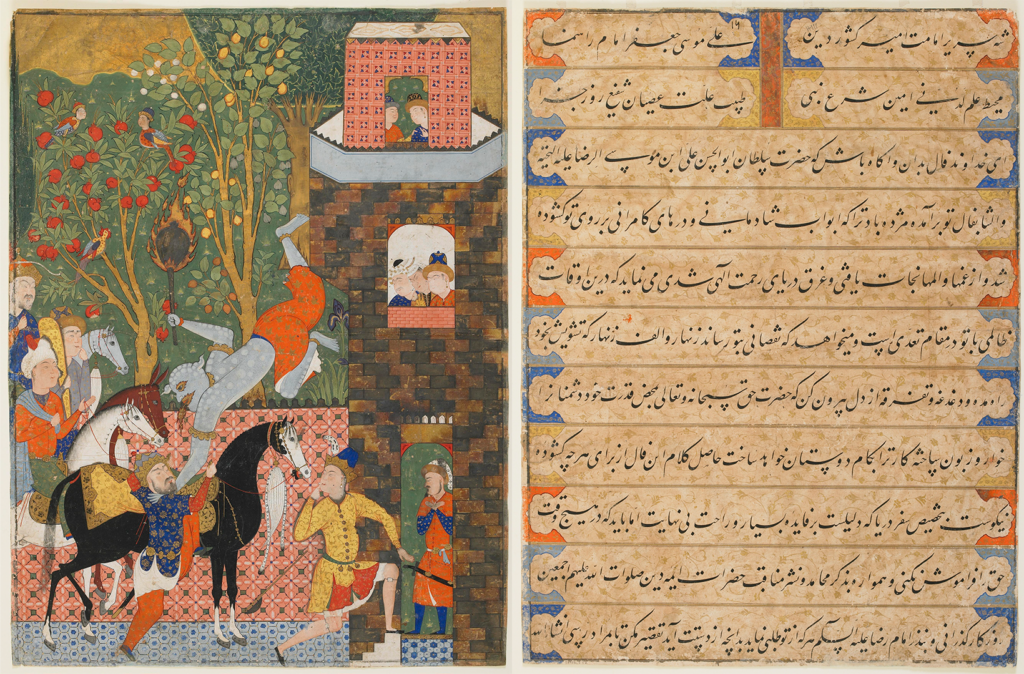
Instead of encountering a truly random omen — for instance, a single word or line that happens to be at the top of the page, and having to undertake the open-ended task of interpretation, the reader instead sees a scene that has already been selected for certain potential interpretations or representative of specific dilemmas. As these scenes are likely recognisable to the intended audience, the moral or philosophical message is recognisable as well, heavily simplifying the process of interpretation. In this way, the act of divination is reframed as a form of ethical contemplation, even if the underlying mechanism appears arbitrary.
In some cases and on auspicious occasions, such as the onset of a harvest season or an equinox, bibliomancy has and continues to be practiced in group settings as well. Certain additional rules are applied to such readings — for instance, one person’s omen (usually the verse on the open page) may not be used for another member of the group, or only a portion of the verse may be regarded as the omen. Rules around bibliomancy shift noticeably across regions, communities, and cultures. Orthodox sects like the Wahabi and Deobandi have condemned such practices while members of Shia communities, like the Bohras, the Twelvers (most famously the Qutb Shahi dynasty which commissioned the Khalili Falnama), and also some Sufi movements, have frequently explored bibliomancy as a legitimate religious exercise.
Not unlike how a popular game has variations in playing customs depending on where one resides, there is a consensus on core principles of Islamic bibliomancy but there is always an additional layer of local practices that have never been standardised across regions and cultures. Seen in this light, bibliomancy and its associated objects are less aberrations than indicators of a persistent tension within Islamic societies — between prescription and practice, orthodoxy and lived experience.
First published: July 24, 2026