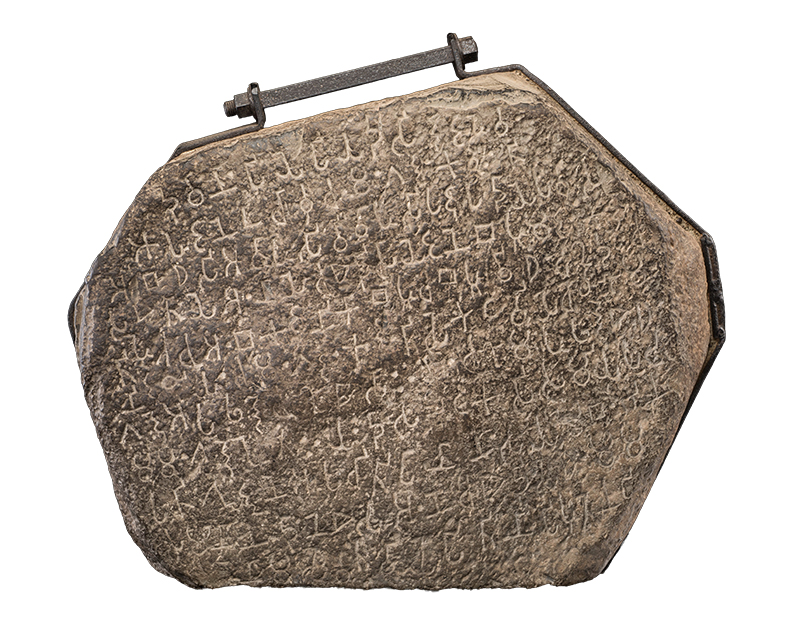
The study of inscriptions, and a key tool in archaeological and historical study. Epigraphy involves deciphering graphemes — letters denoting sounds — and translating the text composed of these graphemes based on wider cultural and historical context. The epigraphist’s material may range from scant markings on shards of pottery to lengthy inscriptions on stone tablets or copper plates; manuscripts, such as those written on papyrus or palm leaves, are not read by epigraphists, but by palaeographers. Epigraphical evidence has been particularly central to understanding developments in South Asian history, which has seen a high concentration of developed societies across time periods, but a lack of robust premodern historical writing. Epigraphy has, for example, played a key role in the study of the Chola kingdom, which produced a particularly rich corpus of inscriptions in various forms, and the Maurya empire, whose most prominent ruler Ashoka issued monumental edicts etched in stone. Epigraphy has also been important in tracing the origin and spread of languages and the evolution of scripts.
epigraphy
Link copied!