-
ChicagoRao, Kavitha. "Inconvenient Truths: Decolonising Museums in “Post-Brexit UK”." Impart Perspectives, June 19, 2026. https://imp-art.org/perspectives/dispatches/the-struggle-to-decolonise-museums-in-post-brexit-uk/
-
MLARao, Kavitha. "Inconvenient Truths: Decolonising Museums in “Post-Brexit UK”." Impart Perspectives, Jun. 19, 2026, https://imp-art.org/perspectives/dispatches/the-struggle-to-decolonise-museums-in-post-brexit-uk/. Accessed 15 Oct 2026.
-
HarvardRao, K. (2026) Inconvenient Truths: Decolonising Museums in “Post-Brexit UK”, Impart Perspectives. Available at: https://imp-art.org/perspectives/dispatches/the-struggle-to-decolonise-museums-in-post-brexit-uk/ (Accessed: 15 October 2026).
Inconvenient Truths: Decolonising Museums in “Post-Brexit UK”
The rush to decolonise British museums has become an increasingly divisive flashpoint in post-Brexit UK.
By Kavitha Rao
Link copied!
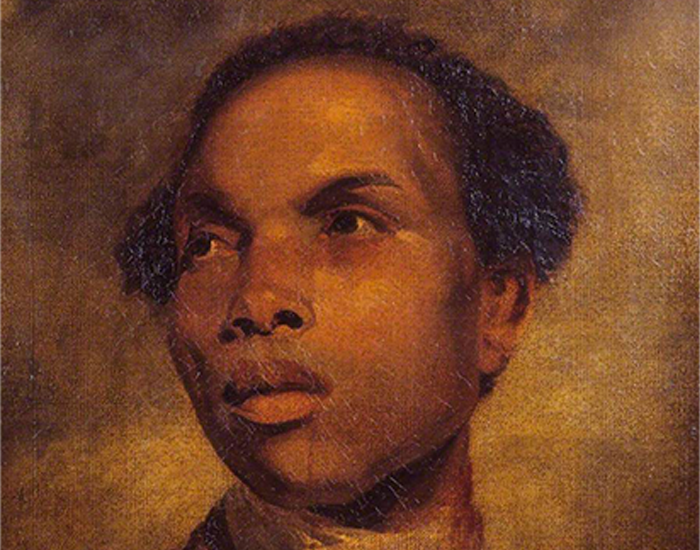
A Young Black (probably freed slave Francis Barber), detail; Joshua Reynolds; 1770. Courtesy Tate
Standing proudly on the banks of the Thames, with its graceful Greek portico welcoming visitors, Tate Britain is one of London’s most venerable cultural destinations. It is a custodian of beloved British art, and is stuffed with Turners, Gainsboroughs, Constables, and other national treasures. But lately, it has been called everything from “the museum where art goes to sleep” to “dull and didactic.”
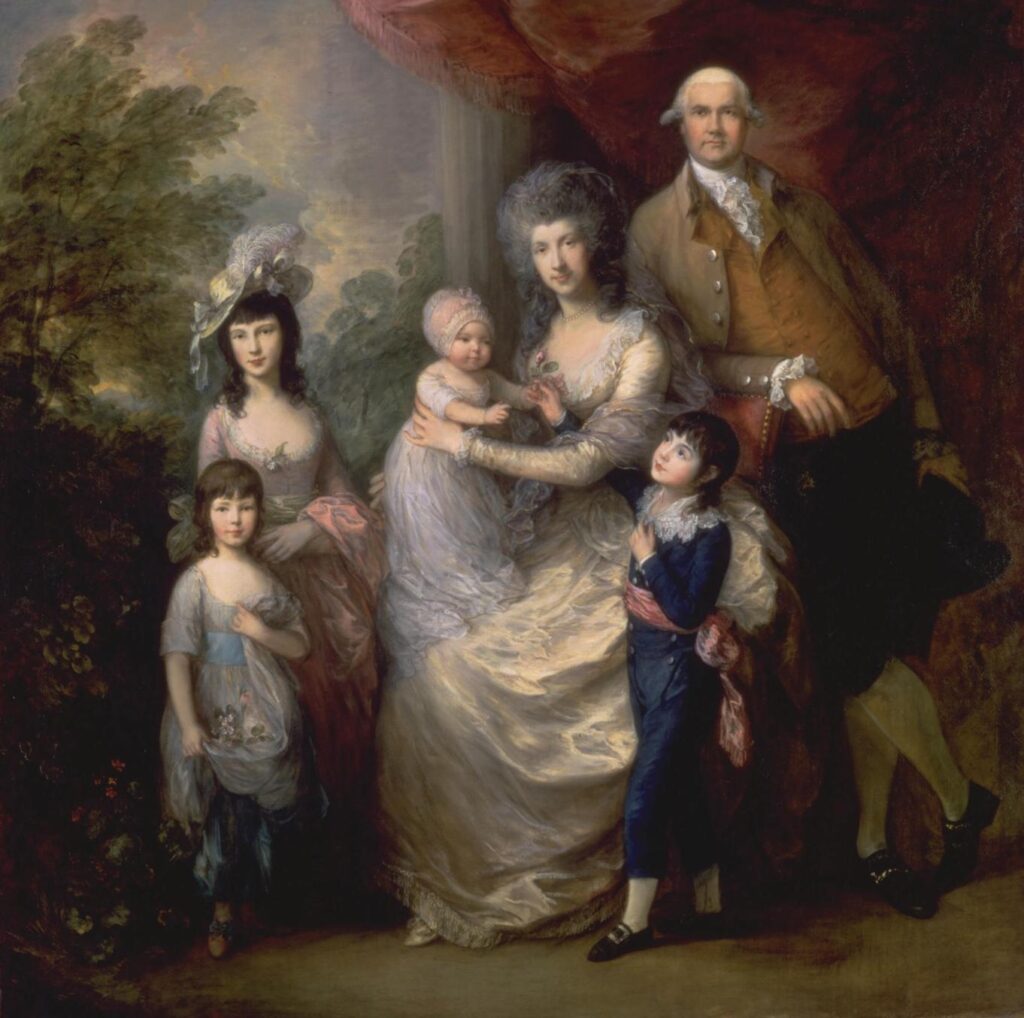
The reason: a controversial ‘rehang’ in 2023. Visitors may notice marked changes in some of the displays. A painting of the wealthy Baillie family, painted by Thomas Gainsborough in 1784, has the following wall text: “James Baillie presents an elegant, affluent image of domestic harmony. This was underpinned by the wealth Baillie amassed through Atlantic trade and plantations in Grenada, laboured by enslaved people.” Nearby is a portrait of a Black man painted by another British icon, Joshua Reynolds. The portrait is thought to be that of Francis Barber, a slave taken to England and then freed. The caption says, “The many versions of this portrait may suggest that as a Black man, he was treated as a subject rather than an individual.” Almost every wall text in this section of Tate Britain, which deals with colonial-era art, now references slavery, colonialism, or the rights of marginalised people in the museum’s much debated attempt to tell a “more expansive story of British art in ways that resonate with us today.”
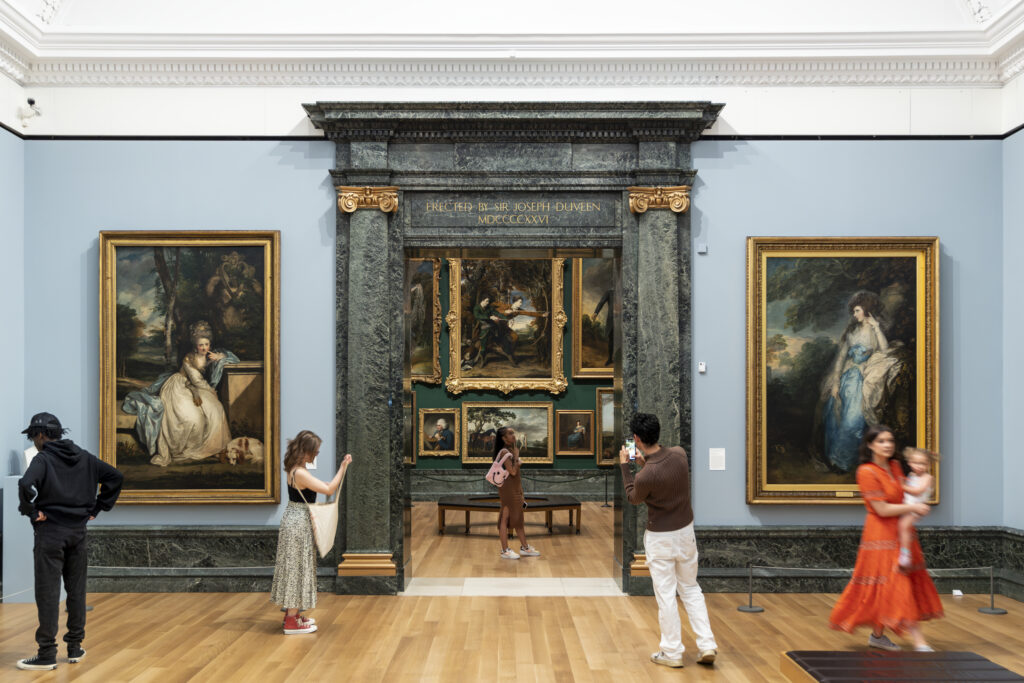
In the age of culture wars, the push for better optics at Tate Britain is part of a recent and growing trend — the decolonisation of culture. To make space for hidden narratives of slavery and colonisation, British museums and cultural centres are scrutinising the curation of their exhibits and displays. The language and content used in wall label texts and in guided exhibition tours are increasingly being updated. For instance, in my own work as a volunteer tour guide at the Old Royal Naval College, I have been encouraged to talk about how the British Navy and the royals were heavily involved in the slave trade.
The intent behind such initiatives is to reframe or recontextualise art to effectively engage a more diverse UK audience, which includes immigrants from former colonies in South Asia, Africa, the Caribbean, and Guyana. Even the British Museum, often under fire for displaying heritage objects taken from colonies during British rule, staged an exhibition in October 2024 by the British-Guyanese artist Hew Locke to trace the journeys of several artefacts that had been ‘acquired’ through loot, theft, conquest, and slavery. Some museums are even removing problematic curations from their collections. The Wellcome Collection closed its Medicine Man exhibit in 2022 — which included a picture of a Black African kneeling in front of a missionary — admitting it was “racist, sexist, and ableist.”
The current decolonisation movement began with the brutal murder of George Floyd in May 2020, which sent ripples of shock across the world and reinvigorated the Black Lives Matter movement. Institutions across the UK rushed to acknowledge Britain’s colonial legacy, some more boldly than others. In June 2020, Richard Deverell, the then director of Kew Gardens — the largest botanical garden in the world — issued an astonishing statement about Kew’s new direction: “Like so many other organisations, parts of Kew’s history shamefully draw from a legacy that has deep roots in colonialism and racism. We were beacons of discovery and science; but also beacons of privilege and exploitation. I acknowledge that I personally benefit from enormous privilege as Kew’s current white, male director. There is no acceptable neutral position on this subject; to stay silent is to be complicit.”
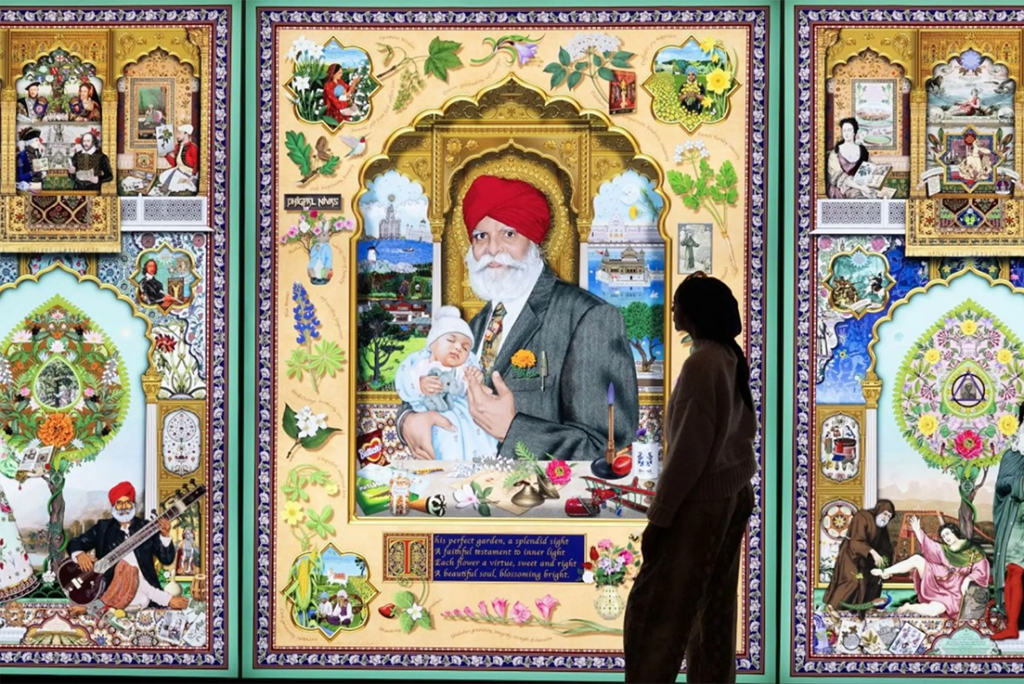
Two recent exhibitions at the Kew Gardens, held between October 2025 and April 2026, have looked into uncovering its own murky colonial past. The Singh Twins: Botanical Tales and Seeds of Empire displayed cutting yet humorous works by the British-Indian artists The Singh Twins, who interrogated the wealth accumulated by the British Empire through the cultivation of cotton, indigo, cocoa, and tea. Meanwhile, another exhibition, Flora Indica, recovered the lost histories of Indian botanical art, displaying 52 watercolours created by Indian artists between 1790 to 1850, but commissioned by the British East India Company to document India’s plant diversity, so that these very plants could later be harvested for the Empire.
But decolonisation is divisive in post-Brexit UK with fear-mongering about rising immigration. Eastern Europeans and Muslims faced higher levels of hate crime immediately after Brexit. There has also been a parallel rise in political polarisation in the UK, fuelled by far-right sentiments. Tate’s rehang has been widely praised, but also sharply criticised for being preachy, pious, and seeking to guilt trip visitors.
On one side of the debate are those like Ben Luke, contributing editor for The Art Newspaper. Speaking about the Tate’s rehang, he tells me, “I don’t think it is overegging the subject to say that the reason Gainsborough was able to paint this person was because he had wealth derived from the slave trade. It should not be devastating or seen as a guilt trip if a museum visitor realises how badly imperial powers treated people. I think contextualisation makes these objects even more interesting, not less.”
But other experts are less sure about this approach. Rather than encourage empathy or solidarity, the efforts to ‘decolonise culture’ by museums have been criticised for patronising audiences, distracting from the art itself, and oversimplifying complex historical narratives that, ironically, erases the agency of the once-colonised peoples.
“History is complex, and decolonisation is reducing it to the ‘oppressed’ and ‘oppressor’. I think it reaffirms victimhood, and removes the agency of African and Asian cultures,” says Inaya Folarin Iman, a British-Nigerian journalist, commentator, and activist. Iman, who was a trustee and youth engagement officer at the National Portrait Gallery (NPG) till July 2025, believes museums should not take on the role of activists. “The Tate is one of the most problematic examples of a publicly-funded institution which is not seeing itself as a custodian, but is trying to change society. It represents progressive orthodoxy, which I believe puts people off and distracts from the art,” she says. Sounding a note of caution, she adds that any decolonisation policy clocked as overreach by museums may lead to a backlash, and the risk of what she calls, “white racial grievance politics.” She points to the Tate’s much derided 2021 exhibition of the eighteenth-century British satirical painter William Hogarth as a good example of museum overreach.
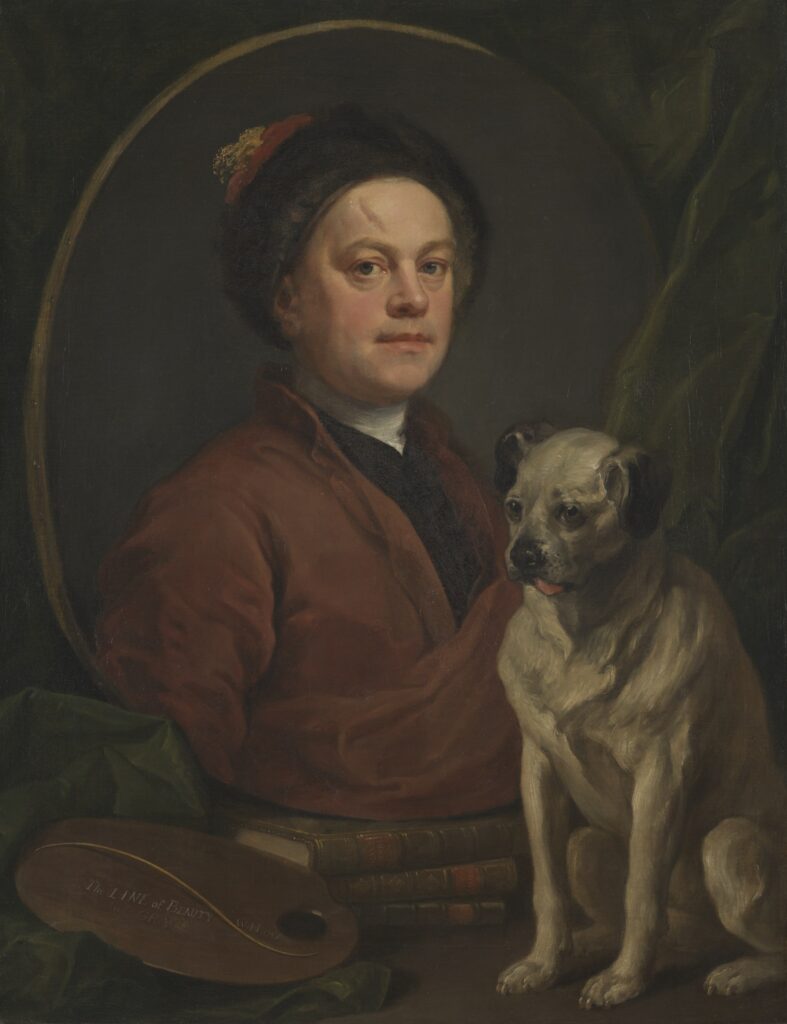
Hogarth’s 1757 self-portrait, where he is depicted sitting on a mahogany chair, was captioned, ‘Could the chair also stand in for all those unnamed Black and brown people enabling the society that supports his vigorous creativity?’ Luke agrees that many captions have been clunky. ‘There is definitely language used by some curators that is jargon-heavy and overly didactic. But it also speaks to different lived experiences. We need pluralities.’ A more nuanced approach has been NPG’s drive to include more portraits of people of colour, reflective of modern Britain, and the UK as a whole.
There have been accusations that many museums’ decolonisation initiatives are a way to appear ‘inclusive’ to tick the right boxes, especially if public funding is involved. Luke does not think so, but he believes the process of decolonisation needs to be much more systematic. “One of my big concerns is that curators tend to be much more progressive than the trustees of many museums. I want to know that curators have the freedom to explore progressive ideas [for exhibits],” he says. There’s also a scattershot approach, which means every museum is charting its own path. “Decolonisation is still in its early days, so museums tend to be more project-based than ethos-based,” says Luke, adding that there is not a single British museum that is actively following a planned, ethos-based approach in his opinion.
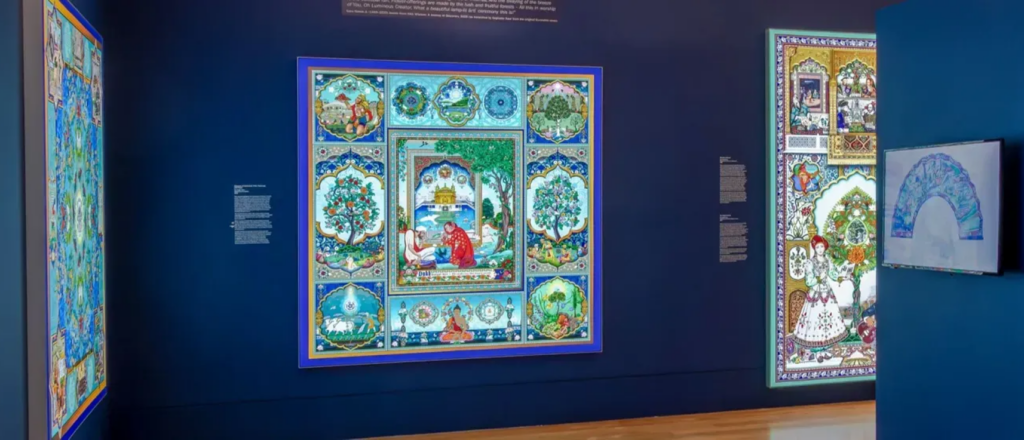
“Some curators are involved in a tick box exercise, but there are also curators out there who genuinely want to address the fact that many of their objects were plundered from other countries and tell stories of colonial conquest, enslavement, and exploitation,” say the Singh Twins. In 2018, their exhibition Slaves of Fashion, which explored British colonialism through Indian textiles, drew over 1,05,000 visitors at the Walker Art Gallery in Liverpool. “At the same time certain institutions — especially those situated in areas that were once predominantly white British but which are now more culturally diverse — are recognising the need to cater to minority communities. They are thinking about how they can survive as institutions, and make their collections relevant to everybody. One of Kew’s objectives was to bring in different audiences.”
However, when it comes to challenging the continued narratives glorifying the overall ‘positive’ impact of the Empire on the Indian subcontinent, the pushback has often been quite vociferous. In June 2026, a video installation by artist Helen Cammock — Persistence — exhibited at the NPG, was removed. The Turner prize-winning artist in the installation’s voiceover had dared to suggest that the the 1943 Bengal Famine was a result of “the wilful starvation of the Indian population by Winston Churchill.” After she was accused of telling a “barefaced lie” by Churchill’s biographer Lord Roberts of Belgravia in an open letter signed by 50 members of the British peerage, Cammock asked NPG to take the installation down. In a statement, the artist later said, “there is an incredible pressure on artists and arts institutions to bend to external pressure; to be benign at best and silent at worst.”
Meanwhile, some conservative publications have blamed the Tate’s rehang for its sharp decline in visitors, arguing that by trying to attract minority communities, they have driven away the majority. The Art Newspaper’s annual visitor figures report, published in April 2025, showed how attendance at Tate institutions in 2024 was significantly lower than the pre-Covid figures of 2019. Tate Modern saw 25 per cent fewer visitors than before the Covid pandemic, while Tate Britain was down 32 per cent. Tate St Ives had an even sharper 37 per cent drop in attendance. Tate Liverpool, which will remain closed till 2027, has also contributed to the overall decrease in the number of recorded visitors at Tate institutions. A similar comparison, between 2019 and 2024 figures, for the National Portrait Gallery in London shows a dip of a little less than three per cent, while the British Museum actually saw an approximately four per cent increase. At the time, Maria Balshaw, the Tate’s current director, had blamed the downturn on fewer visitors in the 16-24 age bracket from other European countries, post-Brexit and the pandemic. There was an even steeper decline from visitors from north-east Asia, according to Tate’s director of audiences and innovation, Liam Darbon.
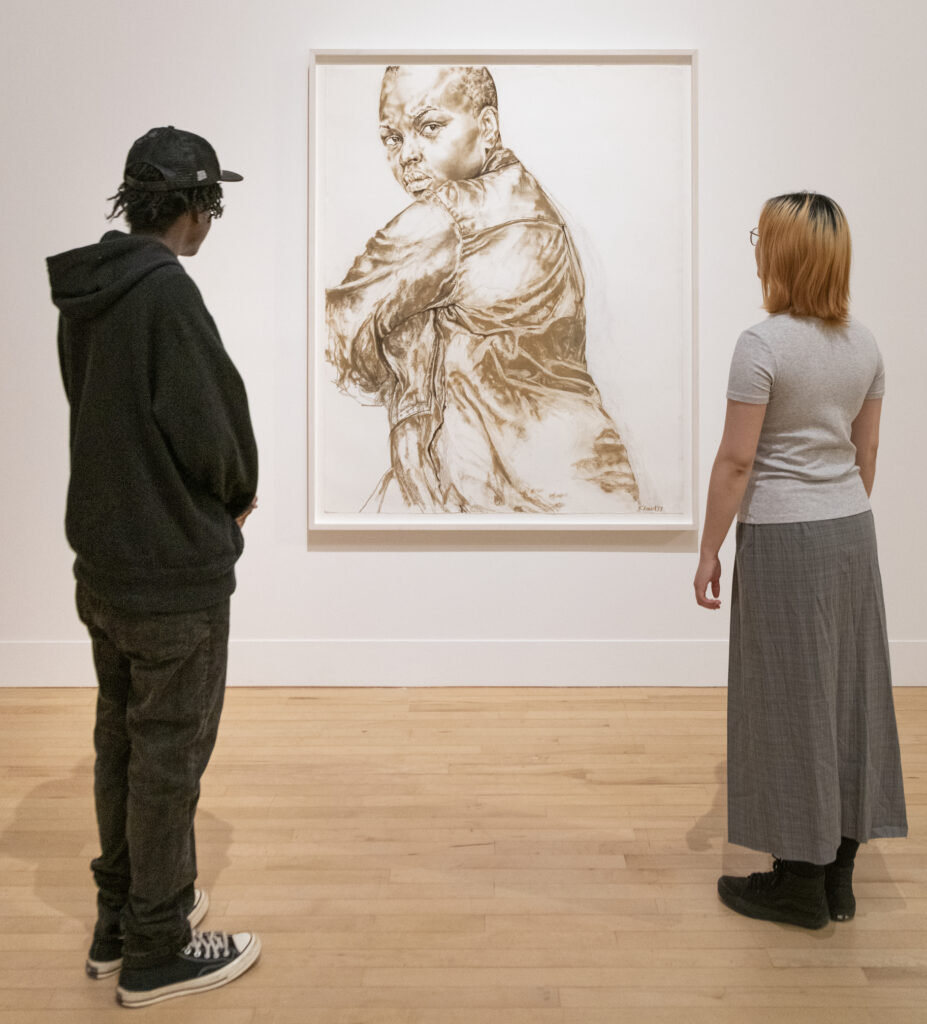
Darbon also made a distinction between ‘art museums’, such as the Tate institutions and NPG, which have a more niche audience compared to ‘museum museums’, such as the British Museum and the Victoria & Albert Museum. Tate’s spokesperson told The Art Newspaper in July 2025 that “Tate’s domestic visitor numbers have recovered to around 95% of their pre-Covid level, whereas Tate’s international visitor numbers are at around 61% of their pre-Covid level.” According to Luke, footfall statistics are complex to analyse without enough data points. “We need many more years of visitor figures and independent analysis before we can assess the cause [of the decline in numbers]. People are using their own prejudices and rushing to explain the decline in visitors to the Tate. They are blaming decolonisation efforts and not looking at many other factors.”
Iman agrees. “I wouldn’t draw a line between decolonisation and the decline in visitor figures. It’s likely because of factors like increasing social media use and the cost of living.” Indeed, while visitor numbers for museums located within England are still below pre-pandemic levels, according to a five-year trend report based on the Arts Council England’s Annual Museum Survey data, digital engagement has, conversely, gone up. Three in four museums reported that their social media following had increased by over 25 per cent since 2019-20.
Appealing to diverse audiences is always a difficult balancing act, but especially so within the current environment in the UK, awash with anti-immigrant sentiment. Tristram Hunt, director of the Victoria and Albert Museum (V&A), recently spoke to the Museums Association on the dilemma of museums caught up in culture wars. “You cannot decolonise the V&A because the colonial past is embedded within the history, the collections and the very building,” Hunt said. “But what you can do is surface it, challenge it, highlight it, and engage with it.” Hunt went on to add, “There’s a sense of culture being under attack, and a higher level of anger or fearfulness.” To deal with this, he argued, institutions need to come up with “a considered response, without being patronising, self-satisfied or uncommunicative.” In response, the Museums Association has come forward with a guide, recognising that there can be no fail-safe, single method to decolonise all cultural institutions and venues in Britain.
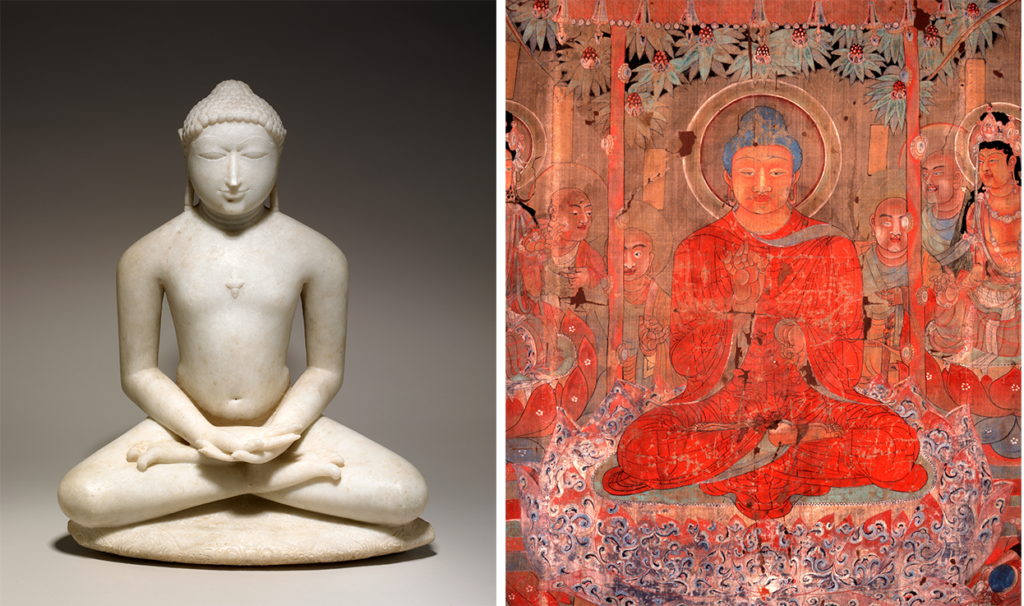
Traditionally, people from Asian and Black communities in the UK have always been reluctant to visit museums. One way forward could be collaborations with local communities. A much lauded 2025 exhibition by the British Museum, Ancient India, Living Traditions — about the sacred art of Hinduism, Buddhism, and Jainism — was a collaborative project, with local communities donating objects and participating in the curation process.
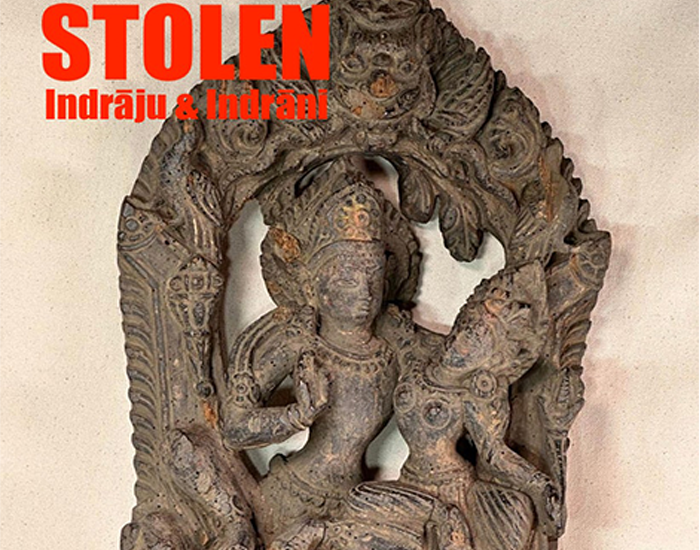
But compared to ‘official’ decolonisation efforts, ‘unofficial’ guerrilla projects have gone viral more often — and for the right reasons. These range from Alice Procter’s Uncomfortable Art Tours in London to online interventions, such as the on-going Balot NFT to VICE’s 2022 Unfiltered History Tour. Conceived as a short-run, multimedia ad campaign by Bengaluru’s Dentsu Webchutney, the now-defunct micro-site hosted by VICE offered an interactive, virtual tour (and accompanying podcast) about ten ‘contested artefacts‘ on display at the British Museum. The satisfaction came from seeing the objects being teleported back to their original locations in former colonies using AR (augmented reality) tools, as experts narrated their stories.
Among the ten featured objects, was the Amravati Collection, a series of sculptures and inscriptions that had been ripped from an existing Buddhist stupa in India. In this instance of looting, several fragments were destroyed while others were transported to Madras (now Chennai) by colonial officers; finally, the most complete pieces — 120 of them — were shipped to England under the British regime as the ‘Amravati Marbles’. Curator Shaleen Wadhwana, who was a historical accuracy research consultant on the project, says that within the UK, a YouGov poll tracked a real-time and significant change in the attitudes of Britons to repatriation claims, such as for the Greek Parthenon Marbles, one of the objects highlighted in the Tour. What’s more the ‘unauthorised’ Tour was not dependent on being physically present at the museum site, given that most people from former colonies would never be in a position to travel to the UK to see their country’s artefacts in person. According to Wadhwana, the project was conceived as a “public lobbying effort” around repatriation activism — so it was essential to use widely-available online technology, such as filters, audio and video podcasting tools, and to drive engagement through popular apps, like Instagram, TikTok, YouTube, and Spotify.
“The Unfiltered History Tour had a very specific context; it was about looted or contested artefacts with verifiable and documented histories. But decolonisation can mean very different things in different contexts; in Britain, there is a lot of focus on the spoils of the former British Empire. But in India, it can mean bringing in subaltern narratives from the margins and decentring English-written, Brahmanical or patriarchal viewpoints on culture and history,” says Wadhwana. She agrees with Dr Hunt that in the case of museums like V&A and the British Museum, the best way forward is honestly engaging with the complicated histories of the institutions as well as their collections. “The efforts by British institutions are long overdue; however, a few of them are taking slow but much-needed steps towards opening conversations about it,” she says.
Taking a page out of guerrilla tour tactics in the age of social media, British museums have also begun relying on online engagement to stay relevant and attract diverse audiences. The British Library’s recent exhibition, Beyond the Bassline: 500 years of Black Music, attracted 4,50,000 visitors. Importantly, over 52 per cent of the visitors were from Black, Asian, and other minority backgrounds. Nearly 8,00,000 people also engaged with the programme online, delivered by public libraries across the UK.
‘Too often, curators try to appeal to the most vocal of activists, a narrow section of society. But, what we need is more dialogue and conversation, rather than lectures,’ says Iman about decolonisation strategies that won’t alienate audiences. A communicative approach rather than a patronising one, with conversation, not lectures — an apt summary of the difficult task ahead for British museums.
First published: June 19, 2026