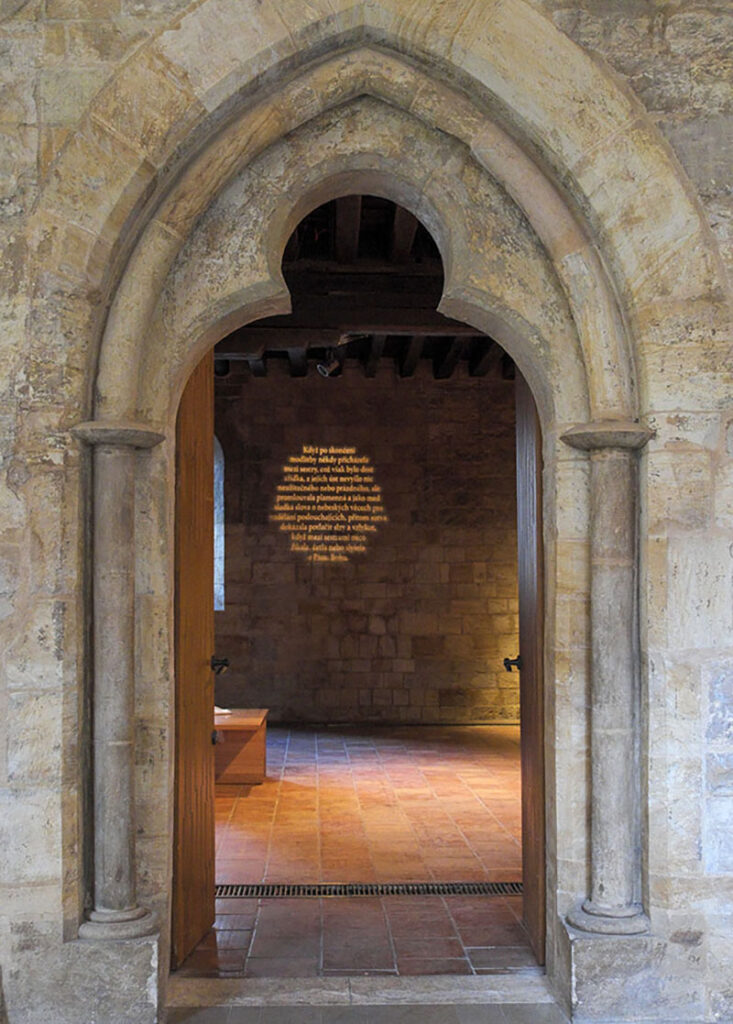
A symmetrical three-lobed motif in art and architecture, resembling a three-petalled flower, or a leaf with three leaflets typical to clover and other plants of the genus Trifolium. The trefoil (Latin, via French trifoil: tri- ‘three’; folium ‘leaf’) motif is derived from three circles overlapping within a larger circle, resulting in three lobes or foils intersecting at three sharp cusps. It has had a significant presence in Christian symbolism, heraldry, and Gothic architecture where it gained prominence and greater complexity of form. Although it appears in earlier Romanesque and Islamic architecture as well, it became a characteristic feature of Gothic stone tracery and arches (trefoil or trilobe arches); less typical is the use of the trefoil layout for churches, known as triconchos. In the South Asian sculptural tradition, trefoil arches and niches often symmetrically frame deities flanked on either side by attendants. The motif also features on early medieval Persian and Achaemenid figurines, coins, royal headdresses and shields. Trefoils appear as repeating motifs on Indian textiles such as ajrakh, and are seen carved in low relief on the clothing of the Priest-King of Mohenjo Daro. Similar motifs include the four-lobed quatrefoil and five-lobed cinquefoil.
trefoil
Link copied!