-
ChicagoBaoni, Aadya. "Notes on My Father: Avani Rai on Raghu Rai’s Many Legacies." Impart Perspectives, June 9, 2026. https://imp-art.org/perspectives/interviews/notes-on-my-father-avani-rai-on-raghu-rai/
-
MLABaoni, Aadya. "Notes on My Father: Avani Rai on Raghu Rai’s Many Legacies." Impart Perspectives, Jun. 9, 2026, https://imp-art.org/perspectives/interviews/notes-on-my-father-avani-rai-on-raghu-rai/. Accessed 15 Oct 2026.
-
HarvardBaoni, A. (2026) Notes on My Father: Avani Rai on Raghu Rai’s Many Legacies, Impart Perspectives. Available at: https://imp-art.org/perspectives/interviews/notes-on-my-father-avani-rai-on-raghu-rai/ (Accessed: 15 October 2026).
Notes on My Father: Avani Rai on Raghu Rai’s Many Legacies
Photographer Avani Rai reflects on her father’s enduring influence — as both a student of his craft and a daughter for whom photography became a shared language.
By Aadya Baoni
Link copied!
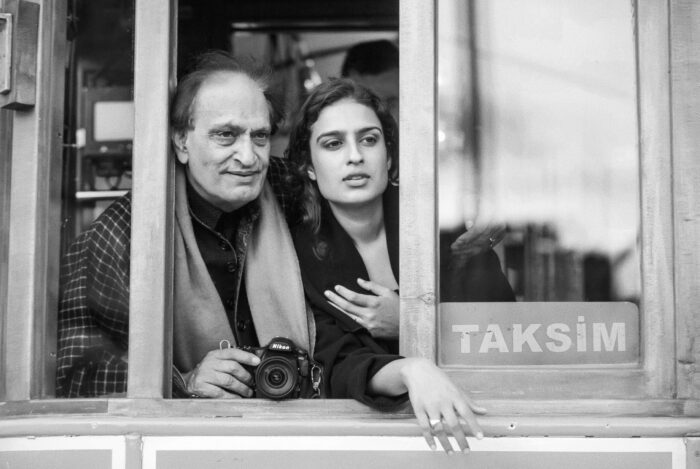
Raghu Rai and Avani Rai in Turkey. Photograph: Ercan Arslan, Courtesy Avani Rai
Avani Rai grew up in a house where dry prints hung on the washing line like laundry, and where her father, Raghu Rai, handed her a small red-and-white camera before she was old enough to realise the weight of his legacy. For her, memories of her father collide with that of her first mentor — from how she saw him hold his camera as a child to the things he said when she was twenty-three and just starting out as a professional photographer and filmmaker.
A family member does not grieve the legend; they grieve the person. They grieve the man who liked his tea a certain way and grumbled when he misplaced something. It is an opaque, private grief that sits in the specifics, in the coordinates of a shared life.
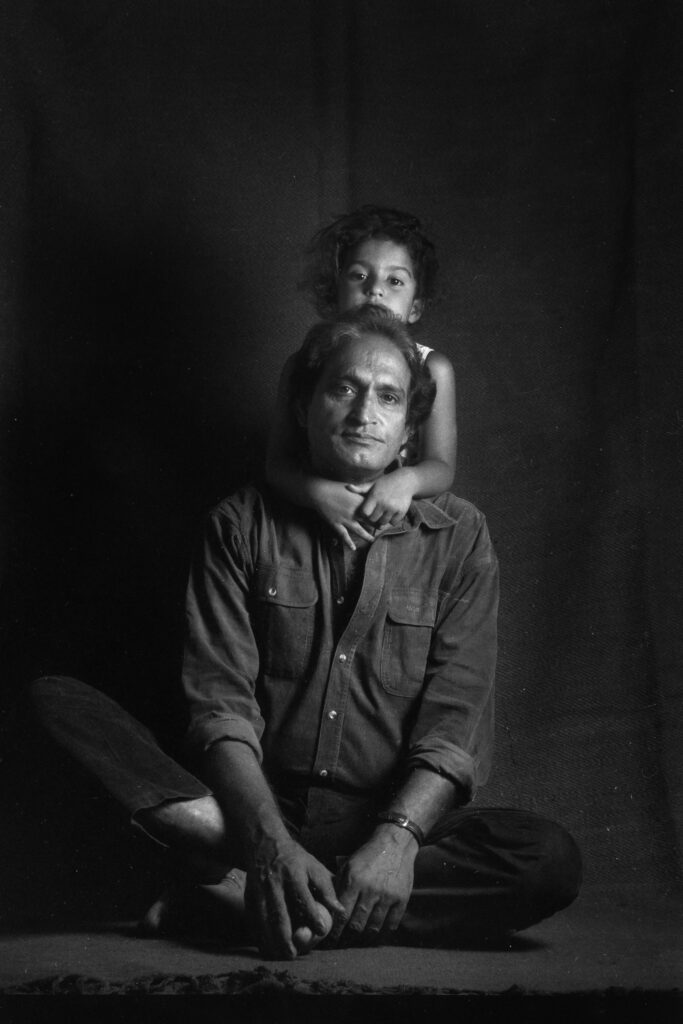
The first few times I spoke to Avani in May, in the weeks after Raghu Rai’s death, she was struggling with the expanse of her grief even as she tried articulating what he meant to her. Who should the disciple-daughter remember — the father, the teacher, or the legend? After the world has decided what his work meant and the double-page tributes and pithy eulogies are done with, what is left to say? Slowly, over many conversations, the answer unfolded.
Aadya Baoni: Raghu Rai often talked about photography as an inner journey, and yet he was also deeply responsive to what was happening out in the world: Bangladesh, Bhopal, Kashmir. How did he hold those two things together: the inner life and the urgent outer one?
Avani Rai: He often spoke about not wanting to make photographs about events, but photographs that revealed the spirit beneath those events. I don’t think his frame of mind ever really shifted, whether he was at home or photographing spirituality, politics, or war. The outer subjects changed, but the inner state remained remarkably consistent. The one thing I witnessed throughout his life was the silence he carried within himself and this constant yearning to receive. He would often speak about keeping his ‘antennas’ open to everything happening around him. There was a deep attentiveness to the world, a willingness to be surprised by it. The photograph was not an act of taking; it was an act of receiving for him.
He was not a man of many words. In fact, I often felt that photography was his language. The empathy he carried into the act of photographing was so intense that he rarely felt the need to over-explain his images. Much of what he understood about people and the world was processed through looking, feeling, and witnessing, rather than through speaking.
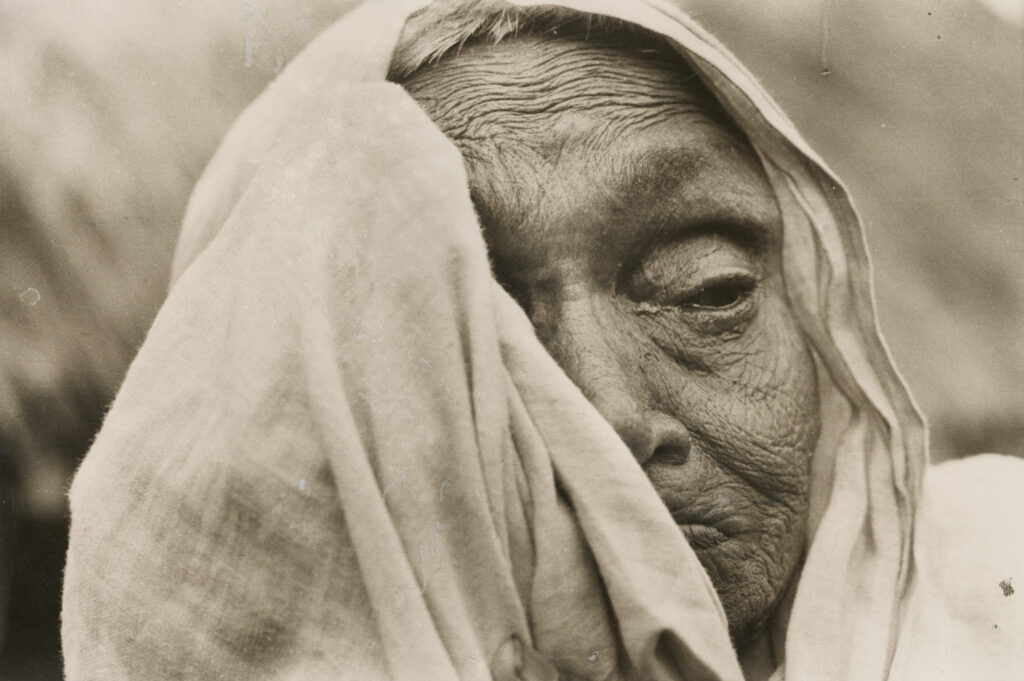
Yet, he was deeply affected by what happened around him. Whenever something significant unfolded in the country, whether joyful, tragic, political, spiritual, or deeply human, he felt compelled to be there. Not necessarily to cover the event, but to experience it. To understand what it felt like from within. He did not enter situations seeking only their physical reality or just to document something. He was searching for what existed underneath: the emotional, spiritual, and human currents moving through a place, a person, or a moment.
Whether he stood before a politician, a pilgrim, a refugee, or a child, he approached them with the same openness. I think that is why his political photographs feel no different in spirit from his photographs of landscapes, or everyday life. He was not photographing separate subjects; he was photographing the human condition as it revealed itself through those subjects.
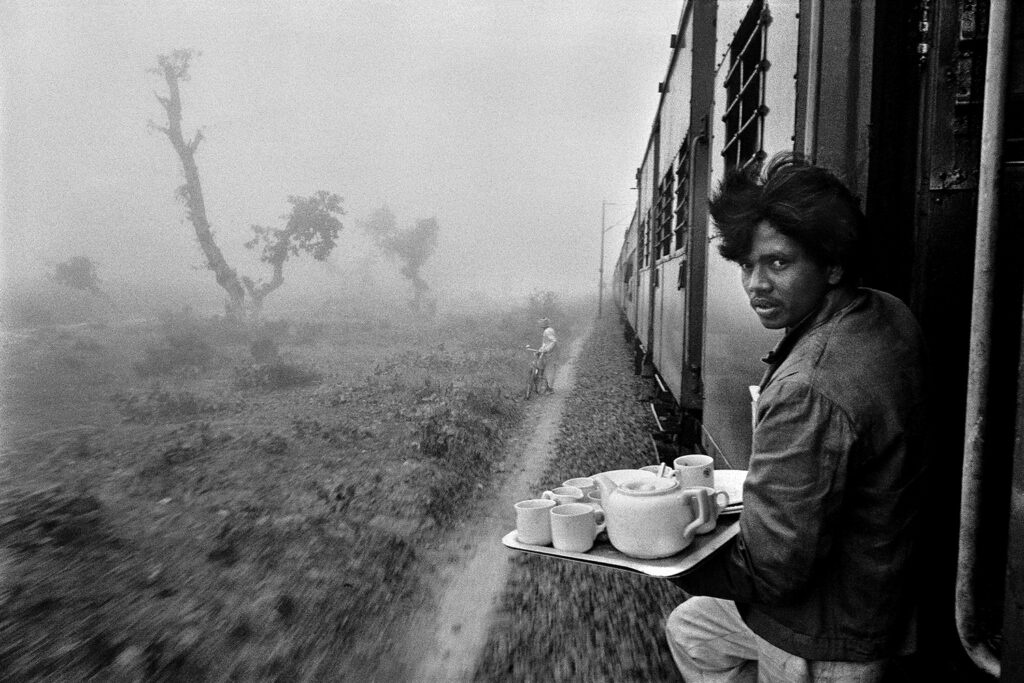
The assignment may have determined where he went, but it never determined what he was looking for. What he was looking for remained the same: that fleeting moment when the visible world revealed something ephemeral but eternal. Perhaps that is why so many of his photographs endure. They are not really about power, conflict, faith, or news. They are about people, the moment. And they are made by someone who approached the world with extraordinary sensitivity.
Baoni: What did he prioritise when he was on a shoot? Do you remember specifics of how he moved or what he did when he was taking pictures?
Rai: What struck me most was how little he seemed to be photographing and how much he seemed to be listening. People imagine photographers as hunters. Papa was more like a pilgrim. He walked constantly. Not fast. Not slow. He would circle a place again and again until it stopped being a location and became a living, organic presence in his perception. He rarely arrived with a picture in mind. He arrived with curiosity.
His body was always alert, but never tense. He had this remarkable ability to disappear into a crowd while remaining completely present. Sometimes he would wait twenty minutes for a gesture that lasted half a second. The stillness is what I remember most. When he found something he was truly interested in, he would suddenly become very quiet. Almost motionless. It was as if he had recognised a frequency nobody else could hear. That stillness was his greatest skill. He knew how to wait long enough for life to reveal itself.
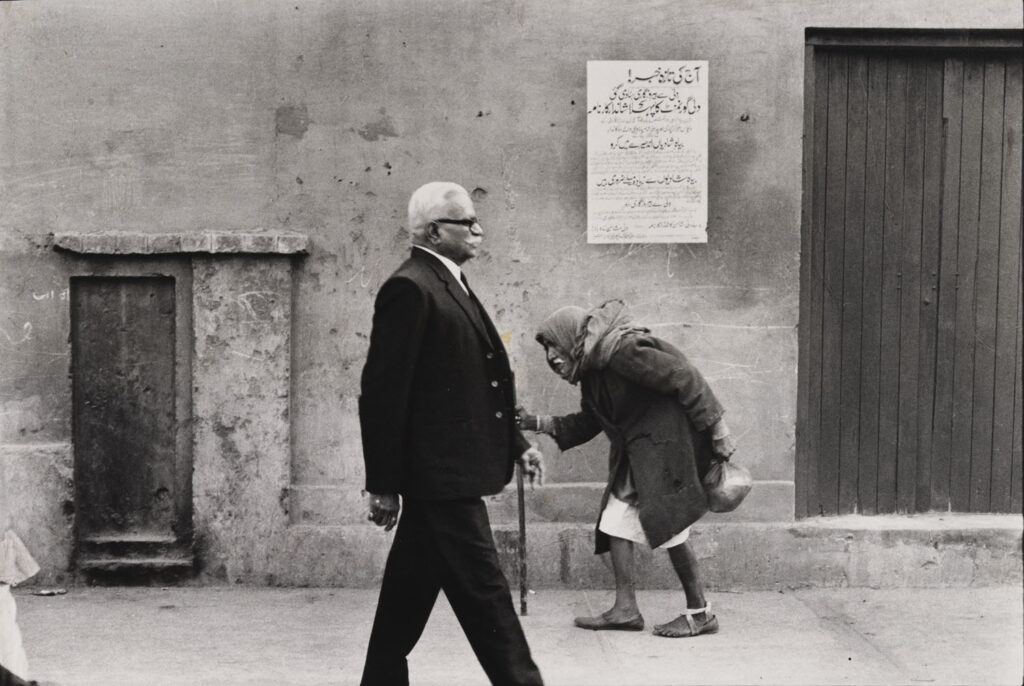
I often felt that the camera wasn’t searching for pictures. It was searching for a conversation. Even now, when I look at old contact sheets, I can see those moments. The frames before are exploratory. Then suddenly something aligns. A face, a shadow, a gesture, an emotion. And the photographs become inevitable.
Baoni: He believed the origin of a great image is unrepeatable; that the magic happens in the now and there are no ‘do-overs’. Did you ever watch him miss a shot?
Rai: Yes, many times. I think one of the biggest misconceptions people have about legendary photographers is that they always get their shot. But Papa did miss moments. Something extraordinary would happen — a gesture, a glance, a shaft of light, and by the time he reacted, it was gone. Sometimes he would laugh. Sometimes he would mutter something under his breath. Occasionally he would be genuinely frustrated for a few seconds. But that was it; he never mourned these ‘lost’ images for very long.
He never believed a photograph ‘belonged’ to him. His philosophy was that the world would briefly offer him a gift. Sometimes he received it, sometimes he didn’t. And to that he’d say, “someone else will get something better.” I remember him saying, “death and a good photograph never waits for anybody.”
Baoni: He talked about photography restoring silence rather than creating noise; that the greatest image is one that gives you stillness. What does that mean in practice?
Rai: We live surrounded by images that demand attention. They shout, persuade, seduce, provoke. They tell us what to feel. Papa was interested in something very different. He was interested in images that allowed you to feel your own feelings. When I look at some of his photographs — the woman sitting alone on the ghats in Varanasi, a figure disappearing into the mist, a child standing quietly amidst chaos, the lonely landscape after a tragedy — what stays with me isn’t information. It’s a sensation. Time seems to slow down. The image continues unfolding long after you’ve looked away.
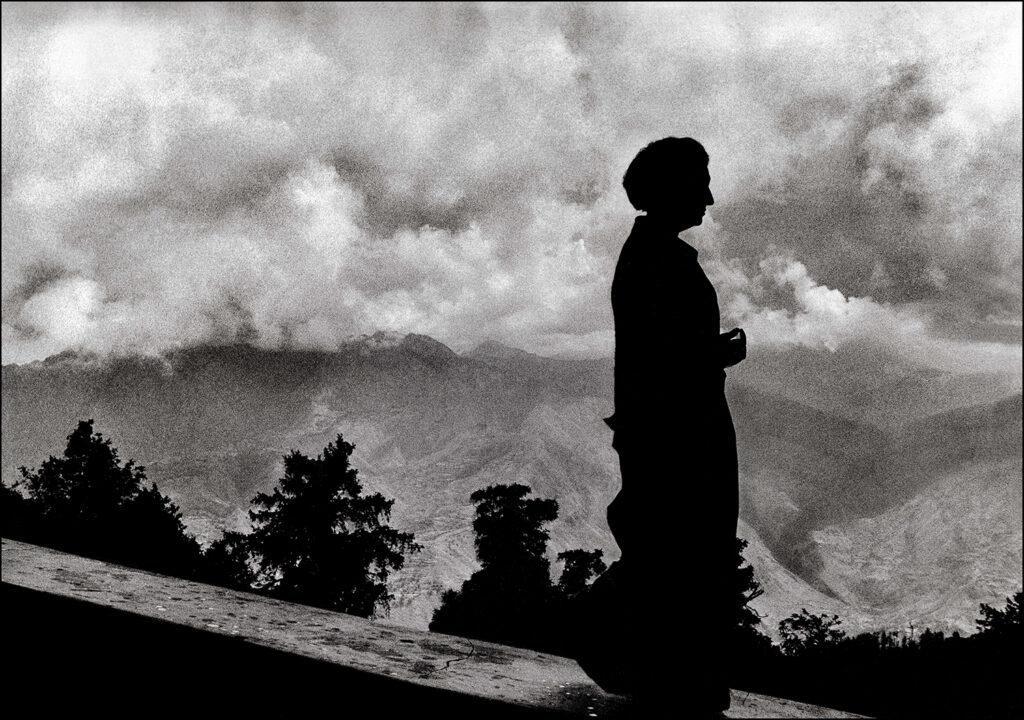
He wasn’t searching for events. He was searching for essence. The stillness in the photographs came from a stillness in the photographer. And that is probably the hardest lesson to learn, because it has very little to do with photography and everything to do with how one chooses to live. That, I think, is the silence he was talking about.
Baoni: He was famously unsparing in his opinions about other people’s work, including yours. When he looked at an image and said it wasn’t working, what did he mean?
Rai: What I remember most is that he rarely spoke in absolutes. He wasn’t interested in calling a photograph beautiful or ugly, brilliant or terrible. He didn’t really operate at either end of that spectrum. Instead, he would ask what remained with you after looking at the image. What thought lingered? What did you remember? What did you feel?
What made his criticism inspiring was that he was always looking at possibilities. Even when he didn’t respond to an image, the feeling was never that the photographer had ‘failed,’ but that there was perhaps something deeper, just waiting to be discovered. He believed photographs had lives beyond the moment they were taken or viewed. What interested him was not what impressed you instantly, but what remained with you days, months, or years later. In many ways, his criticism was simply another way of asking a question: what is it about this photograph that will stay with us when everything else has been forgotten?
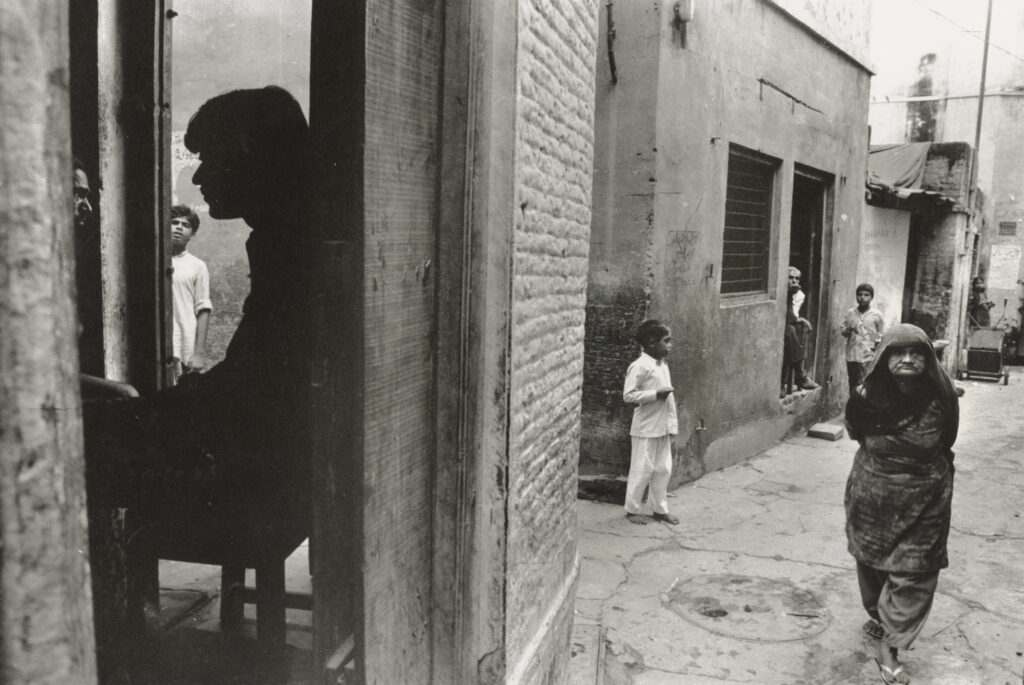
Baoni: He shot in black and white for most of his career, then switched to digital colour and said he could never go back to film. You also predominantly work in black and white. Did you ever argue about colour: when was it a distraction, when was it essential?
Rai: We spoke about colour and black-and-white options as visual languages. Papa often said that the black-and-white format is, in some ways, easier. It neutralises colour. If there is genuine emotion in the photograph, it often survives that reduction. Colour can be far more demanding. In street photography especially, colour introduces another layer of complexity. Every colour becomes part of the composition, part of the emotion, part of the distraction, or part of the meaning.
His practice spanned a time when India itself was changing. The India he photographed in later years was visually different from the India of his early black-and-white work. The energy, abundance, contradictions and excess of contemporary India often demanded colour. He responded to that shift.
What I admired about Papa was that he was never nostalgic about technology. He moved from black-and-white to colour when colour became available to him. He moved from film to digital when digital arrived. If something helped him engage with photography more effectively, he embraced it. He’d use film for certain panoramic work, but he wasn’t attached to a medium for sentimental reasons. One of the things he often said about digital photography was that you could see every step you took. You could make a picture, look at it immediately, step back, adjust, and continue working. There was a certainty to it. You could go home knowing what you had made.
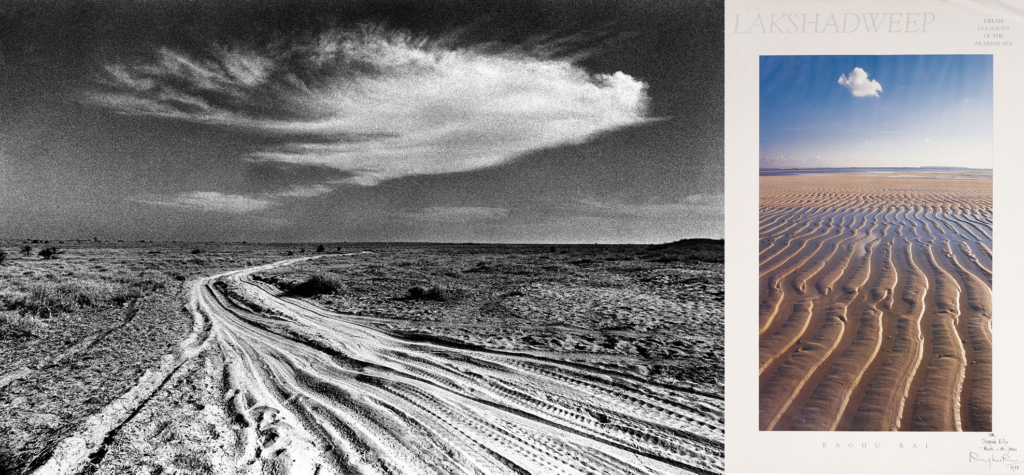
At the same time, his own practice had been formed long before digital existed. By the time digital cameras arrived, he had already spent decades looking through viewfinders. He could look through an SLR and know almost exactly what he was getting. He understood light instinctively. He understood timing instinctively. More often than not, he already knew he was going home with the photograph. My generation grew up differently. Digital arrived at the beginning of my career. I have always had the ability to check, adjust, and review. That confidence he developed through years of film photography is something I still deeply admire.
What I inherited from him was not a preference for black-and-white or colour. It was the belief that neither should be a stylistic decision made in advance. Some photographs need colour. Some photographs need black-and-white. The real question is always: what serves the photograph best? That was something Papa understood deeply. He followed the image rather than the medium.
Baoni: He was, as you mentioned, a man of few words. And yet you have spoken about his extraordinary capacity for love. How did he show it?
Rai: Love was his natural state; how he moved through the world. Whether it was towards people, animals, strangers he met on the street, or his family, there was an immense generosity in the way he paid attention and cared. The same empathy that people often speak about in his photographs was present in the way he lived. Perhaps that is why so many people felt close to him. He made people feel seen. Not because he said the right things, but because he offered them something rarer — his attention. He met people without judgment and with a genuine interest in who they were.
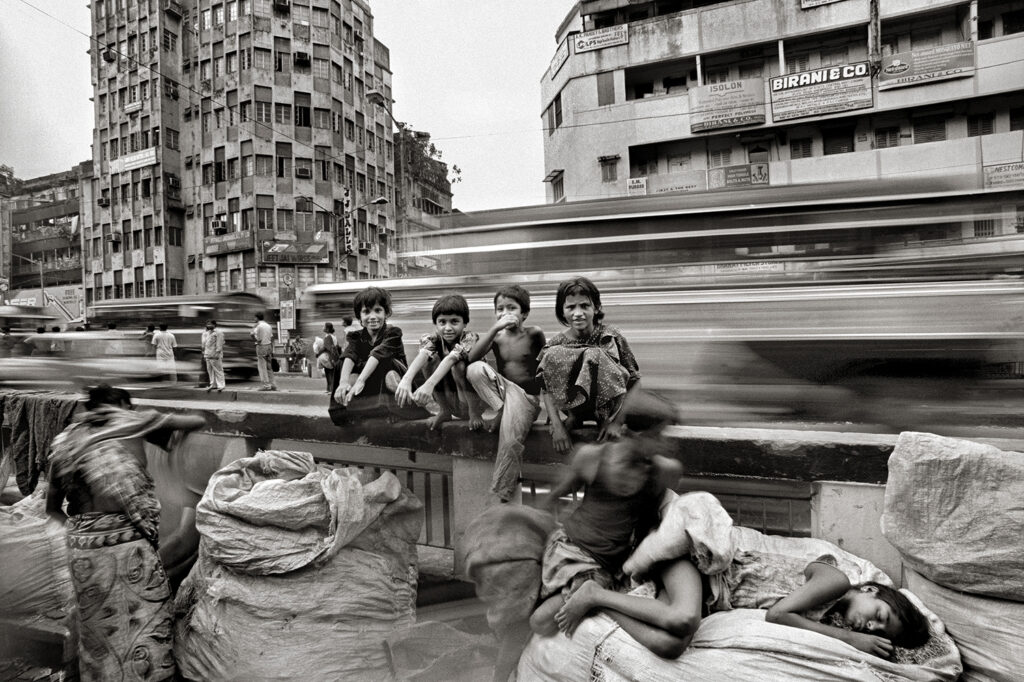
When I think of my father, I struggle to remember him being angry. What I remember is warmth, curiosity, tenderness, and an openness towards life. In all the years I knew him, the only thing that seemed to truly upset him was wasted potential. If he ever became impatient with me, it was usually because he sensed laziness or a lack of commitment. He believed deeply in living fully, working honestly, and giving yourself completely to whatever you loved.
One thing that I often think about is how he was seldom angry, but I have spent so much of my own life being angry… maybe that’s the wrong word. Not angry in a destructive way, but restless. Impatient. Pushing. Wanting more from myself, from work, from the world around me. I often wonder where that came from because he certainly wasn’t like that. But then I remember something he told me when I was in my twenties. He said: “If you want to be my daughter and sit at home and not be a professional, I will love you every day, baby. But if you want to be a photographer, if you want to be a creative person, then you need a fire under you. Like a rocket. It has to make you fly.”
And I think I took that very seriously. I kept flying. Or at least trying to. Sometimes that fire turns into frustration, sometimes ambition, sometimes anger. Sometimes I wish I had inherited more of his calm and less of my urgency. But, every now and again, one of his old editors or friends would tell me stories about him as a young man. People like Kuldeep Nayar would laugh and say: “You know, your father was quite an angry young man.”
And I cannot explain why, but that always makes me happy. Because it reminds me that the person I knew was not the whole story. The serenity people associate with him was something he arrived at. It was earned. Built over years of work, experience, disappointment, wonder, and observation. Perhaps the fire never disappeared. Perhaps it simply transformed. And whenever I hear those stories, I feel a little less guilty about my own restlessness. A little less alone in it. As if somewhere, beneath all that gentleness and compassion, he too had the same savage fire he once told me I needed to succeed.
First published: June 9, 2026