-
ChicagoYadav, Neha. "SPARROW Tales: The Archives that Trace Women’s Stories." Impart Perspectives, May 19, 2026. https://imp-art.org/perspectives/dispatches/sparrow-tales-how-a-mumbai-archive-preserves-womens-stories/
-
MLAYadav, Neha. "SPARROW Tales: The Archives that Trace Women’s Stories." Impart Perspectives, May 19, 2026, https://imp-art.org/perspectives/dispatches/sparrow-tales-how-a-mumbai-archive-preserves-womens-stories/. Accessed 20 Oct 2026.
-
HarvardYadav, N. (2026) SPARROW Tales: The Archives that Trace Women’s Stories, Impart Perspectives. Available at: https://imp-art.org/perspectives/dispatches/sparrow-tales-how-a-mumbai-archive-preserves-womens-stories/ (Accessed: 20 October 2026).
SPARROW Tales: The Archives that Trace Women’s Stories
The archives, run by the famed Tamil writer Dr C S Lakshmi, was born out of her frustration over the dearth of information about women’s lives and work.
By Neha Yadav
Link copied!
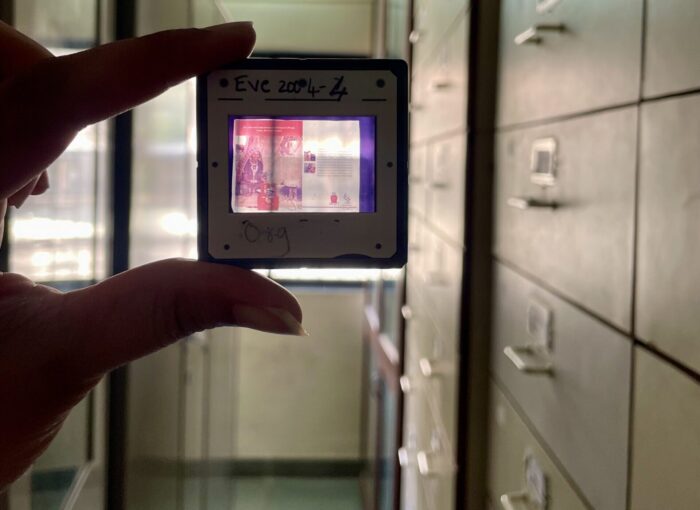
An old-fashioned slide at SPARROW. Courtesy the author and SPARROW
“Clove, camphor, cinnamon, black pepper. Equal parts of three and a double of any one of these.”
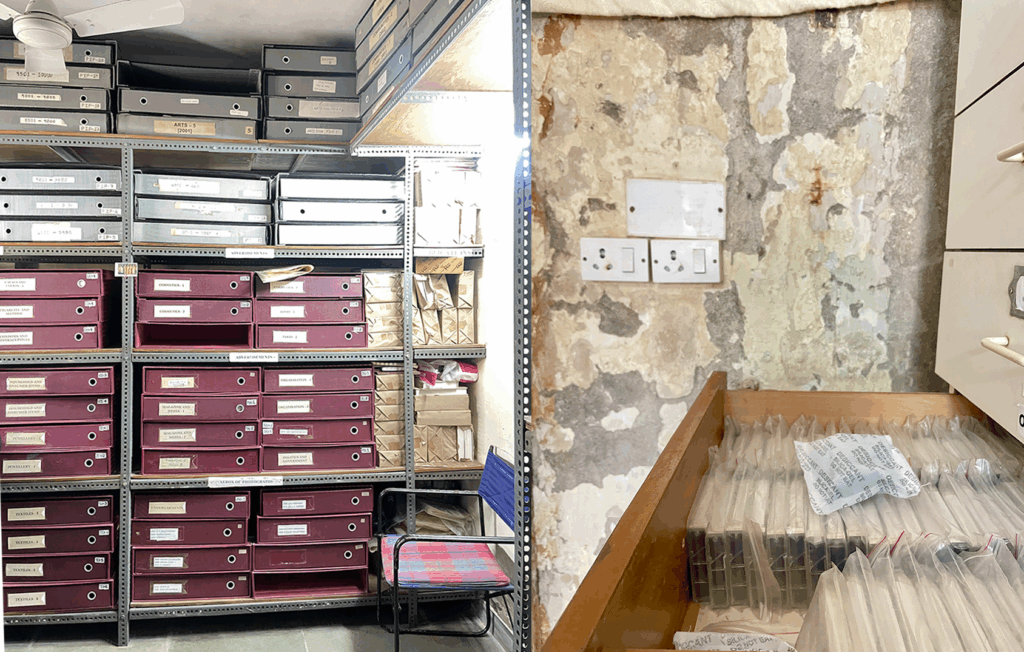
A woman rattles off this list of ingredients to me as she shuts drawers and rearranges folders. An eavesdropper might be forgiven for assuming that I am being presented with a recipe for masala chai or perhaps even a kaadha (medicinal drink) for a case of the sniffles. But I am talking to Sharmila Sontakke, the Senior Librarian at Sound and Picture Archives for Research on Women (SPARROW), and she is describing a moisture-repelling blend housed in white potlis (sachets) that is ubiquitous in the print section of their archives.
The journey that has led me here started a few months ago — with the cartoonist Maya Kamath.
As a researcher with an interest in cartooning, it was a thrill to discover Kamath, the lone woman producing political cartoons in English language around the turn of the millennium in India. The vivacity of her political caricatures, in particular, caught my attention and made me hungry to see more of her work. Unlike her male contemporaries, a search of her name online did not yield an abundance of digital scans documenting her cartoons. A trawl through academic and scholarly repositories for mentions of her name turned up similar results.
In this barren landscape, a small, bright shoot of green finally appeared in the form of a listing for The World of Maya, a limited-run collection of Kamath’s work curated with great care and love by SPARROW, which was founded and is still headed by the famed Tamil writer Dr CS Lakshmi, better known as ‘Ambai’.
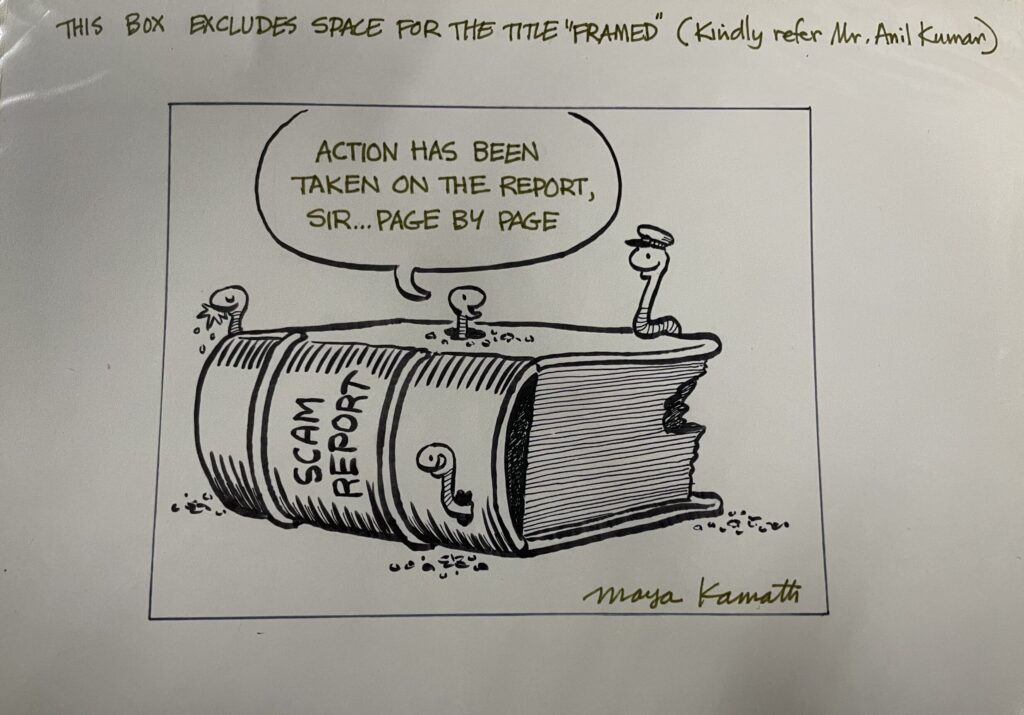
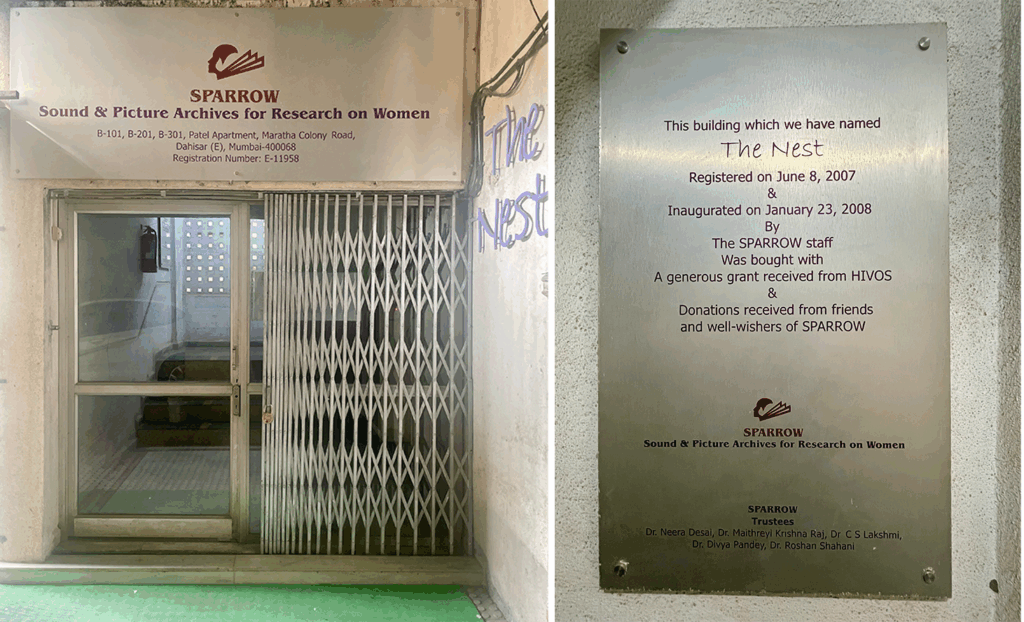
Established as a one-room operation in 1988, SPARROW was born out of Dr Lakshmi’s frustration over the dearth of information about women’s lives and work. As a nonprofit trust, it is dedicated to the systematic preservation and dissemination of a variety of material centred on women.
Kamath’s work beckoned like a jewelled egg nestled inside SPARROW’s physical archives in Mumbai. A few email exchanges later, I was ready to embark on my research pilgrimage.
Where Women’s Stories Take Flight
SPARROW is tucked away in a mixed-use area of Dahisar, a north-western residential suburb of Mumbai and keeps a low profile even within its own neighbourhood. Prior to my visit, I had sought directions from my hosts in the area, Ranjana and Krushnaa Patil. But the mother-daughter duo confessed they had never heard of the place, even though it was in their own backyard. With no conspicuous boards announcing its presence, it can be easy to miss SPARROW’s entrance tucked away at the back of a building. It has for its neighbours a few modest-sized retail shops, several vegetable vendors, a temple dedicated to Pipleshwar Mahadev, and a single-screen theatre. When I play my recordings later, back in Bhopal, I can close my eyes and summon the street through the sounds that attend my conversations at the archives: the sing-song exhortations of sabziwallahs, the periodic tinkling of temple bells, the thinly quacking bicycle horn of a pav vendor, and the heavier rumble of tempos and trucks.
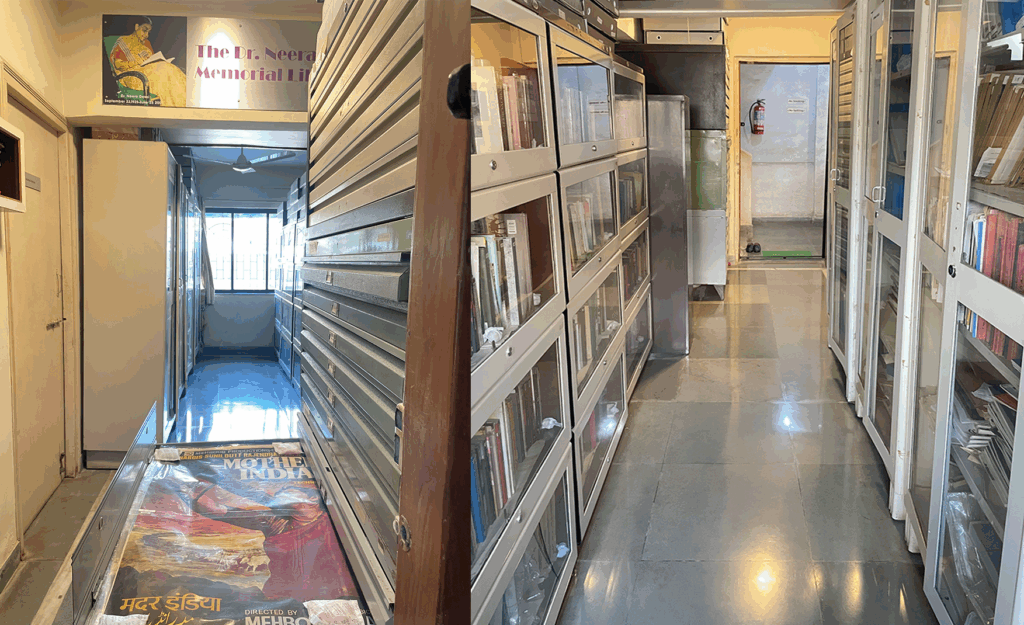
The modest archival space occupies three floors, housing the Dr Neera Desai Memorial Library on the first level. This is where the majority of SPARROW’s print documentation is stored in neatly stacked shelves and drawers. There are around 8,500 books, 40,000 clippings of newspaper articles, and numerous folders devoted to print ads, cartoons, brochures, pamphlets, and vintage film posters.
A nook on this floor — one of the few air-conditioned spaces — houses the special Oral History Recording Programme (OHRP). Cupboards brim with audio cassettes and folders full of painstaking manual transcriptions that have been double-, sometimes triple-checked. A few boxes contain ancient slides that store visual data; a dusty old transparency projector is unearthed to show me the images.
A tinier nook juts off this space; it turns out to contain the unsold inventory of paintings from a previous fundraiser, original prints of all twenty-five of SPARROW’s films, and old electronic typewriters. Sontakke tells me that, on the advice of the team at the National Centre for Performing Arts (NCPA), the nook has been outfitted with protective measures like two dehumidifiers, an aluminium ceiling, and an anti-static floor.
The second floor, where much of the daily operations of the archives take place, features a big communal table, more shelving for books, a digitisation section, the accounts office, and a kitchenette. The third floor is dominated by a large, carpeted room with a TV for screenings and general gatherings. Two small rooms bookend this space: a computer room where SPARROW’s publications (newsletters, blog posts, translations, curated compilations) are finalised, and the director’s office.
In true Mumbai-style, space is severely limited. Folders full of print matter mushroom by the day, spilling from their shelves and onto any flat surfaces nearby; bound reports and publications teeter in piles stored in all available corners. The neat floor-wise demarcations between types of collections and stored materials are slowly blurring as the archives expands steadily. In addition to the property tax on the building, SPARROW is now struggling to organise funds to cover construction costs as more storage needs to be built near the only space still available to the staff: the ceiling.
The lack of funding is merely one part of the challenge, though its manifestations are many and varied, ranging from the limited staff (from twenty-five in 1999 to nine currently, excluding the director) to the space crunch. Mumbai’s weather too poses a problem, with year-round humidity and months of torrential downpours. The walls are peeling everywhere and architecture that provides essential ventilation and light also lets in ruinous rain over long stretches. The material suffered significant damage during COVID lockdowns, says Sontakke sighing, because the staff was not able to check on the collection or do any maintenance work.
Perhaps the most serious obstacle is presented by the increasing difficulty of accessing good quality preservation and conservation material. The special polypropylene sleeves used to preserve original documents are hard to come by anymore. The handmade paper used at the archives to preserve print material, earlier sourced at reasonable rates from Khadi Gram Udyog but no longer available at their stores, needs to now be imported at great cost from Nepal and the US. Much of the custom storage at the archives, from the almirahs to the type of large drawers used in architects’ offices, is from Godrej and has stood the test of time; it is especially sad then to note that Godrej no longer manufactures them.
The ladies of SPARROW, however, remain indefatigable in the face of these difficulties, even seeing disguised opportunities in them. “We have done deep R&D,” Sontakke tells me, referring to the necessary, on-the-job learning they have undertaken in order to figure out how to preserve different kinds of material, where to source conservation equipment from, how to catalogue a variety of media and provide access points for each type. As frustrating as the limitations might be, the staff clearly takes joy in invention, stretching their funds and space creatively.
A ‘Curious’ Methodology
When I ask about cartoonist Maya Kamath, the staff takes very little time to dig out the information I had been seeking about her. I find out that she had enrolled in the early 1970s for a BA in English Literature at Delhi University’s Jesus and Mary College. But she soon transferred to and was much happier at Indraprastha, the oldest college for women in Delhi. The feminist ethos of this environment clearly informed her subsequent work, which revels in exposing hypocrisy, challenging stereotypes, and advocating for gender equality.
As I dive further into the research, my companion for the day — Krushnaa Patil — who had been eager to tag along to see the archives with her own eyes, chats with the staff. She casually mentions that in May 2009, at the age of 19, she had become the youngest Indian woman to scale Mount Everest, a record she held for some years. The staff immediately set about procuring interview dates from Patil before asking her to share her personal collection of media clippings covering her feat. Lo and behold, SPARROW had found another subject to add to its collection.
This glimpse into SPARROW’s archival process reminded me of another bird — the magpie, the curious collector of the animal world. SPARROW too is forever on the lookout for new subjects and materials for its records. A great source for such documentation is when creatives or their family members donate original bodies of work to the archives. For example, a photographer associated with the NCPA donated their collection of theatrical snapshots some time back. Maya Kamath’s Bangalore-based family donated over five thousand original cartoons of hers, with her daughter, Deepa Kamath, also providing crucial biographical context in the form of a long introduction to The World of Maya.
Much of the day-to-day operation at the archives revolves around augmenting and maintaining their considerable print collection, both textual and visual. In the early days of SPARROW, an external consultant helped devise a classificatory framework for the division and filing of print media into eighteen categories and a corresponding set of keywords. Categories include broad fields of study, such as Art, Social History, Philosophy, Psychology, which are further divided into subsets like Cosmetics, Accessories, and Food, among others.
Sayali Bhalekar, who oversees SPARROW’s photograph collection, takes me through her process. In order to preserve original photographs, and in cases where these need to be returned to the original owners, she first makes sure to take high quality scans of the same for their digital records, along with copies of printouts for physical filing. Next comes metadata, where each photograph is tagged with names of subjects, their designation or occupation, its location and source, as well as the occasion upon which it was taken. These details are provided as keywords or access points and stored in Koha, their content management system. In some cases, the photographs are arranged in the form of a narrative, with major markers captured in a linear order: childhood, early education, higher education, wedding, professional milestones, motherhood, etc.
Others depict a specific slice of history; a new scrapbook produced by SPARROW captures the routes of Gandhi’s marches across the country, along with the various monikers by which he was known. Sontakke explains that there are several such projects where the ostensible subject is not a woman but the material captures something of relevance about women’s lives. These mostly cover public figures or momentous events in national politics but centre women’s narratives about them.
Equally important to the archives are the stories of those who fall along a diverse spectrum of gender and sex identities. Sontakke points me towards the wealth of material they have on trans women in particular, including several interviews and a film called Degham, a SPARROW production that centres the lives of five trans women from different walks of life “to understand the different meanings of the body and the impossibility of defining what constitutes the male and the female.”
The Vision and the Visionary
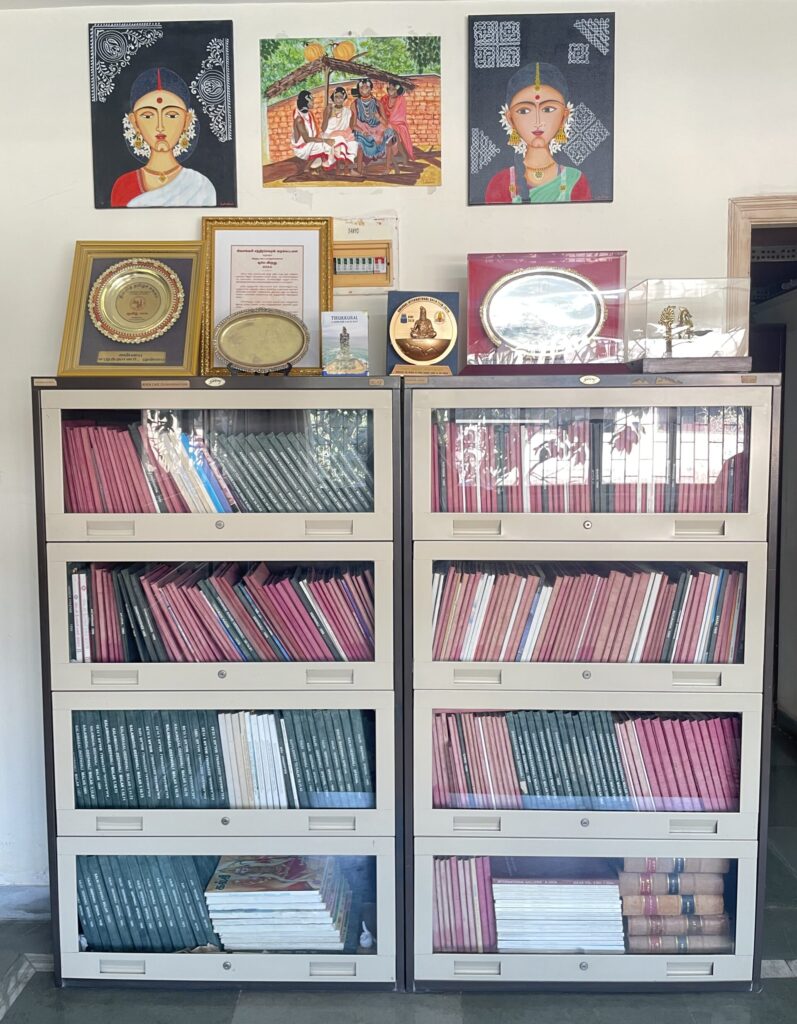
It is said of Achilles in The Iliad that he is an absent presence, a void that haunts the narrative until he is more real than those present. The same could be said of SPARROW’s director, Dr Lakshmi, whose vision and spirit suffuses the space. She is not on the premises the day of my visit, and yet she is everywhere: in the anecdotes of the team, etched as a name on trophies and mementos, and invoked again and again as the compass that guides the ship.
Sontakke, quoting Dr Lakshmi, says that the archives began as a response to the fact that women comprise around fifty percent of any population and yet are repeatedly neglected in historical narratives. Their contributions remain unheralded and unsung. SPARROW has a positively rapacious appetite for women’s stories, as reflected in the truly expansive nature of their collection. While they have covered public personalities like writers, painters, poets, photographers, activists, scientists, theatre and film actors, they have also made space for the stories of women who weren’t famous but led unusual lives. Their exploits would ordinarily have circulated as oral anecdotes within families and communities — like the grandmothers who fought for India’s Independence or working-class women whose life stories never made it into ‘official’ records.
SPARROW collects a plenitude of multimedia material while also commissioning original work like anthologies, translations, and original films. Their regular newsletter is a treasure trove of information about events happening for and by women around the country as well as updates on their work. The obituaries section is devoted to heartfelt tributes to women who have recently died — another poignant form of record-keeping that nearly moves me to tears. The stakes are not fame or fortune, but rather the vital task of standing witness to how pioneering women of India have shaped and continue to shape the world we live in.
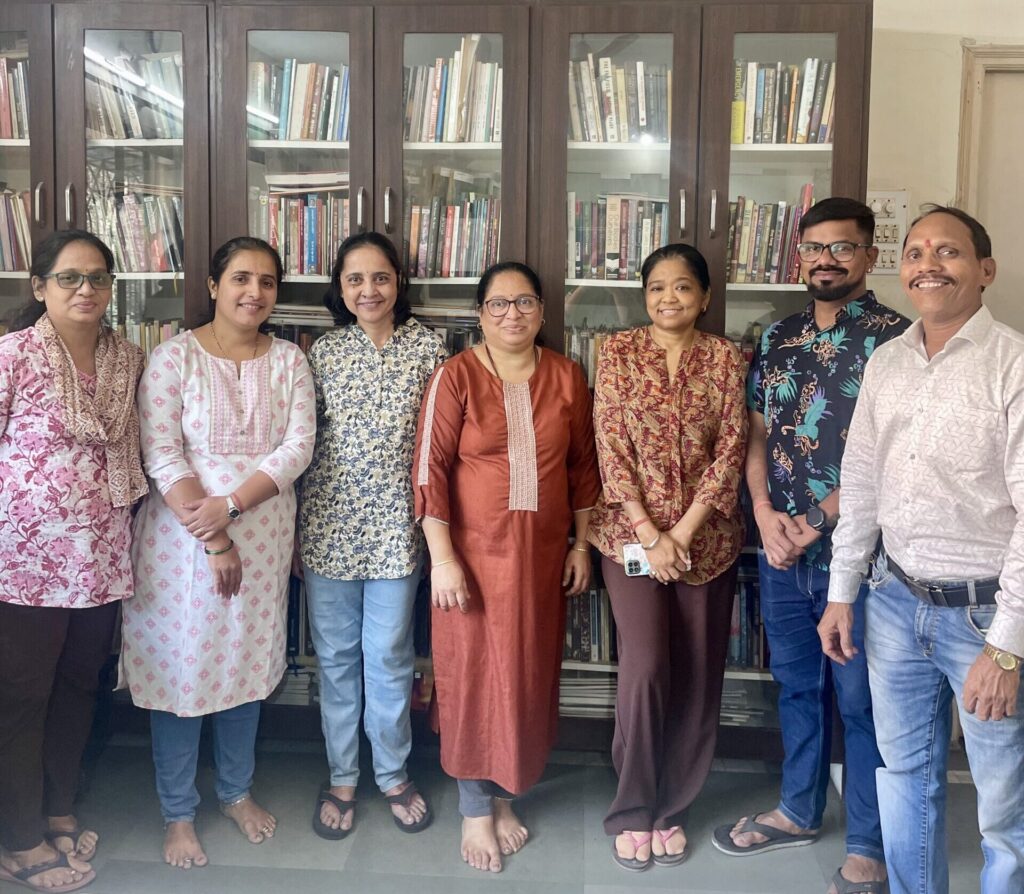
Each member of the team I speak to reflects on the ways in which their job at the archives changed how they view womanhood, women’s labour, and its documentation. Asmita Deshpande, with years of experience working in special libraries, credits SPARROW’s records of female artists for helping her meaningfully engage with art through everyday pursuits. Similarly, Sontakke sees women in her own family or female acquaintances differently now, often ruminating on how their endeavours will impact the generations after them. Bhalekar, responsible for the SPARROW’s visual data, has developed a special relationship with archival photographs. The routine abundance of smartphone photographs makes her especially fond of vintage black and white snapshots. Alongside the daily work of maintaining and nourishing the collection, the staff collectively dream of opening a museum dedicated exclusively to women’s lives and work one day.
Much of this was relayed to me during a special orientation the team does for visiting researchers and guests called the “SPARROW Walk”. The activity, usually lasting twenty minutes, took nearly three hours as Sontakke and Deshpande, in an inspiring duet, relayed the histories of women, stopping every few minutes to direct my attention to a special artefact or tell me the story behind sourcing another. I may have come for just Kamath’s story but I left with the tales of so many more remarkable women, warmed by the worth of their work and those who preserve it.
First published: May 19, 2026