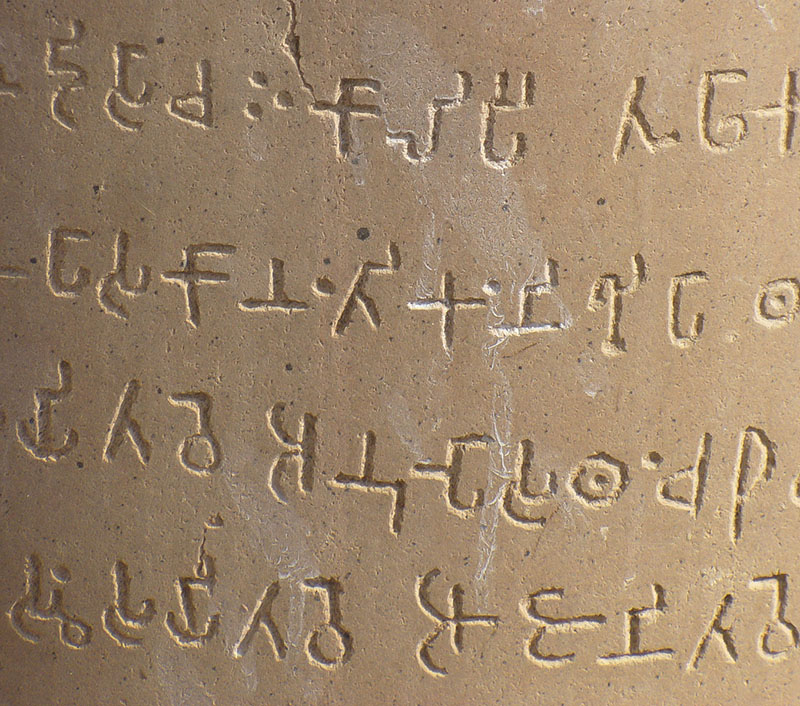
A writing system or script that appeared as a fully developed universal system in Asia c. third century BCE. It is believed to be the ancestor of later South Asian and Southeast Asian scripts. The earliest evidence of the use of the script is from the pillar and rock-cut edicts of Ashoka, dated c. 250–232 BCE. It was first deciphered in 1837 by James Prinsep, an archaeologist with the East India Company.
More Definitions
Nastaliq
A style of Persian calligraphy that originated in Timurid Iran and gained popularity from the fifteenth century onwards. Written in…
Amuktamalyada
A sixteenth-century epic poem in Telugu, authored by the Vijayanagara king, Krishnadevaraya. It narrates the story of Andal, one of…
Brihat Samhita
A Sanskrit text written by the astronomer Varahamihira in the sixth-century CE, during the Gupta period. Primarily centred on astrology,…
Kandahar Bilingual Rock Inscription
A bilingual edict, written in Greek and Aramaic, dating to c. 260 BCE. It is the earliest known rock edict…
Ramayana
One of the two major ancient Indian epics written in Sanskrit, it is believed to have been composed by Valmiki…
Upanishad
A body of texts written in Sanskrit and considered to be the latter part of the Vedas. They cover issues…
Agamic Texts
Meaning “tradition” or “received knowledge” in Sanskrit, the term refers to a set of scriptures within Hinduism, Jainism and Buddhism.…
Doha
A form of Indian poetry, it is a self-contained rhyming couplet consisting of two lines and formed of twenty-four syllables…