-
ChicagoDas, Arti. "Echoes of the Neolithic: Goa’s ‘Perni Zagor’ Folk Theatre." Impart Perspectives, May 12, 2026. https://imp-art.org/perspectives/dispatches/echoes-of-the-neolithic-goas-perni-zagor-folk-theatre/
-
MLADas, Arti. "Echoes of the Neolithic: Goa’s ‘Perni Zagor’ Folk Theatre." Impart Perspectives, May 12, 2026, https://imp-art.org/perspectives/dispatches/echoes-of-the-neolithic-goas-perni-zagor-folk-theatre/. Accessed 20 Oct 2026.
-
HarvardDas, A. (2026) Echoes of the Neolithic: Goa’s ‘Perni Zagor’ Folk Theatre, Impart Perspectives. Available at: https://imp-art.org/perspectives/dispatches/echoes-of-the-neolithic-goas-perni-zagor-folk-theatre/ (Accessed: 20 October 2026).
Echoes of the Neolithic: Goa’s ‘Perni Zagor’ Folk Theatre
Archival and ethnographic evidence indicates Perni Zagor's connection to female shamans belonging to the earliest nomadic tribes that settled in the region between 8000 BC to 4000 BC.
By Arti Das
Link copied!
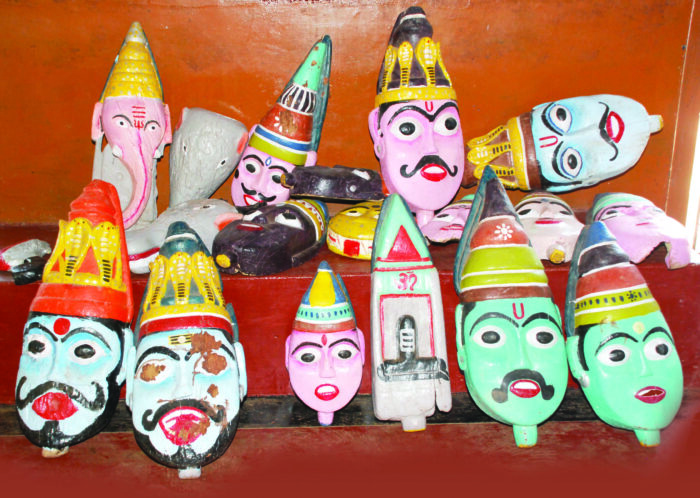
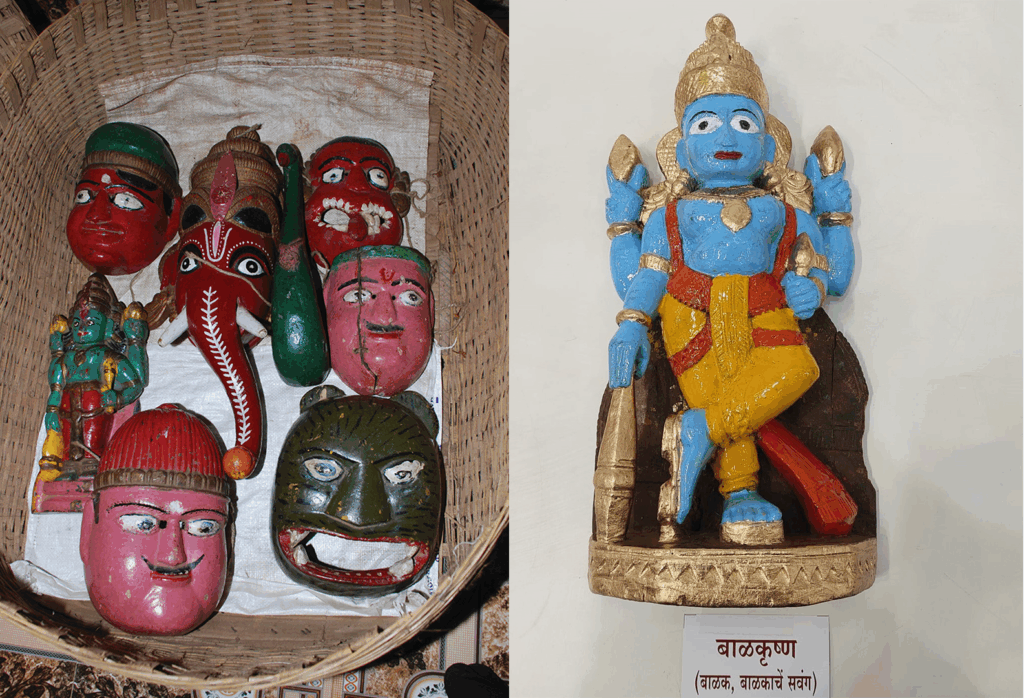
Masks preserved by the Betal Temple at Poinguinim village. They are used during Perni Zagor rituals during the Gadya Zatra. Courtesy Dr Pandurang Phaldesai
Goa — the coastal state of India — has long been a melting pot of cultures and identities. But when it comes to Goan heritage, there is a marked paucity of proper documentation or research on pre-colonial, indigenous folk forms. One such ritualistic tradition that still survives is Perni Zagor — a masked dance drama by performers who come from the Konkani-speaking Perni community.
Zagor dramas are primarily performed by indigenous tribes like Gawda and Kunbi and the Perni caste that is associated with temple service. Referencing the Sanskrit root word jagr (wakefulness), Zagor refers to night-long vigils on specific festival days to seek protection from deities, guardian beings and demigods like Vetal (also known as Betal). Rituals include specific rites — prayers, processions and offerings — combined with folk performances that involve music, singing, dancing, and also folk dramas at designated, communal sacred spots, referred to as maand.
Origins and Evolution of Perni Zagor
Perni Zagor is arguably the oldest form and distinct from the other types of Zagor folk dramas because of the use of wooden masks and the traditional requirement of inducting women into troupes. Archival as well as ethnographic evidence indicates its connection to the earliest nomadic tribes that settled in the region between 8000 BC to 4000 BC. According to folk art researcher Dr Pandurang Phaldesai, Perni Zagor has Neolithic roots as a fertility rite enacted by female shamans who were worshippers of Earth goddesses, like their contemporaries in the rest of Asia, Africa, and Europe.
A distinct mask of an old lady known as Matari or Adimaya, depicted with a stick in her hand, indicates the folk drama’s origins. “That gesture of walking with a stick in hand indicates sowing, as it was the humble farming tool of the ancient farmers. It was used in Mesoamerica and throughout ancient America and relates to fertility cults,” says Phaldesai.
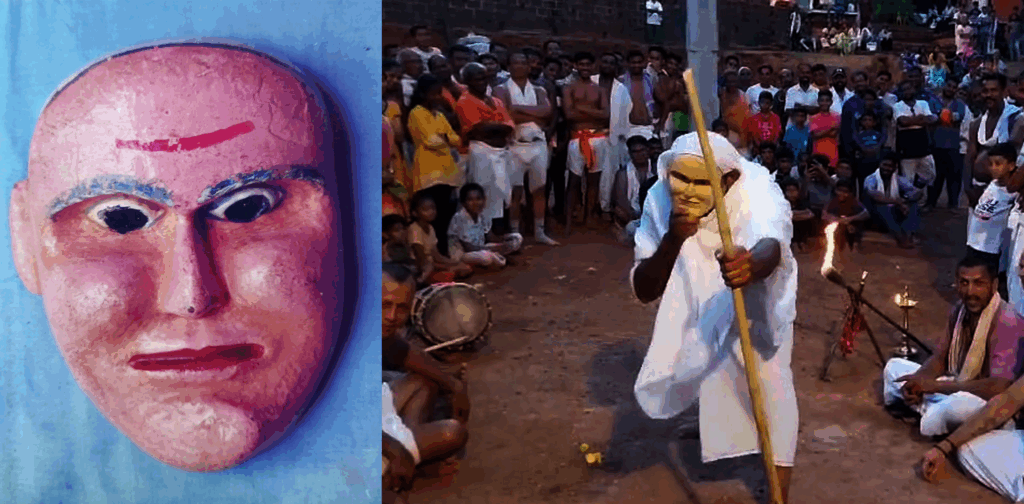
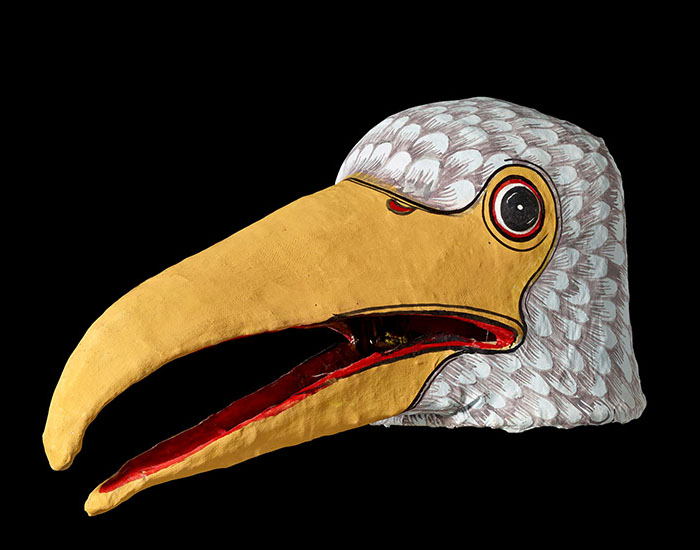
Dr Tanvi Kamat Bambolkar, who has been studying folk theatre for almost a decade in Goa, states that Matari could also mean ‘the original mother’ — the matriarch of the entire human clan. According to Bambolkar, she represents the age-old wisdom that is passed on from one generation to another. Other masks, among the oldest and rarest specimens, such as Waghro (tiger) or Pavno (bird), reveal animistic beliefs associated with pre-Vedic nature worship. “Tribal people believed that birds and animals like tigers had spirit forms and played a special role in many aspects of human life,” says Phaldesai.
Similarly, androgynous masks known as Kolyamaswar in Colomba village, according to Phaldesai, represent the third gender with the ability to bridge masculine and feminine energies. They, in most likelihood, predate the Puranic conception of the Ardhanarishwara form of Shiva. There’s also a phallus (Linga) mask, which is held by a Perni family in Poinguinim. “This mask, which is unique and belongs to this one family, emphasises its direct relevance to the ancient human agro-fertility rites and fecundity,” he observes.
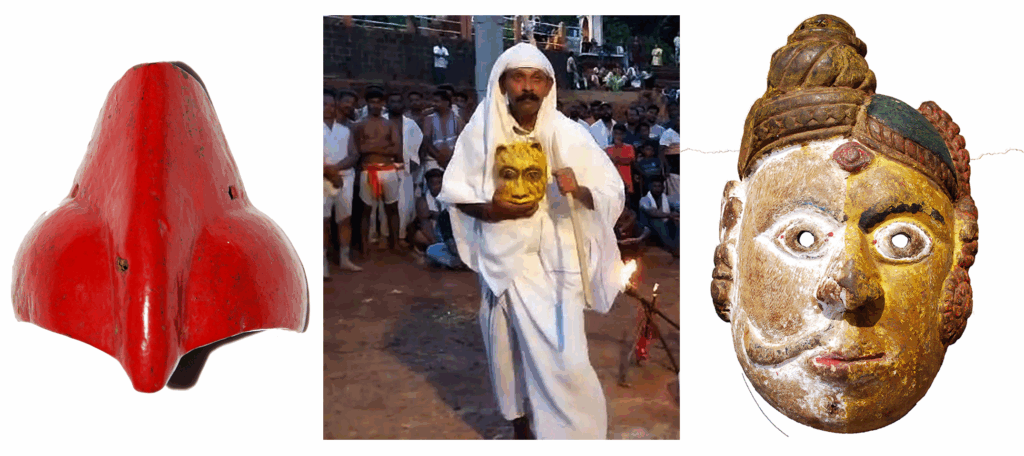
In his book Perni Zagor: Goa’s Unique Gift to the World of Mask Dance Drama, released in 2025 and the culmination of 25 years of research, Phaldesai suggests that as matrilineal lineages gave way to patriarchal ones, male performers rose in prominence. However, Perni Zagor’s original association with female shamans is why troupes are supposed to have at least one woman performer to handle certain masks, such as Matari, Saraswati (peacock), Balkachem (Krishna idol), and Tulijai (a fierce form of Shakti associated with the Tulja Bhavani Temple). No such strictures apply to other Zagor folk drama traditions from the region.
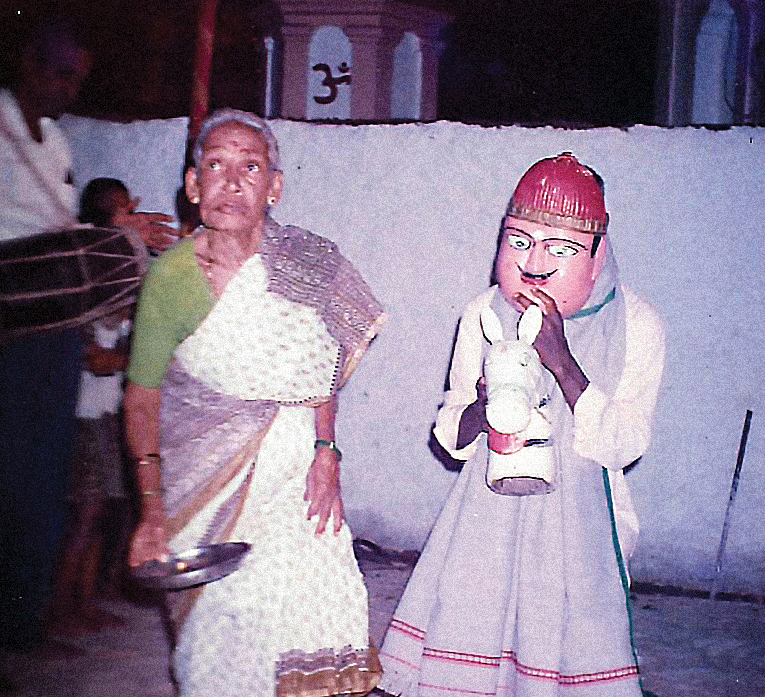
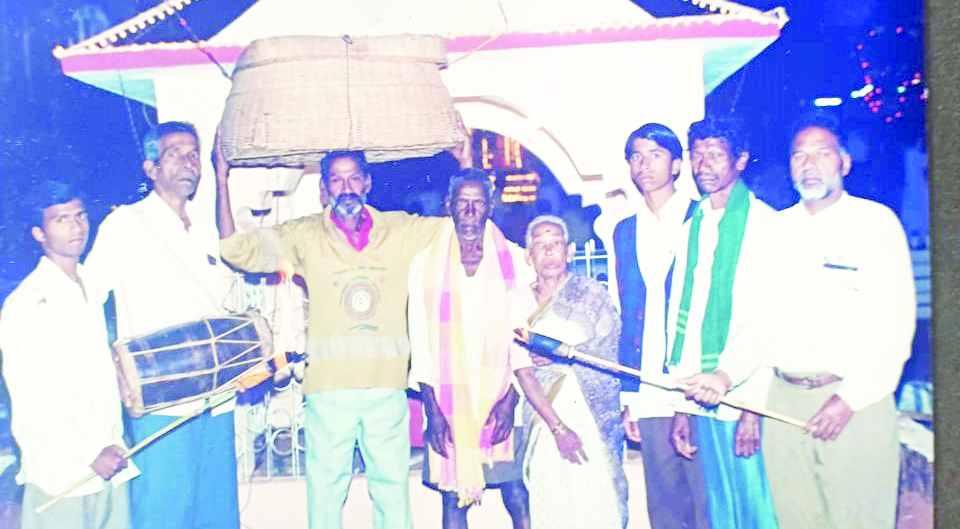
As a living practice that has survived centuries, Perni Zagor has seen a complex and long process of evolution, incorporating popular kathas (mythological stories) associated with pan-Indian Hindu gods as well. Narrative elements show Vedic, Puranic, Shaivite, Tantric and Dravidian influences in the tradition’s folklore associated with masks of Hindu mythological figures, such as Ganesh, Saraswati, Mahadev, Krishna, and Putana. Usually stored in a peth (cane basket), masks — or rupdi, as they are known locally — are revered and handed down from one generation to the next. More contemporary masked characters embrace socio-economic themes, such as the Saudagar (trader) and the ghodo (horse). These later additions reference trade activity in Goa and a shift away from agrarian livelihoods.
Phaldesai’s research indicates that Perni Zagor originated in the village called Vaghurme, situated on the banks of the Mandovi river. The area is culturally significant because it is home to deities like Gajalaxmi and boat deities like Tarini. “Gajalaxmi panels from the 9th to the 14th century AD show a strip at the bottom with intricate carvings of singers, dancers, magicians and acrobats.” According to him, older versions of Perni Zagor performances were integrated and absorbed into these ritual celebrations. The Perni community — along with Bande, Ferjend, Bhavin and Kalavant — are historically temple-associated sub-castes.
A traditional Perni Zagor performance involves a troupe of dancer-singers with wooden masks reciting and singing verses, accompanied by the beat of mainly two folk instruments — zhanz (cymbals) and dholki (two-headed hand drum). Hailing from villages in Molcornem, Colomba, Vaghurme, and Poinguinim, a few Perni family troupes continue to perform at zatras (pilgrimage festivals) at select temples in four talukas of Goa — Ponda, Sanguem, Quepem and Canacona. Such events are held throughout the year, except for the four months of monsoon. But with younger generations unwilling to carry on the legacy, Perni Zagor performances are dwindling. They were held in 68 places in five talukas of Goa in the year 1999, but by 2023, only 3 families performed in the whole of Goa and at only 14 locations.
From female shamans to Devdasis
With the wider societal shift to patriarchal Vedic norms, Perni Zagor rites were also absorbed into the Devadasi system of Goa with women performers holding a special ritual significance within the folk form. “Only a lady who had undergone the rite of ‘shens’ could take part in Perni Zagor. This was a ritual in which the girl, after hitting puberty, was made to undergo a form of marriage ceremony with an old lady [from the Bhavin community] impersonating a man,” says Phaldesai. He adds that now there are no new women performers as this practice of shens stopped after the caste reforms in the 1920s with the birth of Gomantak Maratha Samaj.
The Samaj gave importance to education and worked to end ‘professions’ that held a lower status in the social hierarchy, especially within the Devadasi system. These reforms deeply impacted the Perni community. By the 1950s, many families stopped performing Zagor dramas in Vaghurme, the historical ‘origin’ village of the tradition.
A Fraught Future
Of all the forms of Goan folk theatre, Perni Zagor is possibly the most endangered. Traditionally, Perni families associated with the masked Zagor dramas were allotted land by devasthans (community temples) to perform at zatras. Such land grants that also included housing was how performers sustained themselves. But community-based patronage has now dwindled to token remuneration in kind or cash. The resultant precarity of income faced by performers has only partially been mitigated by state support for Goan Maand traditions, tied to sacred community spaces used to stage socio-religious folk performances.
Surviving Perni Zagor masks, which were once carved and painted by craftspeople from the Chari community, are mostly over a hundred years old — and fragile. When a mask falls apart due to wear and tear, it also signifies an end to the tales attached to it. New masks cannot be made because the ritual craft no longer exists; even the knowledge of how to make the organic paints used to decorate them has been lost.
Over time, the quality of Perni Zagor dramas too have declined — most troupes no longer sing or recite their story verses while dancing. Performances that used to last hours are now dispensed with in minutes and are largely seen as symbolic. Phaldesai explains that the Perni families who continue the tradition believe that if they don’t do what generations of their ancestors have done, they or the larger village community will face calamity and natural disasters.
The Perni family troupe from Molcornem is one of the few that still get to perform every year at a few places in Goa. Sudhakar Perni says they are invited to perform during the annual zatra in December at Fatarpem Shantadurga Cuncolikarin temple, but also at temples in Canacona and Shiroda, among others. “We were practising Perni Zagor even before Portuguese rule in Goa. So, we have a strong tradition and will continue,” says Sudhakar. He is hopeful that if there is renewed interest in this folk form, there will, eventually, be more funding support for the artists.
Similarly, the Poinguinim family troupe regularly performs around 25 Zagors every year. Their performances include the use of unique masks like the Jaliman (demon) and Linga. They also participate in the Gadyanchi Zatra in South Goa, which is held once in three years. Compared to other, more socio-cultural events, such as the Siolim Zagor that sees both the Hindu and Christian communities participate in night-long festivities, Perni Zagor performances continue to be ritualistic and are held exclusively on temple grounds.
It wouldn’t be a stretch to say that with the dwindling number of artists, Perni Zagor could, within a few decades, only leave behind material remnants of its existence in the form of masks preserved as museum pieces or sold as antiques. Its folktales may disappear despite having survived at least 6,000 years into the present. While Phaldesai has advocated for more state support and securing an ‘Intangible Cultural Heritage’ tag from UNESCO, others like Bambolkar feel that it is up to the Perni families to decide the way forward. “I think the community should and must decide its future. But its revival will definitely lead to a better understanding of Perni’s heritage and history,” says Bambolkar.
There is a certain thrill in witnessing the shuffling steps of the Perni Zagor performers and knowing that it holds the echoes of a tribal past molded by the first matriarchs on the Indian subcontinent. But only the Zagor gods know what the future holds.
First published: May 12, 2026