-
ChicagoImpart Encyclopedia of Art. "Paata, Takhat, Takhtposh." May 15, 2026. https://imp-art.org/articles/paata-takhat-takhtposh/.
-
MLA"Paata, Takhat, Takhtposh." Impart Encyclopedia of Art, May. 15, 2026, https://imp-art.org/articles/paata-takhat-takhtposh/.
-
HarvardImpart Encyclopedia of Art (2026) Paata, Takhat, Takhtposh. Available at: https://imp-art.org/articles/paata-takhat-takhtposh/ (Accessed: 17 October 2026).
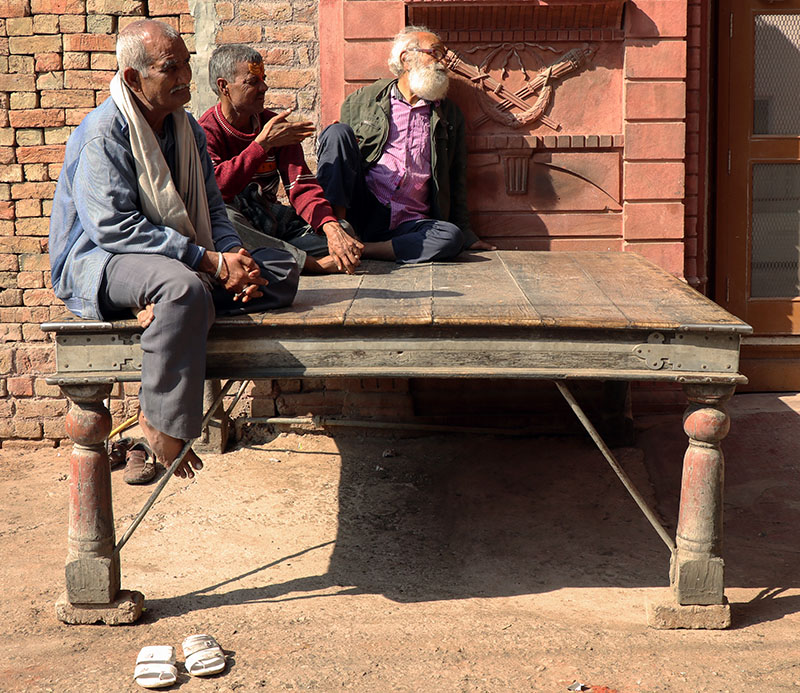
Backless wooden benches seating multiple people are among the most common forms of vernacular furniture in northwestern India, used in both public and private spaces for resting and various social activities. They take the form of paata in Rajasthan’s Marwar region; takhat in other regions of Rajasthan and in Haryana; takht or takhtposh in Punjab; and paat in Gujarat.
Design and construction
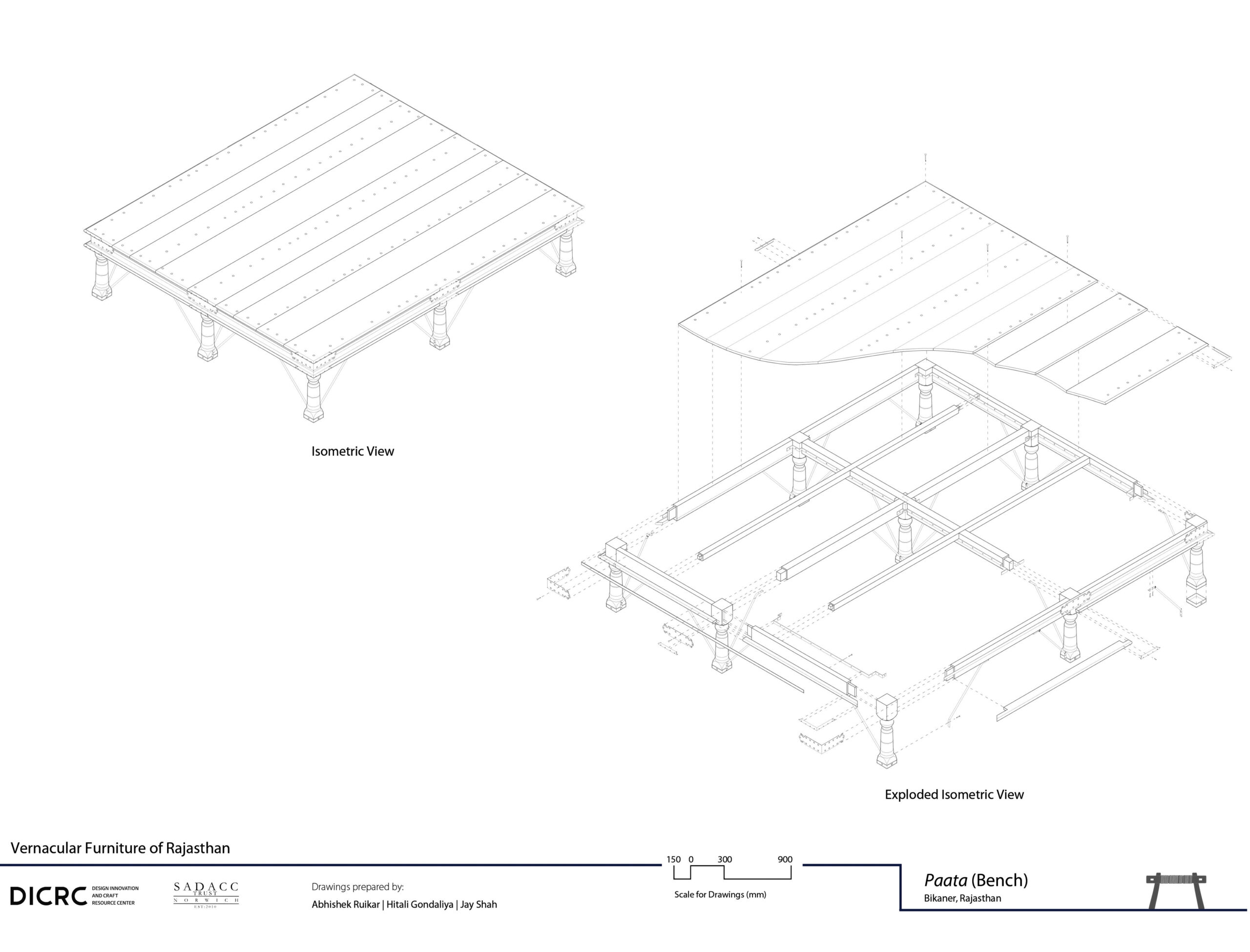
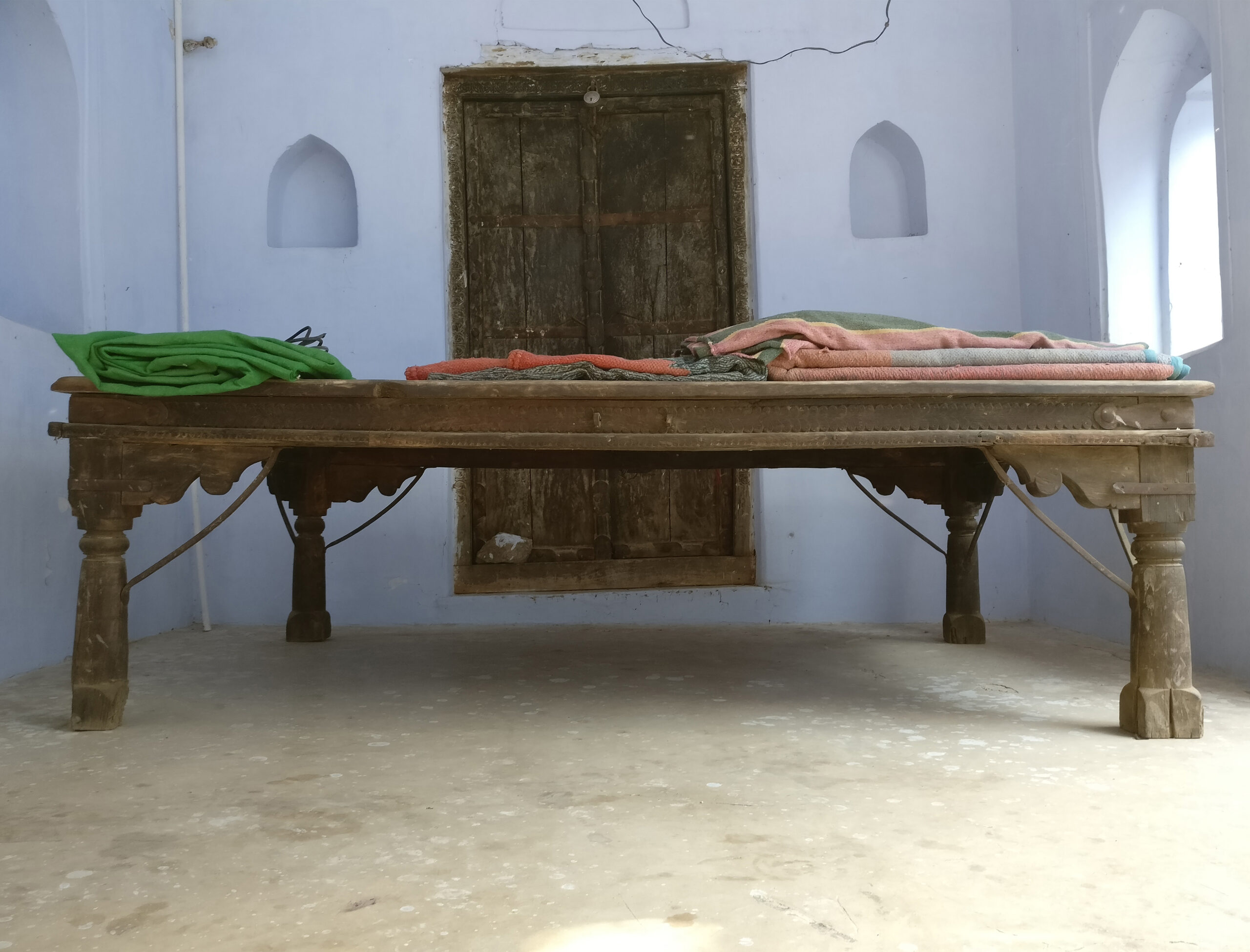
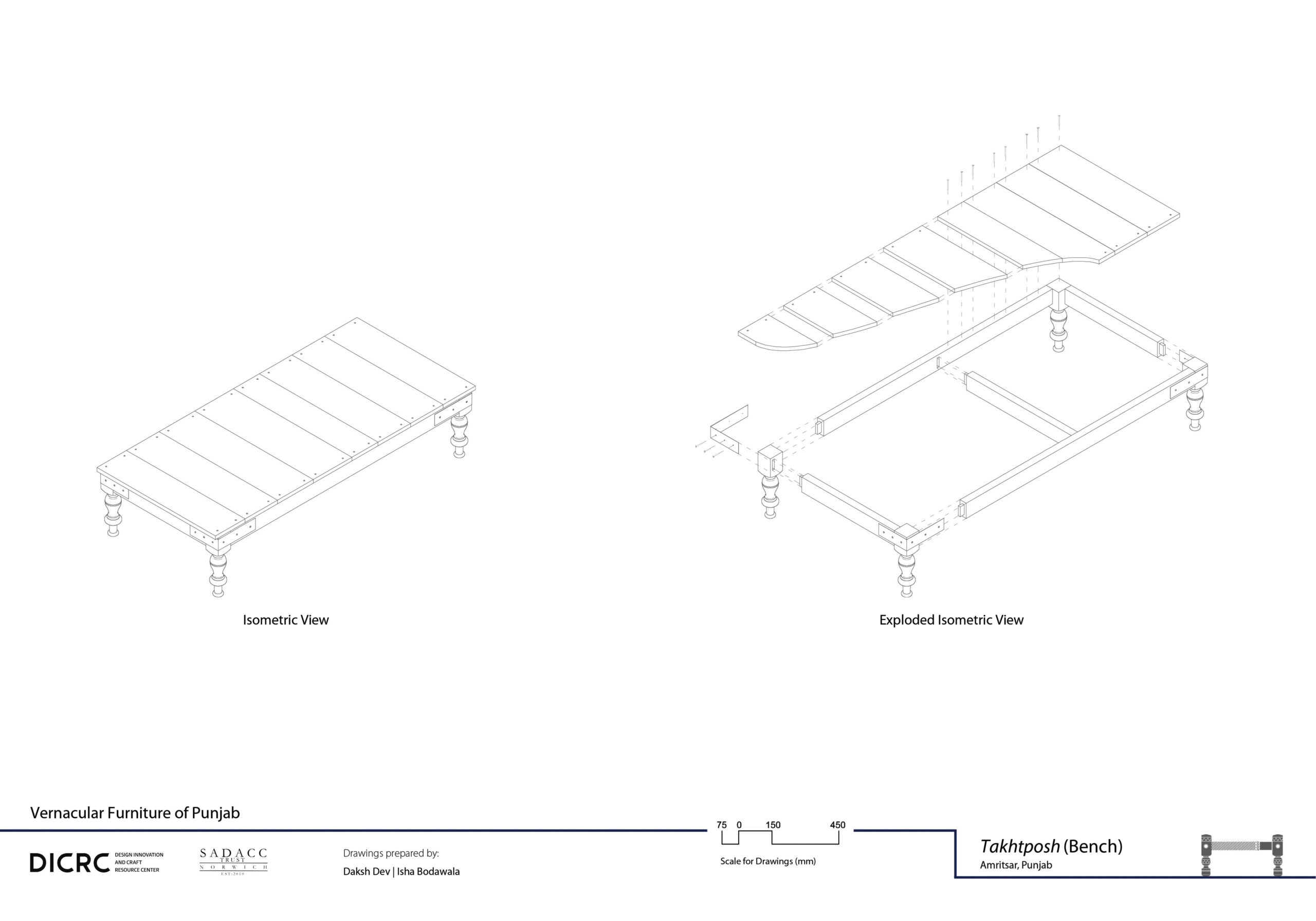
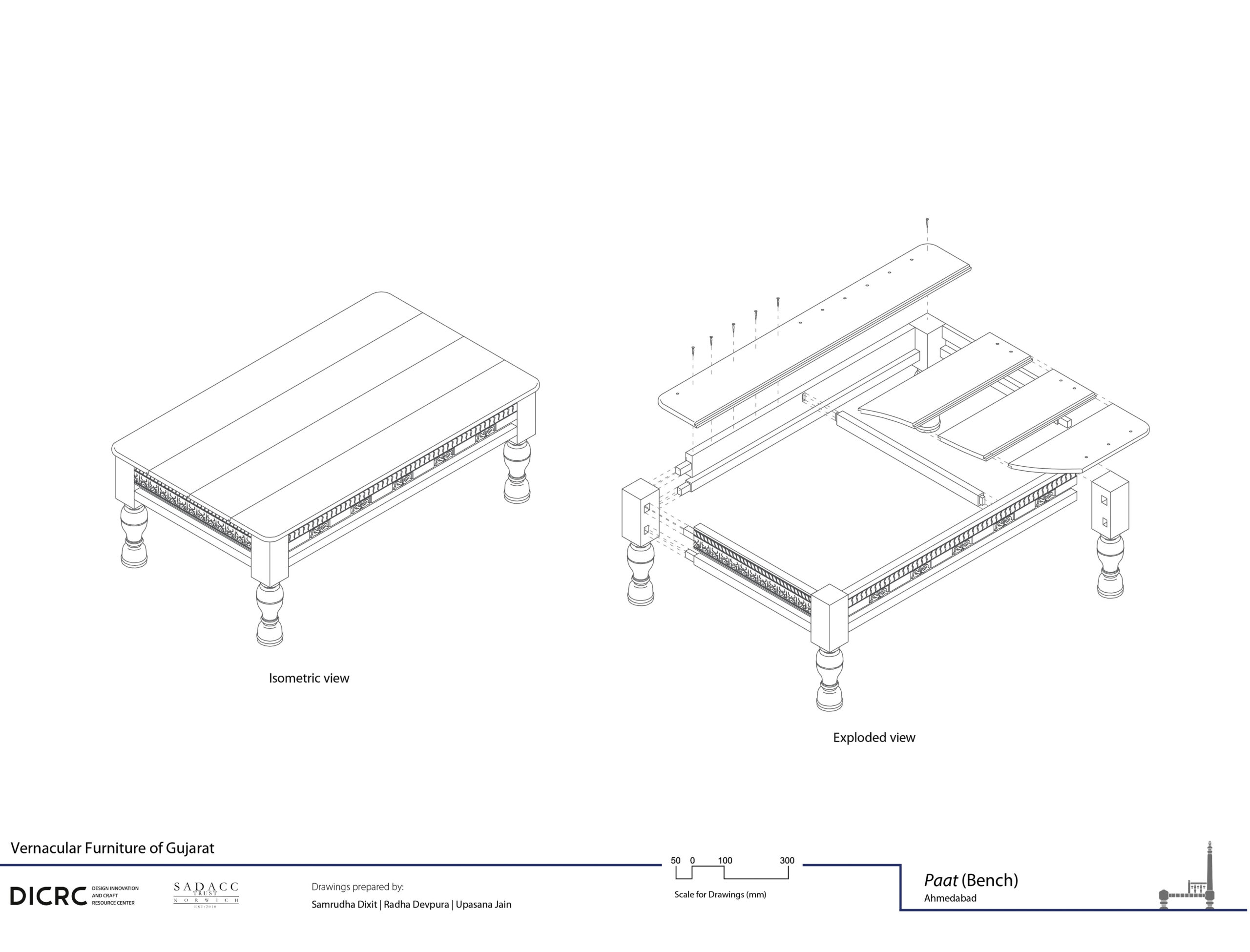
The bench is generally a simple structure, with a flat rectangular or square surface over a frame with four or more legs, often lathe-turned and/or carved. The size is variable, generally allowing several people to sit or lie on at the same time. A paata can have four, seven or nine legs, depending on its size, which have wide, flat bases. The largest recorded paata in Bikaner is 3.75 m long, 2.5 m wide and 1 m high. An unusually large deodar wood takhtposh with ten legs at Thaththi village in Tarn Taran, Punjab can seat three to four groups of people. Takhat in Rajasthan and paat in Gujarat are relatively smaller, the latter having only four legs.
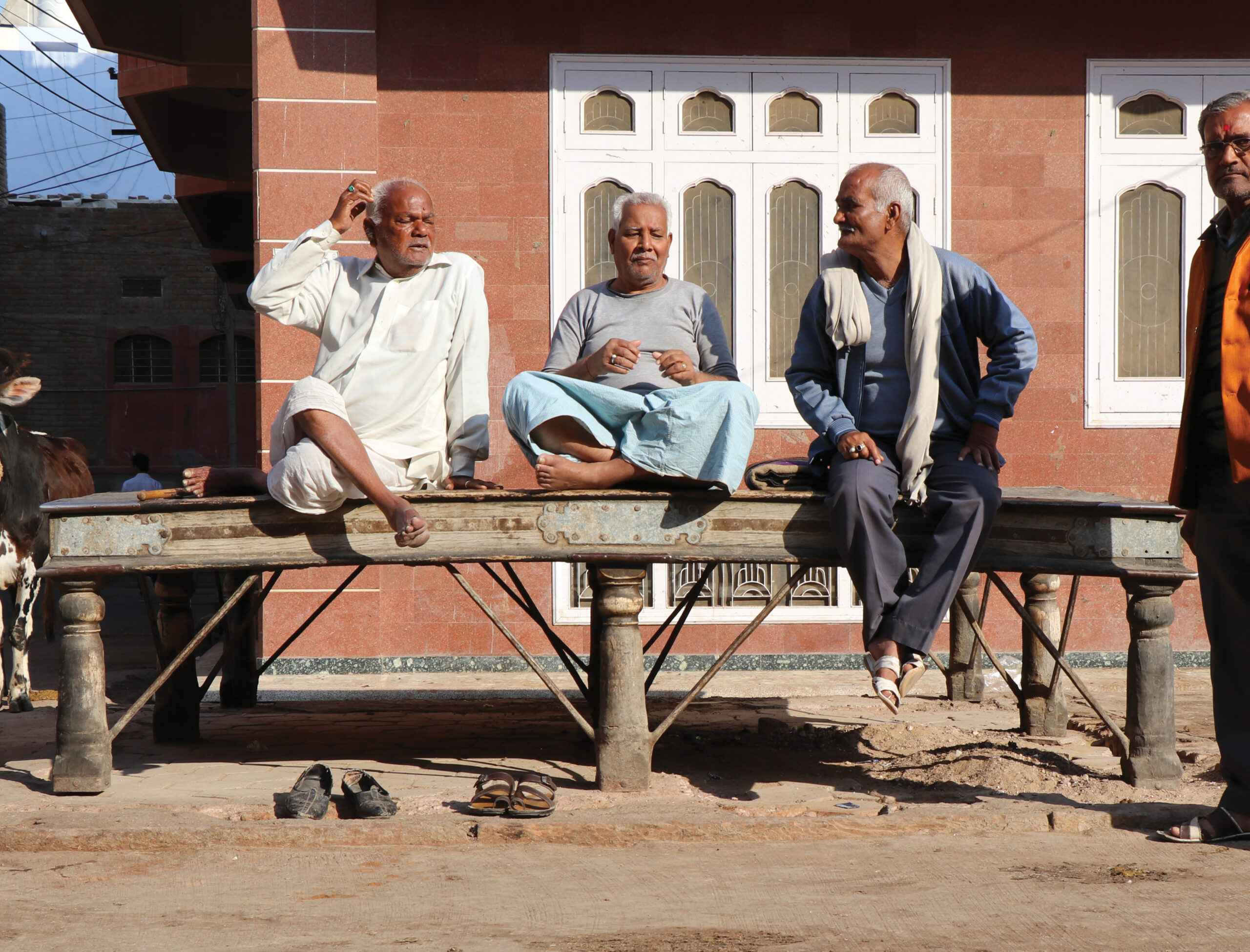
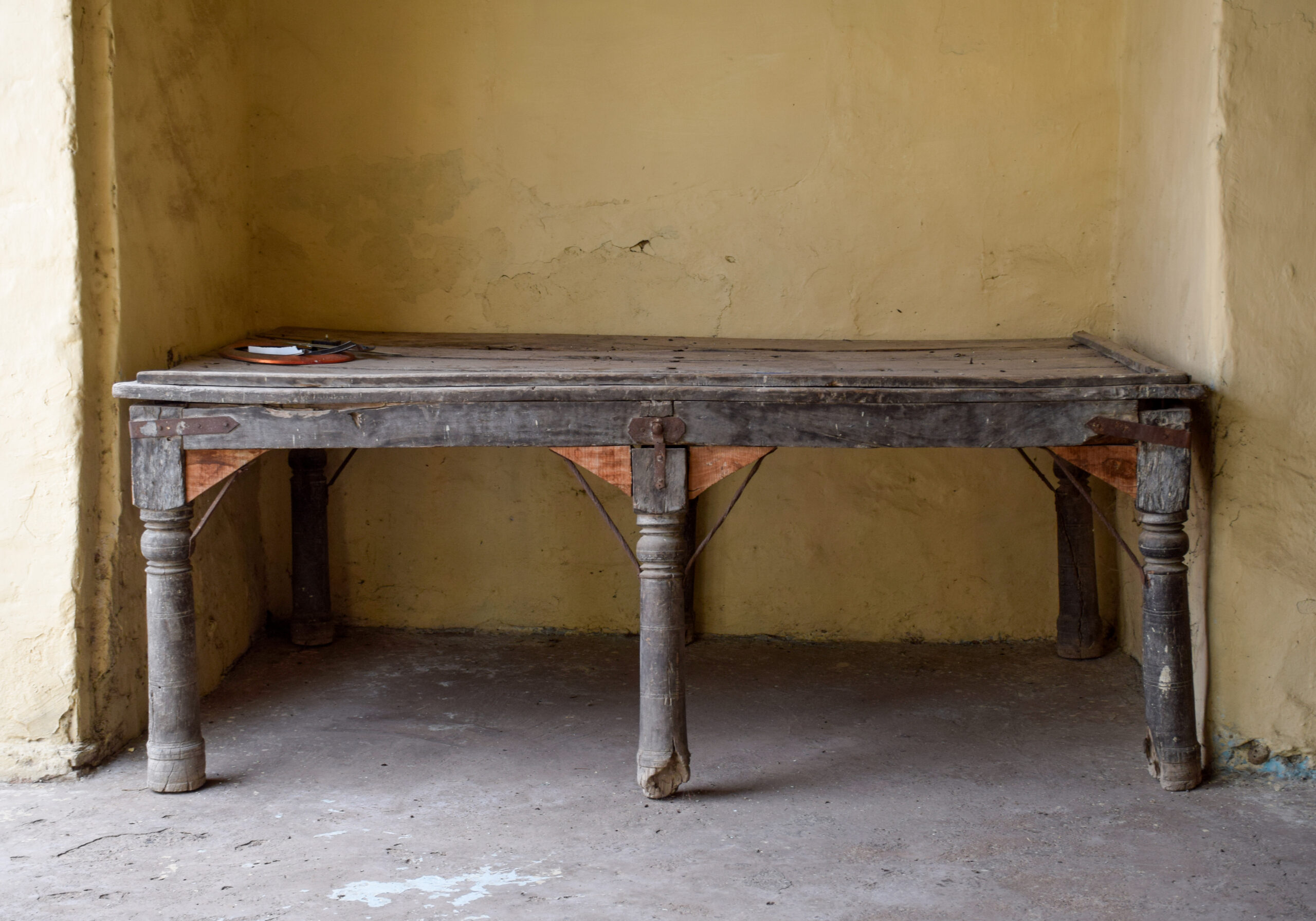
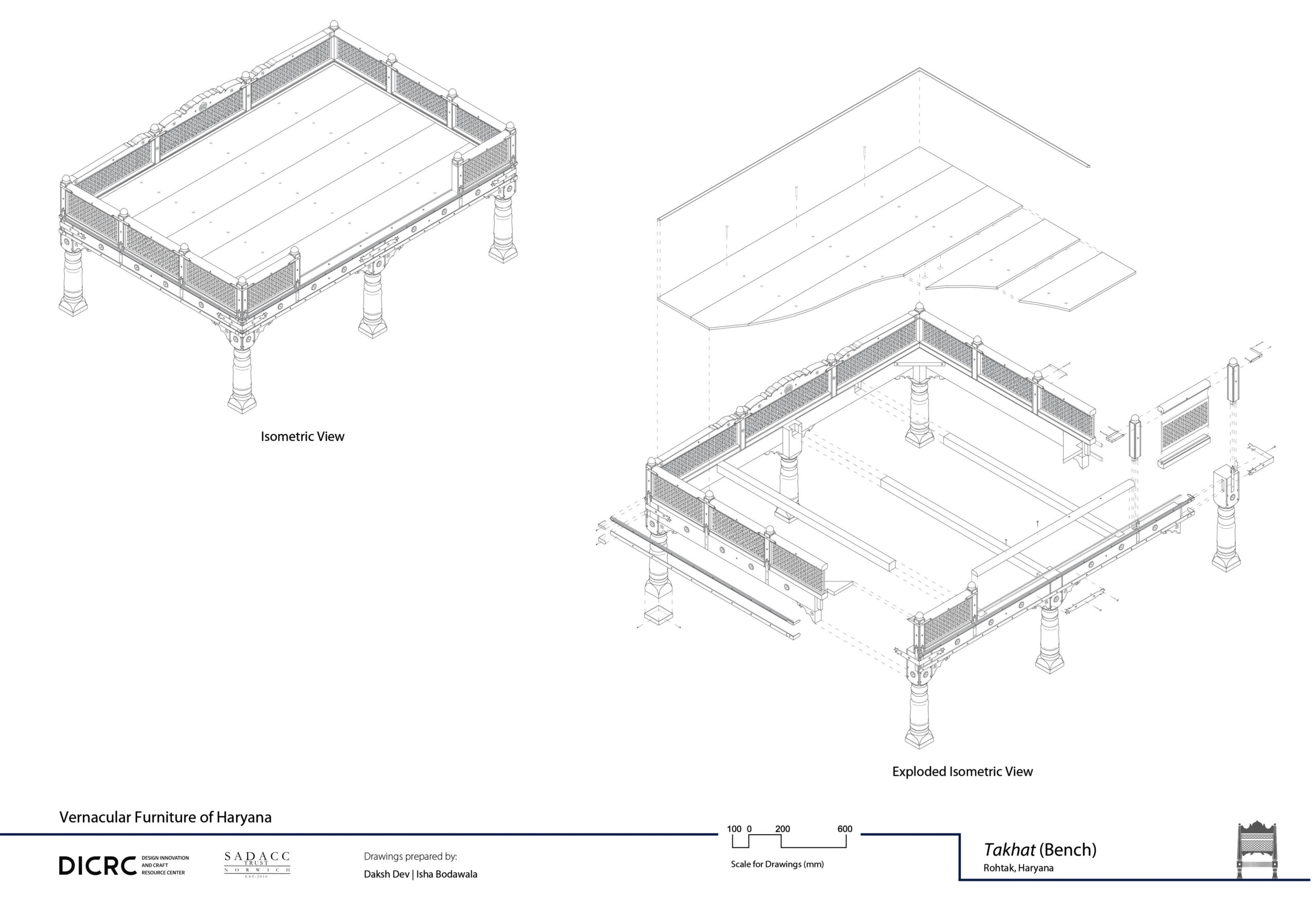
Paata are typically made using hard wood such as rohida (Tecomella undulata) or sheesham (Indian rosewood, Dalbergia sissoo); takht may use sheesham, deodar (Cedrus deodara), or kikar (gum arabic, Vachellia nilotica). Construction for the benches across regions is similar to that described for the paata here. The legs are connected to the frame members using mortise and tenon joints, which help resist structural deformation, with additional tie members similarly joined to impart greater stability. A half-lap joint is used to join these wooden cross-ties to the leg in the centre, when there is one. Metal rods 15–20 mm in diameter are fitted at an angle as brackets between the legs and the frame, using forged nails hammered through the flattened ends. These assist in the transfer and distribution of the horizontal forces on the frame to the legs. The corners of the frame are fitted with stamped metal sheets called khuniyu using forged rivets. The ends of the khuniyu are stamped and cut to form intricate patterns. These act as both structural and aesthetic fittings. In some paata a metal strip is riveted along the entire side of the frame. Once all these components have been put together, the seating surface is created by fixing wooden planks of different widths to the frame, using nails.
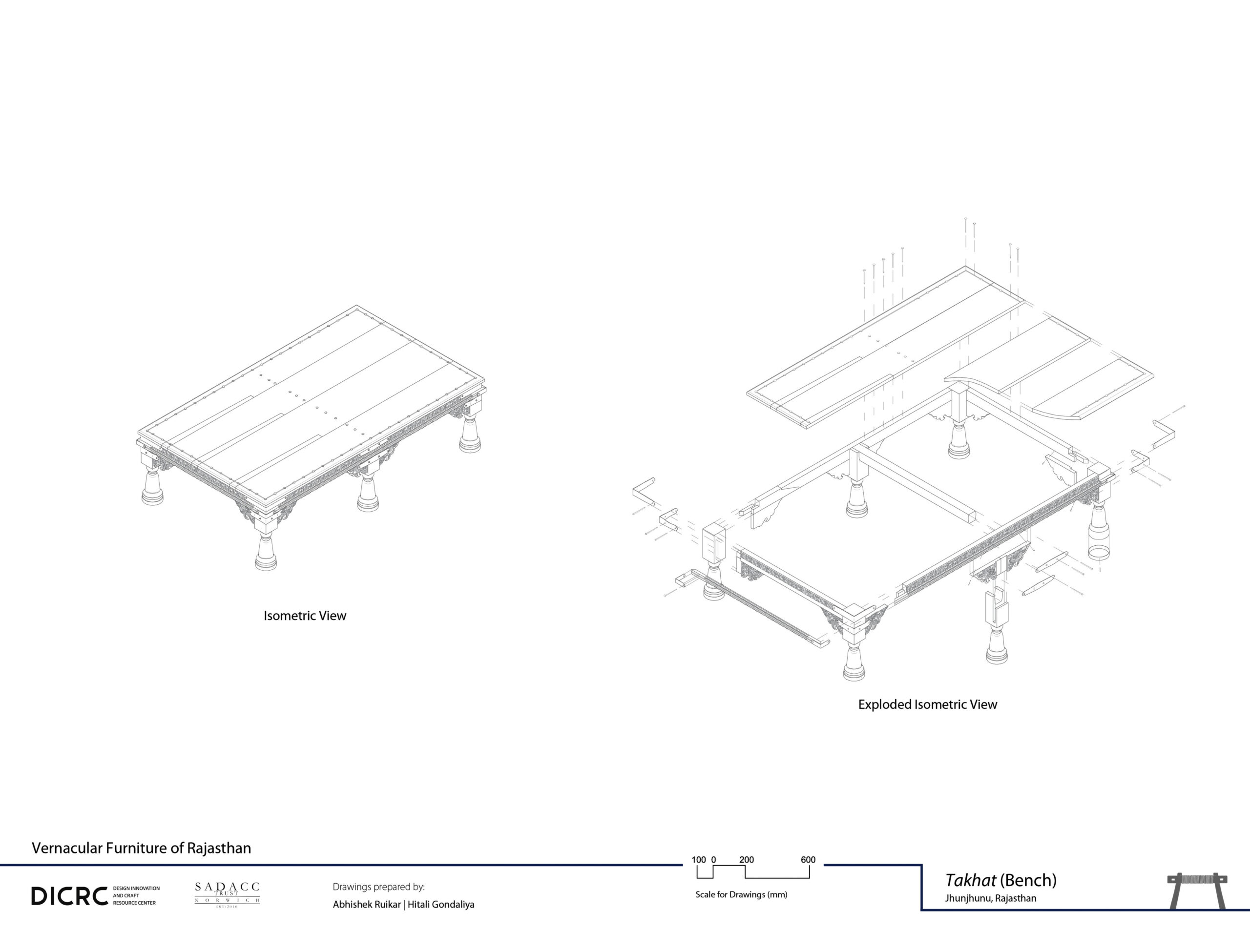
The takhat in Shekhawati, Rajasthan have intricately carved rails, and carved wooden brackets between the frame and the legs. The legs are far more slender than in the paata, as the takhat is meant to seat fewer people. Most paat are devoid of ornamentation, but in rare cases, the frame beneath the surface of a paat is carved with floral ornaments.
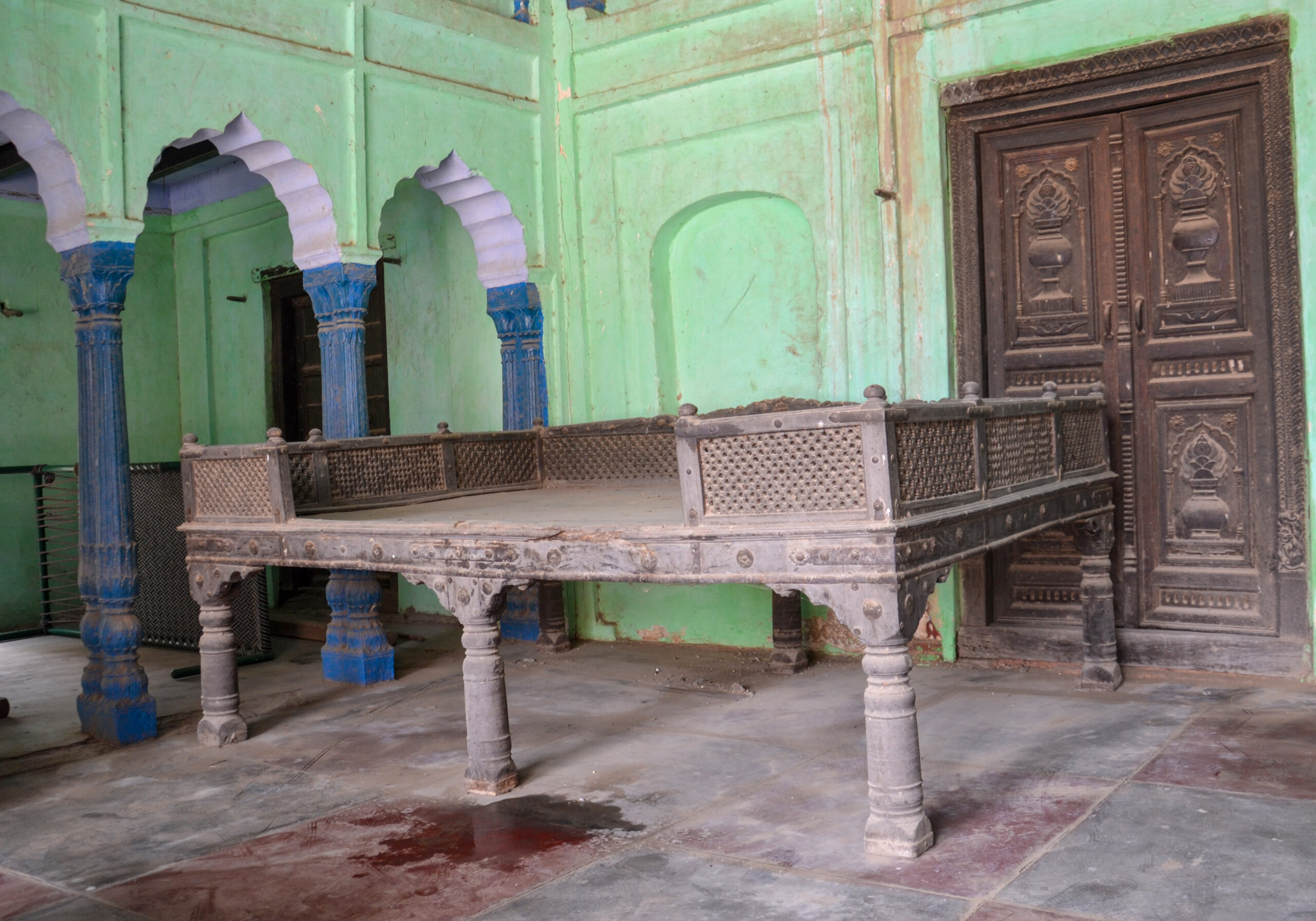
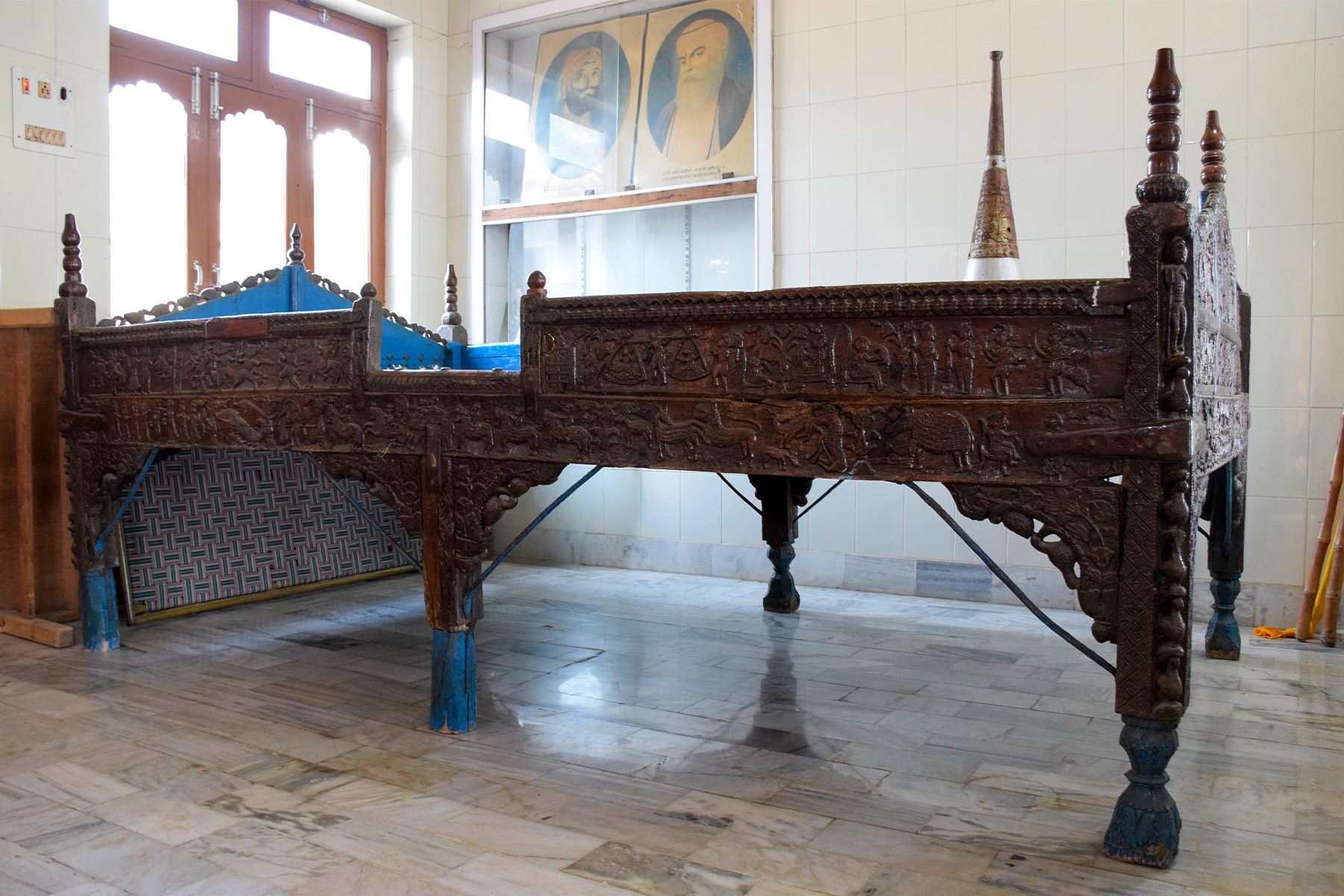
Takht used to sleep on usually have a slanting member along the shorter side to rest one’s head on. A takht inside the gurudwara of Bhaloor, a village in Punjab’s Moga district, has raised sides, with carved panels depicting stories from the Ramayana and the Mahabharata.
Ornamentation
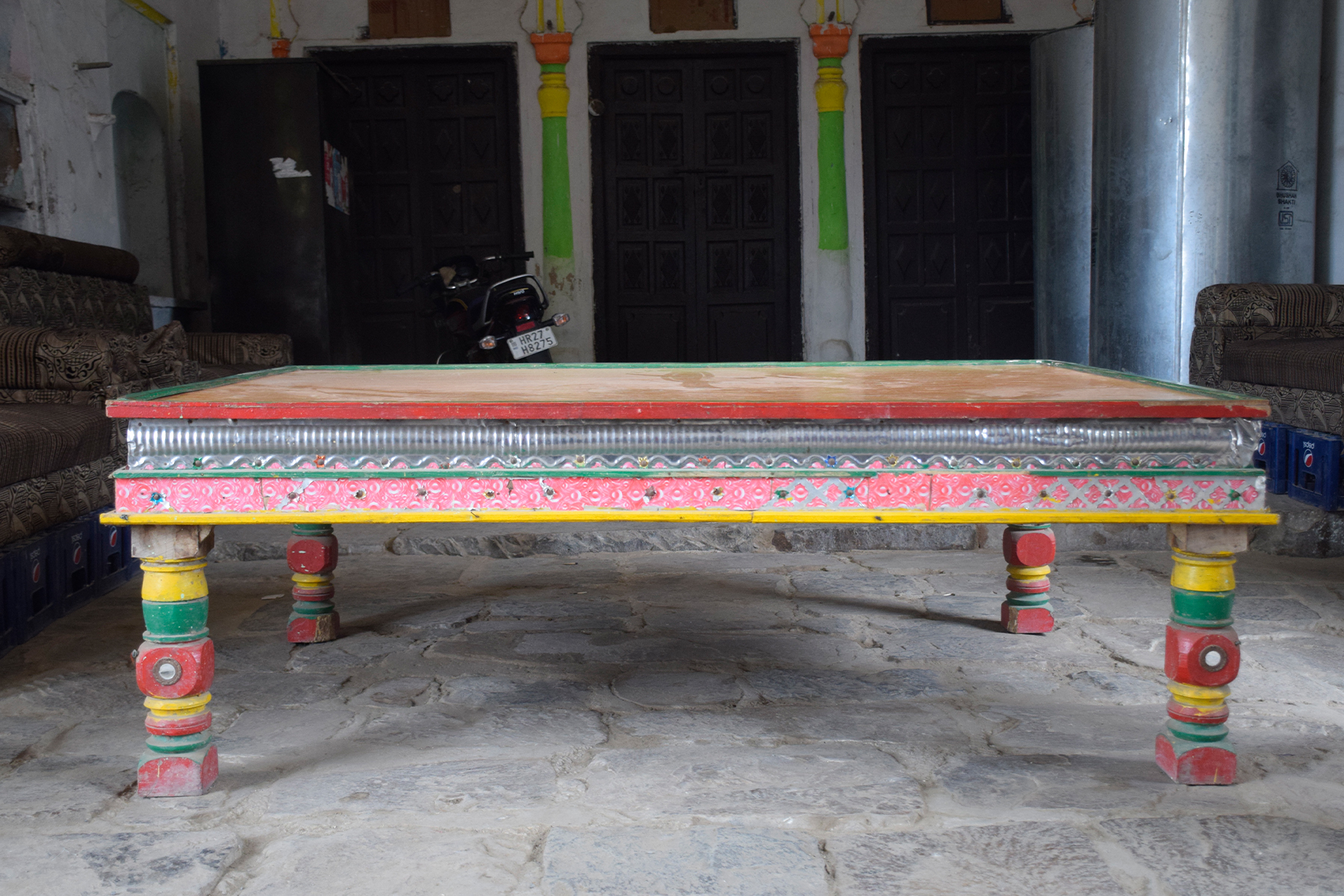
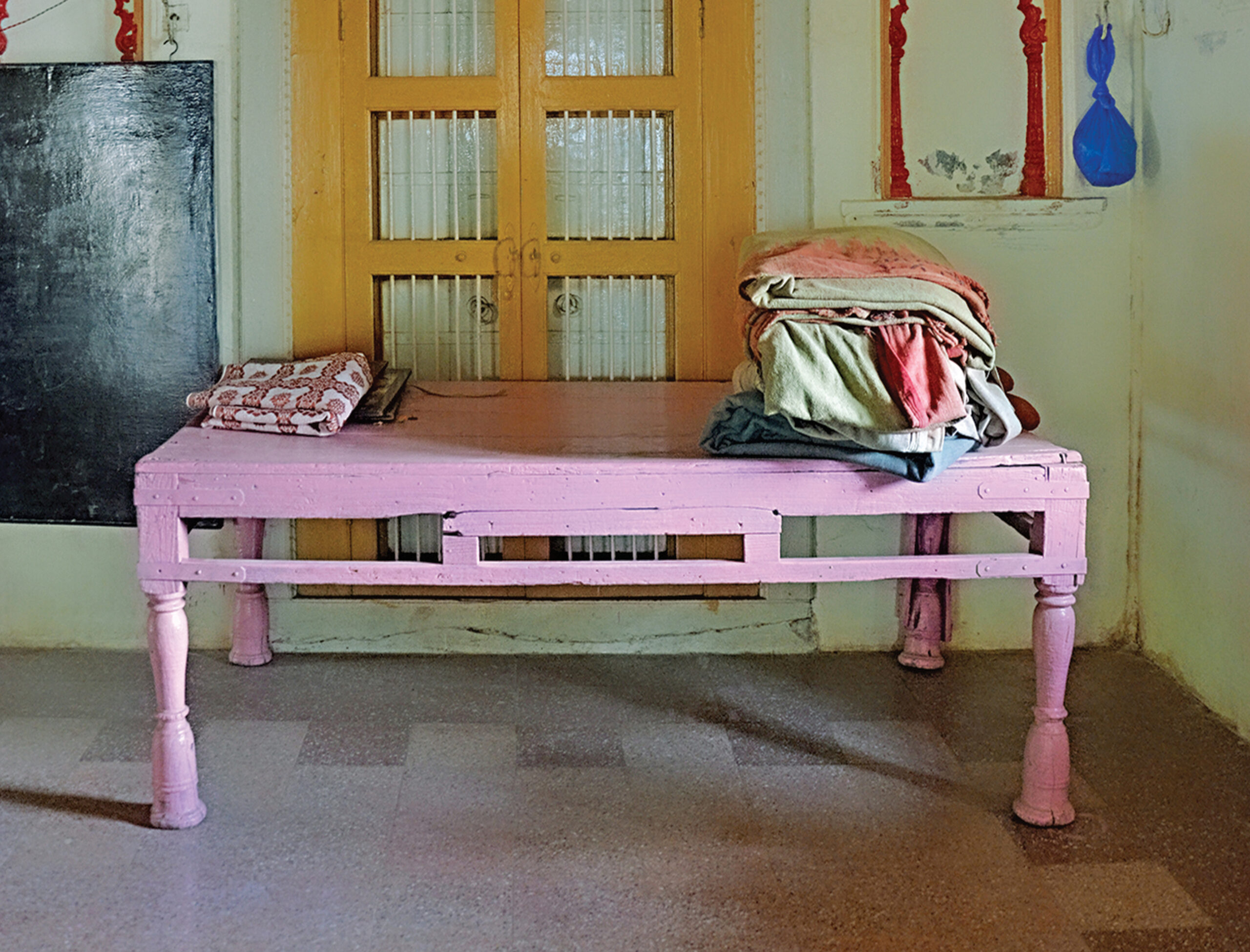
The benches are commonly painted, especially if they are used for ceremonial purposes. While these platforms are often plain, some feature designs and accessories. The khuniyu is often carved with embellishments. A pair of takhat documented in Haryana’s Faridabad district features metal embellishments on the frame, and is coated with lacquer and paint, with the seats covered in coloured laminate sheets. This ornamentation is unusual for the region but common in Nuh district, where these were made. In Rajasthan’s Dungarpur district, a common feature of takhats are spindle-shaped pendants below the frame. A takht in the gurudwara of Bhaloor, a village in Punjab’s Moga district, has raised sides with carved panels depicting stories from the Ramayana and the Mahabharata, in addition to a similarly carved frame and brackets.
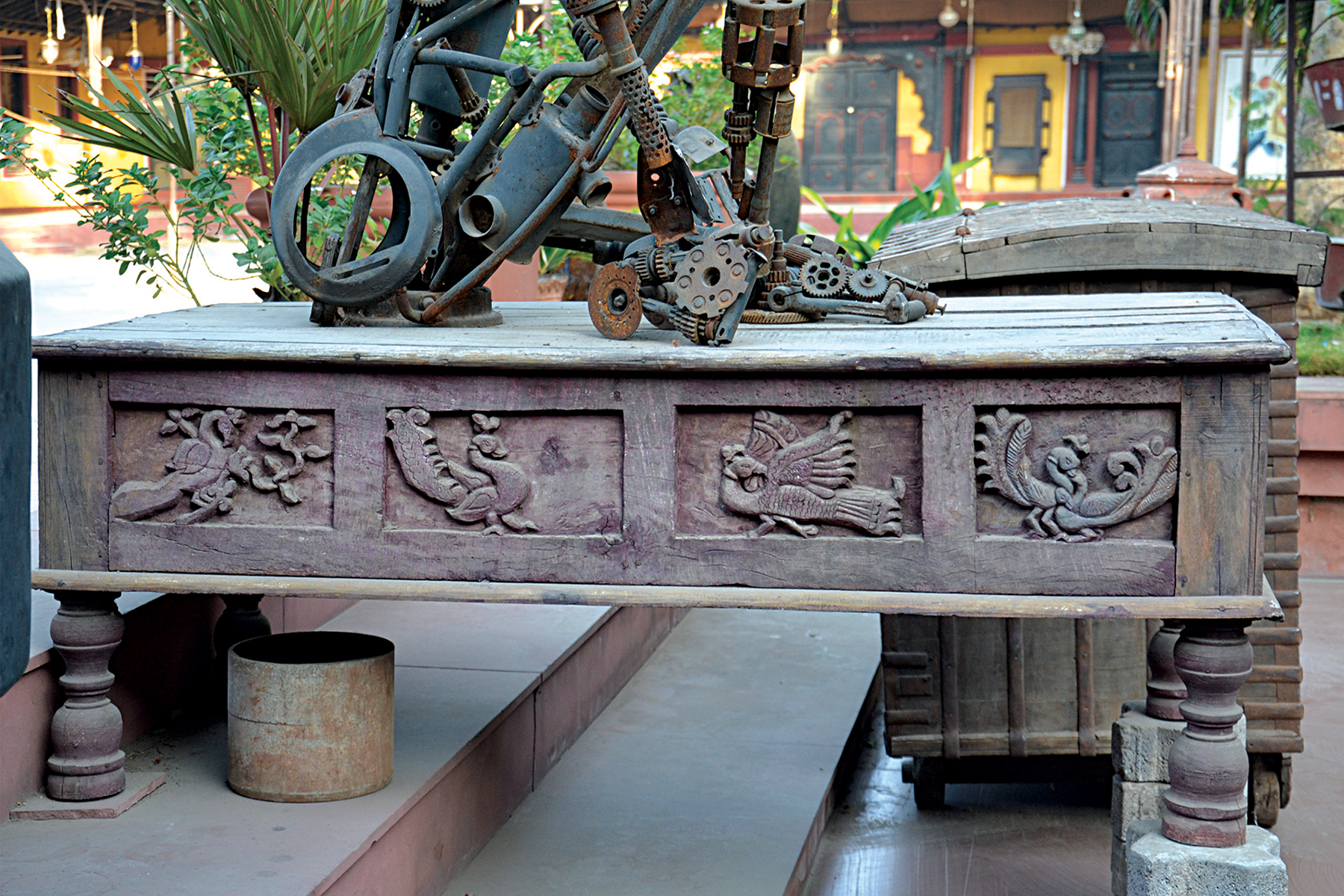
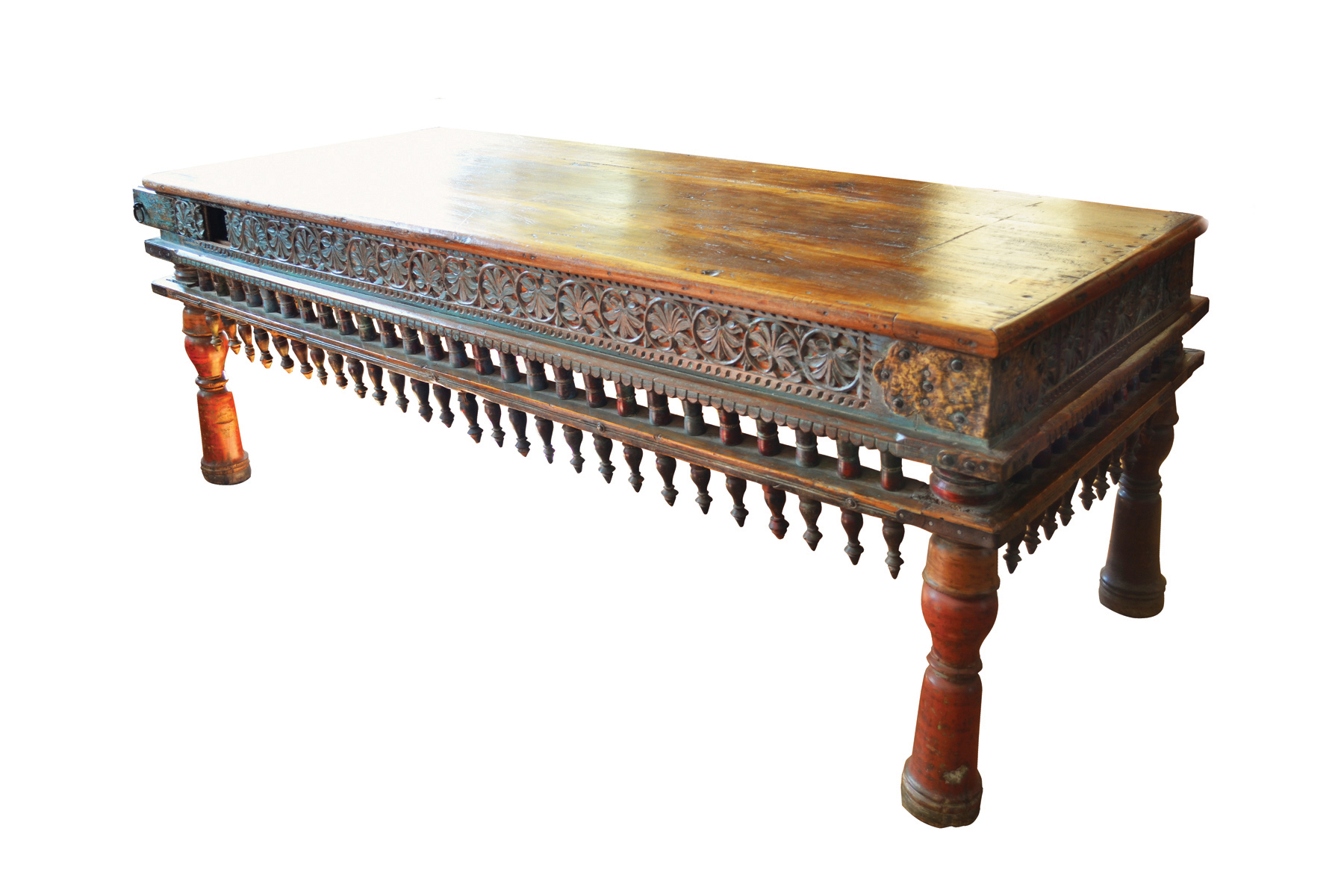
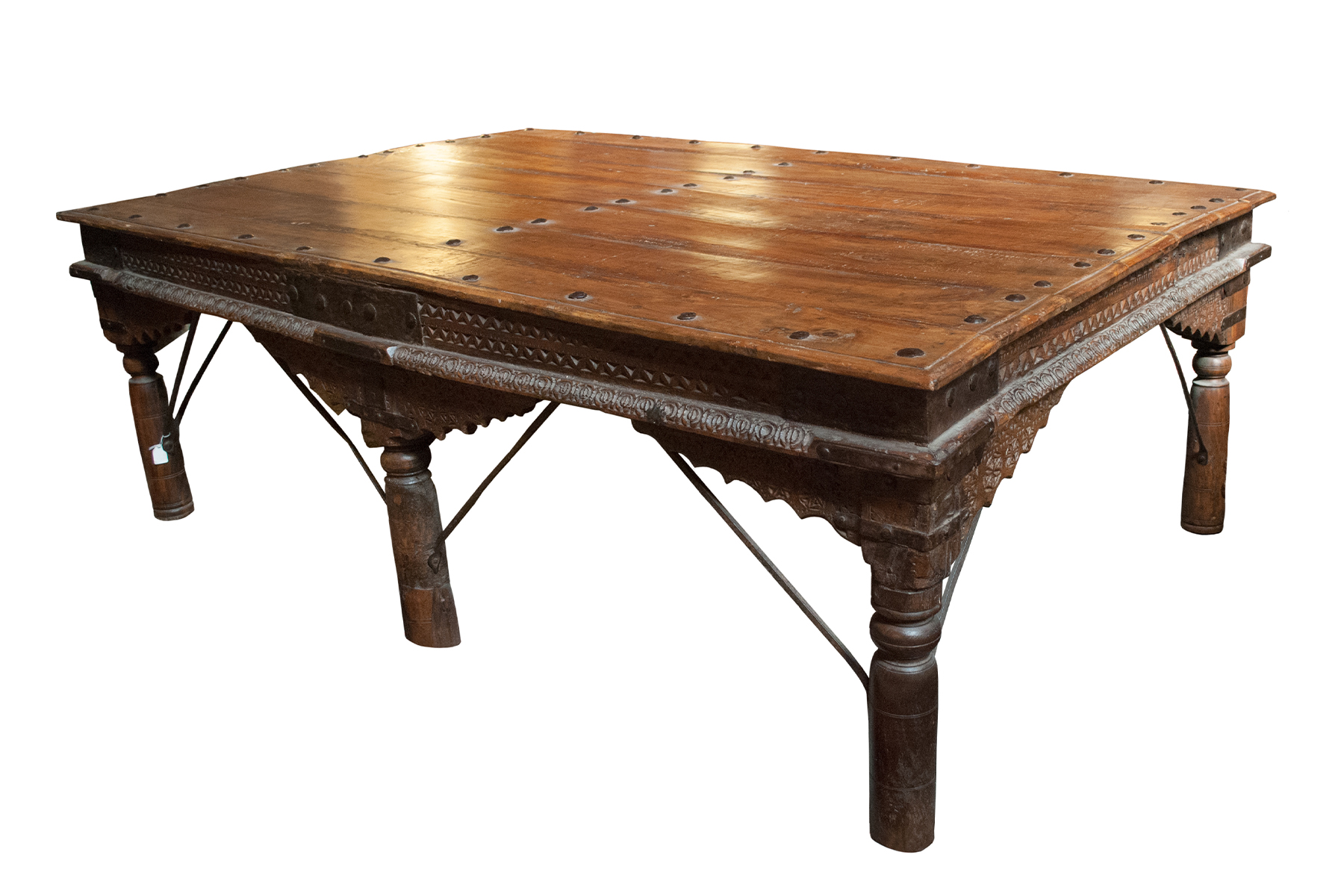
Two takhat that are part of the South Asia Collection in Norwich, UK feature carved handrails and pendants, as well as traces of paint and lacquer. A third one is much smaller, with floral motifs akin to those found in miniature paintings of the Bikaner school, and was possibly used as an offering bench during worship. Coloured takhat have featured commonly in various schools of Rajput miniature paintings as benches for offerings to deities.
Ownership and use
The paata, found in the Marwar region (Jodhpur, Bikaner), is used exclusively by men; women are generally expected to veil their faces when passing by one. Typically placed in chowks or neighbourhood squares, along streets, or outside temples or havelis (private mansions), it is central to the city’s social and cultural life. While it was historically used only by the nobility or political leaders to address people from, today it is used as an everyday gathering and resting place for men. It also serves as a platform for panchayat (council) hearings, and cultural activities such as ceremonies and performances. Especially during the spring festival of Holi, several paata are arranged together in public squares in Bikaner to be used as a stage for satirical plays — where the roles of women are also played by men — as well as for playing music and preparing drinks for the gathering.
While always meant for public use, a paata may be owned by an individual family, a specific community, or a social establishment like a temple or a panchayat, and may sometimes be placed on land specifically designated for it. A 105-year-old paata in Bikaner, the city’s oldest, originally belonged to a rich merchant family who owned a haveli across the street, and is now maintained by a neighbourhood group. Another, placed outside a haveli, features a plaque stating that it was commissioned in memory of the haveli owner by his wife.
In Punjab, the takht or takhtposh has similar public use. It is extensively found in public places such as sath (public gathering space for the men of the village), near bus stands, and so on, where it is typically placed under a tree or has a system for shade constructed around it. The large takhtposh at Thaththi village, originally placed under a large tree, is now housed under a specially built walled shelter next to the main gurudwara — this space has become the village sath. In gurudwaras, minimally ornamented takht are used to hold images of Sikh gurus, as well as langar (free meals) or prasad (offerings). In homes, a takht is commonly used in the living or more public area for residents and guests to sit on, and for sleeping when placed in the private quarters. Simple takhtposh are also used in the fields across Punjab.
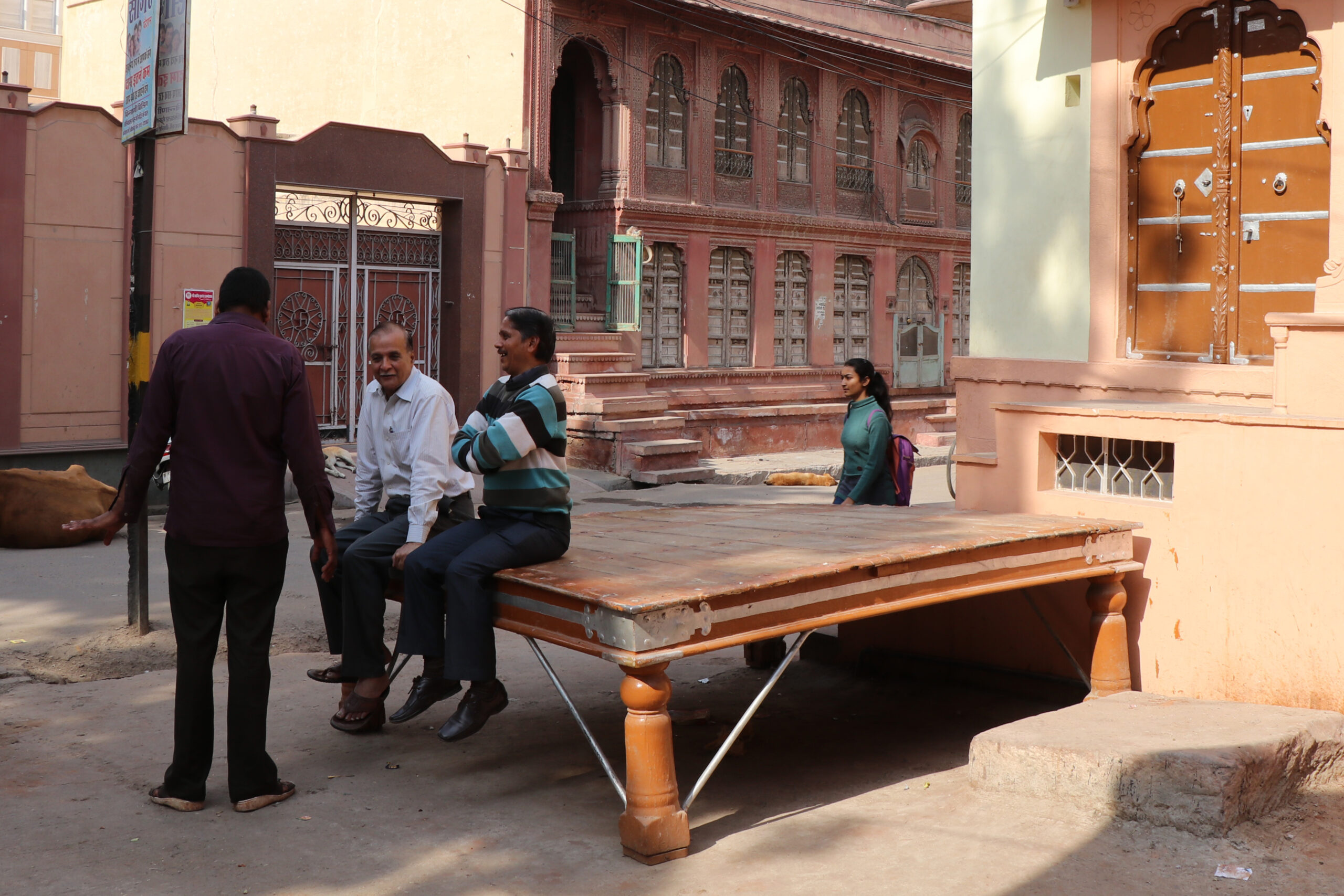
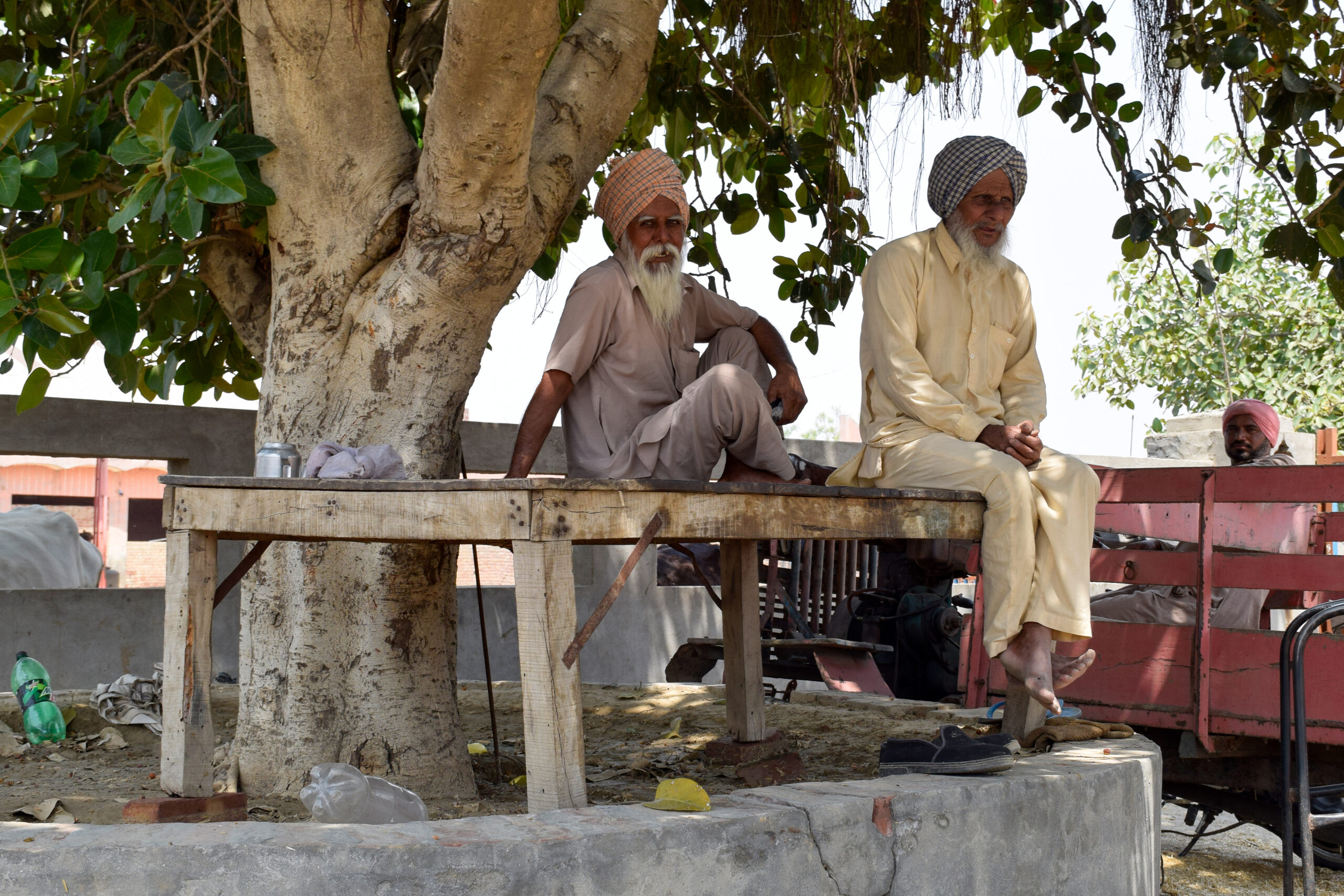
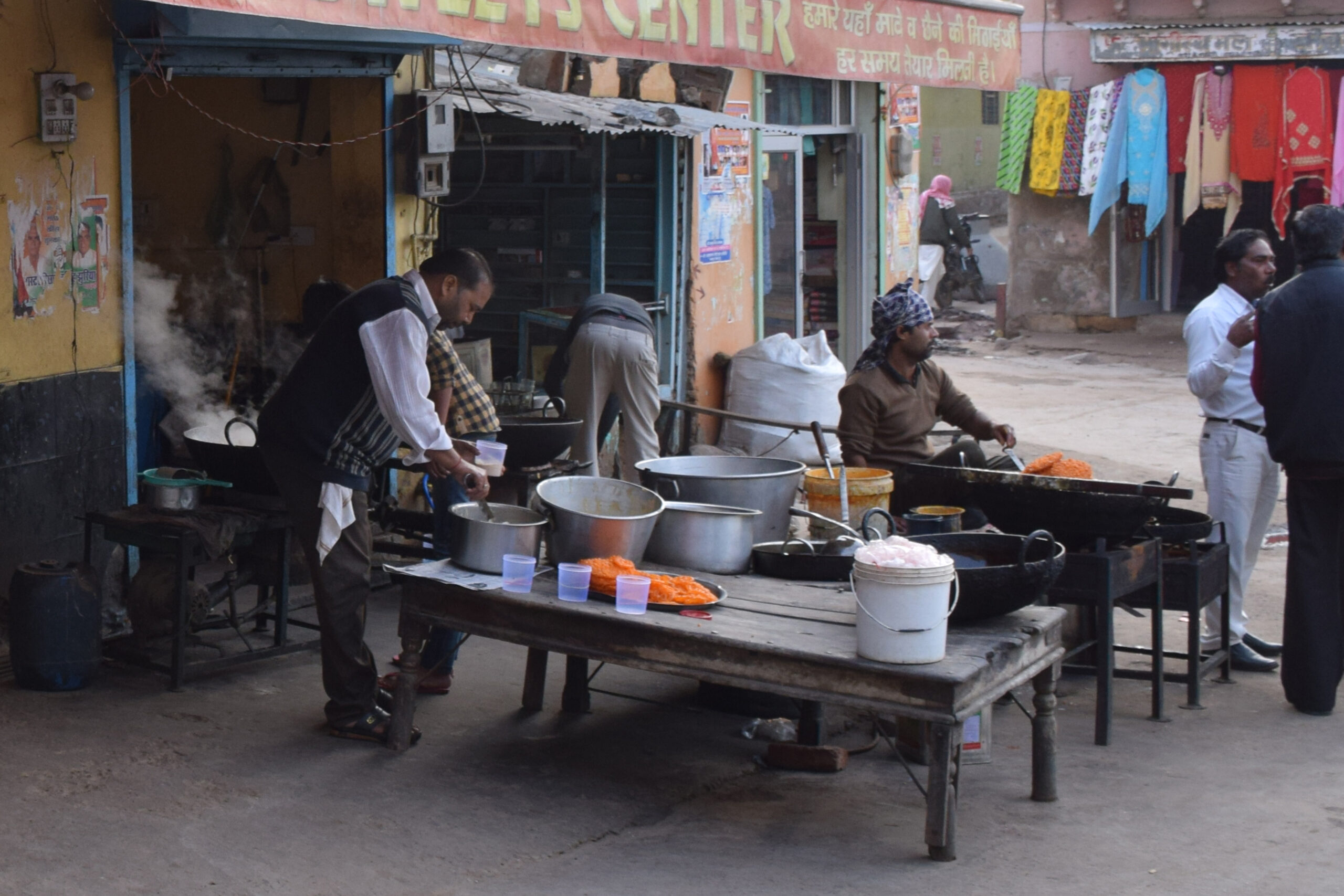
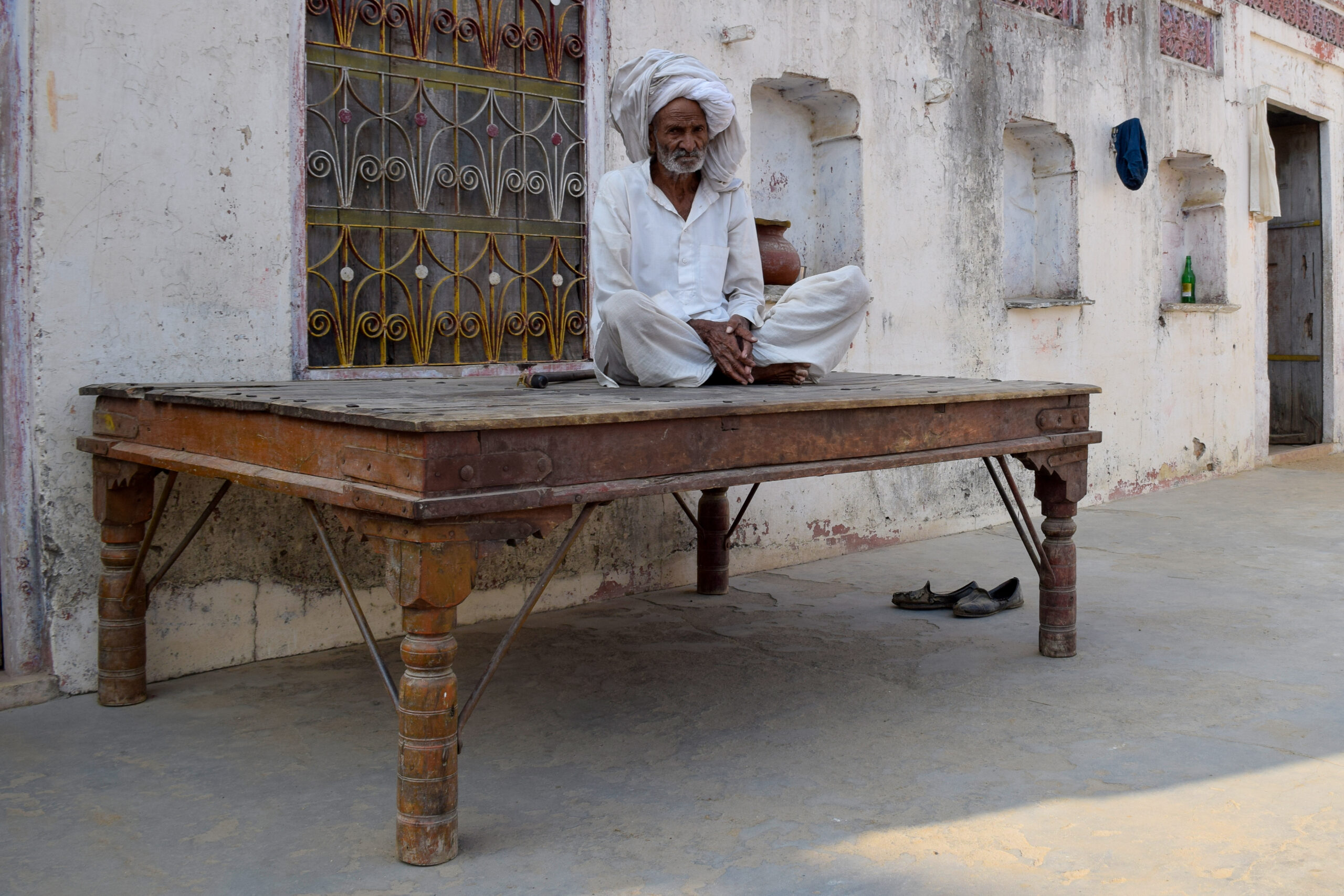
In Haryana too, the takhat is most often seen in a chaupal, a community-built space where men gather for panchayat meetings, playing games and socialising, which also serves as male guest accommodation during weddings. Often two or more takhat may be placed edge to edge to form a larger seating surface. In the Mewat region of Haryana, takhat are part of wedding customs where they are exchanged as gifts between families of the bride and groom. In parts of Haryana closer to Rajasthan, the takhat is placed in the baithak (semi-private space at the entrance of a house, used to entertain guests), or just outside where it may also be used by passers-by. It is generally placed next to a water pitcher as a gesture of hospitality. It is also used in shops, to display wares or for the shopkeeper or customers to rest on. In religious places, the takhat serves as a platform for the priest to give sermons from, or for devotees to sit on.
The takhat in Rajasthan, which accommodates fewer people, may be used in similar ways, though it is most often individually owned and kept in or just outside the home. This is also the case with the paat (‘plank’) in Gujarat, placed in semi-covered spaces of the home such as verandahs or courtyards; indoor paat meant for seating are furnished with mattresses, cushions and bolsters. Traditionally, the paat was a seat of honour primarily used by scholars, teachers or astrologers, who used one paat throughout their lifetime; this also gives ‘paat’ the allegorical meaning of ‘guru’s seat’.
This article is adapted from the outcomes of Vernacular Furniture of North-West India — a collaborative research and documentation project by the Design Innovation and Craft Resource Centre (DICRC), CEPT University, India, and The South Asian Decorative Art and Crafts Collection Trust (SADACC), UK — shared with the Encyclopedia of Art through an Impart partnership. Explore more from this series in our Collection Objects Alive: Vernacular Furniture of North-West India.
First published: 15 May 2026
Image Gallery
Bibliography
Bais, Mitraja, Jay Thakkar, Samrudha Dixit, and Ben Cartwright. Sahaj: Vernacular Furniture of Gujarat. Ahmedabad: CEPT University Press, 2018.
Rao, Mansi S., Ben Cartwright, and Samrudha DIxit. Anaikya: Vernacular Furniture of Rajasthan. Ahmedabad: CEPT University Press, 2021.
Rao, Mansi S., Ben Cartwright, Jay Thakkar, and Abhishek Ruikar. Smarya: Vernacular Furniture of Punjab and Haryana. Ahmedabad: CEPT University Press, 2026.
Vernacular Furniture of India. Accessed February 1, 2026. https://vernacularfurnitureofindia.com/.
Feedback